
TL;DR:
- Early recognition and swift action are crucial for better autism outcomes.
- Families can access services without waiting for formal diagnosis through early intervention and school evaluations.
- Starting support early, even before referral, significantly benefits a child’s development.
Getting an autism diagnosis for your child can feel like standing at the entrance of a maze with no map. You notice something is different, you bring it up with the doctor, and suddenly you’re handed a referral and told to wait months for an appointment. Many families lose valuable developmental time simply because they didn’t know what steps to take or what resources were available right now. This guide is your practical roadmap. We’ll walk you through recognizing early signs, requesting referrals, accessing services without waiting for a diagnosis, and what to expect at every stage of the process.
Table of Contents
- Recognizing early signs and preparing for your first step
- Getting a medical referral: Step-by-step process
- Accessing services without a medical referral
- What happens after a referral? Tests, timelines, and practical tips
- A fresh look: Why early action matters more than waiting for referrals
- Find your next steps with trusted autism therapy providers
- Frequently asked questions
Key Takeaways
| Point | Details |
|---|---|
| Start with your pediatrician | Discuss developmental concerns and request autism screening at well-child visits for early action. |
| Use all available referral paths | Pursue both medical referrals and direct access to state and school programs to avoid delays. |
| Therapy can begin before diagnosis | Early Intervention and school services are available without a formal diagnosis or referral. |
| Stay proactive and organized | Log communication, follow up regularly, and act promptly to reduce delays and improve outcomes. |
| Advocacy makes the biggest difference | Your informed advocacy ensures your child gets timely, comprehensive support and services. |
Recognizing early signs and preparing for your first step
The earlier you act, the better the outcome for your child. That’s not just a saying. It reflects what we know about brain development and the power of early support. But before you can act, you need to know what you’re looking at.
Common early signs of autism in young children include:
- Limited or no eye contact by 6 months
- No babbling or pointing by 12 months
- No single words by 16 months
- Loss of previously acquired language or social skills at any age
- Repetitive movements like rocking, hand-flapping, or spinning objects
- Strong resistance to changes in routine
- Unusual responses to sounds, textures, or lights
You don’t need to see all of these signs to be concerned. One or two consistent patterns is enough reason to bring it up with your child’s doctor.
When you go to that appointment, preparation matters. Pediatricians conduct well-child autism screenings at 18 and 24 months using tools like the M-CHAT-R/F (Modified Checklist for Autism in Toddlers) or the POSI (Parent’s Observations of Social Interactions). These are standardized questionnaires that take just a few minutes. Understanding the doctor’s role in autism care helps you use that appointment time wisely.
| Screening tool | Age range | Format |
|---|---|---|
| M-CHAT-R/F | 16 to 30 months | Parent questionnaire |
| POSI | 16 to 30 months | Parent questionnaire |
| ASQ-3 | 1 to 66 months | Parent questionnaire |
| ADOS-2 | 12 months and up | Clinician observation |
Pro Tip: Start a developmental diary at least two weeks before your appointment. Write down specific examples with dates, like “Tuesday: didn’t respond to name called 5 times in a row.” Concrete observations carry far more weight than general impressions during a 15-minute visit.
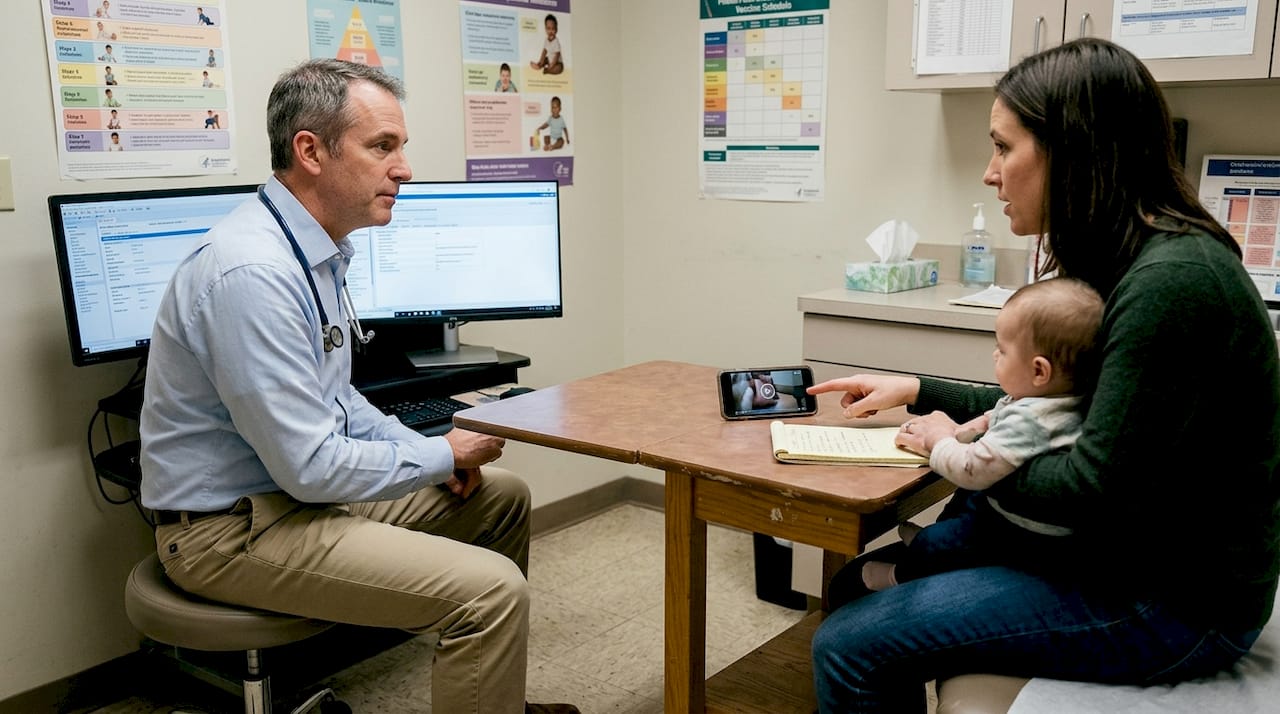
Your pediatrician is your first and most important ally. Come with notes, video clips on your phone if you have them, and a clear list of your concerns. The more specific you are, the more productive that conversation will be.
Getting a medical referral: Step-by-step process
After you’ve gathered your child’s developmental information, the next step is navigating the medical referral process. This part trips up a lot of families, mostly because the steps aren’t always clearly explained.
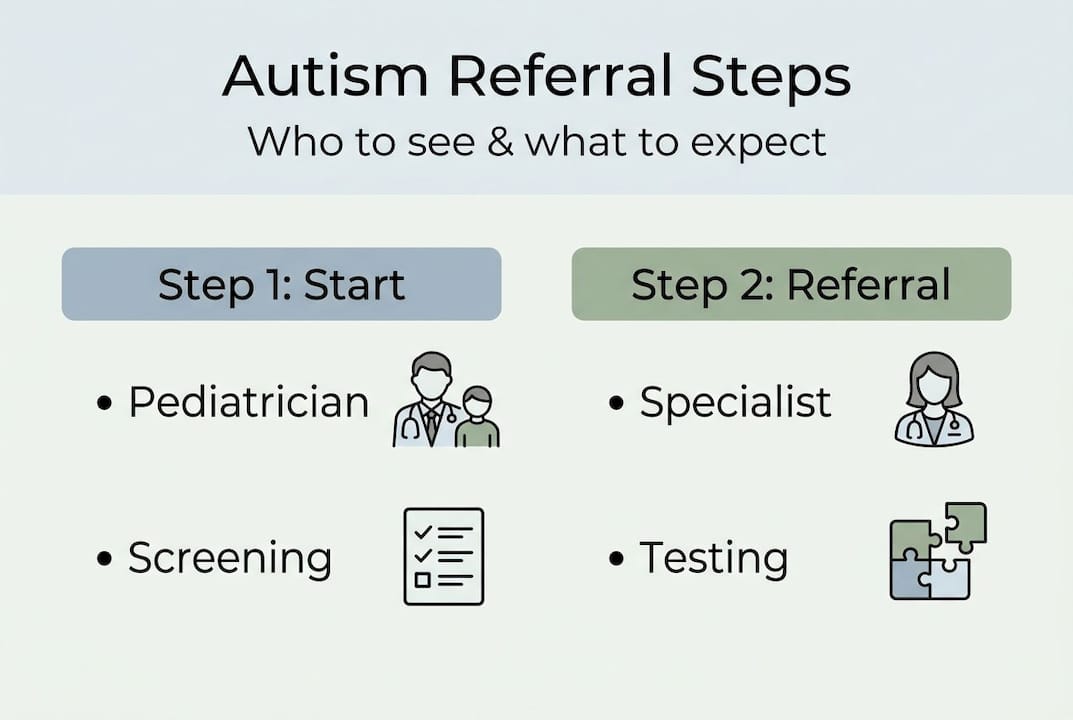
Here’s how the process typically works:
- Raise your concerns at a well-child visit or schedule a dedicated appointment to discuss developmental worries.
- Complete the screening tool your pediatrician uses, usually the M-CHAT-R/F or ASQ.
- Request a hearing and vision test if not already done. These rule out sensory issues that can mimic autism.
- Ask directly for a referral if the screening shows risk or your concerns persist after the screening.
- Get the referral in writing and confirm which specialist your insurance covers.
- Follow up within two weeks if you haven’t received referral paperwork or an appointment confirmation.
The formal diagnosis process involves specialists such as developmental-behavioral pediatricians, child psychologists, or neurologists. In some cases, a well-trained primary care doctor can diagnose autism directly, which can significantly cut wait times.
“The median age of ASD diagnosis is approximately 47 months, with wait times averaging 6 to 7 months from referral to diagnosis nationally. Therapy can and should start before a formal diagnosis is confirmed.”
Knowing the different autism specialist types helps you understand who you’re being referred to and why. Each specialist brings a different lens to the evaluation.
| Referral pathway | Pros | Cons |
|---|---|---|
| Primary care diagnosis | Faster, fewer appointments | May lack specialized tools |
| Specialist referral | Thorough, standardized | Longer wait times |
| University clinic | Highly specialized | Often longest waitlists |
Understanding doctor qualifications helps you ask the right questions when you’re choosing where to go. And knowing how to access a referral gives you a clearer picture of what to expect from the system.
Pro Tip: If you’re placed on a waitlist, call every three to four weeks to check your position. Cancellations happen often, and families who call regularly get moved up faster than those who wait passively.
Accessing services without a medical referral
While pursuing medical referrals, you don’t have to wait to connect with helpful services for your child. This is one of the most important things we want you to know. The system has built-in pathways that don’t require a doctor’s signature.
For children under age 3, you can self-refer to Early Intervention programs through your state. These are federally funded under IDEA (Individuals with Disabilities Education Act) and provide free evaluations and therapies including speech therapy, occupational therapy, and developmental support. No physician referral needed. You call, you request an evaluation, and the process begins.
For children age 3 and older, your local public school district is required by law to provide free evaluations under the “Child Find” mandate. You don’t need a medical diagnosis or a referral to request this. Contact the special education department at your local school and ask for a Child Find evaluation in writing.
| Child’s age | Service pathway | Referral needed? | Cost |
|---|---|---|---|
| Under 3 | State Early Intervention program | No | Free |
| 3 and older | Public school Child Find | No | Free |
| Any age | Private evaluation | Sometimes | Varies |
| Any age | Medical specialist | Yes (usually) | Insurance/copay |
Key actions you can take right now:
- Search for early intervention providers in your area
- Connect with autism therapy services that accept pre-diagnosis referrals
- Reach out to autistic services organizations that can guide you through the process
Starting these parallel to your medical referral process is not redundant. It’s smart. Every week of support during early development counts.
What happens after a referral? Tests, timelines, and practical tips
Once a referral is made or you’ve accessed school or Early Intervention services, here’s what happens next and what to do while waiting.
The evaluation process typically includes:
- Parent interview covering developmental history, family history, and current concerns
- Direct observation of your child in structured and unstructured settings
- Standardized tools like the ADOS-2 (Autism Diagnostic Observation Schedule)
- Cognitive and language testing depending on your child’s age
- Possible genetic testing if the clinician suspects a genetic condition alongside autism
The diagnostic pathway at many clinics also requires prior screenings like the M-CHAT-R, ASQ, and hearing/vision tests before the appointment. Having these done in advance speeds things up considerably.
One important thing to understand: positive screens have low predictive value, meaning a positive M-CHAT-R does not confirm autism. Studies show that only about 2.8% of children referred after a positive screen actually receive an autism diagnosis. This is why clinical judgment and full evaluation matter.
Disparities exist. Wait times and diagnosis rates vary significantly by race, ethnicity, and geographic location. Families in rural areas and communities of color often face longer delays. If you’re experiencing this, ask your pediatrician about primary care diagnosis options, which can reduce the wait significantly.
Pro Tip: Create a dedicated folder (paper or digital) for every piece of correspondence related to your child’s evaluation. Include dates of calls, names of staff you spoke with, and what was said. This documentation becomes critical if deadlines slip or referrals get lost.
Actionable steps during the wait:
- Start speech or occupational therapy through Early Intervention or private providers
- Keep your developmental diary updated with new observations
- Connect with autism doctors and specialists who can advise on interim support
- Join a parent support group to share strategies and reduce isolation
A fresh look: Why early action matters more than waiting for referrals
Here’s something the standard advice doesn’t say loudly enough: the referral is not the starting line. You don’t have to wait for a piece of paper to begin helping your child.
The conventional “wait and see” approach still lingers in some medical offices, and it costs families irreplaceable developmental time. The AAP and CDC guidance is clear: act early, don’t wait for formal diagnosis to begin interventions, and build a strong parent-doctor partnership that keeps the process moving.
Primary care doctors are increasingly equipped to diagnose autism directly, especially in areas with long specialist waitlists. If your pediatrician is trained and willing, a primary care diagnosis can unlock services months earlier than the specialist route.
The families who see the best outcomes aren’t the ones who navigated the system perfectly. They’re the ones who started doing something, anything, while the system caught up. Therapy, school evaluations, Early Intervention, parent education. All of it matters. All of it helps. Don’t let the process become a reason to pause.
Find your next steps with trusted autism therapy providers
Now that you understand the referral process, you’re ready to take action. The Autism Doctor Search Directory connects you with verified, up-to-date providers across every stage of your child’s journey. Whether you’re looking for autism therapy services right now or want to explore options like the Association for Play Therapy and Child and Family Resources, our directory makes it simple to find the right fit. You don’t have to wait for a diagnosis to start searching. Browse providers today and give your child every possible advantage from day one.
Frequently asked questions
Do I need a doctor’s referral to start autism therapy for my child?
No. Children under 3 can self-refer to state Early Intervention programs for free evaluations and therapies, and children 3 and older can access free school-based evaluations through the Child Find process without any medical referral.
What specialists can diagnose autism after a referral?
Developmental-behavioral pediatricians, child psychologists, child neurologists, and primary care doctors with training can all diagnose autism, depending on the case and your location.
How long does the referral and diagnosis process for autism typically take?
Nationally, the average wait is 6 to 7 months from referral to formal diagnosis, but children can and should begin therapies during that waiting period.
Are there ways to speed up the autism referral process?
Yes. Ask your pediatrician about in-house diagnostic options, self-refer to Early Intervention immediately, and follow up with specialist offices every few weeks to stay visible on waitlists.
What if my child’s autism screening is a false positive?
Screening tools like the M-CHAT-R have high false-positive rates, so a positive result triggers further evaluation rather than confirming a diagnosis. Clinical judgment and full assessment are always the next step.