
Finding the right autism experts to support your loved one can feel overwhelming when you’re navigating endless directories, conflicting advice, and long waitlists. Many caregivers struggle to identify trustworthy professionals who truly understand their family’s unique needs and values. This guide walks you through practical steps to locate, evaluate, and connect with qualified autism specialists using reliable directories, peer networks, and structured resources. You’ll learn how to prepare for your search, leverage both professional and community connections, and make informed choices that respect diverse autism perspectives while securing timely, effective support.
Table of Contents
- Key takeaways
- Prepare to connect: understanding what you need
- Find autism experts using reliable directories and professional resources
- Leverage online and local autism support networks to connect with experts and peers
- Navigate autism support models and tailor connections to your loved one’s needs
- Explore trusted autism therapy services and expert providers
- How to connect with autism experts: frequently asked questions
Key Takeaways
| Point | Details |
|---|---|
| Directories with peer referrals | Using professional directories alongside recommendations from other families helps locate qualified autism specialists who fit your needs. |
| Start early due to waitlists | Beginning your search early gives you time to compare options, gather recommendations, and secure timely support. |
| Clarify care needs | Identify whether you need diagnostic evaluation, ongoing therapy, or educational guidance to target the right professionals. |
| Understand care models | Assess whether medical model approaches like ABA or neurodiversity informed practices align with your family values and goals. |
Prepare to connect: understanding what you need
Before reaching out to autism experts, clarify exactly what type of support your loved one needs right now. Are you seeking an initial diagnostic evaluation, ongoing therapy services like speech or occupational therapy, or educational support to navigate school accommodations? Understanding your immediate priorities helps you target the right professionals and avoid wasting time with mismatched specialists.
Different experts serve distinct roles in autism care. Developmental pediatricians typically conduct evaluations and diagnose autism spectrum disorder, while psychologists may provide cognitive assessments and behavioral support. Speech therapists address communication challenges, occupational therapists work on sensory integration and daily living skills, and behavioral therapists implement structured intervention programs. Knowing which professional addresses your specific concerns streamlines your search and ensures you’re asking the right questions during initial consultations.
You’ll also want to consider the philosophical approach guiding your care decisions. Medical model therapies like ABA focus on symptom management and skill building through structured intervention, while neurodiversity affirming approaches emphasize acceptance of neurological differences and accommodating individual needs. Many families blend elements from both perspectives based on what works best for their loved one. Understanding these frameworks helps you identify providers whose values align with yours and ask informed questions about treatment philosophy during consultations.
Plan for potential waitlists by beginning your search as early as possible. Early intervention via connected experts improves outcomes, but waitlists spanning weeks to months are common for qualified specialists. Starting early gives you time to explore multiple options, gather recommendations, and secure appointments without rushed decisions. While waiting, leverage free online resources, parent training programs, and community workshops to begin supporting your loved one immediately.
Pro Tip: Create a simple spreadsheet tracking each expert’s specialty, availability, insurance acceptance, and approach to autism care. This organization system helps you compare options quickly and reference details during follow up calls without searching through scattered notes.
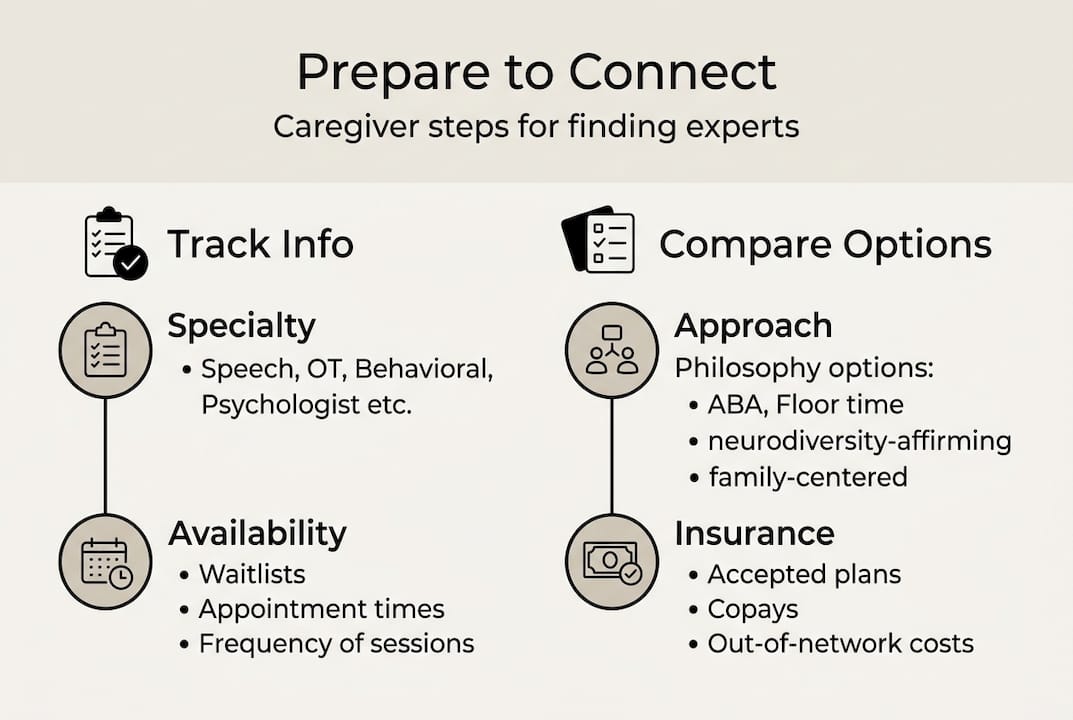
When exploring therapy options, consider visiting autism therapy services to understand the range of available interventions and which might address your loved one’s specific needs most effectively.
Find autism experts using reliable directories and professional resources
Professional directories offer structured, vetted pathways to qualified autism specialists. The CAP Finder directory from the American Academy of Child and Adolescent Psychiatry helps you locate child psychiatrists with autism expertise in your area. These specialists can provide diagnostic evaluations, medication management when appropriate, and coordinate comprehensive care plans. The directory allows filtering by location, insurance, and specific areas of focus, making your search more efficient than generic online searches.
Hospital based autism programs provide comprehensive multidisciplinary evaluations and ongoing care coordination. Programs like the CHOP Autism Integrated Care Program offer teams of specialists who collaborate on assessment and treatment planning. Regional programs vary by location, with some areas offering publicly funded services like Ontario Autism Program for Canadian families. These structured programs often maintain waiting lists but provide thorough, coordinated care once you’re enrolled.

| Resource type | Best for | Typical timeline |
|---|---|---|
| CAP Finder directory | Finding child psychiatrists | 2 to 8 weeks for first appointment |
| Hospital autism programs | Comprehensive team evaluations | 3 to 6 months waitlist common |
| Regional public programs | Funded services and coordination | 6 to 12 months depending on area |
| Private practice therapists | Faster access to specific services | 1 to 4 weeks typically |
When reviewing directory listings, pay attention to each provider’s scope of services, accepted insurance plans, and stated areas of expertise. Some professionals focus primarily on early childhood intervention, while others specialize in supporting adolescents or adults. Cross checking this information with peer recommendations helps you avoid providers whose marketing doesn’t match their actual experience or approach.
Prepare specific questions before contacting potential experts. Ask about their training in autism specific interventions, years of experience working with individuals at your loved one’s developmental level, and their perspective on family involvement in treatment planning. Inquire about waitlist length, typical session frequency, and whether they collaborate with other professionals already supporting your family. These questions help you assess both qualifications and practical fit before committing to lengthy intake processes.
Pro Tip: When calling to schedule initial consultations, ask if the provider offers brief phone screenings before formal appointments. These 10 to 15 minute conversations help you gauge rapport and approach without investing time and money in full evaluations with poorly matched specialists.
For comprehensive listings of specialized centers, explore autism institute options and compare their multidisciplinary team structures with individual autism therapy services providers to determine which model suits your family’s needs.
Leverage online and local autism support networks to connect with experts and peers
Online autism communities provide immediate access to peer recommendations and expert insights without geographic limitations. Platforms like Autism Speaks Community, MyAutismTeam, Reddit r/autism, and Facebook groups connect thousands of caregivers who share provider recommendations, discuss treatment experiences, and answer practical questions about navigating autism services. These communities often feature verified experts who participate in Q&A sessions, offering professional guidance alongside peer support.
Local support groups create opportunities for face to face connections with families in your area who navigate the same service systems and providers. Building a support network through workshops and helplines connects you with therapists, educators, and specialists through resource directories maintained by local autism organizations. These groups often host presentations from regional providers, giving you chances to meet potential experts in low pressure settings before scheduling formal consultations.
| Connection type | Primary benefits | Best use case |
|---|---|---|
| Online forums | 24/7 access, diverse perspectives, anonymity | Quick questions, broad research, connecting across distances |
| Facebook groups | Real time responses, local subgroups, event sharing | Finding local providers, organizing meetups, sharing resources |
| In person groups | Deep relationships, hands on support, immediate help | Ongoing emotional support, collaborative problem solving |
| Expert Q&A sessions | Professional guidance, evidence based answers | Validating treatment decisions, understanding new research |
When gathering recommendations from online communities, look for consistent patterns rather than single opinions. If multiple caregivers independently praise a specific therapist’s communication style or warn about long waitlists at a particular clinic, that repeated feedback carries more weight than isolated reviews. Ask follow up questions about what specifically made an expert effective or problematic to understand whether those factors matter for your situation.
Balance peer advice with professional evaluations by using community recommendations as starting points rather than final decisions. A therapist highly praised in online groups might not match your family’s specific needs or values. Similarly, a provider with mixed reviews might excel at addressing your loved one’s particular challenges. Use peer insights to create a shortlist of candidates, then conduct your own screening through consultations and credential verification.
Pro Tip: Search community forums for posts from 6 to 18 months ago rather than only recent discussions. This timeline gives you perspective on whether recommended providers maintained quality over time or if initial positive impressions faded as families continued treatment.
For comprehensive listings of national and local organizations that can connect you with both experts and peer networks, visit top autism organizations for families to explore resources tailored to caregiver needs.
Navigate autism support models and tailor connections to your loved one’s needs
Understanding different philosophical approaches to autism care helps you identify experts whose values align with your family’s priorities. The medical model focuses on therapy and symptom management through interventions designed to increase adaptive skills and reduce behaviors considered challenging. This perspective views autism primarily as a disorder requiring treatment and emphasizes evidence based therapies like applied behavior analysis, speech therapy, and occupational therapy to help individuals function in neurotypical environments.
The neurodiversity paradigm takes a fundamentally different stance, embracing autism as a natural variation in human neurology rather than a deficit requiring correction. This approach prioritizes acceptance, accommodation, and amplifying autistic voices in decisions about support and services. Neurodiversity affirming practitioners focus on building on strengths, reducing environmental barriers, and respecting communication differences rather than enforcing neurotypical behavior standards.
Many families discover that rigid adherence to either framework doesn’t serve their loved one’s complex, evolving needs. A blended approach might include speech therapy to expand communication options while also advocating for school accommodations that respect your child’s sensory needs and learning style. You might use behavioral strategies to teach safety skills while simultaneously working to reduce anxiety through environmental modifications rather than compliance training.
When interviewing potential providers, ask specific questions that reveal their philosophical stance:
- How do you involve autistic individuals in treatment planning and goal setting?
- What role does the family play in determining therapy priorities versus clinical recommendations?
- How do you balance skill building with acceptance of neurodivergent traits?
- Can you describe situations where you’ve modified standard protocols based on individual preferences?
These questions help you assess whether a provider views your loved one as a whole person with agency or primarily as a collection of symptoms requiring management. Balanced perspectives that incorporate autistic self advocate input lead to more respectful, effective support that honors your loved one’s identity while addressing genuine challenges.
“The most effective autism support recognizes that what works beautifully for one individual may feel harmful to another. Centering the autistic person’s own experience and preferences, rather than outsider judgments about ‘appropriate’ behavior, creates interventions that actually improve quality of life instead of just conformity.”
Stay flexible as your loved one grows and their needs shift. A therapy approach that provided crucial support during early childhood might become less relevant or even counterproductive during adolescence when identity development and autonomy become central. Regular check ins with your loved one about what feels helpful versus stressful, combined with ongoing education about evolving autism perspectives, ensures your support network adapts alongside your family’s journey.
Pro Tip: Before committing to long term therapy contracts, request a trial period of 4 to 6 sessions to assess whether the provider’s stated philosophy translates into practice. Watch how they respond when your loved one resists activities or communicates discomfort with their methods.
For detailed guidance on evaluating behavioral therapy providers specifically, review finding autism behavioral therapists to understand key questions and red flags when assessing ABA and other behavioral intervention programs.
Explore trusted autism therapy services and expert providers
Now that you understand how to identify and evaluate autism experts, connecting with qualified providers becomes your next practical step. Our directory offers carefully curated listings of autism therapy services including ABA therapy, speech therapy, occupational therapy, and other evidence based interventions. Each listing provides detailed information about provider credentials, service models, and contact details to streamline your outreach process.
You can explore specialized providers like The Missing Piece ABA Therapy and autism therapeutics to compare approaches and find services that match your family’s specific needs and values. These vetted listings help you move quickly from research to action, reducing the time between identifying your needs and securing actual support. Whether you’re seeking your first evaluation or adding specialists to an existing care team, our directory connects you with professionals ready to serve families in your area.
How to connect with autism experts: frequently asked questions
How quickly can I usually connect with an autism expert?
Timelines vary significantly based on provider type and location. Private practice therapists often schedule initial consultations within 1 to 4 weeks, while hospital based programs and developmental pediatricians commonly have waitlists of 3 to 6 months. Starting your search early and contacting multiple providers simultaneously increases your chances of securing faster appointments.
What should I ask during the first consultation with an autism professional?
Inquire about their specific training in autism interventions, years of experience with your loved one’s age group, and their approach to family collaboration in treatment planning. Ask how they measure progress, handle situations when clients resist activities, and whether they coordinate with other professionals already supporting your family. Request clarity on session frequency, duration, costs, and insurance coverage to avoid surprises.
How do I find autism experts who respect neurodiversity perspectives?
Ask potential providers directly about their philosophy regarding autism as difference versus disorder and how they incorporate autistic self advocate perspectives into their practice. Look for professionals who prioritize your loved one’s preferences in goal setting, discuss accommodation alongside skill building, and demonstrate familiarity with neurodiversity literature. Online autism communities often maintain lists of neurodiversity affirming providers recommended by autistic adults and families.
Are online support groups safe and helpful for getting expert advice?
Online communities provide valuable peer support and provider recommendations but shouldn’t replace professional consultation for medical or therapeutic decisions. Choose moderated groups with clear community guidelines that prevent harmful advice. Verify any factual claims about treatments or services through reputable sources before acting on peer suggestions, and use online insights as starting points for discussions with qualified professionals.
Can I switch experts if a provider isn’t a good fit for my family?
Absolutely. Therapeutic relationships require trust and alignment on goals and methods. If a provider dismisses your concerns, your loved one consistently resists sessions, or you observe approaches that conflict with your values, seek alternative experts. Request records transfer to new providers to maintain continuity of care. For additional guidance on evaluating behavioral therapy fit specifically, review finding autism behavioral therapists for detailed assessment criteria.