
TL;DR:
- A sensory diet is a personalized program of scheduled sensory activities designed by occupational therapists to regulate the nervous system in autistic individuals. It emphasizes proactive, timed input across various sensory systems to prevent overload and improve daily functioning. Regular assessment and consistent implementation across environments are essential for its effectiveness.
A sensory diet is a personalized, scheduled set of sensory activities designed by occupational therapists to help regulate the nervous system and improve daily functioning in autistic individuals. The term “sensory diet” is a metaphor borrowed from nutrition, reflecting the idea that the nervous system needs regular, balanced sensory input the same way the body needs balanced meals. About 80% of children with autism show sensory processing differences that make self-regulation genuinely difficult, not a behavior problem. This autism sensory diet guide walks you through assessment, activity selection, daily scheduling, and troubleshooting so you can build a plan that actually works for your child and your family.
What is an autism sensory diet and why does it matter?
A sensory diet is not about food. The industry term used by occupational therapists (OTs) is “sensory diet,” and it refers specifically to a structured program of sensory activities targeting the proprioceptive, vestibular, tactile, auditory, and oral sensory systems. The goal is to keep your child inside what OTs call the “optimal arousal window,” a state where the nervous system is calm enough to focus but alert enough to engage.
The critical distinction between a sensory diet and reactive sensory strategies is timing. A sensory diet is proactive. You schedule sensory input throughout the day to prevent the nervous system from reaching overload, rather than scrambling for calming tools after a meltdown has already started. Sensory diets lead to smoother mornings, easier transitions, and fewer overwhelming moments across the day. That shift from reactive to proactive is where most families see the biggest change.
Sensory input types each serve a different function. Proprioceptive input (heavy work like pushing and pulling) tends to organize and calm. Vestibular input (movement) can either alert or calm depending on speed and direction. Tactile input ranges from deeply calming (deep pressure, warm baths) to alerting (light unexpected touch). Understanding these distinctions is the foundation of every effective sensory diet strategy.
How to assess your child’s unique sensory profile
Before selecting any activities, you need a clear picture of how your child processes sensory information. Pediatric OTs use standardized tools like the Sensory Profile 2 and the Sensory Processing Measure to identify patterns across all sensory systems. These tools reveal whether your child is a sensory seeker, a sensory avoider, or under-responsive in specific systems, and that distinction completely changes which activities belong in the plan.
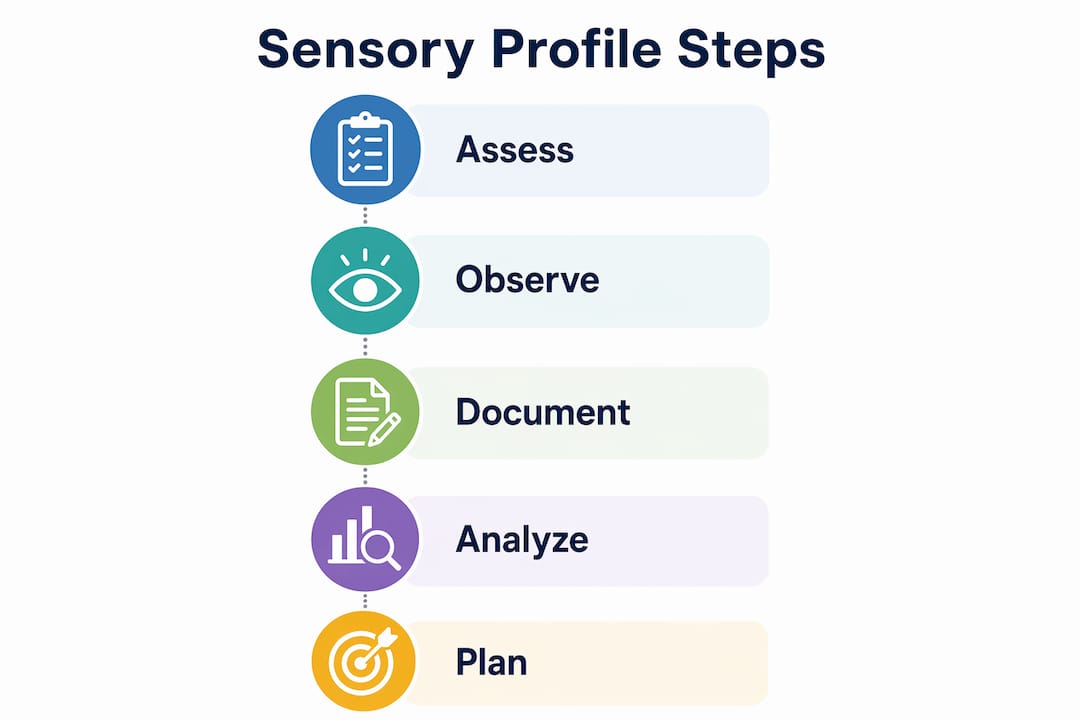
OT assessments follow clinical protocols with follow-up over approximately 15 to 20 days, giving the therapist enough data to identify consistent patterns rather than one-off reactions. A single observation session is rarely enough. The follow-up period is where the most useful information emerges.
You can support this process at home before and between OT appointments. Here is what to observe and document:
- Sensory seeking behaviors: Does your child crash into furniture, chew on clothing, or seek tight hugs? These signal under-registration or sensory seeking.
- Sensory avoidance behaviors: Does your child cover their ears, refuse certain textures, or melt down in busy environments? These point to sensory sensitivity or over-responsiveness.
- Regulation patterns across the day: Note when your child is calmest and when dysregulation spikes. Morning versus afternoon patterns often reveal vestibular or proprioceptive needs.
- Transition triggers: Many autistic children struggle most at transitions. Identifying which transitions are hardest helps the OT target those windows with specific input.
- Environment-specific reactions: Behavior at home versus school versus community settings often differs. Track all three.
Individualized sensory profiles are the foundation of effective plans. A one-size-fits-all approach consistently underperforms because two children with autism can have completely opposite sensory needs. One child may need alerting input before school while another needs calming input for the exact same time slot.
What sensory diet strategies and activities actually work?
Sensory diet activities fall into three functional categories: alerting, calming, and organizing. Matching the right category to the right moment is more important than the specific activity itself.
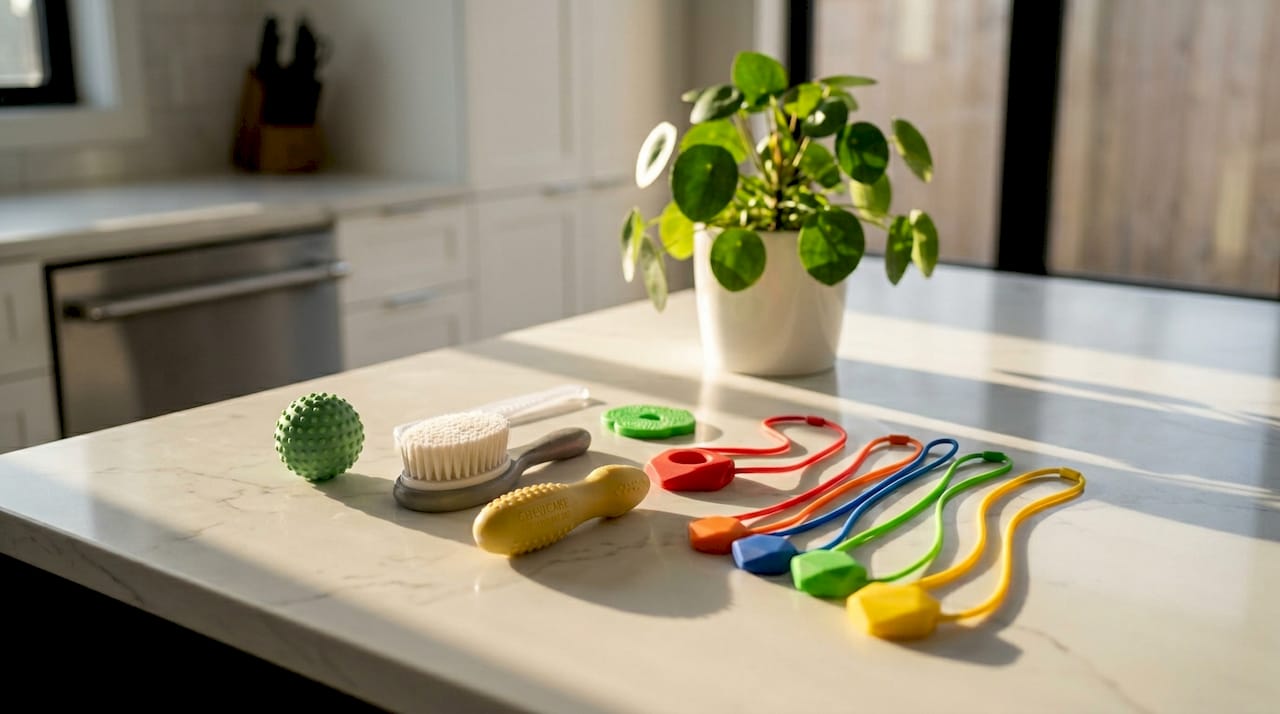
Proprioceptive activities provide heavy work input that calms and organizes the nervous system, making them ideal before demanding tasks or transitions. Practical examples include carrying a weighted backpack, wall push-ups, animal walks (bear crawls, crab walks), pushing a laundry basket, or carrying groceries. These activities are free, require no equipment, and can be woven into existing routines without adding extra time to your day.
Vestibular activities require careful matching. Slow linear swinging calms the nervous system; fast spinning or rotational movement is alerting. Applying the wrong type worsens dysregulation rather than improving it. A child who is already overloaded does not need fast spinning. A child who is sluggish and disengaged before school may benefit from it.
Tactile activities cover a wide range. Deep pressure (firm hugs, weighted blankets, compression clothing) is calming for most children. Light unexpected touch is alerting and often aversive for sensory-sensitive children. Warm baths, playdough, kinetic sand, and textured surfaces provide organizing tactile input that many children find regulating.
Oral motor input is frequently underused. Chewing and blowing exercises provide strong proprioceptive input through the jaw, which is highly organizing. Chewable jewelry (products like ARK Therapeutic chew tools), blowing through a straw, or eating crunchy foods like carrots before a demanding task can make a measurable difference in focus and calmness.
Sensory diets built with household items are just as effective as those using expensive equipment, provided the activities consistently match the child’s sensory profile. Consistency and fit matter far more than cost.
Pro Tip: Schedule sensory “snacks” every 1.5 to 2 hours throughout the day. Proactive sensory scheduling prevents nervous system overload far more effectively than using activities reactively during meltdowns.
How to create a sensory diet plan that fits your daily routine
Building a workable sensory diet plan requires collaboration with your child’s OT, but the structure below gives you a practical framework to start from.
- Map your family’s existing schedule. Identify the fixed anchor points: wake time, school drop-off, school day structure, after-school window, dinner, and bedtime. Sensory activities slot into these existing transitions rather than replacing them.
- Assign activity types to time slots. Mornings typically call for alerting or organizing input to prepare the nervous system for the school day. Transitions between activities need organizing input. After school is usually a decompression window requiring calming input. Bedtime routines benefit from deep pressure and slow vestibular input.
- Build a sample daily schedule with your OT. A school-age child’s sensory diet might look like: wall push-ups before breakfast (proprioceptive, organizing), slow swinging at the park before school (vestibular, calming), a chew tool during class (oral motor, organizing), a heavy work break at lunch (proprioceptive, calming), a weighted blanket and quiet time after school (tactile, calming), and a warm bath before bed (tactile, calming).
- Create visual schedules for your child. Visual schedules using pictures or icons help autistic children anticipate and accept sensory activities as part of their routine rather than unexpected interruptions.
- Share the plan with school staff. Consistent sensory support across home and school settings is a key predictor of success. Provide teachers with a written summary of your child’s sensory needs and the specific tools that help, such as fidget tools, noise-canceling headphones, or access to a quiet space.
- Track responses and adjust. Keep a simple log noting your child’s regulation level before and after each activity. This data helps your OT refine the plan at follow-up appointments.
Pro Tip: Involve your child in choosing activities whenever possible. Children who understand why they are doing an activity and have some say in which one they pick show significantly better engagement and compliance over time.
The table below compares the three input types to help you match activities to your child’s needs at different times of day.
| Input type | Effect on arousal | Best timing |
|---|---|---|
| Proprioceptive (heavy work) | Calming and organizing | Before transitions, demanding tasks |
| Vestibular slow/linear | Calming | Bedtime, after school, overload recovery |
| Vestibular fast/rotational | Alerting | Morning warm-up, low-energy periods |
| Tactile deep pressure | Calming | Bedtime, after school, anxiety peaks |
| Oral motor (chewing/blowing) | Organizing | During focus tasks, before school |
Common challenges when implementing a sensory diet
Even well-designed sensory diets hit obstacles. Knowing what to expect prevents you from abandoning a plan that just needs adjustment.
- Reactive use is the most common mistake. Reaching for sensory tools only when your child is already dysregulated is less effective than scheduled proactive use. If the plan is only running during meltdowns, it is not functioning as a sensory diet.
- Mismatched input worsens dysregulation. Applying alerting input to an already overloaded child is a frequent error. Learn to read your child’s arousal level before selecting an activity, not just the time of day.
- Resistance to specific activities is normal. If your child refuses an activity, do not force it. Offer two alternatives within the same sensory category and let them choose. Forced sensory input defeats the regulatory purpose.
- Sensory needs change over time. Sensory needs evolve with developmental stages, so a plan that worked at age five may need significant revision at age eight. Schedule a formal plan review with your OT every three to six months, or sooner if you notice regression.
- Inconsistency across environments undermines progress. A sensory diet that runs at home but not at school produces limited results. Work with special education strategies and school staff to replicate key activities during the school day.
- Tracking feels overwhelming. Start with a simple five-point scale (1 = very dysregulated, 5 = very regulated) noted before and after each activity. Even two weeks of this data gives your OT enough to make meaningful adjustments.
Key takeaways
A sensory diet works because it delivers scheduled, matched sensory input that keeps the nervous system regulated before overload occurs, not after.
| Point | Details |
|---|---|
| Proactive scheduling is the core principle | Schedule sensory snacks every 1.5 to 2 hours to prevent overload rather than react to it. |
| Match input type to arousal need | Use calming input for overloaded states and alerting input for low-energy states to avoid worsening dysregulation. |
| OT assessment drives personalization | Tools like Sensory Profile 2 identify seeking, avoiding, and under-responsive patterns that determine which activities belong in the plan. |
| Consistency across settings matters | Share the sensory diet plan with school staff and caregivers to replicate key activities throughout the full day. |
| Plans require regular revision | Review and adjust the sensory diet every three to six months as your child’s sensory needs change with development. |
What I’ve learned about sensory diets that most guides skip
Most articles on sensory diets focus on the activity list and stop there. What they miss is the emotional weight parents carry when a plan does not produce instant results. Sensory diets are not a switch you flip. They are a calibration process, and the first four to six weeks often feel like you are doing more work for unclear gains.
The families I have seen get the most out of sensory diets are the ones who stop treating it as a therapy task and start treating it as a communication system. Your child’s response to each activity tells you something specific about their nervous system that no assessment tool captures as accurately. A child who seeks out the weighted blanket unprompted is telling you something. A child who starts refusing wall push-ups after two weeks of compliance is telling you something different.
The other misconception worth addressing directly: “sensory diet” has nothing to do with food. Parents sometimes arrive at their first OT appointment expecting a nutrition plan. The confusion is understandable given the name, but the two are entirely separate. If you are also exploring an autism nutrition guide process for your child, that is a parallel conversation with a dietitian, not the same as a sensory diet.
The most durable sensory diets are the ones families build into the texture of daily life rather than treating as a clinical add-on. When a child’s morning routine naturally includes heavy work and their after-school routine naturally includes deep pressure, the plan sustains itself. That is the goal worth working toward.
— Keith
Find professional sensory diet support through Autismdoctorsearch
Building an effective sensory diet requires professional guidance, and finding the right occupational therapist is the most important first step. Autismdoctorsearch maintains a current directory of autism therapy services including pediatric OTs who specialize in sensory processing and sensory diet development. These professionals conduct standardized assessments, design individualized plans, and provide the follow-up support families need to adjust activities as their child grows. You can also explore the Autismdoctorsearch guide to creating an autism-friendly environment at home to complement your sensory diet plan. Use the directory to find a qualified provider near you and get your child’s sensory diet built on a solid clinical foundation.
FAQ
What is a sensory diet for autism?
A sensory diet is a personalized schedule of sensory activities designed by an occupational therapist to regulate the nervous system of an autistic individual. It targets proprioceptive, vestibular, tactile, auditory, and oral sensory systems to improve focus, calmness, and daily functioning.
How often should sensory diet activities be scheduled?
Sensory activities should be scheduled proactively every 1.5 to 2 hours throughout the day. This prevents nervous system overload far more effectively than using sensory tools reactively during or after a meltdown.
Can I create a sensory diet at home without an OT?
You can observe and document your child’s sensory patterns at home, but a qualified OT should design and supervise the plan using standardized tools like Sensory Profile 2. Home observation supports the OT’s assessment but does not replace it.
How long does it take for a sensory diet to show results?
Most families notice meaningful changes within four to six weeks of consistent implementation. Results depend on how well activities match the child’s sensory profile and how consistently the plan runs across home and school settings.
Does a sensory diet need to change over time?
Yes. Sensory needs evolve with developmental stages, so plans should be formally reviewed every three to six months. A plan that worked well at one age may need significant revision as your child grows and their nervous system matures.