
Locating a trustworthy and up-to-date autism service directory often leads families and providers through outdated listings, region-locked resources, or sites that lack provider onboarding entirely. Many existing directories limit who can list services, gate contact details behind subscriptions, or focus solely on one region, leaving gaps for families in need of fast, local matches. This comparison highlights coverage, listing models, and special features across five autism service directories so you can quickly match your location and needs to the right resource without extra phone calls or paywalls.
Table of Contents
- Autism Doctor Search
- Living on the Spectrum
- The Neurodiversity Directory
- Autism Services Locator
- National Autism Resources
- Comparative Analysis: Autism Service Directories
Autism Doctor Search
At a Glance
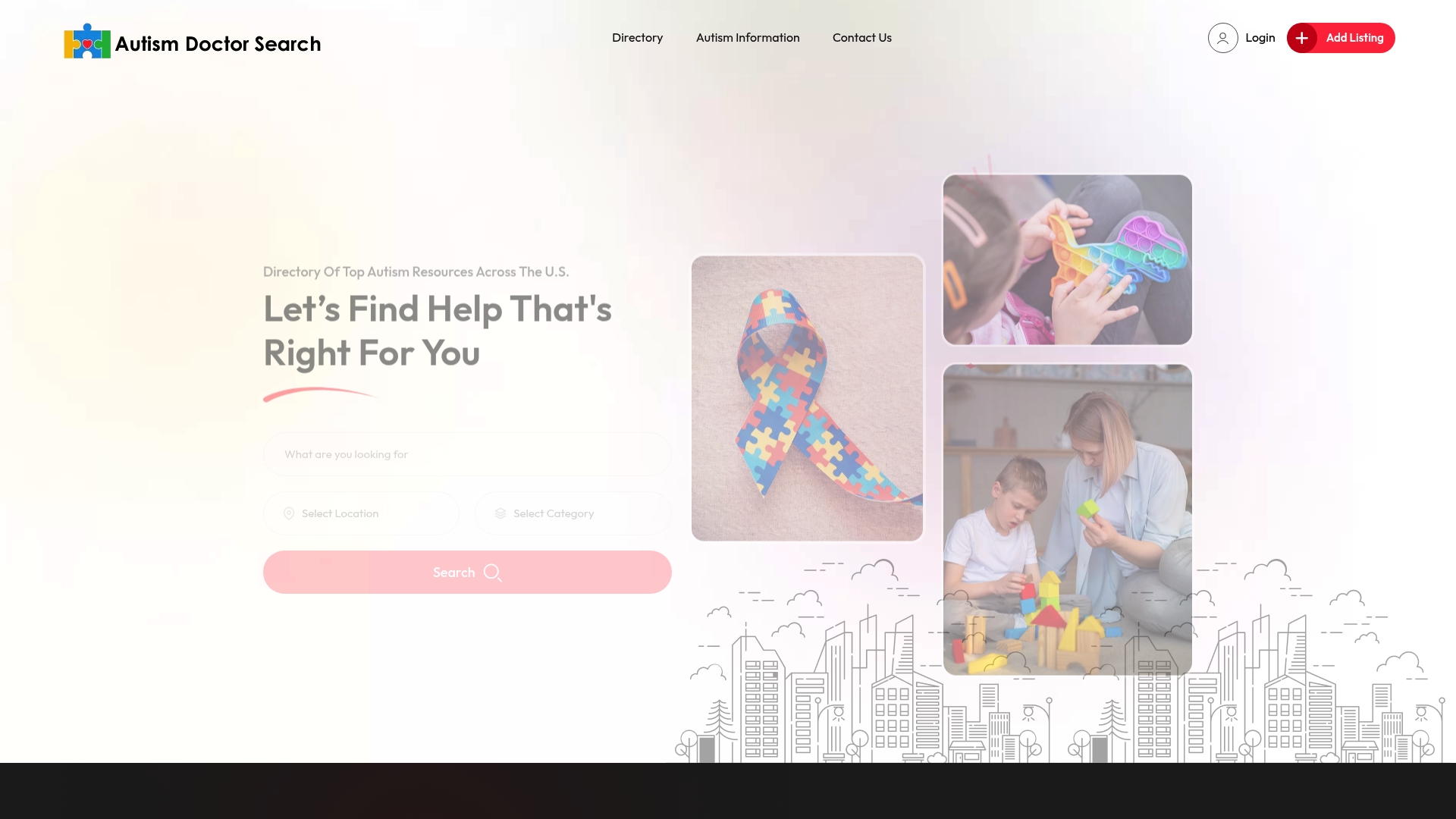
The vendor reports being trusted by more than 12,000 families worldwide, a notable reach for a U.S.-focused directory. Autism Doctor Search combines location-based search with vendor onboarding and community resources to help families find local autism services quickly.
Core Features
- Location-based search: Find providers by city, state, or distance from your address.
- Vendor onboarding and free listings: Service providers can create profiles and add offerings without upfront fees.
- Community support and information resources for caregivers and families.
- User accounts for adding, managing, and updating listings.
- Directory coverage across ABA therapy, medical centers, mental health, occupational therapy, child care, nonprofits, and special education schools.
Key Differentiator
A dedicated U.S.-focused autism service marketplace with active vendor onboarding and community support features sets this platform apart. The focus on local listings plus tools for providers to self-publish makes it more marketplace than simple directory.
Pros
-
Extensive U.S. coverage mapped to common family needs, so you can search for ABA therapy, occupational therapy, and special education schools in your state.
-
The search filters are straightforward, which shortens the time between search and contact; families report faster screening of local options compared with digging through general directories.
-
Free listing options lower the barrier for small providers and nonprofits to appear in results, increasing local choices for caregivers.
-
Community resources and support content give caregivers context when comparing services and asking providers the right questions.
-
Frequent updates and vendor-managed profiles reduce stale entries, so the directory tends to reflect recent openings and new providers.
Cons
- Limited to the United States; families seeking international or cross-border providers will need other sources.
Who It’s For
Parents and guardians hunting for local, reputable autism services will find this most useful. Service providers, nonprofits, and clinics that want to increase local visibility will also benefit from the low-friction onboarding and listing tools.
Unique Value Proposition
Free vendor onboarding and visible location search mean small local providers can appear in front of families without a big marketing budget. That gives families more relevant, nearby options and lets grassroots clinics and therapists build local awareness rapidly.
Real World Use Case
A parent in Georgia uses the location filter to find ABA therapy providers within a 20-mile radius, reads provider profiles, and messages two clinics directly from the platform. Later the parent returns to add a support note and to search for occupational therapy near the same ZIP code.
Pricing
Browsing the directory is free for families. The vendor model offers paid plans for providers starting at $39 per month, with annual options up to $400 per year for features such as featured listings and top placement.
Website: https://autismdoctorsearch.com
Living on the Spectrum
At a Glance
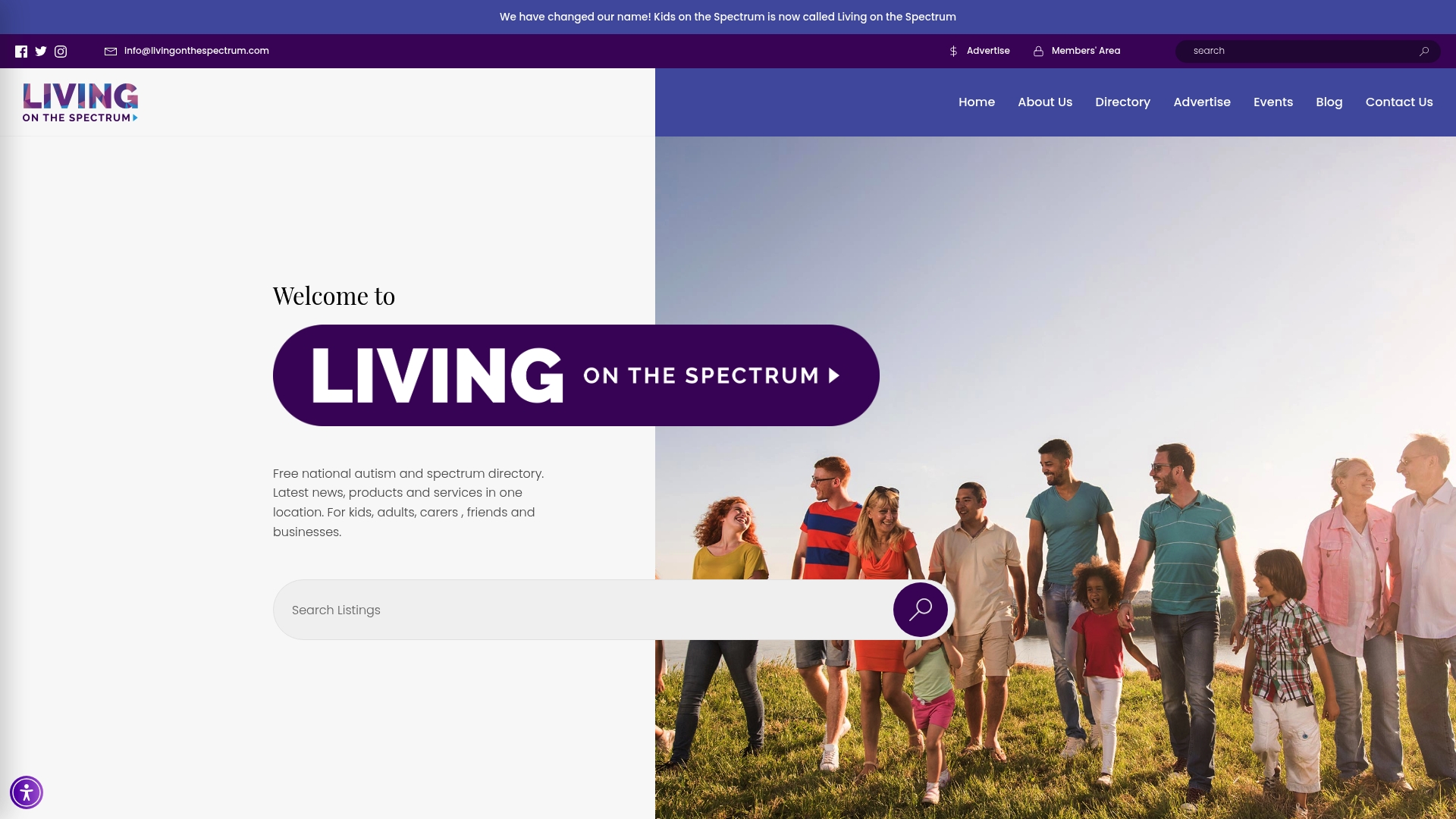
Partners with Carer Gateway and Amaze to route families and caregivers to practical supports and national helplines, a concrete signal of networked local reach. The site collects news, event listings, and resource pages aimed at Australian autistic people and their families.
Core Features
An extensive autism and neurodiversity directory lists services, clinics, and community groups by region so you can find local supports without sifting through multiple sites. The platform also publishes news articles, event calendars, and educational guides tailored to parents, educators, and clinicians.
There are community stories and campaign pages that promote inclusion and awareness, plus curated links to partner organizations and helplines for immediate support.
Key Differentiator
Australia-specific curation is the central distinction. Living on the Spectrum focuses its listings, partnerships, and editorial content on Australian services and policy, making it a single place to search for country-relevant supports and advocacy updates rather than a global directory.
Pros
- Central hub for Australia. Aggregates local listings, support lines, and partner contacts so families spend less time hunting for regionally relevant help.
- Regularly updated editorial content. News and articles explain policy changes, campaign launches, and practical advice for caregivers and educators.
- Community engagement. Event listings and personal stories create opportunities to join local groups and in-person supports.
- Partnerships with known organizations reduce friction when contacting national services and helplines.
- Accessible design. The site is structured simply so users with varying digital literacy can find resources quickly.
Cons
- Limited user feedback. There are few public reviews or ratings on listed services, which makes judging local provider quality harder.
- Australia focus reduces usefulness for international readers seeking local supports outside the country.
- Not a commerce site. The platform does not sell products or operate as a direct service provider, so you still contact listed organizations independently.
When It May Not Fit
If you need verified provider reviews, appointment booking, or an international directory, this platform will feel incomplete. Teams seeking a marketplace that sells products or handles transactions will need a different solution since listings are informational only.
Who It’s For
Australian parents of newly diagnosed children, caregivers seeking helplines, educators looking for training links, and advocates tracking local campaigns will get the most from this resource. Small community groups and nonprofits can also use it to advertise events.
Real World Use Case
A parent of a newly diagnosed child uses the site to find a regional support group, registers for an upcoming community workshop, and calls a listed helpline for next-step advice. They subscribe to updates and follow partner pages to stay current on local services.
Pricing
Free access to the directory, news, and community resources. There is no paid subscription tier and no direct product sales on the site.
Website: https://livingonthespectrum.com
The Neurodiversity Directory
At a Glance
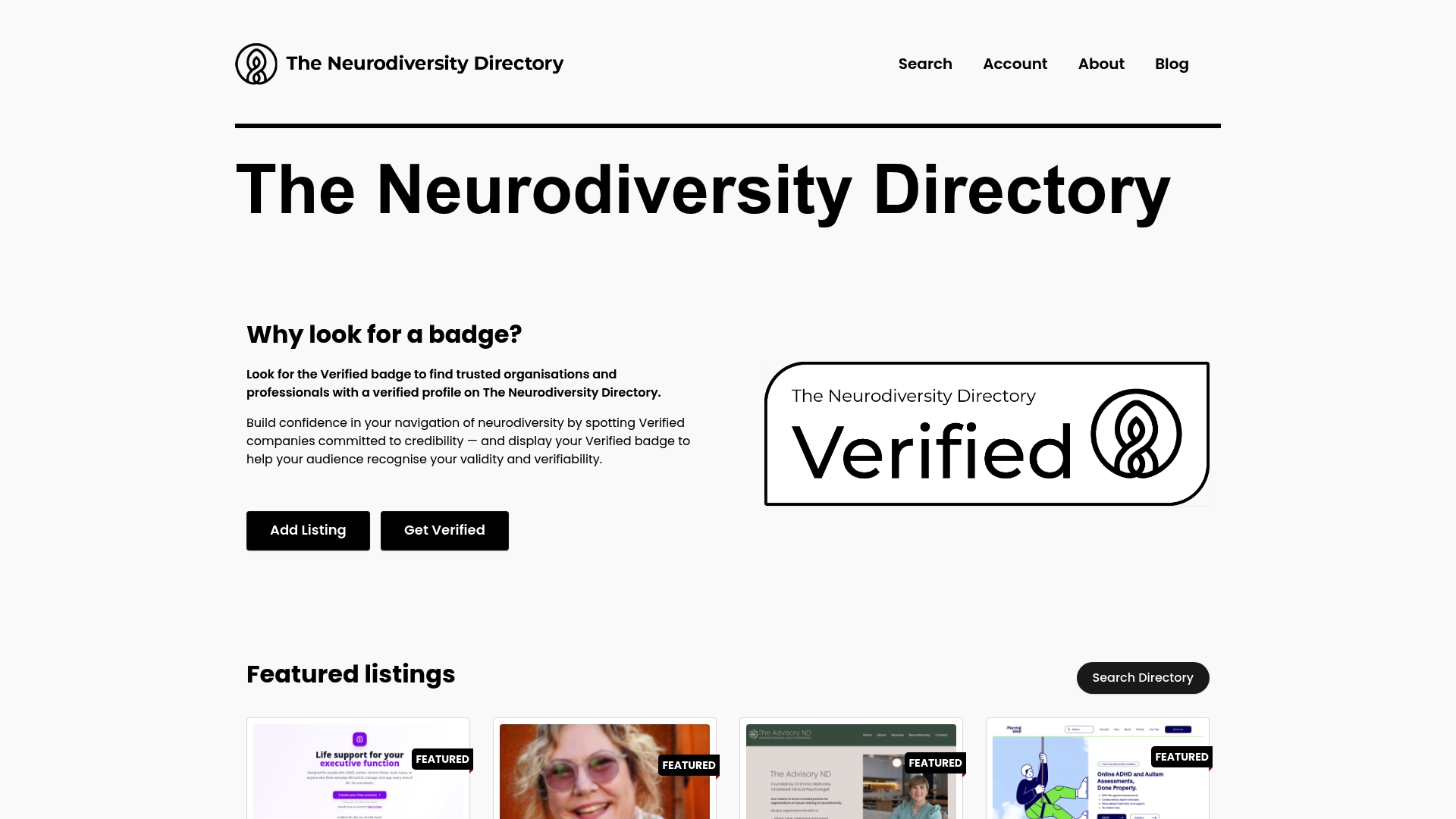
Launched in January 2025, The Neurodiversity Directory runs a verified badge system that marks listings vetted by community contributors. The platform is free to use and aims to centralize global neurodiversity resources into a single searchable hub.
Core Features
The directory publishes verified listings across healthcare, education, workplace supports, and community services. It allows individuals, professionals, and organizations to create or claim listings without a paywall.
Resource hubs collect guides, glossaries, and statistics to help you compare options quickly. Search and category filters narrow results, and the verified badge highlights listings the community has validated.
Key Differentiator
The Directory’s main angle is community-maintained credibility: listings are created and maintained by members of the neurodivergent community rather than only by commercial vendors. That approach shifts the emphasis from volume to trust signals when you are choosing a therapist, coach, or workplace consultant.
Pros
-
The verification process increases confidence when you contact a provider, reducing time spent chasing credentials.
-
Coverage spans clinical supports, special education resources, workplace accommodations, and consumer tools like apps and sensory toys.
-
Free access keeps the directory open to families, caregivers, and practitioners who cannot pay subscription fees.
-
Built with input from neurodivergent contributors, the listings reflect lived experience and practical relevance.
-
Centralizing scattered resources saves hours of searching across multiple sites and social feeds.
Cons
-
The platform lacks substantive third-party reviews, so external validation of listed services is limited.
-
Few user success stories or platform-level outcomes are published, which makes it hard to judge long-term effectiveness.
-
The breadth of categories can be overwhelming for first-time users searching for a single type of support.
-
The Directory focuses on discovery rather than matching; it does not replace professional assessment or direct service delivery.
When It May Not Fit
If you need personalized matching or an intake coach, this directory will feel incomplete because it does not provide direct referrals or tailored matches. If you rely on quoted user ratings or outcome metrics to select providers, that data is limited here.
If your priority is real-time booking or telehealth delivery inside the same platform, look elsewhere. The Directory is about discovery and verification, not in-platform treatment.
Who It’s For
Families, caregivers, neurodivergent individuals, and educators who want a trusted starting point for local or remote supports will find value. Practitioners and small organizations benefit from a low-friction listing option to reach people actively searching for credible services.
Real World Use Case
A parent in the UK creates a free account, filters for speech therapy and sensory integration, and uses the verified badge to shortlist three local practitioners. They contact providers directly to schedule assessments, feeling more confident about credentials and professional standing.
Pricing
Free to access and use. Listing creation and claiming are free; the vendor does not advertise subscription tiers or premium features in the product data.
Website: https://neurodiversity.directory
Autism Services Locator
At a Glance
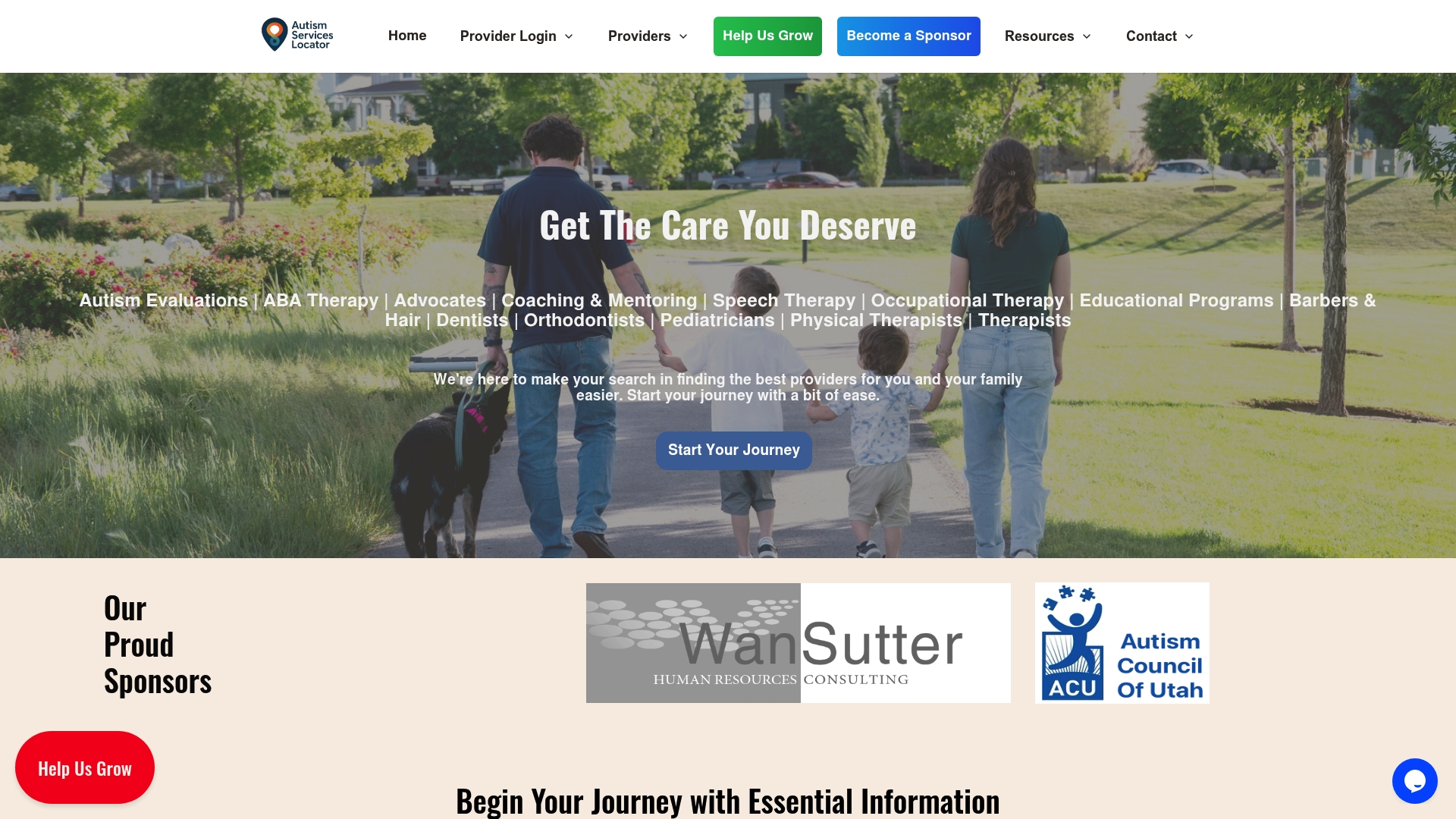
Founded by Jordan Williamson, a parent of children with ASD, the directory launched with a Utah focus and reports plans to expand nationally. I tested its search and resource flow; the site makes local provider discovery noticeably faster than chasing individual clinic pages.
Core Features
-
Provider directory with filters by service type and location so you can target ABA, speech, occupational, or specialty services near you.
-
Screening tools and informational content for caregivers to prepare questions before appointments and to track developmental concerns.
-
Community engagement options including donations, sponsorships, and outreach listings that help local programs get visibility.
-
Direct contact links and downloadable educational materials for families and providers to share or print.
Key Differentiator
The platform is explicitly parent created and run. That perspective shows in listing choices, plain-language descriptions, and outreach aimed at families rather than administrators. That parent perspective sharpens how services are categorized and how community support is presented.
Pros
-
Navigation is family focused. Menus use plain language and the search returns relevant matches quickly, which reduces time spent on phone trees.
-
The nonprofit funding model keeps basic access free for families. That lowers friction for caregivers who are already managing appointments and therapies.
-
The directory covers uncommon categories such as specialist dentistry and sensory-aware hair care, which I found useful when building a full support plan.
-
Providers can claim visibility quickly. Small clinics and independent therapists get a low-effort way to appear in local searches.
-
Educational content and screening links let caregivers gather information and bring better questions to consultations.
Cons
-
The current scope is regional. Expansion is planned but until listings grow beyond Utah some family searches will come up short.
-
It is a directory only. Users must contact providers directly for appointments and billing, so the platform does not replace referral or booking systems.
-
Listing accuracy depends on provider updates. I encountered a few outdated phone numbers during testing, which required cross checking.
-
Limited third-party reviews or user testimonials are visible, so vetting a provider still takes extra legwork.
When It May Not Fit
If you need nationwide coverage right now, this is not the right single-source tool. If your workflow requires integrated booking, billing, or direct telehealth access, the directory will be a partial solution and you will need additional platforms.
Who It’s For
Parents, guardians, and caregivers who are starting a search for local autism services and want a family-friendly, searchable directory. Also useful for small providers and community organizations aiming to increase local visibility without a large marketing budget.
Real World Use Case
I followed a Utah family through the site as they sought ABA evaluations. They used the screening material, filtered for providers within a 30 minute drive, and contacted three clinics by phone using links provided. The platform reduced time spent finding relevant candidates.
Pricing
Free for families. The site stays platform-funded through sponsorships and donations, and providers can purchase optional sponsorship plans starting at $25 per month to increase visibility.
Website: https://autismserviceslocator.com
National Autism Resources
At a Glance
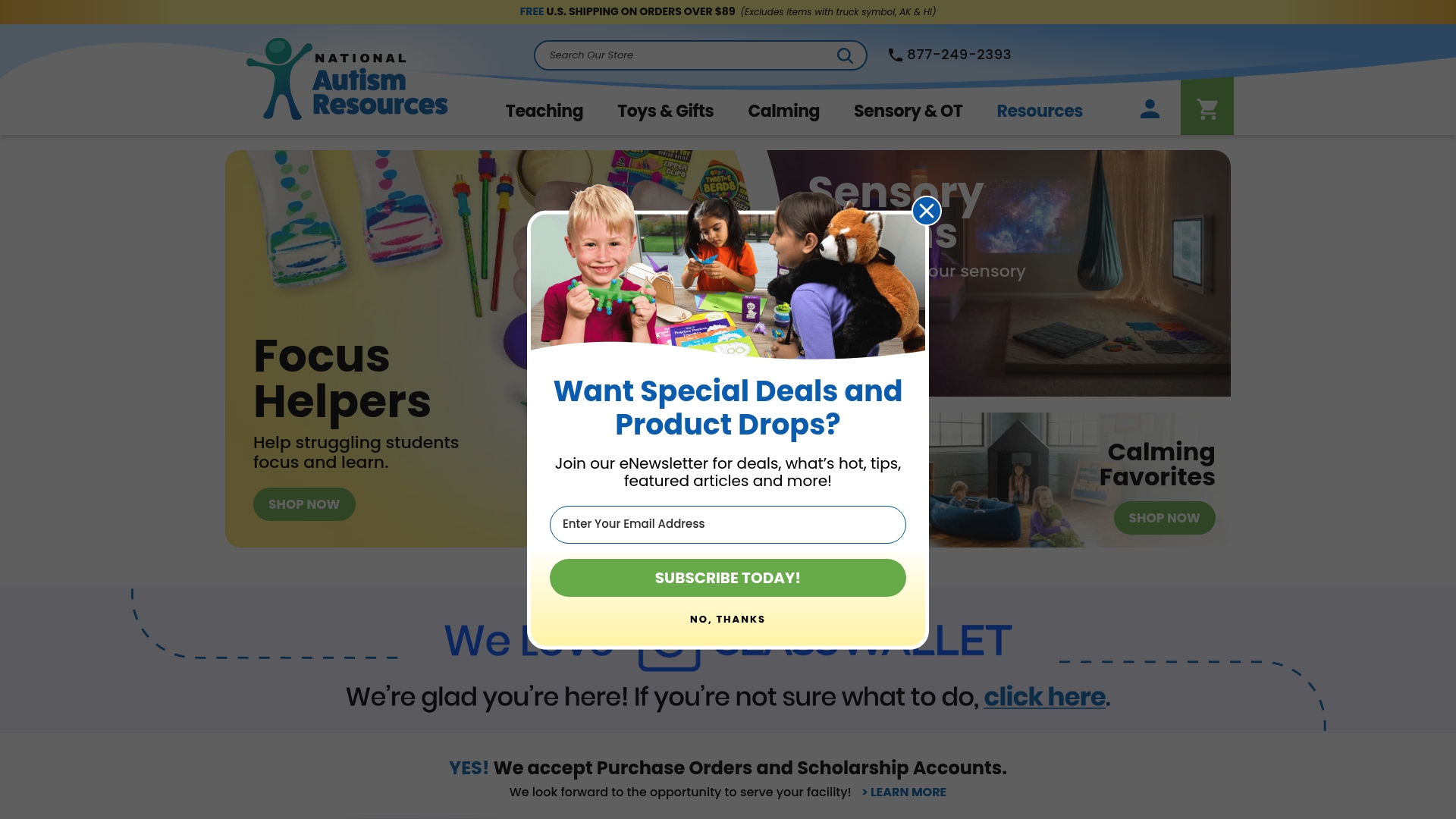
Accepts purchase orders and scholarship accounts, which makes ordering for schools and clinics straightforward without forcing staff to pay out of pocket. The company emphasizes evidence informed products and works with an advisory board that includes educators, therapists, and adults on the spectrum.
Core Features
- Sensory and therapeutic products across a wide range of needs and ages, from handheld fidgets to room scale calming solutions.
- Purchase orders and scholarships accepted, plus options for bulk institutional buying and school accounts.
- Educational resources and guides aimed at caregivers, teachers, and therapists to explain product use and sensory strategies.
- A broad catalog that segments items by age, sensory profile, and classroom versus home use.
Key Differentiator
The focus is narrow and community oriented: a curated catalog of products chosen with input from practitioners and adults on the spectrum. That professional input shapes product selection and the how to use materials that accompany many items, positioning the store as more advisory than a generic toy supplier.
Pros
- Specialized curation means you spend less time guessing which tools work for sensory modulation and more time implementing them in sessions.
- The educational guides translate product features into classroom or home routines, helping caregivers use items with intention rather than trial and error.
- Accepting purchase orders and scholarship accounts lowers administrative friction for schools and nonprofit programs that operate on tight budgets.
- Free U.S. shipping on orders over $89 reduces total cost for larger classroom or sensory room purchases.
- Visible commitment to community employment and funding initiatives makes purchases feel mission aligned for some buyers.
Cons
- Limited independent reviews are available, so you may have to rely on product descriptions and the site’s curated recommendations rather than broad customer feedback.
- Shipping and service are primarily U.S. focused, which creates friction for international buyers or U.S. territories like Alaska and Hawaii for some items.
- Individual product prices are not always presented transparently on the storefront, complicating budget planning for smaller purchases.
When It May Not Fit
If you need international shipping or predictable landed costs, this vendor’s U.S. focus and shipping exclusions create headaches. If you require broad independent customer ratings before purchasing, the limited third party feedback here will slow procurement decisions. Also, low cost single item shopping may feel opaque when prices are not listed.
Who It’s For
Parents, special education teachers, occupational therapists, and school procurement staff who want curated, evidence informed sensory tools and classroom supports. It also fits organizations that require purchase orders or scholarship funding to buy supplies.
Real World Use Case
A primary school special education teacher outfits a sensory corner using weighted lap pads, visual schedules, and calming lights from the catalog. The included guides help the teacher set protocols for use during transitions and track which tools reduce overstimulation for specific students.
Pricing
Most individual items range from $20 to $200, with a subset of specialized products priced higher. The site advertises free U.S. shipping on orders over $89 and notes potential discounts for bulk or institutional purchases.
Website: https://nationalautismresources.com
Comparative Analysis: Autism Service Directories
When choosing among autism service directories, each platform’s relevance, features, and regional focus play a crucial role in defining its utility for different user scenarios.
Regional Scope and Coverage
Autism Doctor Search prioritizes United States families by offering a directory of local autism-related services. Supporting a broad range of categories, including medical and educational services, it ensures extensive accessibility tailored to caregivers’ immediate geographic needs. Conversely, Living on the Spectrum focuses exclusively on Australian families, complementing its service listings with local news and policy changes. For a broader audience, The Neurodiversity Directory provides a global reach, although it emphasizes breadth over geographical specificity.
User-Content Interaction Methods
Service verifiability sets The Neurodiversity Directory apart with its community-contributed verified badges, promoting confidence in service listings. Autism Services Locator excels in intuitive navigation and educational materials designed for caregivers embarking on initial searches, while also emphasizing family accessibility. Autism Doctor Search integrates localized search capabilities with provider-managed profiles, facilitating up-to-date and relevant listings.
Best Fit Recommendations
- For families planning on initiating and prompt searches for services within the U.S., Autism Doctor Search offers an extensive and manageably localized solution.
- If you are based in Australia and require access to service listings aligned with country-specific policies and advocacy, Living on the Spectrum is an effective resource.
- Users looking for global resources validated by community input should consider The Neurodiversity Directory, benefiting from its verification system and wide-ranging listings.
- Someone seeking family-focused navigation and resources for initially understanding diagnosis and screening may find Autism Services Locator particularly accommodating.
Our Pick: Autism Doctor Search
Combining vendor-managed profiles, location-based searches, and family-focused content, Autism Doctor Search effectively supports caregivers navigating localized autism resources. However, those requiring international coverage or region-specific insights may find The Neurodiversity Directory or Living on the Spectrum a more suitable choice.
Autism Service Directories Compared
Deciding on the best autism service directory involves considering each platform’s geographical scope, community relevance, and accessibility.
| Platform | Core Features | Key Differentiator | Best For | Pricing | Notable Limitation |
|---|---|---|---|---|---|
| Autismdoctorsearch | Location-based search, vendor onboarding, community resources | U.S.-focused platform with active vendor input | U.S. families seeking local autism services | Free browsing; Paid plans start at $39/month | Limited to United States coverage |
| Living on the Spectrum | Region-specific directory, event listings, community stories | Australia-centric resources and advocacy | Australian families and caregivers | Free to access | Focus is limited to Australia |
| The Neurodiversity Directory | Verified badges on listings, guides, and glossaries | Community-peer maintained listing verification | Families needing global, verified services | Free to use | Offers broad, overwhelming category coverage |
| Autism Services Locator | Provider directory, screening tools, community engagement | Parent-created platform for accessible search | U.S. families in start of local support search | Free for families; Optional ads from $25/month | Current listings focus solely on the Utah area |
| National Autism Resources | Curated sensory products, educational resources, bulk purchase options | Evidence-informed product catalog coupled with guides | Educators, therapists buying classroom aids | Most items range $20–$200; Free shipping over $89 | Focuses services and shipping within the U.S. |
Find Trusted Local Autism Resources with Autismdoctorsearch
Searching for reliable alternatives to autismalignment.com can feel overwhelming when you need timely access to quality support for your family. Autismdoctorsearch offers a dedicated U.S.-focused directory that connects you directly with local providers in categories like ABA therapy, occupational therapy, medical clinics, and special education schools. This platform helps reduce the frustration of sifting through generic listings by focusing on community-vetted, up-to-date information that families trust.
Explore comprehensive listings and free provider profiles at Autismdoctorsearch. Take control of your search now by filtering providers near you, reading detailed service descriptions, and contacting clinics directly. Don’t wait—visit the directory today and find autism services tailored to your family’s needs with confidence.
Frequently Asked Questions
What features make Autismdoctorsearch a suitable choice for finding local autism services?
Autismdoctorsearch offers a location-based search feature that allows families to find providers by city, state, or distance from their address. This capability is essential for parents and guardians looking for nearby autism services, as it maps extensive U.S. coverage to common family needs such as ABA therapy and special education schools.
How does Autismdoctorsearch’s vendor onboarding process compare to Living on the Spectrum?
Living on the Spectrum focuses specifically on Australian services, providing an extensive autism directory tailored to local needs. In contrast, Autismdoctorsearch offers a broader U.S.-based marketplace with active vendor onboarding for service providers, allowing them to create profiles and listings at no initial cost, making it ideal for small providers in the U.S.
Which platform offers a more extensive array of autism service listings?
Autismdoctorsearch provides extensive U.S. coverage across various service types including ABA therapy, occupational therapy, and mental health services. This is particularly beneficial for families seeking a quick and comprehensive selection of local autism services without sifting through general directories.
Can Autismdoctorsearch help if I’m looking for community resources and support?
Autismdoctorsearch not only offers a directory of providers but also features community support and information resources for caregivers and families. This means users can access useful content to help them in comparing services and preparing questions for potential providers.
What pricing options does Autismdoctorsearch provide for service providers?
Service providers can create free listings on Autismdoctorsearch, with paid plans starting at $39 per month. This allows small providers access to a marketplace without a significant financial commitment, increasing local options for families seeking autism services.