TL;DR:
- Respite care offers temporary relief to primary caregivers of children with autism, reducing burnout and enhancing caregiving quality. Evidence indicates it significantly improves caregiver physical, emotional, and social health, especially when planned and integrated with other supports. Access involves early application and provider qualification, with strategic, scheduled use leading to the best long-term outcomes.
Respite care for autism is defined as short-term, temporary relief provided to primary caregivers of children with autism spectrum disorder (ASD), giving them scheduled breaks that protect their physical and emotional health. The broader clinical term is “caregiver respite,” and it covers everything from a few hours of in-home support to multi-day facility-based stays. Organizations including the National Institutes of Health and Autism Speaks recognize the role of respite care in autism caregiving as critical, not optional. Without structured breaks, caregiver burnout accelerates, and the quality of care a child receives declines alongside it.
What benefits does respite care provide for caregivers of children with autism?
Respite care delivers measurable, evidence-backed improvements in caregiver well-being. A meta-analysis of five studies found that respite care programs produce a significant moderate effect on caregiver quality of life, with a standardized mean difference of 0.45. That effect size is comparable to what parent training programs achieve, meaning respite care belongs in the same tier of evidence-supported interventions.
The benefits extend across three distinct dimensions of caregiver health:
- Physical health: Regular breaks reduce the physical toll of 24/7 caregiving, including sleep deprivation and chronic fatigue.
- Emotional health: Respite care reduces caregiver stress, anxiety, and depression by creating space for mental recovery.
- Social health: Time away from caregiving duties allows parents to maintain friendships, romantic relationships, and connections with other children in the family.
Group-based respite programs show particularly strong results. A study published in ScienceDirect found that 94% of participants showed measurable stress reduction following a group respite intervention. That figure reflects how powerful structured, community-based breaks can be when designed specifically for caregivers of children with special needs.
“Respite care is not a luxury for caregivers. It is a clinical support that directly affects the sustainability of the care a child with autism receives at home.”
The family dynamics in autism care also improve when caregivers receive consistent respite. Parents who take regular breaks report more patience, more positive interactions with their child, and a stronger sense of competence in their caregiving role.
What types of autism respite care programs exist?
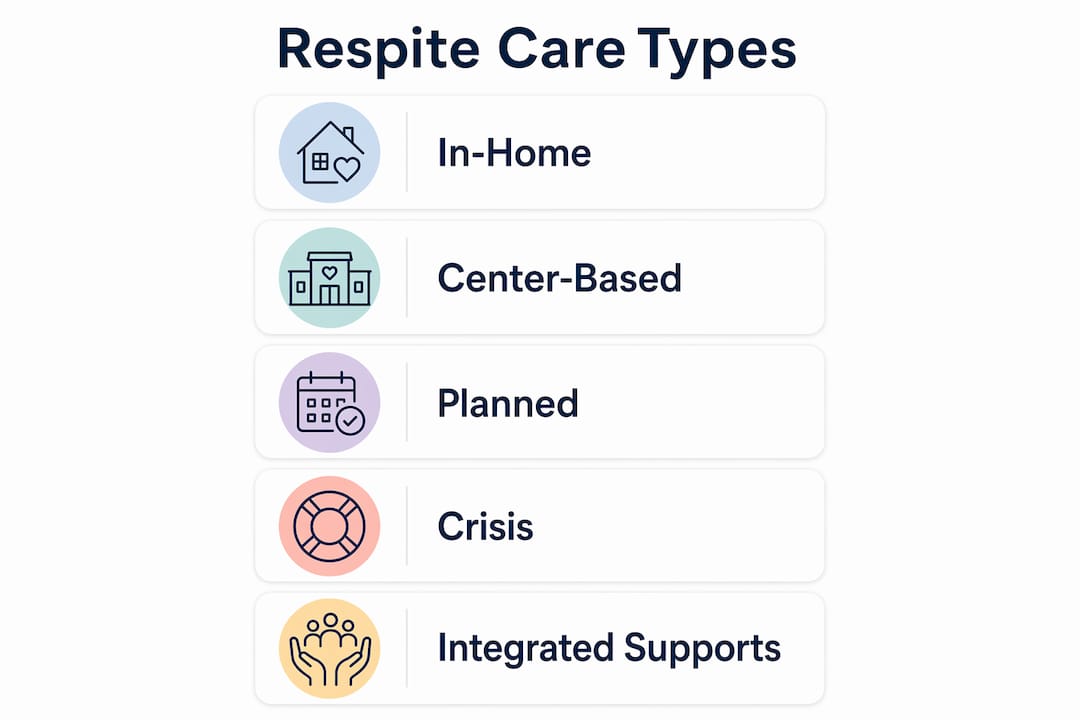

Respite care is not a single service. It spans a spectrum of delivery models, and choosing the right one depends on your child’s needs, your schedule, and your funding source.
| Respite type | Description | Best for |
|---|---|---|
| In-home planned respite | A trained provider comes to your home on a scheduled basis | Families needing routine, predictable breaks |
| Facility-based respite | Child stays at a licensed care center for hours or overnight | Parents needing extended time away |
| Group respite | Multiple families share a supervised care session | Social skill building and cost sharing |
| Crisis respite | Emergency short-term care during a family crisis | Unexpected hospitalizations or emergencies |
The ARCH National Respite Network distinguishes planned versus crisis respite as fundamentally different services with different administration structures and eligibility criteria. Planned respite is proactive and scheduled. Crisis respite is reactive and triggered by an acute family emergency. Families who rely only on crisis respite tend to experience worse outcomes because they never get ahead of burnout.
Respite care also frequently overlaps with other autism supports. Many programs bundle behavioral support, coaching, or therapeutic activities into respite hours. This is worth understanding clearly, because the multi-component nature of respite makes it difficult to isolate which element is driving the benefit. When you interview a provider, ask specifically what happens during the respite hours and whether any behavioral or therapeutic support is included.
Pro Tip: Ask every prospective respite provider for a written breakdown of activities and supports included during care hours. This helps you compare programs accurately and ensures your child receives consistent behavioral support.
Combining respite with parent training for autism has shown stronger outcomes than either intervention alone. If you are already enrolled in a parent training program, look for respite providers who coordinate with your existing care team.
What challenges do families face when accessing respite care?
Respite care is a benefit, not an entitlement. That distinction matters because it means access depends on eligibility, program capacity, and available funding, none of which are guaranteed.
Here is a practical sequence for navigating the access process:
- Get a formal diagnosis documented. Most public respite programs require an official ASD diagnosis from a licensed clinician before you can apply.
- Identify your funding source. Medicaid Home and Community-Based Services (HCBS) waivers are the most common public funding stream for respite care. Military families enrolled in the Exceptional Family Member Program (EFMP) can access EFMP respite benefits through Military OneSource, which include in-home respite hours with eligibility tied to service branch rules.
- Prepare your documentation. Bring your child’s diagnosis records, current care plan, and any prior authorization letters from your insurer or Medicaid case manager.
- Apply early and expect a wait. ARCH’s research confirms that access to respite care varies widely by region, funding availability, and workforce capacity. Waitlists of six to twelve months are common in many states.
- Ask about private pay and nonprofit options. Some families supplement public funding with private providers or nonprofit organizations while waiting for a funded slot to open.
Regional variation is a real barrier. A family in a well-funded urban area may access in-home respite within weeks. A rural family may wait over a year for the same service. Advocating for equal coverage access is part of the broader fight to make respite care equitable across all communities.
Pro Tip: Contact your state’s Lifespan Respite Program coordinator. Every state that receives federal Lifespan Respite Care Act funding has a designated coordinator who can map available programs and help you navigate the application process faster.
How can caregivers get the most out of respite care?
Using respite care well is a skill. Families who treat it as a passive service tend to underuse it. Families who plan it strategically see the strongest results.
- Schedule respite before you need it. Proactive scheduling prevents the crisis cycle. Book recurring respite sessions the same way you would a therapy appointment, not as a last resort.
- Use the time intentionally. Sleep, exercise, medical appointments, and time with a partner or friends all count as recovery. Spending respite hours on household tasks alone does not restore the mental energy caregiving depletes.
- Maintain a communication log. Share your child’s current behavioral patterns, sensory triggers, and daily routines with every respite provider in writing. Consistency between home and respite settings reduces your child’s anxiety and improves their behavior during care.
- Combine respite with caregiver mental health support. Tools like AI-assisted stress management can complement the breaks respite provides, especially during high-stress periods between scheduled sessions.
- Evaluate providers regularly. Provider quality directly affects outcomes. Ask for feedback from your child after sessions, watch for behavioral changes, and do not hesitate to switch providers if the fit is poor.
The research is clear that provider qualifications and integrated support during respite hours determine how much benefit families actually receive. A provider who simply supervises your child offers less than one who incorporates structured activities or behavioral reinforcement strategies.
Key takeaways
Respite care is a clinically supported intervention that reduces caregiver burnout and sustains the quality of autism caregiving at home, with the strongest outcomes achieved through planned, provider-qualified, and strategically scheduled programs.
| Point | Details |
|---|---|
| Respite improves caregiver quality of life | Meta-analysis shows effects comparable to parent training, with a moderate effect size. |
| Planned respite outperforms crisis respite | Proactive scheduling prevents burnout; crisis respite only addresses emergencies after they occur. |
| Access requires preparation | Families need documented diagnoses, care plans, and early applications to navigate waitlists. |
| Provider quality determines outcomes | Ask what support is included during respite hours; behavioral integration matters. |
| Combining supports amplifies benefits | Pairing respite with parent training produces stronger results than either approach alone. |
Why respite care deserves more respect than it gets
I have spent years reviewing research on autism caregiving, and one pattern stands out: respite care is consistently undervalued by the families who need it most. Parents tell themselves they should be able to manage. They feel guilty handing their child to someone else. They wait until they are completely depleted before asking for help.
That thinking is the problem. Respite care is not a sign that you are struggling. It is a sign that you understand how sustainable caregiving actually works. The data backs this up. A 94% stress reduction rate in group respite participants is not a marginal finding. It is a strong signal that structured breaks work.
What I find most underappreciated is the combination effect. Respite paired with parent training does not just add benefits. It multiplies them. If you are already doing one, adding the other is the highest-return move available to most families. Yet most caregivers treat these as separate programs rather than a coordinated system.
My honest recommendation: stop waiting for a crisis to justify using respite care. Schedule it now, use the time for genuine recovery, and treat it as a non-negotiable part of your caregiving plan. Your child’s long-term outcomes depend on your sustained capacity to care for them. That capacity has limits, and respite care is how you protect them.
— Keith
Find autism respite and therapy services near you
Autismdoctorsearch maintains one of the most current directories of autism resources in the country, built specifically for families navigating the complexity of autism care. Whether you are searching for in-home respite providers, ABA therapy, occupational therapists, or mental health services, the platform connects you to vetted local providers without the guesswork. Browse the autism therapy services directory to find providers in your area who offer both therapeutic and respite support. For families exploring ABA therapy alongside respite care, the Missing Piece ABA Therapy listing is a strong starting point. Your next step is one search away.
FAQ
What is the role of respite care in autism caregiving?
Respite care provides short-term relief for primary caregivers of children with autism, giving them scheduled breaks that reduce stress, prevent burnout, and improve overall caregiver quality of life. Research shows its effects on caregiver well-being are comparable to parent training programs.
How do I find autism respite care programs in my state?
Contact your state’s Lifespan Respite Program coordinator or apply through your Medicaid HCBS waiver program. Military families can access respite hours through the EFMP via Military OneSource.
Does respite care directly benefit the child with autism?
Respite care primarily targets caregiver well-being, but children benefit indirectly because a less stressed, more rested caregiver provides higher-quality, more consistent care at home.
What is the difference between planned and crisis respite?
Planned respite is scheduled proactively to prevent caregiver burnout, while crisis respite is emergency short-term care triggered by an acute family situation. The ARCH National Respite Network recommends prioritizing planned respite to avoid reaching crisis thresholds.
How often should caregivers use respite care?
There is no single standard, but research supports regular, recurring use rather than occasional or emergency-only use. Scheduling respite the same way you schedule therapy appointments produces the most consistent caregiver health benefits.