
Many families assume autism care responsibility rests mainly on parents’ shoulders. This belief overlooks the extended family contributions that shape outcomes and support quality. Cultural dynamics, sibling involvement, and collaborative care models all influence how effectively families navigate autism challenges. Understanding these diverse roles empowers you to build stronger support networks, reduce stress, and improve your child’s development. This guide explores how different family members contribute, which management styles work best, and how professional partnerships enhance family quality of life.
Table of Contents
- Key takeaways
- How different family members contribute to autism care
- Family management styles and their impact on autism outcomes
- Benefits of collaborative and family-centered autism interventions
- Enhancing family quality of life through parent training and resolving diagnosis
- Find supportive autism therapy services for your family
- FAQ
Key Takeaways
| Point | Details |
|---|---|
| Diverse family roles | Different relatives provide emotional, financial, instrumental, and informational support that shapes how autism care is organized and experienced. |
| Cultural influences | Cultural values and stigma influence which relatives engage in caregiving and which coping strategies families use. |
| Family management style | The four patterns of the Family Management Style Framework predict caregiver stress and overall well being based on how families balance autism tasks with daily life. |
| Collaborative care benefits | Collaborative care models reduce parenting stress and support better functioning by coordinating therapies with family input and professional guidance. |
How different family members contribute to autism care
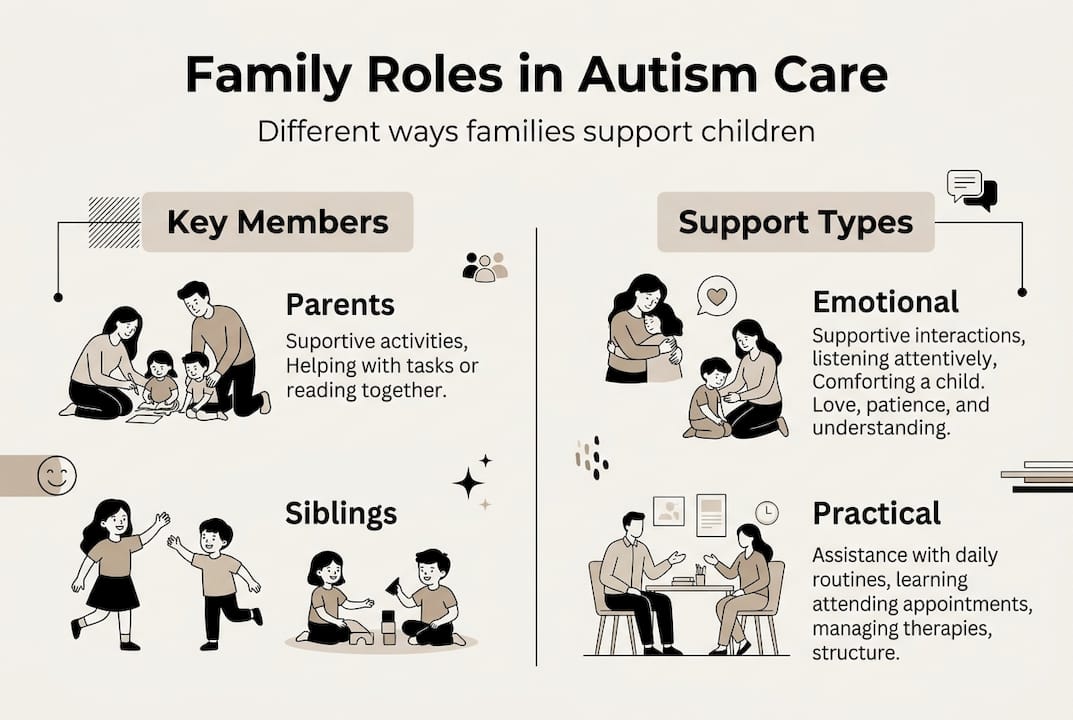
Parents typically serve as primary caregivers and decision makers, coordinating therapies and managing daily routines. They advocate for educational accommodations, research treatment options, and monitor developmental progress. This central role demands significant time, emotional energy, and financial resources.
Siblings often provide companionship and natural social interaction opportunities that complement formal interventions. They model age-appropriate behaviors, share play experiences, and offer emotional support through their unique peer relationship. However, siblings may also experience stress from reduced parental attention or family schedule disruptions.

Extended family members like grandparents, aunts, and uncles can provide emotional, financial, instrumental, and informational support but sometimes offer unhelpful guidance due to cultural stigma or misunderstandings about autism. Research shows cultural values significantly shape how families perceive autism and which coping strategies they employ. Some cultures view developmental differences through a medical lens, while others interpret them spiritually or socially. These perspectives influence whether extended family members embrace or distance themselves from caregiving roles.
Recognizing these distinct contributions helps you identify strengths within your family network. You can then strategically involve relatives who offer genuine support while gently educating those whose well-meaning advice conflicts with evidence-based approaches. This awareness also helps you support autism communication difficulties by coordinating consistent strategies across all family interactions.
Pro Tip: Create a simple one-page summary of your child’s strengths, challenges, and current intervention goals to share with extended family. This document reduces repetitive explanations and ensures everyone understands how to provide consistent support.
Key support types from extended family:
- Emotional support through active listening and validation of parenting challenges
- Financial assistance with therapy costs, specialized equipment, or respite care
- Instrumental help like transportation, meal preparation, or childcare for siblings
- Informational resources from their own research or professional networks
Family management styles and their impact on autism outcomes
The Family Management Style Framework identifies four patterns that families adopt when managing autism care. These styles range from thriving (family-focused with balanced integration) to struggling (condition-focused with limited coping resources). Your family’s style influences stress levels, quality of life, and how effectively you implement interventions.
Child behaviors significantly shape which management style emerges. Aggression, self-injury, sleep disturbances, and sensory sensitivities increase caregiver burden and push families toward more reactive, condition-focused approaches. Conversely, children with fewer challenging behaviors allow families to maintain broader focus on overall family wellness alongside autism management.
Social support quality matters tremendously. Strong networks of understanding friends, supportive relatives, and responsive professionals help families shift toward thriving, family-focused styles. This support buffers stress and provides practical assistance that prevents caregiver burnout. Employment stability and lower parental depression also correlate with higher family quality of life scores.
Identifying your current management style creates self-awareness that guides intervention choices. Families using accommodative styles (accepting the condition but struggling with daily management) benefit from structured parent training. Those in struggling patterns need intensive support services and respite care before they can engage effectively in child-focused interventions. Understanding these dynamics helps you advocate for appropriate resources that match your family’s actual capacity.
Pro Tip: Assess your family’s management style quarterly by rating stress levels, social support adequacy, and how well daily routines accommodate your child’s needs. Track changes over time to identify when you need additional professional support or when current strategies are working well.
| Management Style | Characteristics | Associated Outcomes |
|---|---|---|
| Thriving | Balanced family and condition focus, strong support networks | Highest family quality of life, effective intervention implementation |
| Accommodative | Accepts condition but struggles with daily management | Moderate stress, benefits from structured parent training |
| Enduring | Focuses primarily on condition management | Higher caregiver burden, needs respite and support services |
| Struggling | Limited coping resources, minimal support | Highest stress levels, requires intensive intervention before child-focused work |
Recognizing how employment status, depression, and social connections influence your management style empowers you to address root causes rather than just symptoms. This approach creates sustainable improvements in both child outcomes and family wellness. Consider connecting with non-profit autism support organizations that offer peer networks and practical resources aligned with your family’s needs.
Benefits of collaborative and family-centered autism interventions
Research demonstrates that collaborative interventions improve ASD symptoms while simultaneously reducing parenting stress and enhancing family functioning. Hospital-family collaborative Discrete Trial Teaching shows statistically significant improvements in young children’s core autism symptoms compared to standard care approaches. These gains occur because families learn to implement evidence-based strategies consistently across home, school, and community settings.
Family-centered and transdisciplinary care models improve outcomes across ages 2 through 16 by coordinating multiple professionals who communicate regularly with families. Instead of receiving fragmented services from speech therapists, occupational therapists, and behavioral specialists who rarely interact, families work with integrated teams that share goals and strategies. This coordination eliminates conflicting advice and ensures everyone reinforces the same skills.
Parental stress reduction emerges as a crucial benefit of collaborative approaches. When professionals actively involve you in treatment planning and skill-building, you gain confidence and competence. This empowerment reduces the anxiety that comes from feeling like a passive observer in your child’s care. You become an effective intervention agent rather than just a coordinator of services.
Increased family involvement correlates with greater gains in child functioning and behavior across multiple domains. Children whose families participate actively in therapy sessions generalize skills more quickly and maintain progress better than those whose families remain uninvolved. This pattern holds across different intervention types and autism severity levels.
| Intervention Model | Key Features | Documented Benefits |
|---|---|---|
| Hospital-Family Collaborative DTT | Parents trained in discrete trial methods, regular coaching sessions | Significant improvements in core symptoms, reduced parenting stress |
| Transdisciplinary Family-Centered | Integrated team, shared goals, family as equal partner | Better child outcomes, reduced support needs, improved family functioning |
| Parent-Mediated Intervention | Parents deliver therapy with professional coaching | Skill generalization, cost-effective, sustainable progress |
Strategies to maximize collaborative intervention benefits:
- Request regular coaching sessions where professionals observe and guide your implementation of techniques
- Ask for written summaries of goals and strategies so all family members can provide consistent support
- Participate in team meetings to share observations about what works at home
- Practice new skills during therapy sessions before implementing them independently
Understanding these intervention types helps you advocate for inclusive care that respects your expertise about your child while leveraging professional knowledge. Explore autism therapy services that explicitly incorporate family training and collaborative models into their treatment approach.
Enhancing family quality of life through parent training and resolving diagnosis
Strong family-professional partnerships enhance training effectiveness and correlate with higher Family Quality of Life scores. When professionals respect your cultural values, communication preferences, and family priorities, training becomes more relevant and applicable. Generic programs that ignore family context often fail because strategies don’t fit your daily routines or conflict with your parenting philosophy.
Parent education delivers greatest impact when it addresses your specific challenges rather than covering broad autism information you already know. Training focused on managing your child’s particular behaviors, supporting their unique communication style, or navigating your local school system proves more valuable than general autism awareness content. This targeted approach builds competence where you need it most.
Parental acceptance or resolution of the diagnosis reduces stress and caregiving burden while improving parent-child relationships. Resolution doesn’t mean you stop wishing things were different or never feel grief. It means you’ve processed the diagnosis emotionally and can focus energy on supporting your child rather than fighting reality. This psychological shift dramatically improves your emotional availability and the quality of interactions with your child.
Improved emotional availability supports parent-child bonding and helps you read your child’s cues more accurately. When you’re not consumed by denial, anger, or overwhelming sadness, you notice subtle communication attempts and respond more sensitively. This responsiveness builds your child’s trust and encourages further communication efforts.
Recognizing that parents often travel divergent emotional journeys helps tailor support appropriately. One parent may reach acceptance quickly while the other struggles for years. These different timelines don’t indicate one parent cares more. They reflect individual coping styles, prior experiences, and support system differences. Acknowledging this reality prevents judgment and allows each parent to access support matching their current needs.
Elements of effective parent training programs:
- Culturally responsive content that respects family values and communication styles
- Practical skill-building focused on your child’s specific challenges
- Ongoing coaching and feedback rather than one-time workshops
- Peer support opportunities to reduce isolation and share strategies
- Flexible delivery formats accommodating work schedules and childcare constraints
Connect with a center for children with special needs autism that offers comprehensive parent training alongside direct child services. This integrated approach ensures consistency between what professionals do during therapy and what you implement at home.
Find supportive autism therapy services for your family
Now that you understand how family involvement shapes autism care outcomes, connecting with providers who value your participation becomes essential. Autism Doctor Search Directory lists autism therapy services specializing in family-inclusive care models that actively train and support caregivers alongside direct child interventions.
Our directory includes ABA therapy services that incorporate parent coaching, autism therapeutics providers offering family-centered approaches, and centers emphasizing collaborative care. These professionals recognize that your expertise about your child combined with their clinical knowledge creates the most effective intervention strategies. Search by location to find providers near you who share this family-partnership philosophy and can help you implement the evidence-based strategies discussed throughout this guide.
FAQ
What is the role of extended family in supporting a child with autism?
Extended family members can provide crucial emotional support, financial assistance, practical help with daily tasks, and information about resources. However, cultural stigma or misunderstandings about autism sometimes lead to unhelpful advice or withdrawal from caregiving roles. Educating extended family about your child’s specific needs and evidence-based approaches helps them contribute more effectively while reducing conflicts over parenting strategies.
How does parental acceptance of an autism diagnosis affect family dynamics?
Acceptance significantly lowers parenting stress and reduces the burden of caregiving responsibilities by freeing emotional energy for constructive action. Parents who have processed the diagnosis emotionally demonstrate greater emotional availability and sensitivity during interactions with their child. This improved quality of engagement strengthens parent-child bonding and helps children feel more secure and understood.
What are effective strategies for family collaboration in autism interventions?
Engage actively in evidence-based interventions like Discrete Trial Teaching where professionals coach you in implementing techniques. Participate in transdisciplinary and family-centered care models that position you as an equal partner in treatment planning. Build strong communication with professionals by sharing observations about what works at home and asking questions when strategies seem unclear or impractical for your family’s routines.
How can cultural values impact family support in autism care?
Cultural values fundamentally shape how families interpret autism, which coping strategies they consider acceptable, and whether they seek professional help. Some cultures view developmental differences through medical frameworks while others understand them spiritually or socially. Stigma in certain cultural contexts may cause extended family to distance themselves or pressure parents to hide the diagnosis, limiting access to both informal and formal support systems.