
Many families believe a single doctor can fully diagnose and treat autism, but in reality a team of specialized medical professionals works together. Understanding these distinct medical roles clarifies how to access the right expertise at the right time. Medical doctors coordinate screening, diagnosis, treatment planning, and ongoing support to optimize developmental outcomes for children with autism.
Table of Contents
- Types Of Medical Doctors Involved In Autism Care
- Role Of Pediatricians And Early Autism Screening
- The Autism Diagnostic Process Led By Medical Doctors
- Medical Management And Treatment Recommendations
- Challenges In Physician Training And Confidence In Autism Care
- Practical Guidance For Families To Access Medical Care
- Find Trusted Autism Therapy And Medical Care Providers
- Frequently Asked Questions
Key takeaways
| Point | Details |
|---|---|
| Multiple specialists collaborate | Developmental-behavioral pediatricians, neurologists, psychiatrists, and geneticists each contribute unique expertise to autism care. |
| Early screening is critical | Pediatricians use validated screening tools at 18 and 24 months to detect autism early and enable timely intervention. |
| Diagnosis requires comprehensive assessment | No single medical test confirms autism; doctors rely on behavioral observation, developmental history, and multidisciplinary evaluation. |
| Doctors coordinate holistic treatment | Medical professionals manage co-occurring conditions like anxiety and seizures while guiding families toward therapies and community resources. |
| Families must actively advocate | Preparing documentation, asking targeted questions, and maintaining records helps families navigate the medical system effectively. |
Types of medical doctors involved in autism care
Autism diagnosis and management involve several medical specialists, each bringing distinct training and expertise. Families often wonder which doctor to consult first and how different specialists collaborate.
Developmental-behavioral pediatricians are subspecialists trained to diagnose and manage autism in children. They complete additional fellowship training beyond general pediatrics, focusing on developmental disorders, behavioral challenges, and family-centered care. These specialists lead comprehensive evaluations and coordinate treatment plans.
General pediatricians perform routine screening during well-child visits and refer families to specialists when concerns arise. They monitor overall health, administer developmental questionnaires, and maintain continuity of care. Pediatricians often serve as the family’s primary medical contact throughout the diagnostic journey.
Neurologists evaluate children when seizures, movement disorders, or other neurological symptoms accompany autism. Psychiatrists address mental health conditions like anxiety, depression, or attention challenges that frequently co-occur with autism. Geneticists investigate cases where genetic syndromes or family history suggest hereditary factors.
| Specialist Type | Primary Role | When to Consult |
|---|---|---|
| Developmental-Behavioral Pediatrician | Comprehensive autism diagnosis and treatment planning | Suspected autism, complex behavioral concerns |
| General Pediatrician | Screening, referrals, routine health monitoring | Regular check-ups, initial developmental concerns |
| Neurologist | Neurological evaluation and seizure management | Seizures, motor difficulties, regression |
| Psychiatrist | Mental health diagnosis and medication management | Anxiety, depression, severe behavioral challenges |
| Geneticist | Genetic testing and syndrome identification | Family history of autism, physical anomalies |
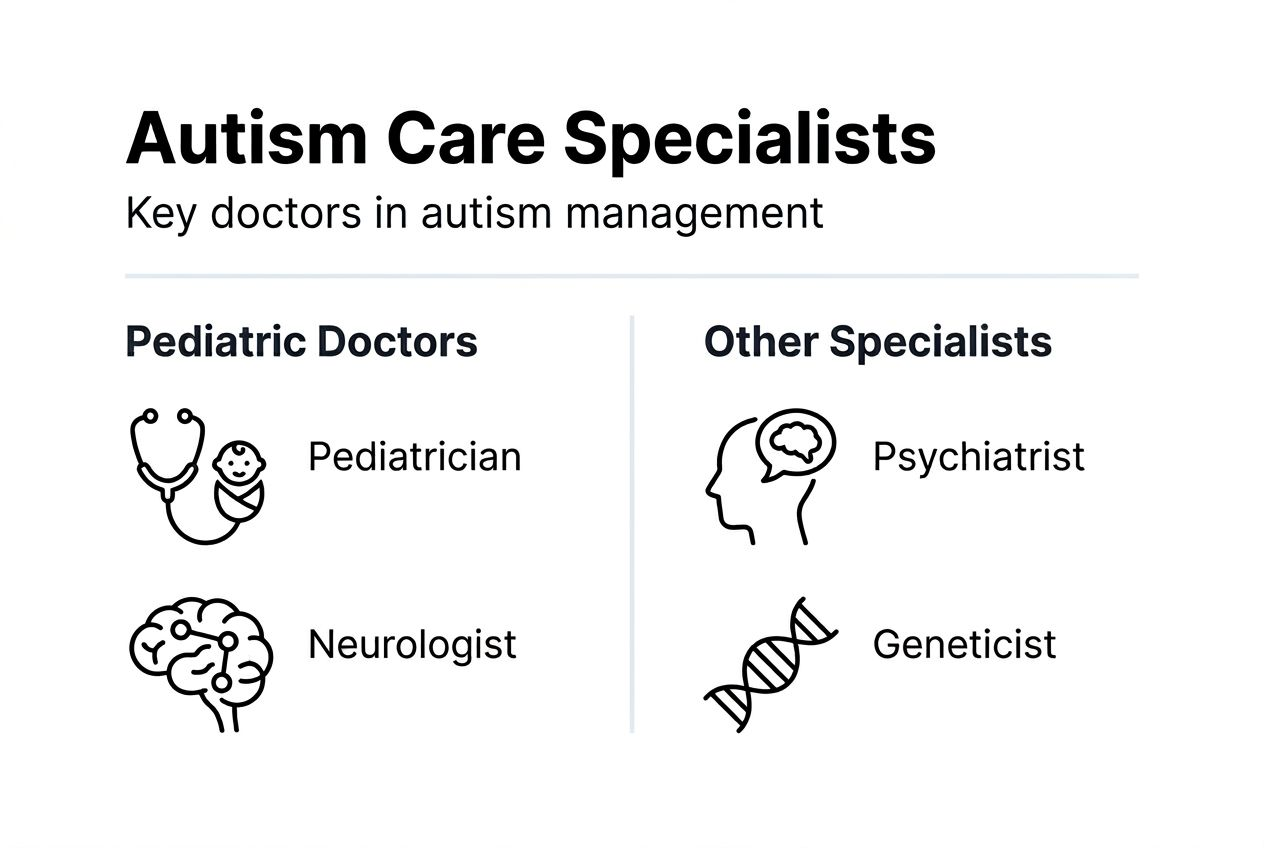
Families benefit from understanding that autism care rarely involves just one doctor. Collaboration among specialists ensures comprehensive evaluation and tailored interventions. Connecting with autism therapy services alongside medical care creates a well-rounded support system.
Pro Tip: Always ask potential doctors about their specific autism training and how many children with autism they currently treat. Experience matters significantly in diagnosis accuracy and family guidance.
Using resources like the autism doctor search resource helps families locate qualified specialists in their area. Advocacy organizations such as autism spectrum advocacy groups and autism spectrum news outlets provide additional guidance on navigating the medical system. Regional support networks like the autism society of north carolina offer localized expertise and community connections.
Role of pediatricians and early autism screening
Pediatricians stand at the frontline of autism detection through systematic screening during routine well-child visits. The American Academy of Pediatrics recommends universal autism screening at 18 and 24 months, using standardized tools to identify developmental concerns early.

Pediatricians use validated screening tools like the Modified Checklist for Autism in Toddlers, Revised with Follow-Up (M-CHAT-R/F) during these visits. These brief questionnaires assess social communication, play behaviors, and responses to sensory input. Positive screens trigger immediate follow-up assessments and referrals to specialists.
Timing matters enormously. Early diagnosis and intervention improve long-term developmental outcomes by capitalizing on brain plasticity during critical developmental windows. Children who receive intervention before age three show greater gains in language, social skills, and adaptive behavior compared to those diagnosed later.
When screening reveals concerns, pediatricians initiate the referral process to developmental specialists while continuing to monitor the child’s overall health. They educate families about what to expect during evaluations and connect them with early intervention programs. This dual role of screener and care coordinator makes pediatricians invaluable partners in the autism journey.
Pro Tip: Request a copy of all screening results and keep a developmental milestone log at home. This documentation becomes essential when specialists conduct comprehensive evaluations and helps track progress over time.
Families should know that screening identifies risk, not diagnosis. A positive screen means further evaluation is needed, not that autism is confirmed. Understanding this distinction reduces anxiety while emphasizing the importance of follow-through. Resources like autism spectrum news help families stay informed about screening advancements and interpretation.
Connecting with centers such as raising stars autism center early in the process ensures families have support while awaiting specialist appointments. Exploring an autism therapy pricing plan helps families prepare financially for potential services.
The autism diagnostic process led by medical doctors
Autism diagnosis involves comprehensive clinical assessment rather than a single definitive test. Medical doctors conduct detailed evaluations using behavioral observation, developmental history, and standardized diagnostic tools to reach accurate conclusions.
No single medical test confirms autism diagnosis. Instead, doctors apply criteria from the Diagnostic and Statistical Manual of Mental Disorders, Fifth Edition (DSM-5), which requires persistent deficits in social communication and restricted, repetitive behavior patterns. The diagnosis captures severity levels and specifies whether intellectual or language impairments are present.
The diagnostic process typically unfolds across multiple appointments:
- Comprehensive developmental history: Doctors interview parents about pregnancy, birth, early milestones, family history, and current concerns.
- Direct behavioral observation: Specialists watch how the child plays, communicates, and interacts in structured and unstructured settings.
- Standardized diagnostic instruments: Tools like the Autism Diagnostic Observation Schedule (ADOS-2) and Autism Diagnostic Interview-Revised (ADI-R) provide objective measures.
- Medical and neurological examination: Doctors rule out other conditions and identify co-occurring health issues.
- Multidisciplinary input: Psychologists, speech therapists, and occupational therapists contribute assessments of cognitive, language, and sensory functioning.
This thorough approach ensures accurate diagnosis while identifying the child’s unique strengths and challenges. Families should expect the process to span weeks or months, depending on specialist availability and evaluation complexity. Centers like autism therapy services and raising stars autism center often work alongside medical teams to provide comprehensive assessments.
Blood tests, brain imaging, and genetic testing may be ordered when doctors suspect underlying medical conditions, but these tests supplement rather than replace behavioral diagnosis. Genetic testing identifies known autism-related syndromes in roughly 10 to 15 percent of cases, providing valuable information for family planning and medical management.
Medical management and treatment recommendations
Following diagnosis, medical doctors coordinate comprehensive treatment plans that address developmental, behavioral, educational, and health needs. They guide families toward evidence-based interventions while managing co-occurring medical conditions.
Early intervention during preschool years significantly improves social and communication skills in children with autism. Intensive behavioral therapies, speech and language therapy, occupational therapy, and social skills training form the cornerstone of treatment. Medical doctors recommend specific therapies based on the child’s evaluation results and monitor progress through regular follow-ups.
Managing autism care involves several coordinated steps:
- Establish baseline functioning across developmental domains through comprehensive evaluation.
- Develop an individualized treatment plan incorporating behavioral, educational, and therapeutic interventions.
- Coordinate referrals to specialists such as speech therapists, occupational therapists, and ABA providers.
- Monitor progress through regular appointments and adjust interventions based on response.
- Manage co-occurring conditions with appropriate medical or psychiatric treatment.
- Provide ongoing family education and connect families with community resources and support groups.
Doctors play a crucial role beyond diagnosis. They manage co-occurring conditions like sleep disturbances, anxiety, seizures, and gastrointestinal problems that affect up to 70 percent of children with autism. Addressing these medical issues often improves behavior and quality of life substantially.
Key aspects of medical management include:
- Medication management: Doctors may prescribe medications for anxiety, attention difficulties, or aggression when behavioral interventions alone prove insufficient.
- Health monitoring: Regular check-ups track growth, nutrition, and overall wellness while screening for emerging conditions.
- Care coordination: Doctors communicate with therapists, educators, and other providers to ensure cohesive treatment.
- Family support: Physicians guide families toward respite care, financial assistance programs, and advocacy resources.
“Early, intensive behavioral intervention leads to meaningful improvements in language, cognitive ability, and adaptive behavior. Medical coordination ensures children access these critical services promptly.”
Families working with organizations like allied autism group services and autism therapy services benefit from integrated medical oversight. Doctors remain central to treatment success even as therapists deliver day-to-day interventions.
Challenges in physician training and confidence in autism care
Despite autism’s prevalence, many physicians report inadequate preparation to diagnose and manage the condition. This training gap affects care quality and family experiences throughout the diagnostic journey.
Many physicians report low confidence and insufficient training in autism care, impacting quality. Research shows that while training programs increase physician knowledge, translating that knowledge into consistent practice changes remains challenging. Doctors often feel unprepared to conduct comprehensive developmental assessments or counsel families about intervention options.
Systemic gaps in autism training affect timely diagnosis and family support. Medical schools and residency programs traditionally provide limited instruction on autism identification and management. Physicians may lack exposure to evidence-based interventions or strategies for addressing sensory sensitivities and communication differences during medical visits.
Common training and knowledge gaps include:
- Limited clinical exposure to diverse autism presentations during medical training
- Insufficient instruction on administering and interpreting screening tools
- Lack of familiarity with community resources and referral pathways
- Inadequate preparation for counseling families about prognosis and treatment options
- Minimal training in adapting communication and examination techniques for autistic patients
These gaps contribute to delayed diagnosis, with families sometimes waiting months or years for specialist appointments after initial concerns arise. Fragmented care results when doctors lack confidence to coordinate comprehensive treatment plans or communicate effectively with therapy teams.
“Improving physician education on autism is not optional. It directly determines whether families receive timely diagnosis, appropriate referrals, and compassionate support during a vulnerable period.”
Families may need to advocate persistently for referrals and services when their primary doctor lacks autism expertise. Connecting with autism spectrum advocacy organizations provides guidance on navigating these challenges and requesting second opinions when needed.
Awareness of these systemic issues helps families set realistic expectations and prepare to actively participate in their child’s medical care. While individual physicians vary widely in expertise, understanding common gaps empowers families to seek specialists with demonstrated autism competence.
Practical guidance for families to access medical care
Navigating the medical system for autism care requires preparation, persistence, and strategic use of available resources. Families who approach medical appointments methodically get better results and build stronger partnerships with providers.
Finding qualified autism specialists starts with targeted searches. Online directories allow families to filter by specialty, location, insurance acceptance, and patient reviews. Verified listings provide contact information, credentials, and areas of focus, streamlining the search process.
Steps to navigate medical referrals and appointments:
- Request specific referrals from your pediatrician to developmental-behavioral pediatricians or autism specialists rather than general referrals.
- Contact your insurance company to verify coverage, pre-authorization requirements, and in-network providers before scheduling.
- Join waiting lists at multiple clinics simultaneously, as specialist appointments often have months-long delays.
- Prepare comprehensive documentation including developmental histories, school reports, and videos showing concerning behaviors.
- Follow up persistently on referrals and appointments, as administrative delays are common in specialty care.
What families should bring to medical appointments:
- Complete developmental milestone timeline noting when skills emerged or regressed
- List of current concerns prioritized by severity and impact on daily life
- Videos demonstrating communication attempts, play behaviors, and challenging situations
- Previous evaluation reports, therapy progress notes, and individualized education plans
- Written questions for the doctor organized by topic
- Insurance cards, identification, and any required authorization forms
Pro Tip: Create a one-page summary of your child’s history, current functioning, and top three concerns. Hand this to the doctor at the start of the appointment to maximize limited consultation time and ensure critical information gets documented.
Centers such as raising stars autism center and twin cities autism center often provide intake forms and preparation guides for families. Using an autism specialist listing map helps identify nearby providers and compare options efficiently.
Maintaining ongoing collaboration with medical teams requires active communication. Share therapy progress reports with doctors, request copies of all medical records, and inform providers when new symptoms or concerns arise. This partnership approach ensures medical management stays aligned with educational and therapeutic interventions.
Understanding autism therapy pricing plan structures helps families budget for comprehensive care and explore financial assistance options. Many centers offer sliding scale fees or payment plans to increase accessibility.
Find trusted autism therapy and medical care providers
Connecting with experienced autism specialists transforms the care journey from overwhelming to manageable. Autism Doctor Search simplifies the process of finding qualified providers who understand your child’s unique needs and your family’s goals.
Our comprehensive directory features verified listings for medical doctors, developmental specialists, and therapy providers across the country. Search by location, specialty, and services offered to identify professionals with proven autism expertise. Read reviews from other families, compare credentials, and contact providers directly through the platform.
Explore options for autism therapy services including ABA therapy, speech therapy, and occupational therapy. Providers like the missing piece aba therapy and pace behavior therapy and consultation offer evidence-based interventions tailored to individual children. Access contact information, service descriptions, and availability instantly to accelerate your search.
Frequently asked questions
What types of medical doctors diagnose autism?
Developmental-behavioral pediatricians lead most autism diagnoses through specialized training in developmental disorders. General pediatricians perform initial screening and referrals, while neurologists evaluate neurological symptoms and psychiatrists address mental health concerns. Geneticists investigate hereditary factors when family history or physical features suggest genetic syndromes. Multidisciplinary teams often collaborate to ensure comprehensive evaluation, as no single specialist possesses all necessary expertise for complex presentations.
How important is early autism screening by doctors?
Early screening by pediatricians at 18 and 24 months enables timely diagnosis and intervention, dramatically improving developmental trajectories. Children who receive services before age three demonstrate significantly better outcomes in language, social skills, and adaptive behavior compared to those diagnosed later. Validated screening tools used during routine well-child visits detect autism risk efficiently, allowing families to access early intervention programs during critical developmental windows when brain plasticity maximizes treatment response.
What challenges exist in autism care from the medical side?
Many physicians lack specialized autism training, leading to lower diagnostic confidence and delayed referrals to specialists. Medical education traditionally provides limited instruction on autism identification, evidence-based interventions, and family counseling approaches. These knowledge gaps contribute to fragmented care, longer wait times for diagnosis, and inconsistent quality across providers. Families often must advocate persistently for appropriate referrals and services, particularly in areas with few autism specialists.
How can families prepare for and get the most from medical autism appointments?
Bring detailed developmental histories, prioritized concern lists, and videos demonstrating target behaviors to appointments. Keep organized records of all screening results, diagnoses, therapy reports, and educational plans to provide complete context. Prepare written questions organized by topic to maximize limited appointment time. Advocate actively by requesting clear next steps, specific intervention recommendations, and timelines for follow-up. Create one-page summaries highlighting critical information to ensure doctors capture essential details in medical records.
Do medical doctors cure autism?
Doctors do not cure autism, as it represents a neurological difference rather than a disease requiring cure. Instead, physicians coordinate evidence-based interventions that build skills, reduce challenging behaviors, and improve quality of life. Medical management focuses on maximizing developmental potential through early intervention, treating co-occurring conditions like anxiety or sleep problems, and supporting families with education and community resources. The goal centers on helping autistic individuals thrive according to their unique strengths and needs rather than eliminating autism itself.