TL;DR:
- Autism behaviors are signals reflecting neurological differences, not choices or misbehavior.
- Understanding sensory and communication factors helps families support autistic children effectively.
- Support strategies focus on acceptance, communication, and creating sensory-friendly environments.
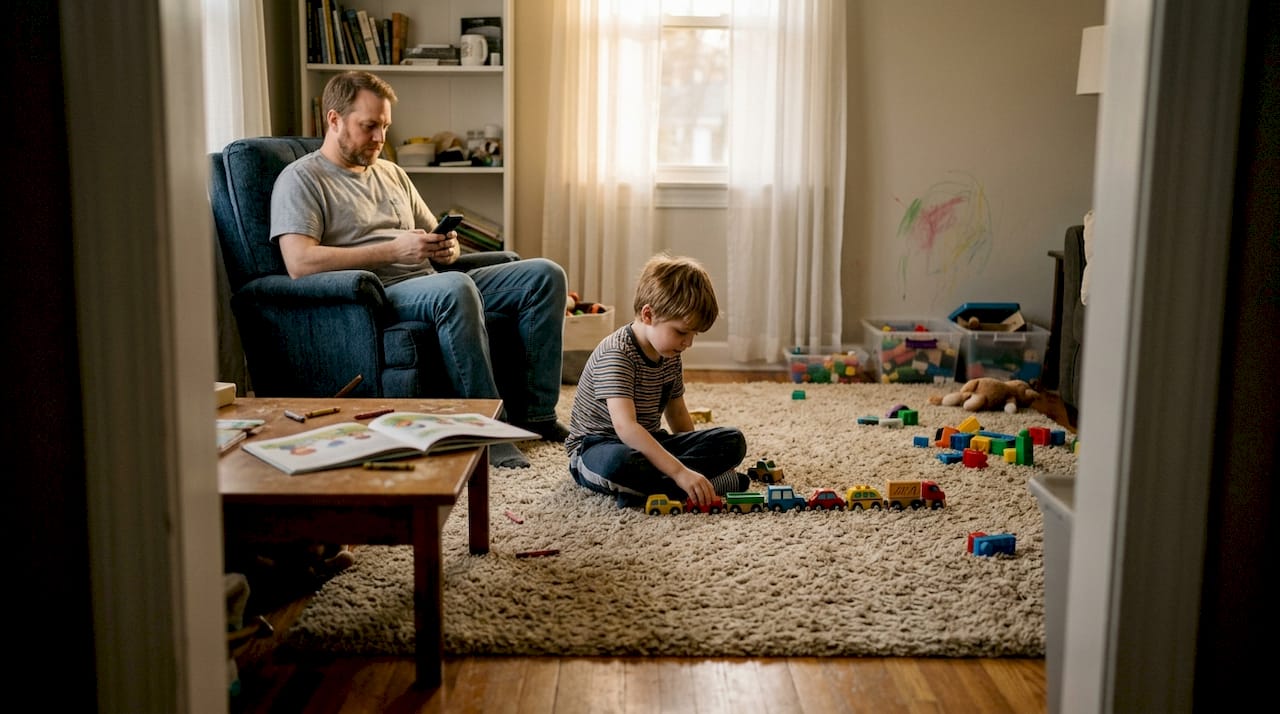
Many families assume that when an autistic child screams, refuses to move, or repeats the same phrase over and over, they’re simply acting out. That assumption causes real harm. Most autism behaviors are not choices. They are signals. ASD prevalence now affects 1 in 31 eight-year-olds in the United States, and yet misconceptions about why autistic children behave the way they do remain widespread. This guide walks families and caregivers through the core behaviors, the sensory and communication factors behind them, and the practical tools that actually help.
Table of Contents
- What are autism behaviors? Defining core patterns
- Breaking down social communication differences
- Understanding repetitive behaviors and sensory needs
- Explaining behaviors: Medical vs. neurodiversity perspectives
- Our take: Behavior is communication, and support starts with listening
- Find tailored autism support services near you
- Frequently asked questions
Key Takeaways
| Point | Details |
|---|---|
| Autism behaviors have deeper causes | Behaviors like meltdowns and repetitive actions often reflect underlying communication or sensory needs, not misbehavior. |
| Different models shape support | The medical and neurodiversity models offer contrasting perspectives, but both inform practical family approaches. |
| Sensory needs impact daily life | Understanding sensory overload and regulation strategies helps families create supportive environments. |
| Behavior is a form of communication | Seeing behaviors as signals allows caregivers to respond with empathy and proactive support. |
| Specialized services facilitate progress | Connecting with tailored autism therapy and resources enables families to access effective strategies and expert help. |
What are autism behaviors? Defining core patterns
Having set the context, let’s clarify what defines autism behaviors and how they differ from typical childhood actions.
Autism Spectrum Disorder (ASD) is characterized by persistent deficits in social communication and interaction, along with restricted, repetitive patterns of behavior, interests, or activities. That definition matters because it tells us two things: autism is not a single behavior, and it is not a phase. It is a neurological difference that shapes how a person processes the world around them.
The word “spectrum” is important here. One autistic child might speak fluently but struggle to read social cues. Another might be nonverbal and rely entirely on visual supports. Both are autistic. Both deserve individualized support. For more foundational context, explore autism information that covers the full range of presentations.
ASD prevalence at a glance (2022 data, ages 8)
| Group | Prevalence |
|---|---|
| Overall | 1 in 31 (32.2 per 1,000) |
| Boys | ~4.5x higher than girls |
| Girls | Lower reported rates |
| Varies by race/ethnicity | Yes, significant variation |
The CDC’s 2022 data confirms ASD is 3.4 times more common in boys than girls, with meaningful differences across racial and ethnic groups. These numbers remind us that autism looks different across communities, and support systems need to reflect that.
Autism-specific behaviors vs. typical childhood behavior:
- Typical: A toddler throws a tantrum when tired or hungry
- Autism-specific: Meltdowns triggered by sensory overload, not manipulation
- Typical: A child prefers certain toys or routines
- Autism-specific: Intense distress when routines change unexpectedly
- Typical: A child avoids eye contact when shy
- Autism-specific: Consistent avoidance of eye contact across all settings
- Typical: A child repeats a favorite song
- Autism-specific: Echolalia used as communication or self-regulation
The distinction is not about severity. It is about pattern, persistence, and function.
Breaking down social communication differences
Now that we’ve established the core features, let’s explore the social communication aspect in more detail.
Social communication is one of the most visible areas where autism shows up, and it’s also one of the most misunderstood. When a child doesn’t make eye contact, doesn’t respond to their name, or struggles to hold a back-and-forth conversation, adults often interpret this as rudeness or disinterest. It’s rarely either.
Common social communication deficits include limited eye contact, difficulty understanding others’ perspectives, challenges with back-and-forth conversation, and atypical nonverbal behaviors. These are not personality flaws. They reflect how the autistic brain processes social input differently.
Think of it this way: for many autistic children, maintaining eye contact while also processing spoken language is like trying to pat your head and rub your stomach at the same time. Something has to give. When a child looks away, they may actually be listening more carefully.
Common social communication challenges:
- Difficulty initiating or sustaining conversation
- Literal interpretation of language (missing sarcasm, idioms, or jokes)
- Trouble reading facial expressions or body language
- Delayed or absent response to their name
- Preference for parallel play over interactive play
- Scripted or repetitive speech patterns
- Challenges adjusting communication style to different social contexts
For families working through these patterns, supporting autism communication offers practical strategies grounded in current research.
“These behaviors often reflect differences in sensory and cognitive processing, not defiance or lack of effort. Reframing the ‘why’ changes everything about how we respond.” — Autism behavioral specialist perspective
Pro Tip: Use the ABC method (Antecedent, Behavior, Consequence) to track social communication patterns. Write down what happened before a behavior, the behavior itself, and what followed. Over time, you’ll spot triggers and find opportunities to offer support before frustration builds.
Understanding repetitive behaviors and sensory needs
With social communication covered, let’s turn to the sensory and repetitive behavior side of autism.
Restricted repetitive behaviors include stereotyped movements such as hand-flapping, insistence on sameness and routines, highly fixated interests, and hyper- or hypo-reactivity to sensory input. These behaviors are often the ones that draw the most attention in public, and unfortunately, the most judgment.
Hand-flapping, rocking, spinning, and humming are forms of stimming (self-stimulatory behavior). They are not random. They serve a purpose: managing overwhelming input, expressing excitement, or calming an anxious nervous system. Stopping stimming without offering an alternative is like taking away someone’s stress ball with no replacement.
Adaptive vs. problematic repetitive behaviors:
| Behavior | Adaptive function | When it may need support |
|---|---|---|
| Hand-flapping | Emotional regulation, excitement | If it causes injury |
| Rocking | Calming sensory input | If it disrupts daily function |
| Fixated interests | Deep focus, motivation tool | If it prevents other learning |
| Rigid routines | Predictability, safety | If it causes extreme distress when broken |
| Echolalia | Communication, processing | If it replaces all functional speech |
Sensory processing differences are core to many autism behaviors. Hypersensitivity leads to overload, while hyposensitivity leads to seeking more input. A child who covers their ears in a grocery store isn’t being dramatic. Their auditory system is genuinely overwhelmed.
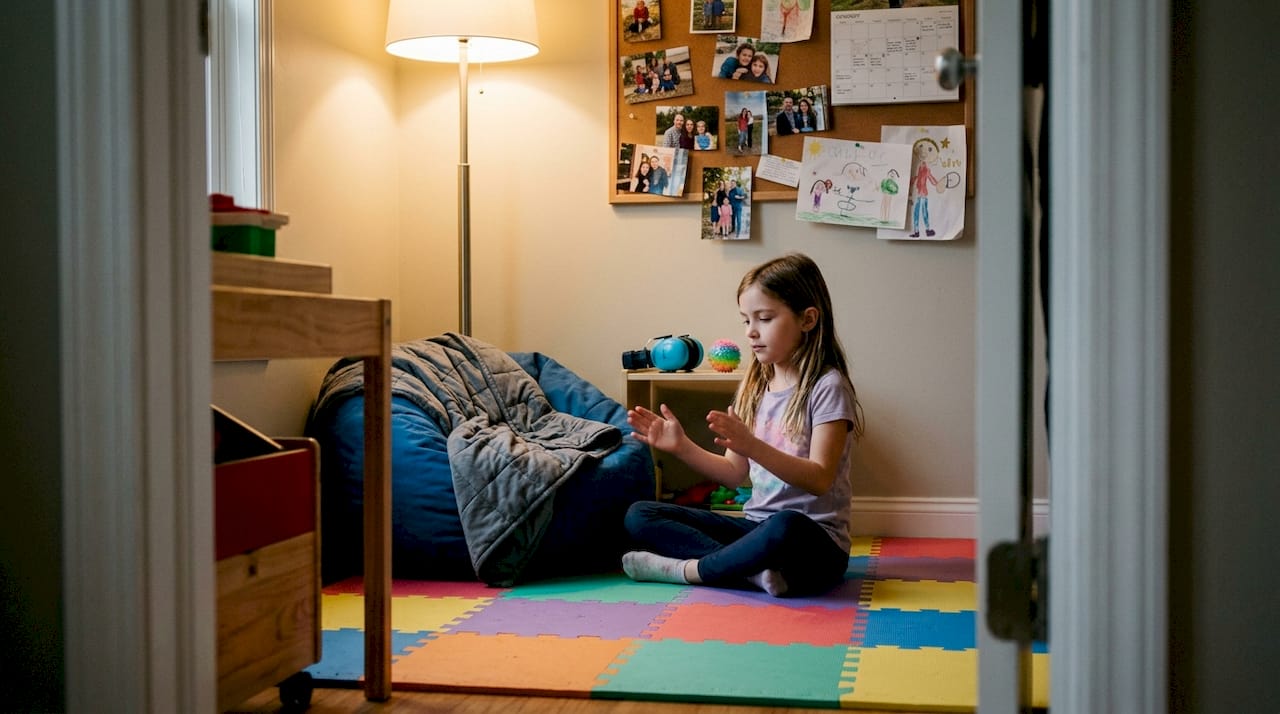
Steps to create a sensory-friendly home environment:
- Identify your child’s specific sensory triggers through observation and notes
- Reduce harsh lighting by using lamps or dimmer switches
- Create a quiet corner with soft textures, weighted blankets, or noise-canceling headphones
- Establish predictable daily routines with visual schedules
- Offer sensory breaks before transitions, not just after meltdowns
For a deeper look at setting up your home, the autism friendly environments guide is a strong starting point. You’ll also find support strategies for autism that connect sensory needs to daily routines.
Pro Tip: Not all sensory input is bad. Some children seek deep pressure, vibration, or movement. Providing a trampoline, a weighted lap pad, or a fidget tool can meet sensory needs proactively and reduce meltdowns before they start.
Explaining behaviors: Medical vs. neurodiversity perspectives
To make sense of these behaviors, it’s helpful to explore the prevailing models that influence family and societal responses.
Two major frameworks shape how families, clinicians, and society understand autism behaviors. Neither is completely wrong. Both have real implications for how you support your child.
Medical model vs. neurodiversity perspective:
- Medical model: Views autism behaviors as deficits or symptoms that need clinical intervention to reduce or eliminate
- Neurodiversity perspective: Views autism as a natural variation in human cognition, with RRBs and stimming as identity-affirming regulation strategies
- Medical model strength: Supports access to therapy, early intervention, and structured skill-building
- Neurodiversity strength: Promotes self-acceptance, reduces shame, and centers the autistic person’s experience
- Shared goal: Both aim to improve quality of life, though they differ on what that means
Contrasting views show that the medical model sees behaviors as deficits needing intervention, while neurodiversity and autistic perspectives view RRBs and stimming as identity-affirming regulation. The honest truth is that most families need both lenses.
“When families shift from ‘how do I stop this behavior’ to ‘what is this behavior telling me,’ outcomes improve. Acceptance and understanding are not passive. They are active, powerful tools.”
RRBs serve adaptive functions like sensory regulation and anxiety reduction, linked to striatal circuit changes and executive function differences. This means repetitive behaviors are not random quirks. They are the nervous system doing its best.
For families navigating these decisions daily, family-centered autism care offers a model that blends clinical support with whole-family wellbeing. The goal is never to erase who your child is. It’s to help them thrive as who they are.
Our take: Behavior is communication, and support starts with listening
With competing models clarified, here’s a perspective that can help families move forward with understanding and empowerment.
We’ve seen it repeatedly: a family spends months trying to eliminate a behavior, only to discover it was the child’s only reliable way of saying “I’m overwhelmed” or “I need a break.” When a parent starts treating behavior as a message instead of a problem, something shifts. The child feels understood. The household becomes calmer. Progress follows.
The ABC analysis mentioned earlier is not just a clinical tool. It’s a listening tool. It teaches caregivers to pause before reacting and ask: what was happening before this? What did my child need in that moment? Practical autism support built on this kind of observation tends to stick because it’s rooted in your child’s actual experience, not a generic checklist.
Positive reinforcement works best when it’s connected to something meaningful to your child, whether that’s a fixated interest, a sensory reward, or simply your undivided attention. Blending evidence-based strategies with genuine acceptance is not a compromise. It’s the most effective approach there is. Start with autism information resources and build from there.
Find tailored autism support services near you
If you’re looking for specialized support, the resources below connect you with trusted professionals.
Understanding autism behaviors is the first step. Connecting with the right professionals is what turns that understanding into real progress for your child and your family. At Autism Doctor Search, we maintain an up-to-date directory of vetted providers across ABA therapy, occupational therapy, mental health services, special education, and more. Whether you’re newly navigating a diagnosis or looking to expand your child’s support team, our listings make it easier to find local experts who specialize in exactly what your family needs. Explore autism therapy services, connect with ABA therapy for autism, or browse autism therapeutics near you.
Frequently asked questions
Why does my autistic child have frequent meltdowns?
Meltdowns are most often triggered by sensory overload or frustration when communication breaks down, not by intentional misbehavior. Identifying the specific trigger is the most effective first step toward prevention.
Are repetitive behaviors in autism always problematic?
No. RRBs often serve adaptive functions like reducing anxiety or regulating sensory input, and many are entirely harmless. Support is only needed when a behavior causes injury or significantly limits daily participation.
How is autism diagnosed in children?
Diagnosis uses DSM-5 criteria, parent reports, and structured behavioral observations like the ADOS-2. There is no blood test or brain scan that confirms autism, which is why early behavioral screening matters so much.
Can autism behaviors change as children grow older?
Yes. Behaviors often evolve as children develop coping strategies, learn new communication tools, or internalize routines. Some high-masking individuals learn to hide traits, which is why ongoing support remains important across all ages.
Where can families find reliable autism support resources?
Families can start with CDC autism resources, NIMH guides, and the Autism Doctor Search directory for local therapy and specialist listings. Early intervention consistently improves long-term outcomes, so connecting sooner rather than later makes a meaningful difference.