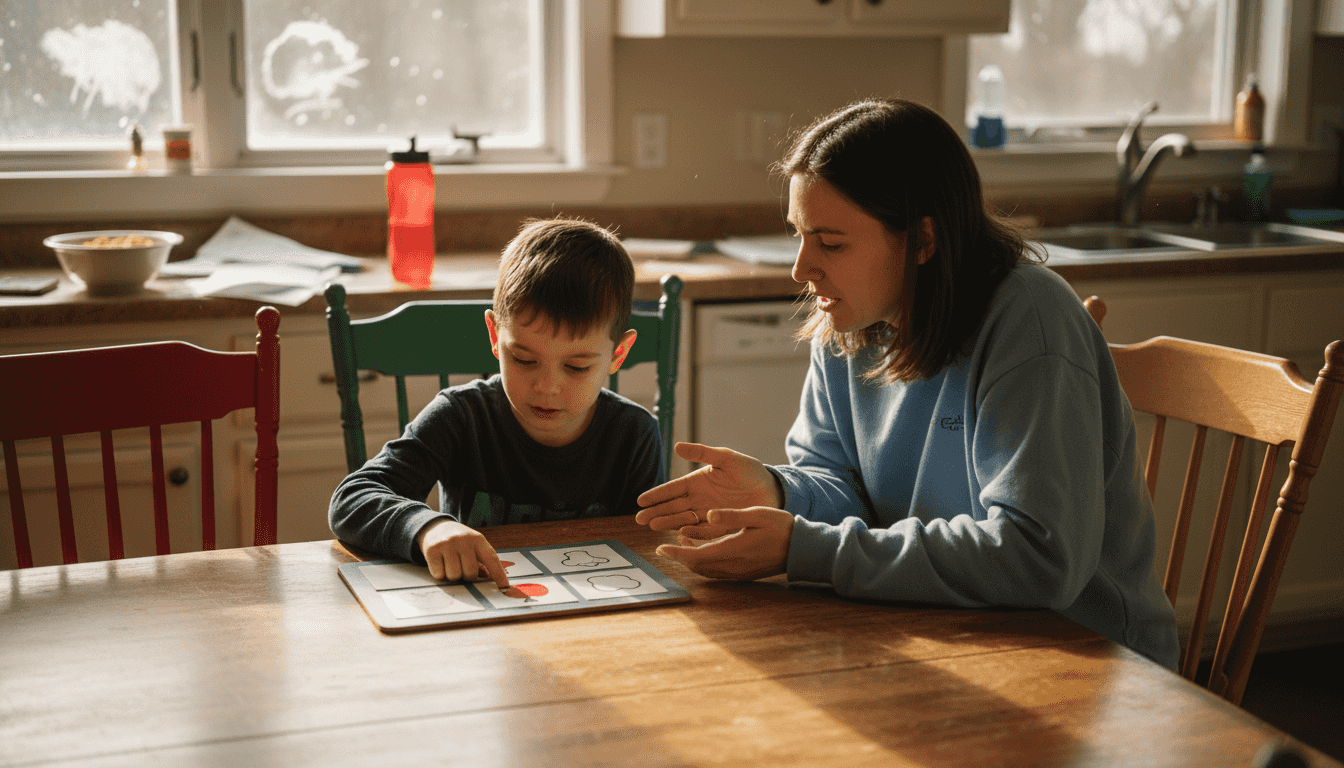
Many parents believe a non-speaking child doesn’t understand language or lacks thoughts to share. Communication differences in autism vary immensely across the spectrum, from highly verbal to entirely non-verbal. Understanding these variations and the underlying reasons empowers you to support your child’s unique communication journey with evidence-backed strategies that truly work.
Table of Contents
- Understanding Communication Differences In Autism
- How Autism Impacts Speech And Language Development
- Practical Strategies To Support Communication
- Effective Parent-Delivered Interventions And Programs
- Explore Autism Therapy Services And Resources
- Frequently Asked Questions
Key takeaways
| Point | Details |
|---|---|
| Autistic communication varies widely | Abilities range from highly verbal to non-verbal, each child unique. |
| Motor and sensory challenges impact speech | Apraxia and sensory overload can inhibit verbal expression. |
| Early intervention drives outcomes | Structured support boosts communication and social skill development. |
| Visual aids and AAC expand options | Pictures, choice boards, and devices enhance communication access. |
| Parent involvement amplifies success | Active participation in interventions sustains long-term progress. |
Understanding communication differences in autism
Communication differences are a hallmark feature of Autism Spectrum Disorder (ASD), with a vast spectrum of abilities ranging from highly verbal to non-verbal. This wide variation reflects the complex interplay of neurological, motor, and sensory factors shaping each child’s unique profile. Understanding these differences helps you move beyond assumptions and tailor your approach to your child’s specific needs.
Motor planning challenges can lead to apraxia of speech in autistic children, affecting their ability to coordinate muscle movements for speech. Apraxia makes it difficult for the brain to send precise signals to the mouth, tongue, and lips, even when a child knows what they want to say. This disconnect between intention and execution can be frustrating for both child and parent.
Sensory processing issues can make speaking overwhelming for some autistic individuals, impacting verbal communication. Loud environments, bright lights, or even the physical sensation of forming words may create discomfort that inhibits speech. Recognizing these sensory barriers allows you to create supportive communication environments.
Social communication differences also play a role. Challenges with turn-taking, interpreting social cues, and understanding conversational flow can complicate verbal interactions. These are skills that can be taught and improved with targeted support and practice.
The claim that autistic people are ‘mind blind’ is not supported by evidence.
This myth has been thoroughly debunked. Autistic individuals vary widely in their social understanding and empathy, just like neurotypical people. Dismissing an autistic child’s inner world based on outdated stereotypes prevents meaningful connection and support.
Key factors affecting communication:
- Neurological differences in brain processing and connectivity
- Physical coordination challenges affecting speech muscles
- Sensory sensitivities creating communication barriers
- Social skill variations requiring explicit teaching
- Individual learning styles and strengths
For advocacy and community resources, explore autism spectrum advocacy organizations that champion understanding and acceptance.
How autism impacts speech and language development
Developmental language delays are common in autism, but do not always equate to an absence of speech; some children may have a rich inner language. A child who doesn’t speak may still comprehend complex instructions, enjoy stories, and think in sophisticated ways. Never assume silence means emptiness.
Anxiety and overwhelm can inhibit speech production in autistic children due to the pressure to communicate ‘normally’. When children feel forced to speak in ways that don’t align with their natural communication style, stress can shut down verbal expression entirely. Reducing pressure and celebrating alternative communication methods often paradoxically increases verbal attempts.
Social communication differences, such as turn-taking and understanding social cues, can pose challenges in verbal communication for autistic children. Conversations require rapid processing of facial expressions, tone changes, and unspoken rules that may not come intuitively. Explicit teaching of these patterns helps bridge the gap.
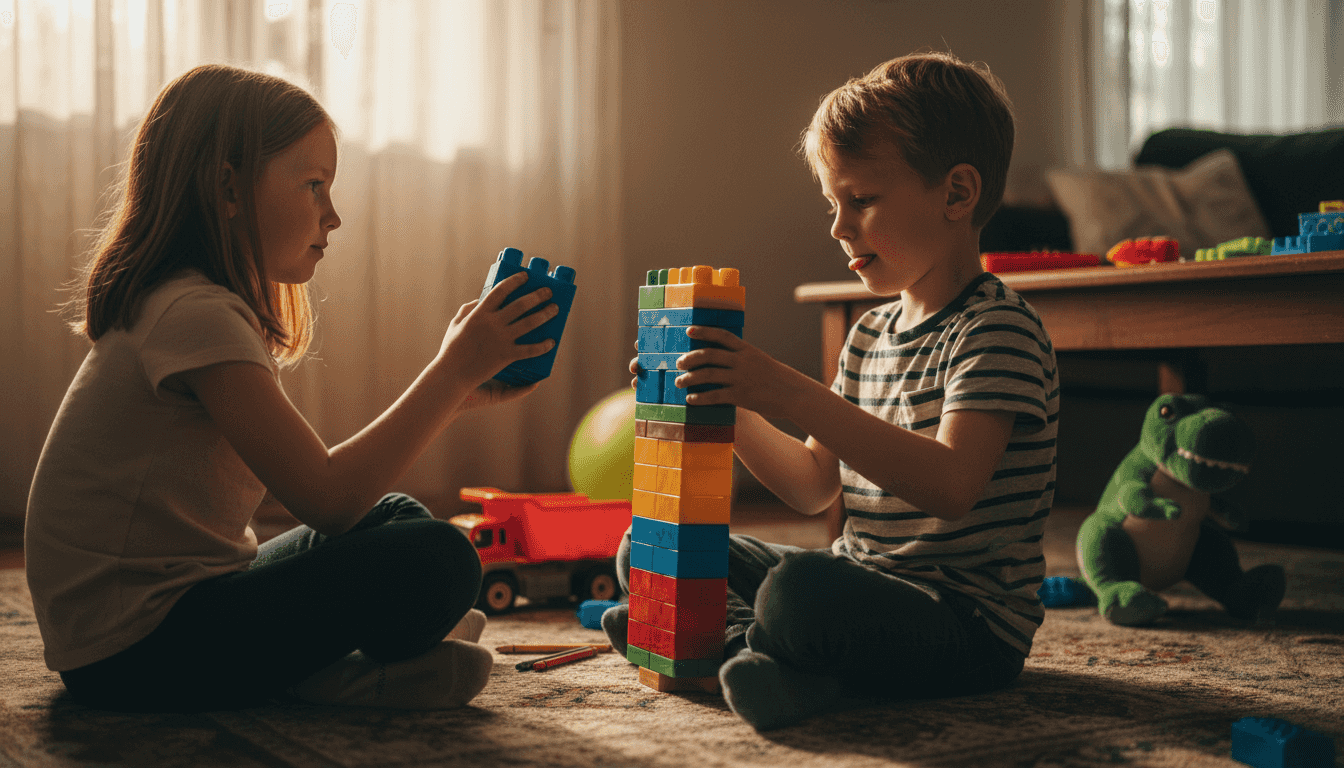
Joint attention, the ability to share attention with another person on an object or event, is crucial for language development in children with autism. This foundational skill enables children to connect words with objects and actions. When you and your child focus together on the same toy or activity, you create natural opportunities for language learning.
Following your child’s lead strengthens joint attention organically. If your child shows interest in a specific toy, join that play rather than redirecting to your planned activity. Comment on what they’re doing using simple, descriptive language. This child-led approach builds trust and creates meaningful contexts for learning words.
Developmental considerations:
- Receptive language often exceeds expressive ability
- Processing time may be longer than typical peers
- Pattern recognition and visual learning are common strengths
- Emotional regulation impacts communication capacity
- Individual developmental timelines vary significantly
Stay informed about the latest research and approaches through autism spectrum news resources.
Practical strategies to support communication
Using visual supports, such as pictures and choice boards, and augmentative and alternative communication (AAC) methods can aid in communication for children with autism. Visual aids reduce the cognitive load of verbal processing and provide concrete references your child can point to or use independently.
Narrating daily life, using short sentences, and simple words during routines helps children with autism learn words and understand actions. As you brush teeth, say “Open mouth. Brush teeth. Rinse.” Match your words precisely to each action, creating clear associations between language and experience.
Expanding a child’s words by adding to their utterances helps build sentences and clear speech. If your child says “ball,” you respond with “red ball” or “throw ball.” This modeling technique gently stretches language without pressure or correction.
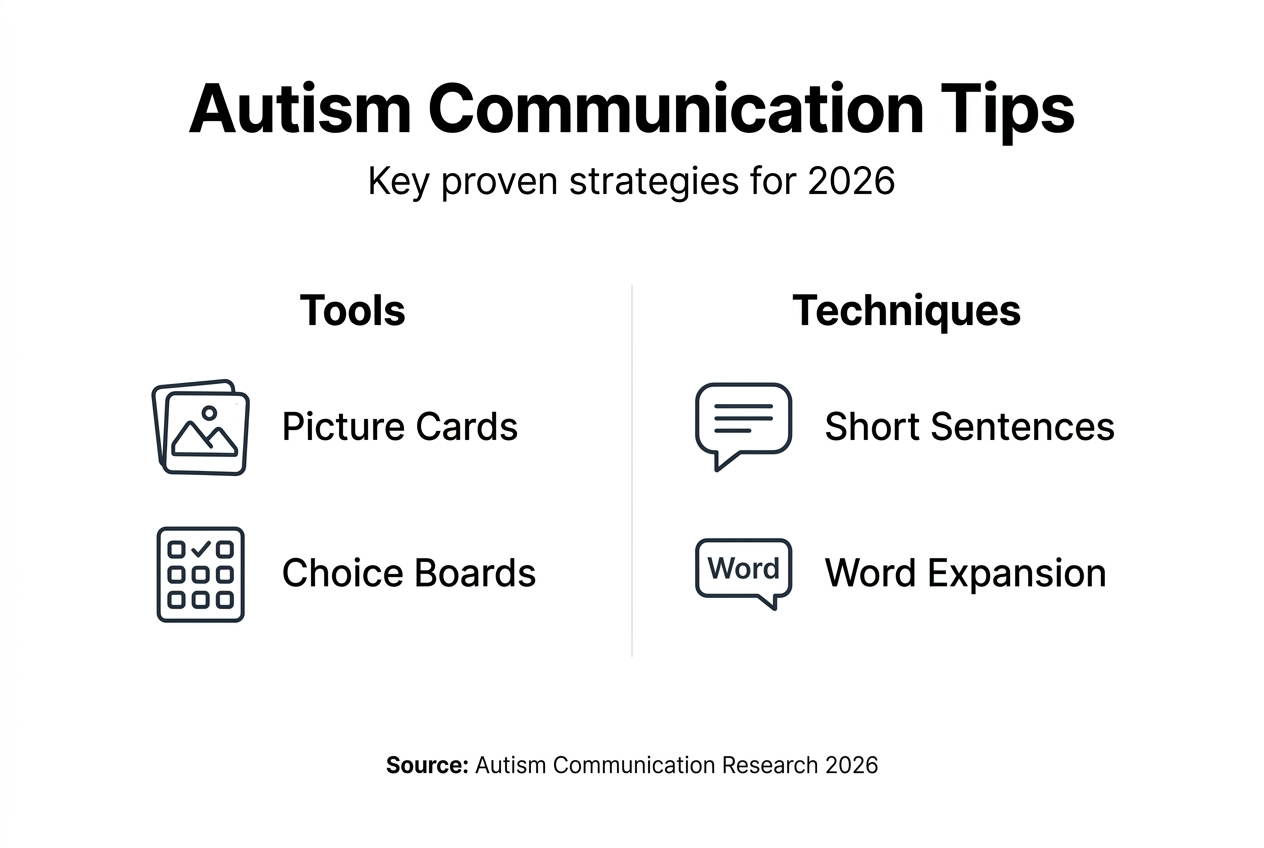
All forms of communication, including gestures, sounds, pictures, and devices, are valid and should be celebrated. Honoring every communication attempt, regardless of form, builds confidence and motivation. A pointed finger, a pulled hand, or a selected picture card all represent successful communication.
Implementing daily communication strategies:
- Create a visual schedule showing daily activities with pictures
- Establish consistent routines that reduce anxiety and create predictable language opportunities
- Use choice boards for snacks, activities, and preferences
- Introduce AAC devices or apps if verbal speech is challenging
- Practice turn-taking games that build conversational skills
- Celebrate all communication attempts enthusiastically
Pro Tip: Keep communication opportunities short and successful. Five successful 2-minute interactions beat one frustrating 10-minute session. End on a positive note to build momentum for next time.
Practical tools comparison:
| Tool Type | Best For | Example Use |
|---|---|---|
| Picture cards | Making choices | Selecting preferred snack or activity |
| Visual schedule | Reducing transition anxiety | Showing sequence of morning routine |
| AAC device | Complex expression | Sharing detailed thoughts and feelings |
| Gesture system | Quick communication | Indicating basic needs immediately |
Consistent practice during everyday moments yields the strongest results. Bath time, meals, and play all offer natural language-learning contexts. The key is meeting your child where they are and building from their current abilities.
Connect with specialized support through autism therapy services that understand these evidence-based approaches. Professional guidance from autism therapeutics providers can personalize these strategies to your child’s unique profile.
Effective parent-delivered interventions and programs
Teaching parents how to use everyday interactions can motivate children with autism to speak. Pivotal Response Treatment (PRT) trains parents to identify and respond to their child’s natural motivations, turning daily moments into powerful learning opportunities. This approach increases spontaneous communication attempts significantly.
The More Than Words® program shows promising results in improving communication skills and communicative participation in autistic children. MTW teaches parents specific interaction strategies that enhance early communication development and strengthen parent-child relationships. Parents learn to recognize and respond to subtle communication cues they might have missed.
The study highlights the importance of adapting interventions like MTW for real-world community settings, acknowledging the challenges of generalizability. While research settings show strong results, implementing these programs in busy family life requires flexibility and realistic expectations. Successful programs acknowledge these practical constraints.
Benefits of parent-delivered interventions:
- Parents learn to recognize communication opportunities in natural settings
- Children practice skills throughout the day, not just during therapy sessions
- Family confidence and competence increase measurably
- Interventions adapt to individual family routines and values
- Long-term maintenance improves with parent expertise
Pro Tip: Start with one strategy at a time. Master following your child’s lead during play before adding language expansion techniques. Building your skills gradually prevents overwhelm and ensures consistent implementation.
Program comparison:
| Program | Focus Area | Parent Role | Typical Duration |
|---|---|---|---|
| PRT | Child motivation | Active play partner | Ongoing integration |
| More Than Words® | Early communication | Interaction coach | 8-10 week program |
| Hanen approach | Social interaction | Responsive partner | 8 weeks plus practice |
Parental involvement proves essential for sustaining communication improvements beyond formal therapy sessions. When you become skilled in these techniques, your child benefits from consistent support across all environments and activities.
Seek personalized guidance from parent coaching programs that teach these evidence-based methods. Professional services like developing minds therapy can train you in these approaches with individualized support.
Explore autism therapy services and resources
Professional autism therapy provides structured support for communication and social development tailored to your child’s specific needs and learning style. Experienced therapists assess your child’s current abilities and design interventions that build systematically on their strengths.
Parent coaching programs empower you with personalized tools and strategies you can implement immediately at home and in your community. These programs recognize you as the expert on your child while providing professional guidance to maximize your impact.
Accessing local services connects you with therapists who understand autism communication challenges deeply. Finding the right fit makes all the difference in your family’s journey. Explore comprehensive autism therapy services in your area. Consider specialized support from your autism coach for personalized parent training. Connect with developing minds therapy services for evidence-based communication interventions.
Frequently asked questions
Can children with autism without speech still understand language?
Yes, absolutely. Developmental language delays are common in autism, but do not always equate to an absence of speech; some children may have a rich inner language. Many non-speaking autistic children comprehend complex instructions and enjoy stories. Never underestimate understanding based on verbal output alone.
What role do sensory issues play in autistic communication difficulties?
Sensory processing issues can make speaking overwhelming for some autistic individuals, impacting verbal communication. Loud environments, bright lights, or the physical sensation of talking may create significant discomfort. Reducing sensory stressors often improves communication attempts noticeably.
How can parents effectively support language development at home?
Narrating daily life, using short sentences, and simple words during routines helps children with autism learn words and understand actions. Follow your child’s interests to build joint attention naturally. Expanding on utterances helps build sentences and clear speech. Incorporate visual aids and AAC devices where helpful to reduce frustration.
Are all forms of communication from autistic children valid?
Absolutely yes. All forms of communication, including gestures, sounds, pictures, and devices, are valid and should be celebrated enthusiastically. Every communication attempt represents your child expressing their needs, thoughts, and ideas. Honoring all forms builds confidence and motivation to communicate more.
Recommended
- How to match autism needs to services in 2026
- Questions for your autism doctor: Essential 2026 guide
- Autism Speaks – Autism Doctor Search
- Autism Spectrum Advocacy – Autism Doctor Search
- How to Communicate in Recovery for Stronger Relationships | Glendora Recovery Center
- Improve the brushing of your child’s teeth with autism (Automatic Tooth – Y-Brush USA