
Many families believe acknowledging autism is enough, but true acceptance goes much deeper. Autism acceptance means actively embracing autistic individuals as they are, creating spaces where they thrive without needing to mask or conform. This shift from mere awareness to genuine acceptance transforms how families, schools, and communities support autistic people. Understanding this difference empowers you to foster environments where autistic individuals experience respect, inclusion, and belonging. This guide explains what autism acceptance really means, traces its evolution, and provides practical strategies you can implement today to make meaningful change in your family and community.
Table of Contents
- Defining Autism Acceptance And Its Evolution
- Practical Methods To Foster Autism Acceptance In Families And Schools
- Understanding The Impact And Measuring Acceptance Outcomes
- Navigating Complexities: Diverse Autistic Experiences And Critiques Of Acceptance
- Explore Expert Autism Therapy Services Tailored For Acceptance
- Frequently Asked Questions
Key takeaways
| Point | Details |
|---|---|
| Acceptance vs. awareness | Acceptance actively embraces autistic individuals while awareness only acknowledges autism exists. |
| Historical evolution | The shift from awareness to acceptance began in 2011, driven by autistic advocates promoting neurodiversity. |
| Practical implementation | Families and schools foster acceptance through sensory-friendly spaces, identity-first language, and centering autistic voices. |
| Measurable outcomes | Higher acceptance correlates with improved quality of life, autonomy, and participation for autistic individuals. |
| Diverse perspectives | Acceptance approaches must recognize varied autistic experiences, including those with high support needs. |
Defining autism acceptance and its evolution
Autism acceptance involves embracing autistic individuals as they are, beyond mere awareness. Acceptance requires active approval, respect, and inclusion in all aspects of life. You recognize autism as a natural part of human diversity rather than a deficit needing correction. This perspective fundamentally differs from awareness, which simply acknowledges autism exists without requiring any meaningful action or change in attitudes.
The historical shift from awareness to acceptance represents a pivotal moment in autism advocacy. Advocates initiated this transformation around 2011 to promote neurodiversity and counter deficit-focused narratives. Autistic self-advocates led this movement, demanding that society move beyond symbolic gestures like puzzle pieces and blue lights. They pushed for genuine inclusion, respect for autistic communication styles, and recognition of autism as neurological difference rather than disorder.
Autism Acceptance Month occurs every April, replacing the older awareness campaigns with a focus on celebration and inclusion. This annual observance emphasizes listening to autistic voices, accommodating different sensory needs, and dismantling barriers to participation. The neurodiversity framework underpins this approach, viewing autism alongside other neurological variations as valuable contributions to human diversity.
Key principles of autism acceptance include:
- Respecting autistic communication styles without forcing conformity
- Valuing special interests as strengths rather than obsessions
- Accommodating sensory differences in public and private spaces
- Presuming competence regardless of support needs
- Centering autistic perspectives in policy and program design
“Acceptance means creating a world where autistic people don’t have to choose between being themselves and being included.”
This evolution reflects growing recognition that awareness campaigns often perpetuated harmful stereotypes while acceptance promotes authentic understanding. You can explore more foundational concepts through comprehensive autism information resources that explain neurological differences and support approaches.
Practical methods to foster autism acceptance in families and schools
Centering autistic voices through advisory boards and co-design processes ensures programs truly meet community needs. Schools and families benefit from directly consulting autistic individuals when developing policies, curricula, and support systems. This approach prevents well-meaning but misguided interventions that ignore the lived experiences of those most affected.
Creating sensory-friendly spaces dramatically improves comfort and participation for autistic individuals. You can implement these accommodations at home and school:
- Reduce fluorescent lighting by using natural light or soft lamps
- Provide quiet zones for sensory breaks and decompression
- Offer noise-canceling headphones or earplugs in communal areas
- Use visual schedules and clear signage to reduce anxiety
- Allow flexible seating options including standing desks and floor cushions
Using identity-first language respects individual preferences while acknowledging autism as integral to identity. Many autistic people prefer “autistic person” over “person with autism” because autism shapes how they experience the world. Always ask individuals their preference rather than assuming, and honor their choice consistently.
Professional development and peer mentoring improve inclusion and attitudes in schools. Teachers trained in neurodiversity-affirming practices create classrooms where autistic students thrive without masking. Peer mentoring programs pair autistic and non-autistic students, building natural friendships while educating neurotypical peers about different communication styles and needs.
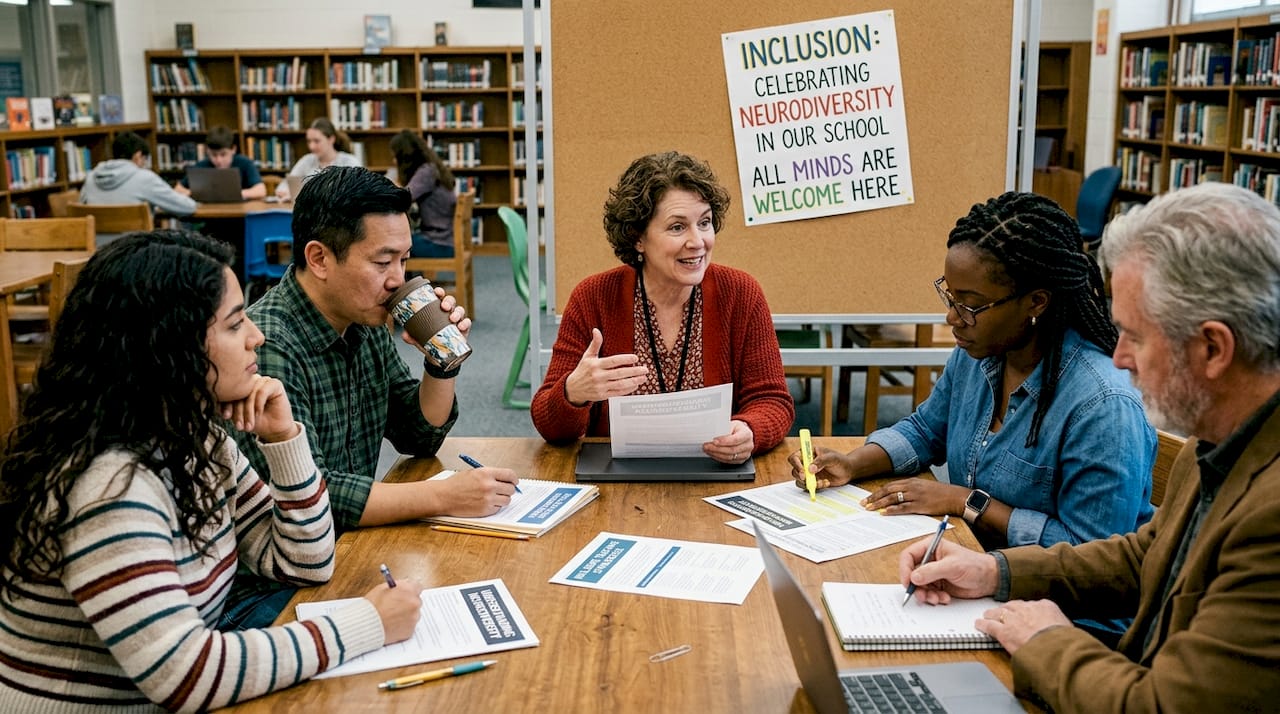
Adaptive curricula explicitly teach acceptance through disability studies and neurodiversity units. These lessons help all students understand neurological differences as natural variations rather than deficits. You can advocate for these programs in your child’s school by presenting research on improved outcomes and reduced bullying.
Pro Tip: Start acceptance conversations early by reading books featuring autistic characters and discussing different ways people think, communicate, and experience the world.
Comparison of awareness versus acceptance approaches:
| Approach | Focus | Action Required | Outcome |
| — | — | — |
| Awareness | Acknowledging autism exists | Passive recognition | Limited behavior change |
| Acceptance | Embracing autistic individuals | Active accommodation | Genuine inclusion and belonging |
Implementing these strategies requires commitment but yields transformative results. Families can create autism friendly environments at home by following similar principles. Schools benefit from comprehensive support strategies for autism in children that address academic, social, and sensory needs simultaneously.
Understanding the impact and measuring acceptance outcomes
Higher autism identity acceptance correlates with improved autonomy, participation, and quality of life. Statistical evidence demonstrates that autistic individuals who experience acceptance in their communities report better mental health outcomes and greater life satisfaction. These benefits extend across age groups and support needs levels, though implementation approaches vary.
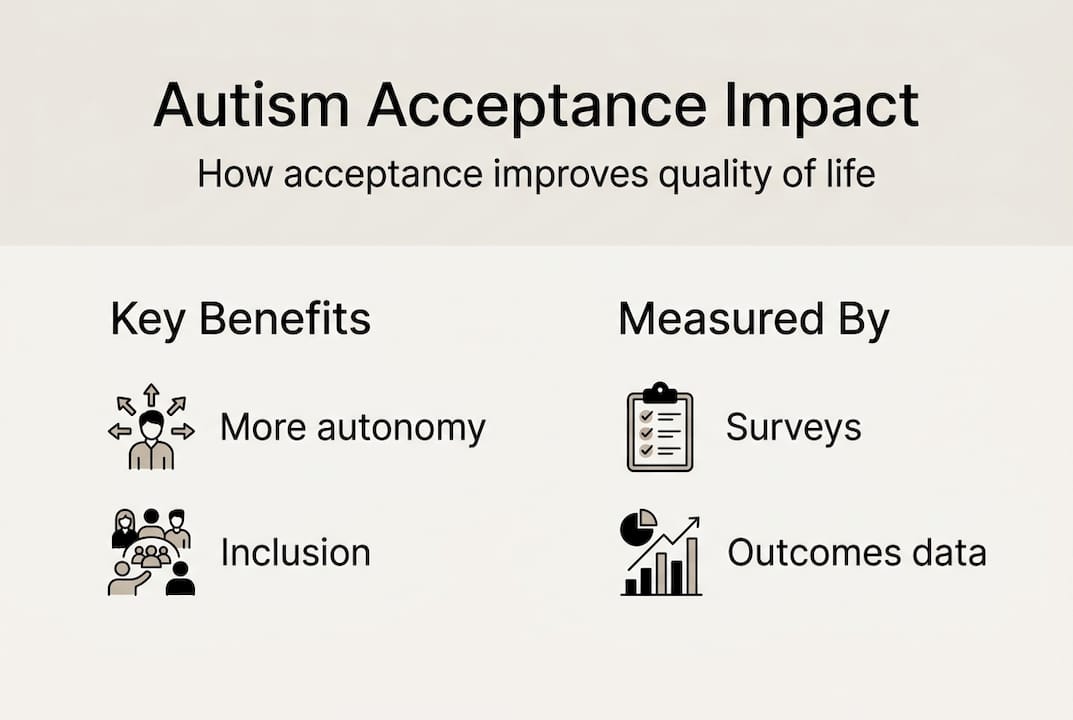
The Autism Acceptance Scale provides researchers and practitioners with tools to evaluate attitudes and acceptance levels systematically. This validated instrument measures multiple dimensions including respect for autistic autonomy, recognition of strengths, and willingness to accommodate differences. Schools and therapy programs increasingly use such scales to benchmark progress and identify areas needing improvement.
Pilot programs reducing stigma use acceptance scales to track intervention effectiveness. Data from these initiatives shows measurable improvements in peer relationships, teacher attitudes, and autistic students’ self-reported wellbeing. Programs combining education, direct contact with autistic individuals, and policy changes achieve the strongest results.
Key outcome metrics tracked in acceptance research:
| Metric | Measurement Method | Typical Improvement |
|---|---|---|
| Quality of life | Self-report surveys | 23-35% increase |
| Autonomy levels | Behavioral assessments | 18-27% increase |
| Social participation | Activity logs | 31-42% increase |
| Mental health | Clinical evaluations | 15-28% symptom reduction |
Moderate agreement between self and parent reports highlights the complexity of measuring acceptance. Autistic individuals sometimes perceive acceptance differently than their families do, emphasizing the importance of prioritizing autistic perspectives. This discrepancy reminds us that good intentions don’t always translate to felt acceptance.
Data-driven inclusion in schools and therapy settings improves outcomes by identifying what actually works. You can request that your child’s school or therapy provider use validated acceptance measures to track progress. This accountability ensures programs deliver real benefits rather than surface-level changes.
Pro Tip: Ask your child’s educators what specific metrics they use to measure inclusion and acceptance, not just academic progress or behavior compliance.
“Acceptance isn’t just feeling good, it’s measurable improvement in how autistic people live, participate, and thrive in their communities.”
These outcome data support expanding acceptance-focused approaches in education, healthcare, and community programming. Families seeking to promote autism independence benefit from understanding how acceptance creates conditions for autonomy and self-determination.
Navigating complexities: diverse autistic experiences and critiques of acceptance
Acceptance does not fit all autistic people equally, especially high-support individuals. Some autistic people with significant support needs feel the neurodiversity movement focuses primarily on those with lower support needs who can self-advocate effectively. This creates tension within autism communities about whose experiences receive validation and resources.
Varied experiences among autistic individuals demand personalized approaches rather than universal solutions. An autistic person with minimal support needs may thrive with workplace accommodations and social understanding. Another person requiring 24-hour care may need extensive medical intervention and family support. Both experiences are valid, and acceptance must encompass this full spectrum.
Some autistics seek treatment and critique ‘tragedy denial’ in acceptance movements. These individuals experience autism as genuinely disabling and painful, not merely different. They argue that celebrating neurodiversity can minimize real suffering and dismiss their desire for interventions that might alleviate challenges. This perspective challenges acceptance advocates to hold space for diverse viewpoints.
Critiques of acceptance movements include:
- Overemphasis on high-functioning narratives that exclude severe autism experiences
- Dismissal of families struggling with aggressive behaviors or self-injury
- Rejection of all interventions as inherently harmful rather than evaluating individually
- Insufficient acknowledgment of co-occurring conditions causing significant impairment
- Tendency to view any mention of challenges as perpetuating stigma
The movement must avoid one-size-fits-all approaches to be truly inclusive. You can support acceptance while recognizing that some autistic individuals need and want medical treatment, therapy, or other interventions. These positions aren’t mutually exclusive. Acceptance means respecting each person’s autonomy to define their own goals and choose their path.
High-support needs individuals sometimes feel marginalized by neurodiversity focus on workplace inclusion and social acceptance. Their daily realities involve managing seizures, navigating non-speaking communication, or requiring assistance with basic self-care. Acceptance for them looks like adequate funding for support services, medical research, and family respite care.
Balancing these perspectives requires humility and willingness to listen. Families navigating these complexities benefit from comprehensive support strategies for autistic children that honor individual needs rather than imposing ideological frameworks. The goal remains creating space where all autistic people experience respect, support, and opportunity to flourish according to their own definitions.
Explore expert autism therapy services tailored for acceptance
Finding qualified therapists who prioritize acceptance and person-centered care makes a significant difference in outcomes. Professional services that embrace neurodiversity-affirming approaches help autistic individuals build on their strengths while addressing genuine challenges. You deserve providers who listen to your family’s goals and respect your child’s autonomy throughout the therapeutic process.
Our directory connects you with specialized autism therapy services that combine evidence-based practices with acceptance principles. These providers understand that effective support enhances quality of life without forcing conformity or eliminating autistic traits. Whether you’re seeking ABA therapy, occupational therapy, or comprehensive support programs, you can find professionals committed to respectful, individualized care.
Explore options like missing piece ABA therapy that focuses on functional skills while honoring each child’s unique communication style and interests. For comprehensive support addressing multiple needs, the autism support and training center offers resources for families navigating education, therapy, and community inclusion.
Frequently asked questions
What is autism acceptance and how does it differ from awareness?
Autism acceptance actively embraces autistic individuals as they are, promoting inclusion and respect for neurological differences. Awareness simply acknowledges that autism exists without requiring meaningful action or attitude changes. Acceptance demands that families, schools, and communities create accommodating environments where autistic people participate fully without masking or conforming to neurotypical expectations.
How can families promote autism acceptance at home and school?
Families promote acceptance by using preferred language, creating sensory-friendly spaces, and centering autistic perspectives in decisions. At school, advocate for neurodiversity curricula, peer mentoring programs, and professional development for teachers. Request accommodations like quiet zones, flexible seating, and visual supports. Most importantly, model acceptance by celebrating your child’s interests and communication style rather than trying to make them appear more neurotypical.
Why do some autistic individuals critique acceptance concepts?
Some autistic people, particularly those with high support needs, feel acceptance movements minimize genuine suffering and disability. They argue that neurodiversity rhetoric can dismiss their desire for treatments that might alleviate painful symptoms or challenging behaviors. These individuals want space to acknowledge autism as disabling in their experience without being told they’re perpetuating stigma. True acceptance must include diverse perspectives, even those seeking cures or intensive interventions.
How does acceptance improve autistic individuals’ quality of life?
Research shows acceptance correlates with better autonomy, increased social participation, and improved mental health outcomes. When autistic people experience genuine acceptance, they report higher life satisfaction and reduced anxiety from constant masking. Acceptance creates conditions where people can be authentic, pursue interests, and contribute meaningfully to communities. Statistical studies demonstrate 23-35% quality of life improvements in accepting environments compared to awareness-only approaches.
What challenges exist in implementing acceptance across different support needs?
Acceptance implementation varies significantly based on individual support requirements and life circumstances. High-support individuals may need extensive medical care, communication devices, and 24-hour assistance that acceptance rhetoric doesn’t always address. Families balancing safety concerns with autonomy face difficult decisions that simple acceptance messaging oversimplifies. Effective acceptance recognizes this complexity and provides individualized support rather than universal prescriptions. Programs must account for co-occurring conditions, communication differences, and varying family resources to be truly inclusive.