TL;DR:
- Occupational therapy helps children with autism gain independence in daily activities and improve sensory processing skills. It complements behavioral therapies like ABA and benefits from early intervention, caregiver involvement, and goal-specific progress tracking. Partnering with qualified providers and utilizing evidence-based frameworks enhances developmental outcomes and school participation.
Occupational therapy (OT) is defined as a health profession that helps children participate in meaningful daily activities despite physical, sensory, or developmental challenges. For children with autism spectrum disorder (ASD), the benefits of occupational therapy span self-care, sensory regulation, social skills, and functional independence. Occupational therapists use evidence-based frameworks like Ayres Sensory Integration (ASI), WeeFIM outcome tracking, and communication tools like PECS to deliver measurable gains. This article breaks down the top benefits, backed by recent case studies and comparative trials, so you can make confident decisions for your child.
1. Benefits of occupational therapy for self-care and daily living skills
The most direct advantage of OT for children with autism is improved independence in activities of daily living (ADLs). ADLs include dressing, feeding, toileting, grooming, and bathing. These tasks are often difficult for autistic children due to sensory sensitivities, motor planning challenges, or difficulty sequencing steps.
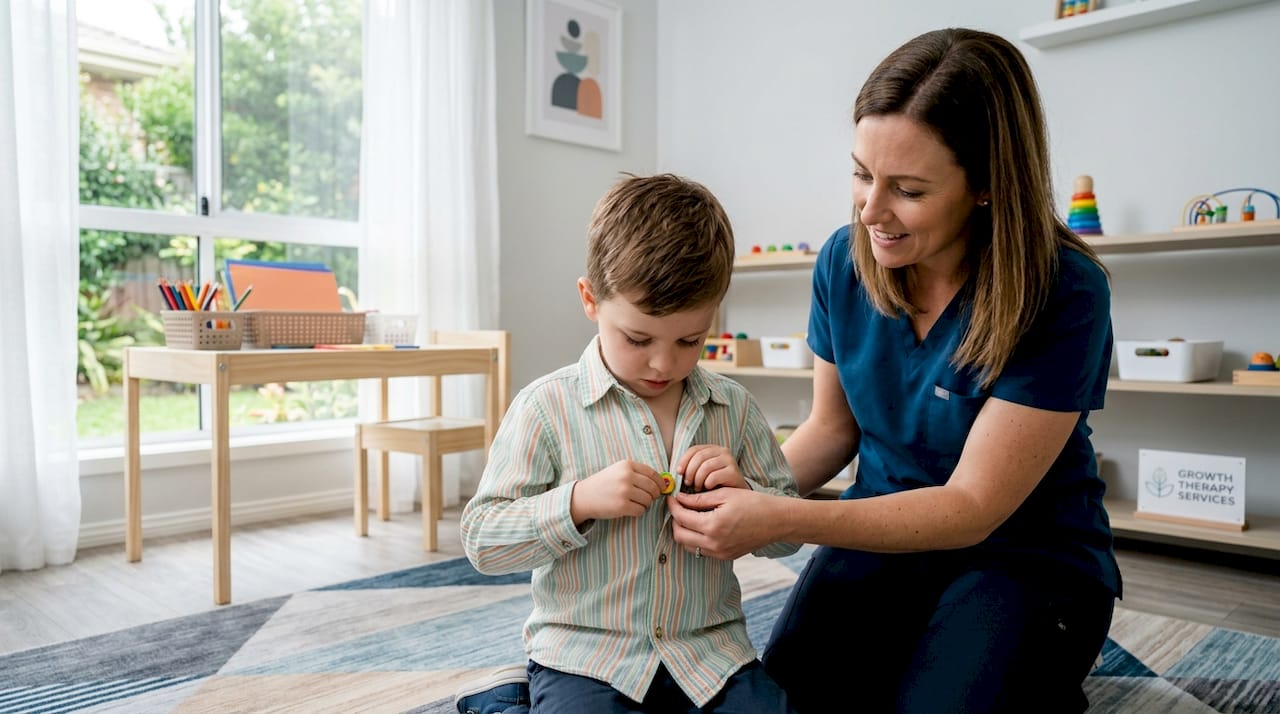
OT addresses ADLs through activity grading, which means breaking a complex task like putting on a shirt into small, teachable steps. A therapist might start with the child pulling a shirt over their head, then add sleeves, then buttons, building competence gradually. This approach prevents overwhelm and builds genuine skill rather than forced compliance.
The results are measurable. In one documented case, a 6-month OT intervention for a 3.5-year-old child with mild ASD raised the WeeFIM Self-Care score from 12 to 20. That jump represents a real shift in how independently the child could manage daily routines, which directly reduces caregiver burden.
- Dressing and undressing independently
- Feeding with utensils and managing food textures
- Toileting and hygiene routines
- Grooming tasks like hand washing and tooth brushing
- Managing a school bag or lunchbox
Pro Tip: Ask your child’s OT for a home program with specific practice tasks. Research confirms that caregiver involvement and consistent practice between sessions are among the strongest predictors of therapy success.
2. Sensory integration therapy and how it helps autistic children
Sensory processing differences are present in the majority of children with autism. Many are hypersensitive to touch, sound, or movement, while others seek intense sensory input. Sensory Integration Therapy (SIT), and specifically the Ayres Sensory Integration (ASI) model, is the most widely used OT framework for addressing these challenges.
Sensory Integration Therapy uses play-based, “just-right challenge” activities to help the nervous system process sensory input more effectively. A child who is overwhelmed by loud environments might work with a therapist in a controlled sensory gym, gradually increasing tolerance through swings, weighted blankets, and tactile play. The goal is not desensitization alone. It is building adaptive responses that transfer to real-life settings like classrooms and family meals.
The sensory skills targeted in ASI-based OT include:
- Tactile discrimination (tolerating touch, textures, and clothing)
- Vestibular processing (balance, movement, and coordination)
- Proprioceptive awareness (body position and motor planning)
- Auditory filtering (managing noise in group settings)
- Visual-motor integration (eye-hand coordination for writing and play)
Pro Tip: SIT protocols vary significantly between providers. Seek therapists who explain their specific goals, the assessment tools they use (such as the Sensory Profile 2), and how sensory work connects to your child’s participation in school and home routines. A vague answer here is a red flag.
3. Social interaction and play skill development
Children with autism frequently face challenges with joint attention, eye contact, turn-taking, and cooperative play. These are not just social niceties. They are the building blocks of language development, friendship, and classroom participation. OT directly targets these skills through structured play activities and social participation goals.
In the same case study referenced above, a child who received 6 months of OT showed increased eye contact duration of up to 4 to 6 seconds, compared to near-zero baseline. That shift opened the door to more reciprocal communication and reduced parental frustration during daily interactions.
OT also integrates communication tools like the Picture Exchange Communication System (PECS) to support children who are nonverbal or minimally verbal. When a child can request a toy using PECS during a play session, the OT is simultaneously building communication, social initiation, and play engagement. These gains compound over time. You can explore how assistive communication tools like PECS fit into broader autism support strategies.
Key social and play skills addressed in OT:
- Joint attention and shared focus with a partner
- Turn-taking in structured games and activities
- Imitation of actions and gestures
- Parallel and cooperative play with peers
- Initiating and responding to social bids
4. Comparing occupational therapy and ABA for children with autism
Parents often ask whether to choose OT or Applied Behavior Analysis (ABA) for their child. The honest answer is that these therapies are not competitors. They address different domains and work best in combination.
A comparative trial involving 30 one-hour sessions found that both OT-ASI and ABA produced significant individualized goal gains in autistic children compared to no treatment. Both groups showed improvements in daily living skills and goal attainment. Neither therapy was clearly superior across all outcome domains. This means the right choice depends on your child’s specific profile, not a universal ranking.
| Domain | OT with ASI | ABA |
|---|---|---|
| Sensory regulation | Primary focus | Limited direct targeting |
| Daily living skills (ADLs) | Strong evidence | Strong evidence |
| Behavior reduction | Indirect, via regulation | Direct primary focus |
| Social communication | Addressed through play | Addressed through reinforcement |
| Goal attainment | Comparable gains in trials | Comparable gains in trials |
| Best combined with | ABA, speech therapy | OT, speech therapy |
Many families find that OT addresses the sensory and motor foundations that make ABA goals more achievable. A child who is not overwhelmed by sensory input is far more available for learning. You can find ABA therapy providers through Autismdoctorsearch to explore integrated care options.
5. Early intervention through OT and its impact on developmental outcomes
Starting OT early, ideally before age three, produces the most significant developmental gains. The brain’s neuroplasticity is highest in the first years of life, which means sensory and motor pathways are more responsive to targeted intervention during this window.
A documented case study of a 25-month-old child at risk for autism showed that early OT intervention produced a dramatic shift in autism risk screening scores. The M-CHAT score dropped from 13 out of 23 to 1 out of 23 following intervention. The child also showed improved sensory reactivity, eye contact, and joint attention. These are not minor improvements. A score shift of that magnitude can change a child’s diagnostic trajectory entirely.
Early OT benefits include:
- Reduced autism risk scores on validated screening tools
- Improved sensory reactivity and tolerance
- Earlier development of joint attention and social communication
- Better motor coordination and body awareness
- Stronger foundation for school readiness
The American Academy of Pediatrics recommends that families coordinate OT with pediatricians and other specialists to create individualized, evidence-based intervention plans. This coordination matters because early OT works best as part of a multidisciplinary team, not as a standalone service.
Pro Tip: If your child has an Individualized Education Program (IEP), OT services can often be written directly into the plan at no cost to your family. Ask your school district’s special education coordinator about this option. You can also review IEP advocacy strategies to strengthen your request.
6. Fine motor and handwriting skill development
Many children with autism struggle with fine motor tasks: holding a pencil, cutting with scissors, fastening buttons, or using a fork. These challenges affect school performance, self-care, and self-esteem. OT directly targets fine motor development through graded activities that build strength, coordination, and precision.
A therapist might use theraputty, pegboards, or bead threading to build hand strength and pincer grasp before introducing pencil tasks. This sequencing matters. Asking a child to write before their hand muscles are ready creates frustration and avoidance. OT removes that barrier by building the physical foundation first.
Fine motor gains also support handwriting, which remains a primary academic tool in most schools. Children who receive OT for handwriting often show improvements in letter formation, spacing, and writing endurance. These gains reduce classroom anxiety and improve a child’s ability to participate in academic tasks alongside peers.
7. Emotional regulation and behavior support through OT
Challenging behaviors in children with autism, including meltdowns, aggression, and self-injurious behavior, are frequently rooted in sensory overload or an inability to communicate distress. OT addresses the sensory and regulatory foundations of these behaviors rather than targeting the behavior itself in isolation.
A Cochrane review found short-term OT benefits in daily functioning and mental health-related quality of life. This finding applies broadly: when a child can regulate their sensory system, their emotional responses become more manageable. Fewer meltdowns mean less stress for the entire family.
OT therapists teach children self-regulation strategies like heavy work activities (pushing a cart, carrying books), proprioceptive input (jumping, wall push-ups), and sensory breaks. These tools give children a way to manage their own nervous system, which builds both independence and confidence. Parents who learn these strategies alongside their child can apply them at home, in the car, and at school.
8. School participation and academic readiness
The importance of occupational therapy extends directly into the classroom. Children with autism often struggle with sitting still, transitioning between activities, managing classroom noise, and engaging in group tasks. OT addresses all of these barriers through a combination of sensory strategies, environmental modifications, and skill building.
An OT might recommend a wobble cushion for a child who needs movement to stay focused, or noise-canceling headphones for a child who is overwhelmed by classroom noise. These are not accommodations that lower expectations. They are tools that level the playing field. When sensory barriers are removed, children can access the curriculum more fully.
OT also supports transitions, which are a common trigger for anxiety and behavioral escalation in autistic children. Therapists use visual schedules, countdown timers, and predictable routines to reduce transition-related stress. These strategies align directly with special education approaches that support autistic learners in school settings.
Key takeaways
Occupational therapy produces measurable gains in self-care, sensory regulation, social participation, and school readiness for children with autism when delivered consistently with clear goals and caregiver involvement.
| Point | Details |
|---|---|
| ADL independence is measurable | WeeFIM scores show documented gains in self-care after structured OT intervention. |
| Sensory work needs clear goals | ASI therapy is most effective when tied to real participation outcomes, not standalone sensory tasks. |
| Early intervention changes trajectories | M-CHAT scores can shift dramatically with OT before age three, altering developmental outcomes. |
| OT and ABA are complementary | Both therapies show comparable goal attainment; combining them addresses a wider range of needs. |
| Caregiver involvement drives results | Consistent home practice and parent coaching are among the strongest predictors of OT success. |
What I’ve learned from watching OT work in real families
I’ve spent years reviewing autism therapy research and connecting families with providers through Autismdoctorsearch. The pattern I see most often is this: parents who get the most from OT are the ones who treat it as a partnership, not a service they drop their child off for.
The research backs this up. Goal Attainment Scaling and WeeFIM scores improve most when parents are coached on how to reinforce skills at home. But beyond the numbers, I’ve seen families describe a shift in their daily life quality that no clinical measure fully captures. A child who can dress independently in the morning changes the entire tone of a family’s day.
My honest advice: do not accept vague progress updates. Ask your OT specifically which assessment tools they use, what the baseline scores were, and what the target looks like at 3 months and 6 months. If a therapist cannot answer those questions clearly, find one who can. The American Occupational Therapy Association publishes practice guidelines that can help you ask the right questions.
One more thing worth saying plainly: OT is not a cure, and no credible therapist will tell you it is. A Cochrane summary notes that short-term benefits are documented but long-term effects require ongoing evaluation. Set realistic goals, track progress consistently, and adjust the plan when something is not working. That approach produces better outcomes than any single therapy technique.
— Keith
Find occupational therapy providers for your child
Autismdoctorsearch maintains one of the most current directories of autism therapy resources in the United States. If you are ready to find a qualified occupational therapist for your child, the autism therapy services directory lists vetted providers across multiple therapy types, including OT, ABA, speech therapy, and more. Each listing includes contact details so you can reach out directly to schedule an evaluation and discuss an individualized care plan. Whether you are just starting the process or looking to add OT to an existing therapy program, Autismdoctorsearch gives you a reliable starting point.
FAQ
What is occupational therapy for children with autism?
Occupational therapy for autism is a health service that helps children develop the skills needed for daily activities, including self-care, play, and school participation. Therapists use evidence-based approaches like Ayres Sensory Integration and ADL training to address each child’s specific challenges.
How does occupational therapy help with sensory issues in autism?
OT uses Sensory Integration Therapy to help children process sensory input more effectively through play-based activities that build adaptive responses. The goal is to reduce sensory-related distress and improve participation in everyday settings like school and home.
When should a child with autism start occupational therapy?
Early intervention is most effective, ideally before age three, when neuroplasticity is highest. Research shows that OT before age three can produce significant shifts in autism risk scores and developmental measures.
Can occupational therapy and ABA be used together?
Yes. A comparative trial found that OT with Ayres Sensory Integration and ABA produced comparable gains in goal attainment and daily living skills. The two therapies address different domains and work best in combination for most children with autism.
How do I know if occupational therapy is working for my child?
Ask your therapist to track progress using validated tools like WeeFIM, Goal Attainment Scaling, or the Sensory Profile 2. Clear baseline scores and defined targets at 3 and 6 months give you objective evidence of whether the intervention is producing results.