TL;DR:
- School counselors support autistic students through direct and indirect services, advocating for their social, emotional, and academic needs.
- Parents can enhance intervention outcomes by actively engaging, documenting behaviors, asking targeted questions, and collaborating proactively.
Most parents think of school counselors as the adults who help teenagers pick college classes or chat with struggling students after a bad day. For families raising children with autism, that assumption can quietly cost your child months or even years of support they deserve. School counselors play a vital role in supporting students with autism through individual counseling, family consultation, advocacy, and active participation in IEP and 504 plan teams. This guide unpacks exactly what that role looks like, how it benefits your child every day, and what you can do to make it work harder for your family.
Table of Contents
- Understanding the counselor’s role for students with autism
- How counselors support emotional and social development
- School counselors and the IEP/504 team: Advocacy in action
- Special considerations: High-functioning autism, transitions, and inclusion
- Barriers and real-world challenges in counselor support
- Why a proactive, partnership approach makes all the difference
- Connect with autism support services beyond school
- Frequently asked questions
Key Takeaways
| Point | Details |
|---|---|
| Counselors support whole child | School counselors help with emotional, social, and academic needs for students with autism. |
| Active advocacy is vital | Parents can shape better support by engaging proactively in IEP and 504 planning with counselors. |
| Challenges exist, but can be addressed | Barriers like high caseloads and limited autism-specific training can be overcome with prepared collaboration. |
| Transition support matters | Counselors play a crucial role in guiding older autistic students through major school changes. |
| External resources are key | Combining school counselor support with outside professionals leads to stronger student outcomes. |
Understanding the counselor’s role for students with autism
School counselors carry responsibilities that stretch far beyond scheduling classes or mediating lunchroom disputes. For autistic students specifically, their work spans two broad categories: direct services and indirect services. Direct services mean the counselor works face to face with your child, whether that is individual counseling sessions, small group work on social skills, or classroom lessons about emotional awareness. Indirect services happen behind the scenes, including consulting with teachers, coordinating with outside therapists, and collaborating with you as a parent.
What makes a school counselor different from a special education teacher or an outside therapist? Each professional plays a distinct role.
| Professional | Primary focus | Works with | Setting |
|---|---|---|---|
| School counselor | Academic, social, emotional, career | Students, families, teachers, IEP team | School |
| Special education teacher | Academic instruction and learning goals | Students primarily | Classroom |
| Outside therapist | Clinical diagnosis, intensive therapy | Student and family | Clinic or private office |
Counselors act as connective tissue between these groups. They coordinate information, flag concerns, and make sure the whole team stays aligned around your child’s needs.
When it comes to IEP (Individualized Education Program) and 504 plan development, counselors serve as advocates and liaisons. According to ASCA’s role statement, school counselors deliver direct and indirect services including advocacy and participation in IEP/504 teams to address academic, social/emotional, and career needs for students with autism. That advocacy role matters because it means someone at the school table is explicitly looking out for your child’s broader wellbeing, not just their reading level.
“The school counselor functions as both a direct support and a systems-level advocate, ensuring that the educational environment is genuinely responsive to each autistic student’s strengths and challenges.”
You can learn more about how autism advocacy in schools works as a structured support to understand the broader landscape of who fights for your child’s rights.
How counselors support emotional and social development
Knowing that counselors have a wide-ranging role is helpful. Seeing what that actually looks like in practice is where things get real for your child.
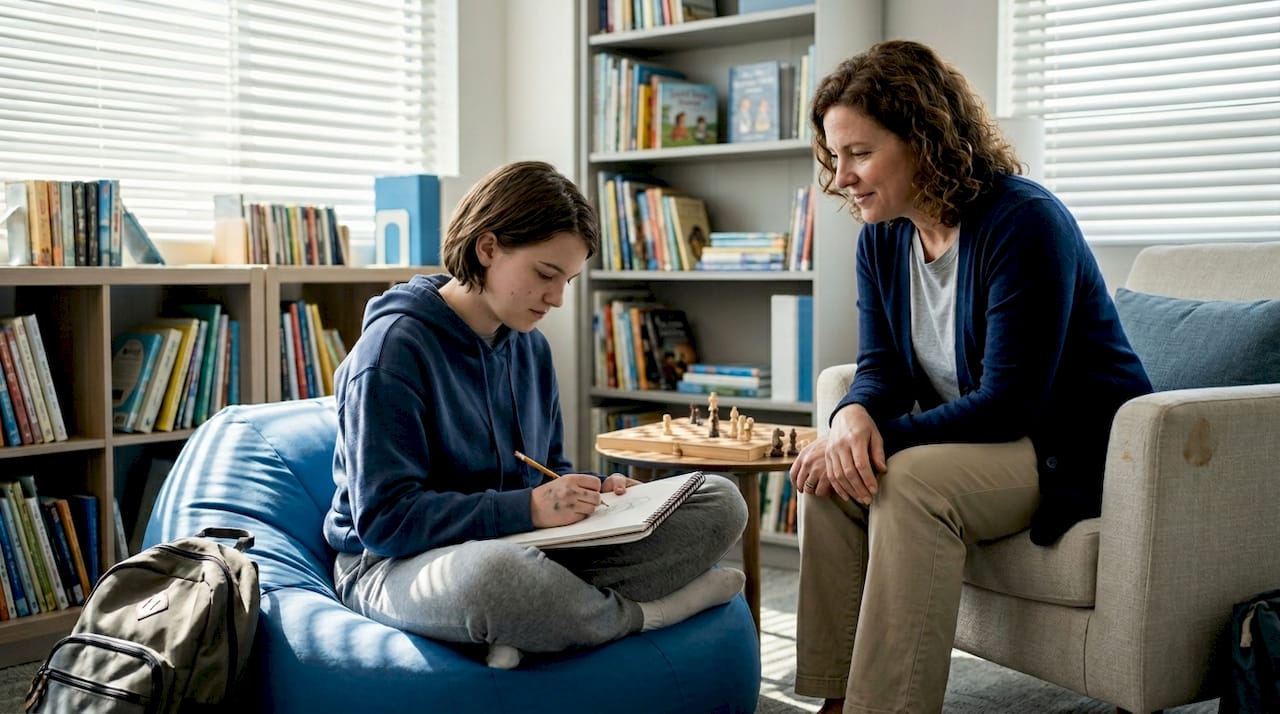
Counselors use several evidence-based approaches to support autistic students with the emotional and social challenges that often feel overwhelming, particularly in a school environment full of unpredictable interactions. Key services include short-term counseling focused on emotion management, social skills coaching, peer conflict resolution, and referrals to more intensive support when needed. Research on counselor training programs confirms that key methodologies include short-term counseling for emotion management and interpersonal skills, collaboration with families and teachers, referrals for long-term support, and designing developmentally appropriate activities aligned with ASCA Student Standards.
Here is how support typically looks at different school levels:
- Elementary: Counselors use visual tools, emotion cards, and play-based activities to help younger autistic students identify feelings and practice taking turns in conversations.
- Middle school: Group sessions focus on navigating peer relationships, recognizing social cues, and managing anxiety around transitions like changing classes.
- High school: Sessions shift toward self-advocacy, executive functioning skills, and preparing for post-secondary transitions including employment or college.
The table below shows common counseling services and their specific benefits for autistic students:
| Counseling service | Benefit for autistic students |
|---|---|
| Individual sessions | Safe space to process anxiety and social challenges |
| Small group social skills | Structured peer practice in a low-stakes environment |
| Emotion regulation coaching | Reduces meltdowns and improves classroom readiness |
| Family consultation | Ensures consistent strategies between home and school |
| Teacher collaboration | Aligns classroom accommodations with counseling goals |
| Outside referrals | Connects families to ABA therapy, mental health, or medical support |
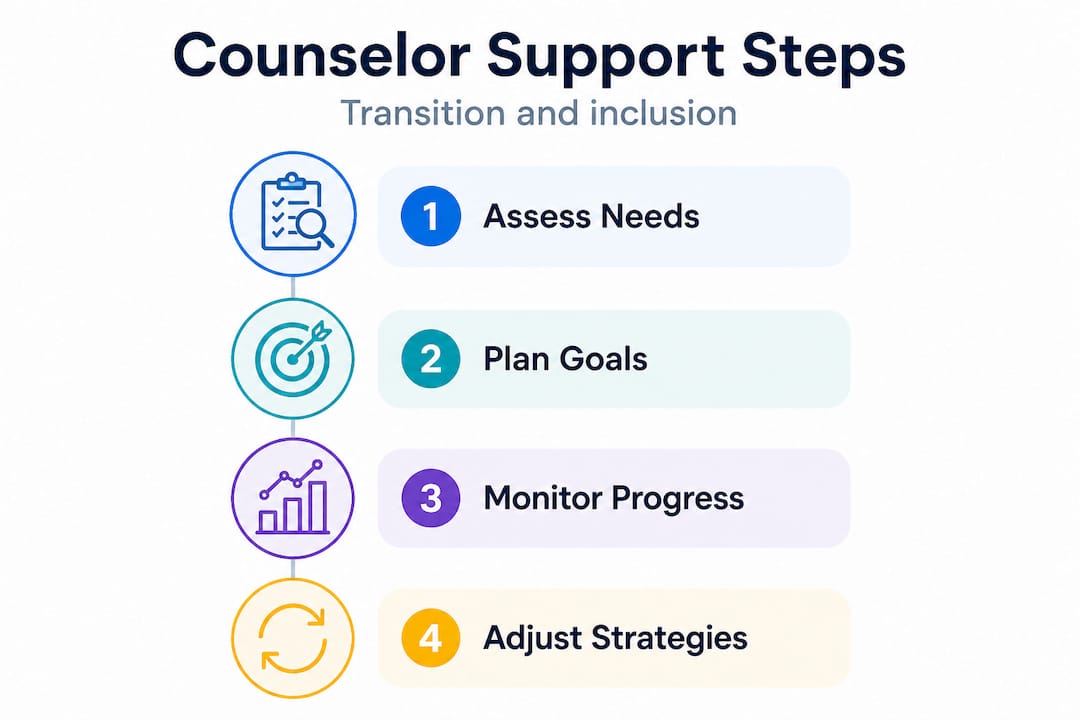
Here is how the support process typically unfolds step by step:
- A teacher or parent notices your child is struggling socially or emotionally and flags it to the counselor.
- The counselor conducts an observation or informal check-in to understand the situation.
- A plan is created, which may include individual sessions, small group work, or both.
- Progress is monitored through teacher feedback, parent input, and your child’s own reports.
- The counselor adjusts the approach or makes a referral if more specialized support is needed.
Counselors often use communication strategies for autism to tailor how they interact with each student, and families can explore education strategies for autistic students to reinforce what happens at school with what happens at home.
Pro Tip: Ask your counselor directly, “What specific emotional regulation strategies are you using with my child, and how can I use the same language at home?” Consistency between school and home is one of the most powerful things you can do to help your child generalize new skills.
School counselors and the IEP/504 team: Advocacy in action
The IEP and 504 plan processes can feel like walking into a room full of acronyms and professionals who all seem to know something you don’t. A school counselor who is actively engaged in these meetings changes that dynamic significantly.
Counselors contribute to IEP and 504 plans by helping develop social/emotional goals, providing direct counseling services as part of the plan, and ensuring that adaptations reflect your child’s actual daily experience at school. Research confirms that counselors serve as advocates and liaisons in IEP and 504 plan development and implementation, helping develop goals, provide counseling services, and ensure adaptations for students with autism are meaningful and practical.
Here are specific questions you should bring to your next IEP or 504 meeting to make sure counselor-led support is on the table:
- Is the school counselor included in this meeting and in the implementation of this plan?
- What social/emotional goals are written into my child’s IEP or 504?
- Does the plan include sensory break schedules, and who monitors them?
- Is peer interaction coaching available, and what does it look like?
- How will the counselor communicate progress to me, and how often?
- What happens if a strategy in this plan is not working for my child?
After a plan is in place, counselors should monitor how your child responds and flag when adjustments are needed. If you feel your child’s plan is sitting on a shelf somewhere instead of being actively used, it is appropriate to request a mid-year review. You can also push for inclusive education for autism approaches to be formally incorporated into your child’s accommodation plan.
Pro Tip: Before any IEP or 504 meeting, write down three things your child is struggling with and three things that are working well. Bringing concrete observations makes the counselor’s job easier and ensures the meeting focuses on what actually matters for your child’s growth.
Special considerations: High-functioning autism, transitions, and inclusion
Not every autistic student looks the same in a school setting. Students who are sometimes described as high-functioning, or who are twice-exceptional (meaning they have both a high intellectual ability and a disability), often fall through the cracks precisely because their challenges are less visible. A perceptive counselor can make an enormous difference for these students.
For high-functioning and twice-exceptional students with autism, counselors can support college transitions, anxiety management, executive function skills, and strength-based approaches that build on a student’s passions and social interests. These students frequently experience significant anxiety in social situations, struggle with organizational demands, and feel pressure to “mask” their autistic traits to fit in. Counselors who understand this can offer a rare combination of academic support and genuine emotional attunement.
It is worth noting that ASD affects 1 in 50 children according to older CDC data, and yet the field still lacks specific benchmarks for what counselor-led interventions should look like. This gap makes collaboration with families even more critical, because research underscores the importance of interdisciplinary teamwork to fill in where formal guidance falls short.
Here are the top transition supports a counselor can offer as your child moves toward adulthood:
- Anxiety management strategies tailored to new environments like college campuses or workplaces.
- Executive functioning coaching, including how to manage deadlines, organize tasks, and ask for help.
- Self-advocacy skill building so your child can communicate their own needs to future professors or employers.
- Connection to disability services offices at colleges or vocational rehabilitation programs.
- Social connection planning, identifying clubs, interest groups, or community spaces aligned with your child’s strengths.
“Many schools still lack clear benchmarks for what counselor-led autism interventions should accomplish, which is why the parent-counselor partnership is not a bonus, it is a necessity.”
Parents who want to sharpen their own skills in this area will find parent communication strategies a useful complement to what counselors model with students.
Barriers and real-world challenges in counselor support
Here is something many parents do not hear often enough: school counselors are frequently overworked, undertrained for autism-specific needs, and navigating systems that make individualized care difficult. Understanding these barriers helps you advocate more effectively, not with frustration, but with the knowledge to push for better.
Common challenges that limit the quality of counselor support include:
- High caseloads: Many school counselors are responsible for 300 to 500 students at once. The 2025 School Counselor Report confirms that high caseloads limit personalized support, creating implementation barriers especially in inclusive settings.
- Limited autism-specific training: Most counselor preparation programs do not require deep coursework in autism support, leaving many counselors relying on general skills that may not be sufficient for your child’s specific needs.
- Inclusion setting complexity: As more autistic students are placed in general education classrooms, counselors must coordinate across more teachers and environments with fewer dedicated resources.
- Communication gaps: Without strong home-school communication systems, important observations from parents can get lost and never make it into a student’s support plan.
“Ethical, competent counselors must prioritize evidence-based practices and data-driven collaboration, especially when supporting students with complex developmental profiles.”
If you notice your child is not getting meaningful support, start by putting your concerns in writing. Send an email to both the counselor and the school principal requesting a meeting to review your child’s support plan. Documenting your concerns creates a paper trail and often prompts faster action than a verbal conversation alone.
Why a proactive, partnership approach makes all the difference
Here is the perspective most guides skip over: the quality of the support your child receives from a school counselor is not fixed. It is shaped, to a significant degree, by how engaged you are as a parent.
Conventional wisdom treats counselors as background professionals who quietly do their work. Parents who challenge that assumption and position themselves as active partners consistently report better outcomes for their children. This is not about being demanding or combative. It is about recognizing that counselors are working with dozens of students and genuinely welcome parents who come prepared, share observations, and follow up consistently.
The most effective parents we see engaging through the parental advocacy for autism landscape do three things: they document their child’s behaviors at home with specific examples, they ask precise questions in meetings rather than general ones, and they express empathy for the counselor’s workload while firmly holding expectations.
That last part matters more than people realize. Counselors who feel seen and respected as professionals are more likely to go the extra mile for your child. A simple “I know your caseload is enormous, and I appreciate what you do” before a meeting costs you nothing and changes the entire tone of the collaboration.
The framework is straightforward: communicate proactively in writing, come to every meeting with documented observations, ask specific questions about what is being done and how it is being measured, and follow up after every meeting with a brief summary email. This is not extra work. It is the most efficient way to make sure your child’s support does not fall through the cracks of a busy school system.
Connect with autism support services beyond school
School counselors are a powerful piece of your child’s support network, but they work best when paired with professional resources outside school. At Autism Doctor Search, our directory connects families to autism therapy services including ABA therapy, mental health providers, occupational therapists, and medical centers that complement everything happening in the classroom. You can also explore options in special schools for autism if you are considering a more specialized educational environment. Our directory is updated regularly so you can find current, vetted resources in your area. The goal is a complete circle of support, with school counselors and outside professionals working from the same page on behalf of your child.
Frequently asked questions
How can I ensure my child receives counseling services at school?
Request an IEP or 504 plan meeting and specifically ask for school counselor involvement to address your child’s social and emotional needs, since counselors serve as advocates and liaisons in both IEP and 504 plan development.
What questions should I ask my child’s school counselor about autism support?
Ask about emotional regulation strategies, social skills training, sensory accommodations, and how the counselor participates in your child’s IEP or 504 plan, because active parent participation in these meetings helps ensure tailored supports are written into the plan.
Do all counselors have autism-specific training?
Many do not, and the 2025 School Counselor Report highlights the ongoing need for autism-specific training, which means families often need to seek additional resources outside school to fill those gaps.
Are counselors involved in transition planning for older autistic students?
Yes, counselors can assist with college transition planning, anxiety management, and executive functioning skills to help older students move successfully into college or employment.
What if my school counselor seems too busy?
Put your concerns in writing and formally request additional supports or outside referrals, since high caseloads are a documented barrier and written requests typically receive a faster, more formal response than verbal conversations.