
TL;DR:
- Families outside California can access federal programs, innovative adult support models, and verified national directories for autism services. Coordinated clinics with dedicated staff help reduce insurance complexities and improve therapy access, especially beyond state systems. These resources offer broader, more reliable support options than any single state’s website provides.
What are the best alternatives to www.dds.ca.gov for autism services?
Families outside California, or those who’ve hit the limits of what their state’s developmental disability portal offers, have real options. The alternatives to www.dds.ca.gov span federal programs, national directories, innovative adult support models, and clinic-based coordination services that go well beyond what any single state website can provide.
Here’s a quick map of what’s available:
- Federal programs: The Department of Education’s OSEP funds technical assistance centers that support educational services for children with disabilities across every state, not just California.
- Medicaid EPSDT: Federal Medicaid policy requires states to cover medically necessary autism therapies for children under 21, giving families a coverage pathway independent of state DDS systems.
- Innovative adult support models: Organizations like Jonathan’s Landing Foundation integrate housing and workforce training into a single, intentional model, filling the gap that most state programs leave wide open after age 21.
- Care and benefits coordinators: Clinics like Radiant Autism Center employ dedicated staff who handle insurance authorizations, eligibility verification, and renewal paperwork so families don’t have to.
- National autism directories: Autismdoctorsearch maintains a verified, regularly updated directory of ABA therapy, occupational therapy, behavioral health, and special education providers nationwide.
- Reputable member organizations: The Association of Developmental Disabilities Providers (ADDP) and the California Council of Community Behavioral Health Agencies are among the recognized organizations listed through Autismdoctorsearch.
- Direct verification: Online listings, including state DDS sites, frequently carry outdated insurance information. Calling providers directly remains the only reliable way to confirm participation.
Table of Contents
- 1. Federal programs give you a nationwide foundation
- 2. Jonathan’s Landing Foundation rethinks adult autism support
- 3. Care and benefits coordinators cut through insurance complexity
- 4. Autismdoctorsearch connects you to verified providers nationwide
- State-level autism resources beyond California
- How to navigate eligibility and applications for alternative programs
- Key Takeaways
1. Federal programs give you a nationwide foundation
The Department of Education’s Office of Special Education Programs (OSEP) is the federal anchor for autism and disability education services. OSEP funds a network of technical assistance centers that help states, schools, and families understand and access services under IDEA. If your child’s school district is failing to provide appropriate services, OSEP-backed resources give you the framework and the leverage to push back.
Medicaid’s EPSDT program is equally significant. It requires state Medicaid programs to cover any medically necessary treatment for children under 21, including ABA therapy, speech therapy, and occupational therapy. That mandate applies regardless of which state you live in, making it one of the most powerful federal tools available to autism families.
Federal advocacy organizations also maintain navigation hotlines and state-specific benefit guides. These tools help families interpret what their state Medicaid plan actually covers, which often differs significantly from what a state DDS website describes.
2. Jonathan’s Landing Foundation rethinks adult autism support
Most state developmental programs, including California’s DDS, have a hard edge at age 21. After that, housing and employment supports are typically managed by separate agencies with no coordination between them. Jonathan’s Landing Foundation was built specifically to address that fragmentation of adult autism systems.

The Foundation’s model treats housing and work as equal pillars, not separate services. Its Workforce Academy pairs hands-on career training with residential stability, targeting hundreds of residences and thousands of career pathways. That scale matters because most intentional communities for autistic adults remain small pilots with limited geographic reach.
Other models worth knowing:
- Suivera runs a 12-month supported independent living pilot for neurodiverse adults, focused on life skills and emotional regulation rather than clinical therapy.
- Pike Autism Support Services (PASS) is developing Independence Village in Pennsylvania, a mixed-use residential community for 50–60 adults with and without IDD, with an Enrichment Center for programming and social connection.
- US Autism Homes partners with faith-based organizations, including the Archdiocese of the Greek Orthodox Church, to provide non-denominational residential care with a long-term stability focus.
- Beacon Specialized Living has operated a community-based integrated model for over 50 years, combining in-home behavioral support with clinical care for adults with complex needs.
Pro Tip: When evaluating any adult support model, ask specifically whether housing and employment are managed by the same organization or handed off to separate providers. Integrated models tend to produce more stable outcomes than those that treat housing and work as independent services.
These programs supplement state systems rather than replace them. Many residents still draw on Medicaid HCBS waiver funding to pay for direct support services within these communities.
3. Care and benefits coordinators cut through insurance complexity
One of the most underappreciated features of a good autism clinic is a dedicated Care and Benefits Coordinator. These staff members handle the administrative side of autism therapy access: insurance eligibility checks, prior authorization requests, renewal paperwork, and appeals when coverage is denied.
Radiant Autism Center employs coordinators specifically to help families estimate out-of-pocket costs and manage the back-and-forth with insurers. That role matters because authorization requirements for ABA therapy can be extensive, and a lapse in paperwork often means a gap in services.
What coordinators typically handle:
- Verifying active insurance coverage before the first appointment
- Submitting prior authorization requests for ABA, speech, and occupational therapy
- Tracking authorization renewal dates so therapy doesn’t get interrupted
- Coordinating with Medicaid and private insurers when a child has dual coverage
- Filing appeals when a claim is denied
The AMA has documented how frequently provider directories carry inaccurate insurance information. A coordinator who calls your insurer directly, rather than relying on an online listing, is the practical solution to that problem. When you’re comparing clinics, asking whether they have a dedicated coordinator in this role is one of the most useful questions you can ask.
You can also learn more about how autism case managers support families through the full arc of therapy access and care planning.
4. Autismdoctorsearch connects you to verified providers nationwide
State DDS websites are built around their own regional center networks. If you live outside California, or if your child needs a provider type that your regional center doesn’t cover, a national directory fills that gap.
Autismdoctorsearch maintains a current, comprehensive directory of autism therapy and support providers across the United States, covering ABA therapy, occupational therapy, speech therapy, behavioral health, medical clinics, special education schools, and nonprofit organizations. The directory includes listings for recognized organizations like the Association of Developmental Disabilities Providers (ADDP) and the California Council of Community Behavioral Health Agencies.
What to look for when using any autism directory:
- Update frequency: Listings that aren’t regularly reviewed go stale fast, especially insurance participation data.
- Service breadth: A directory covering only ABA misses families who need speech, OT, or social skills programs.
- Geographic range: National coverage matters when local options are limited or waitlists are long.
- Provider verification: Look for directories that confirm provider credentials, not just collect self-submitted listings.
Even with a strong directory, always call the clinic directly to confirm they accept your specific insurance plan. Online listings, including those on insurer websites, often lag behind actual participation status.
For families exploring alternative autism services beyond a single state portal, Autismdoctorsearch is a practical starting point that covers the full range of therapy types and provider categories.
State-level autism resources beyond California
Every state has its own developmental disability agency, and the quality and scope of services varies considerably. A few worth knowing:
Texas operates the Health and Human Services Commission, which administers Medicaid waiver programs for children and adults with autism. Waitlists for some waivers run long, so early application matters.
New York routes developmental disability services through the Office for People With Developmental Disabilities (OPWDD). The agency funds residential, day program, and employment supports for adults.
Florida uses the Agency for Persons with Disabilities (APD) and its iBudget waiver, which gives families more direct control over how funds are allocated across service types.
Pennsylvania administers autism services through the Office of Developmental Programs, with specific waiver programs targeting both children and adults, including the Adult Autism Waiver for individuals 21 and older.
Most state agencies have their own intake processes, eligibility criteria, and waitlists that operate independently of California’s regional center system. If you’ve relocated from California, you’ll need to re-establish eligibility in your new state rather than transfer DDS services directly.
How to navigate eligibility and applications for alternative programs
Eligibility for alternative programs, whether federal, state, or community-based, usually hinges on a few consistent factors: a documented autism diagnosis, age, income or Medicaid status, and sometimes geographic location.
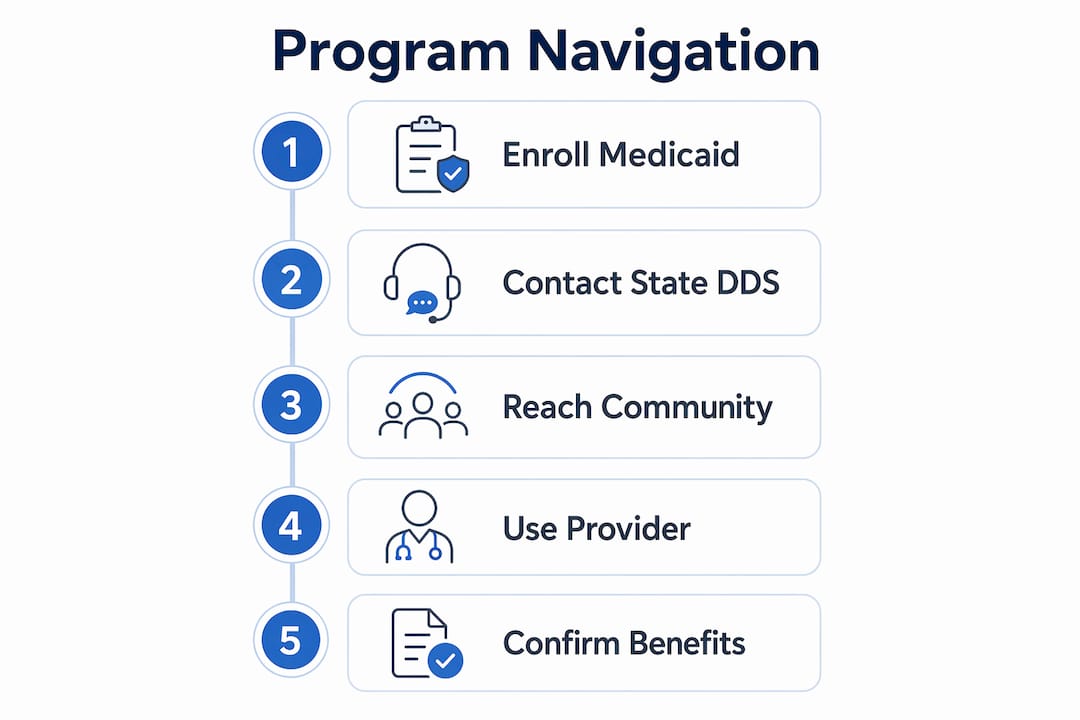
For federal programs like EPSDT, eligibility flows through your state Medicaid enrollment. If your child is enrolled in Medicaid, EPSDT coverage applies automatically for services deemed medically necessary. Your pediatrician or a developmental pediatrician can write the documentation supporting medical necessity.
For state waiver programs, the process typically starts with contacting your state’s developmental disability agency directly. Most require a formal intake application, a diagnostic evaluation, and a functional assessment. Waitlists are common, so submitting an application early, even before you need services urgently, is standard practice.
For community-based adult programs like Jonathan’s Landing Foundation or Suivera, contact the organization directly. These programs often have their own intake criteria and may require a separate application from any state waiver process. Many still coordinate with Medicaid HCBS waivers to fund the direct support component of their model.
Autismdoctorsearch can help you identify autism therapy services in your area as a starting point while you work through the eligibility process for longer-term programs.
Key Takeaways
Federal, community-based, and directory-driven alternatives to www.dds.ca.gov give U.S. families a broader set of verified, accessible autism support options than any single state website can provide.
| Point | Details |
|---|---|
| Federal programs cover all states | OSEP and Medicaid EPSDT apply nationally, giving families a baseline outside any state DDS system. |
| Adult support models fill the age-21 gap | Organizations like Jonathan’s Landing Foundation integrate housing and workforce training where state programs typically stop. |
| Coordinators reduce insurance friction | Clinics with dedicated Care and Benefits Coordinators handle authorizations and appeals, cutting delays in therapy access. |
| Always verify insurance by phone | Online directories frequently carry outdated participation data; a direct call to the clinic is the only reliable check. |
| National directories expand your search | Autismdoctorsearch lists verified providers across ABA, OT, speech, and behavioral health nationwide, beyond any regional center network. |