
The most effective way to talk to teachers about your autistic child’s needs is to start early, stay specific, and make it easy for them to respond. Lead with your child’s strengths, not just challenges. Establish a preferred communication channel before the school year gets busy. Keep your requests focused: limiting asks to three items at a time increases the likelihood that the school team will actually follow through. A positive, respectful tone from the first conversation sets the foundation for everything that follows.
Here is a quick-start checklist to ground your first outreach:
- Choose a communication method the teacher prefers (email, daily log, app, or phone)
- Share three key facts about your child’s needs, strengths, and classroom supports
- Ask what information from home would help the teacher understand your child better
- Set a regular check-in schedule, even if brief
- Keep your tone collaborative, not adversarial
How to talk to teachers about autism from day one
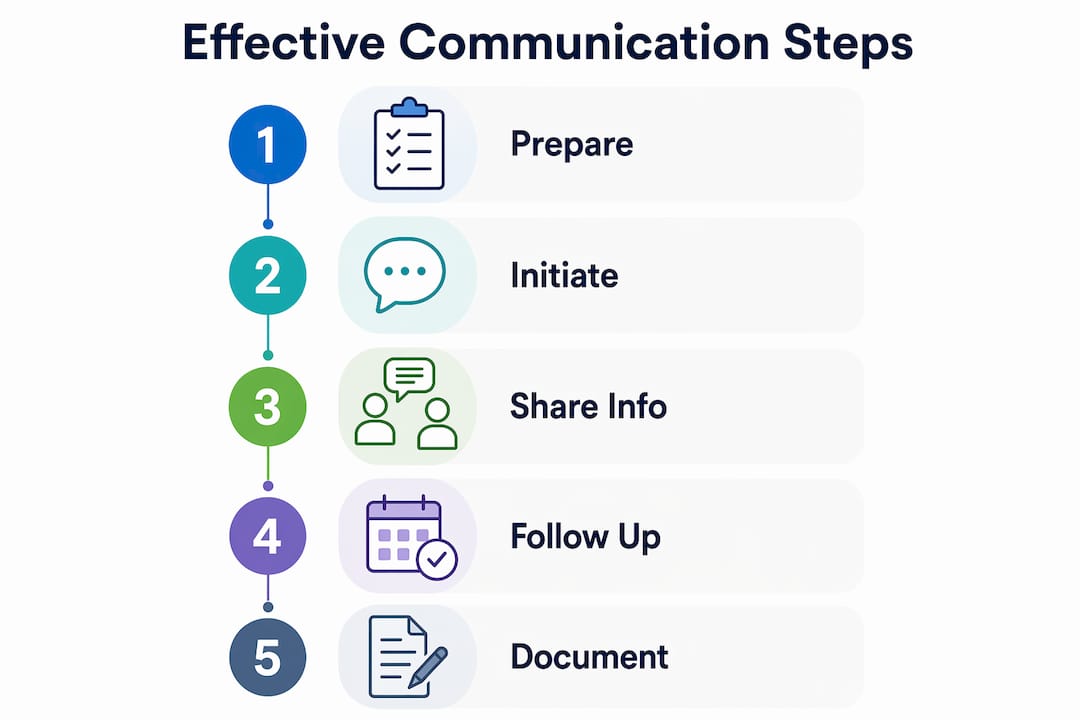
The first conversation with a new teacher shapes the entire year. Start by letting the teacher know you want to build a real working partnership, not just exchange updates when problems arise. The Marcus Autism Center recommends asking teachers directly how they prefer to communicate, whether that is email, a written daily log, phone calls, or in-person meetings. When teachers choose the method, they are far more likely to stay consistent.
Once you have a channel, keep it predictable. A weekly email on the same day works better than sporadic messages whenever something comes up. Follow every verbal conversation with a brief written summary sent by email. That habit creates a documentation trail that protects both you and the teacher if misunderstandings arise later.
Pro Tip: Ask the teacher what information from home would help them most, such as sleep quality, recent therapy goals, or changes in routine. Reciprocal communication like this dramatically improves teacher engagement and reduces the guesswork on both sides.
What to share about your child’s needs and preferences
Teachers need a clear, organized picture of your child, and they need it fast. A well-prepared parent gives them that picture without overwhelming them. Use the structure below as a starting point.
| Category | What to share |
|---|---|
| Strengths and interests | Favorite topics, activities, and what motivates your child |
| Communication style | Verbal, gestures, picture exchange, AAC device, or a mix |
| Sensory sensitivities | Noise, lighting, textures, or transitions that cause distress |
| Learning needs | Preferred instruction style, processing time, visual supports |
| Safety considerations | Elopement risk, meltdown triggers, calming strategies |
Leading with strengths shifts the conversation away from a deficit checklist and toward specific, practical support. A teacher who knows your child loves trains and struggles with loud transitions will approach the day very differently than one who only hears about behavioral challenges. Pair each challenge with a strategy that has already worked at home.
Building a positive, ongoing partnership with teachers
Start every meeting by acknowledging something the teacher has done well. It sounds simple, but expressing genuine appreciation sets a tone that makes hard conversations easier later. Teachers who feel respected are more open to feedback and more willing to try new approaches.
When the teacher shares observations about your child’s behavior, treat that information as data, not criticism. The Marcus Autism Center notes that teachers see your child in a structured group setting you rarely witness, and those observations are genuinely valuable. Work through problems together rather than arriving with a predetermined solution. Keep a shared record of agreements, strategies tried, and outcomes, so neither party has to rely on memory alone.
- Open with appreciation before raising concerns
- Listen fully before responding to teacher observations
- Agree on shared goals and write them down
- Review what is working before changing strategies
- Store all written agreements in a dedicated folder
How a One Page Profile can transform teacher communication
A One Page Profile is a single document that tells teachers everything they need to know about your child at a glance. It covers what people like and admire about the child, what matters most to the child from their own perspective, and clear instructions for how to support them. That last section is the most practical: it tells a teacher exactly what to do when your child is overwhelmed, how to give instructions effectively, and what to avoid.
| Section | Content |
|---|---|
| What people like and admire | Positive traits observed by family, therapists, and past teachers |
| What is important to me | The child’s own priorities, routines, and preferences |
| How to support me | Specific strategies, accommodations, and responses that work |
| My goals | Short and longer-term aspirations the child and family hold |
Share the profile with every adult who works with your child, including substitute teachers, aides, and specialists. Sharing it widely ensures consistent support across every setting, not just the main classroom. Update it at least once a year or after any significant change in your child’s needs.
Keeping teachers engaged and building a paper trail
Consistent, low-friction communication keeps teachers engaged over the long haul. A brief weekly check-in, even two or three sentences by email, signals that you are present without adding to an already heavy workload. When something significant happens at home, a quick heads-up to the teacher prevents confusion about unexpected behavior at school.

Documentation matters more than most parents realize. Keep copies of every email, meeting note, and written agreement in a dedicated folder, physical or digital. If a concern escalates, that record becomes your clearest evidence of what was discussed and what was promised. Date every note and follow up in writing after phone calls.
How to advocate effectively during school meetings
Walking into a meeting without preparation puts you at a disadvantage. Bring a written list of your top concerns, ranked by priority. Stick to a few items if possible, since focused agendas produce better outcomes than wide-ranging discussions. Bring a support person if you need one, whether a spouse, advocate, or autism support specialist.
Speak in concrete terms. “My child shuts down when given multi-step verbal instructions” is more useful than “my child has trouble following directions.” Ask the team to explain any jargon they use, and do not leave the room until you understand every decision made. Request that next steps be written down before the meeting ends.
How to prepare for and follow up on teacher conferences
Before any conference, write down your child’s recent wins, current struggles, and two or three specific questions. Review any recent progress reports or communication logs so you are not starting from scratch. Arrive a few minutes early; rushed entrances set a tense tone.
After the conference, send a follow-up email within 24 hours. Summarize what was discussed, what was agreed upon, and who is responsible for each next step. That email is not just courtesy. It is your record of the meeting and a gentle accountability tool for everyone involved. For autism-specific communication strategies that go beyond the conference room, Autismdoctorsearch has additional resources worth bookmarking.
Understanding and discussing your child’s IEP
The Individualized Education Plan, or IEP, is a legally binding document that outlines your child’s goals, services, and accommodations under the Individuals with Disabilities Education Act. You are a full member of the IEP team, not a passive observer. Read the draft before the meeting, note anything unclear, and come prepared to ask questions or push back on goals that feel too low.
Focus on whether goals are specific and measurable. “Will improve social skills” is not a goal; “will initiate a greeting with a peer in three out of five opportunities” is. Ask how progress will be tracked and how often you will receive updates. If you disagree with any part of the IEP, you have the right to request changes before signing. Understanding ABA therapy collaboration can also help you align IEP goals with any outside therapy your child receives.
Collaborating on behavior and learning strategies
The most effective behavior strategies are consistent across home and school. When a teacher finds an approach that works, ask for the specifics so you can replicate it at home. When something works at home, share it. That two-way exchange is what reciprocal communication looks like in practice.
Ask the teacher to describe what a successful day looks like for your child, not just what goes wrong. Build from those successes. If a behavior plan is in place, request a copy and review it together at least once a semester to check whether it still fits your child’s current needs.
Recognizing teacher challenges and supporting the partnership
Teachers managing a full classroom while supporting a student with complex needs are under real pressure. Acknowledging that reality does not mean lowering your expectations. It means framing your requests in ways that are practical and specific rather than adding to an already long list. Offering resources, such as a relevant article or a contact at your child’s therapy provider, signals that you see the teacher as a partner rather than a problem to solve.
When conflicts arise, address them directly and early. A small misunderstanding left unaddressed grows into a breakdown in trust. Request a meeting, stay calm, and focus on what your child needs rather than assigning blame. Most teachers genuinely want to do right by your child. Giving them the right information, at the right time, in the right format, makes that possible.
If you are looking for qualified autism therapy providers to support your child’s school goals, the Autismdoctorsearch directory lists vetted services across the United States, from ABA therapy to occupational therapy and special education schools.
Key Takeaways
Clear, proactive communication with your child’s teachers, grounded in strengths and supported by written documentation, is the single most reliable way to build a partnership that benefits your child’s education.
| Point | Details |
|---|---|
| Establish a preferred channel | Ask teachers how they prefer to communicate and commit to that method consistently. |
| Lead with strengths | Share your child’s interests and motivators before discussing challenges to shift the conversation toward solutions. |
| Use a One Page Profile | A single document covering strengths, communication style, sensory needs, and support strategies accelerates teacher understanding. |
| Document everything | Follow every verbal discussion with a written email summary to prevent misunderstandings and create accountability. |
| Keep requests focused | Limiting asks to three items at a time increases the likelihood that the school team will actually follow through. |