A developmental pediatrician is a medical doctor who specializes in evaluating and treating children with developmental, behavioral, emotional, and learning challenges. More precisely, the formal title is developmental-behavioral pediatrician (DBP), a subspecialty recognized by the American Board of Pediatrics. These physicians go well beyond routine checkups. They assess the full picture of a child’s development, from how a child learns and communicates to how they regulate emotions and interact socially.
Here is what that role covers at a glance:
- Diagnosing and managing conditions like Autism Spectrum Disorder, ADHD, and learning disorders
- Evaluating behavioral concerns such as Oppositional Defiant Disorder, anxiety, and tics
- Considering medical, family, and psychosocial factors together, not in isolation
- Coordinating care across families, schools, therapists, and community providers
Nearly 25% of children and adolescents have developmental, learning, behavioral, or emotional needs that warrant this level of expertise, yet the supply of DBPs in the United States falls well short of that demand.
Table of Contents
- What training and qualifications does a developmental-behavioral pediatrician have?
- What conditions do developmental pediatricians evaluate and treat?
- How do developmental-behavioral pediatricians work with families and care teams?
- How to find a developmental-behavioral pediatrician in the United States
- What treatment approaches do developmental pediatricians typically recommend?
- Key Takeaways
What training and qualifications does a developmental-behavioral pediatrician have?
The path to becoming a DBP is long and specific. It starts with a four-year medical degree, followed by a three-year pediatrics residency, and then a rigorous fellowship in developmental-behavioral pediatrics. That adds up to roughly ten years of training after a bachelor’s degree.
Fellowship training is where the real specialization happens. DBPs develop expertise in complex developmental pathways that go far beyond what general pediatricians cover. The training is explicitly multidisciplinary, preparing physicians to work alongside psychologists, speech therapists, and educators rather than operating in a silo.
Key credentials to look for:
- Board certification in general pediatrics from the American Board of Pediatrics
- Subspecialty certification in developmental-behavioral pediatrics, also granted by the American Board of Pediatrics
- Completion of an accredited fellowship program with hands-on clinical and interdisciplinary training
A general pediatrician manages a child’s broad physical health. A DBP takes over when the concerns are complex and multi-layered, requiring specialized expertise that a busy primary care practice simply cannot provide.
What conditions do developmental pediatricians evaluate and treat?
DBPs handle a wide spectrum of conditions, and the cases they see rarely fit neatly into one box. A child referred for attention problems might also have an anxiety disorder and a language delay. That overlap is exactly where a DBP’s training pays off.
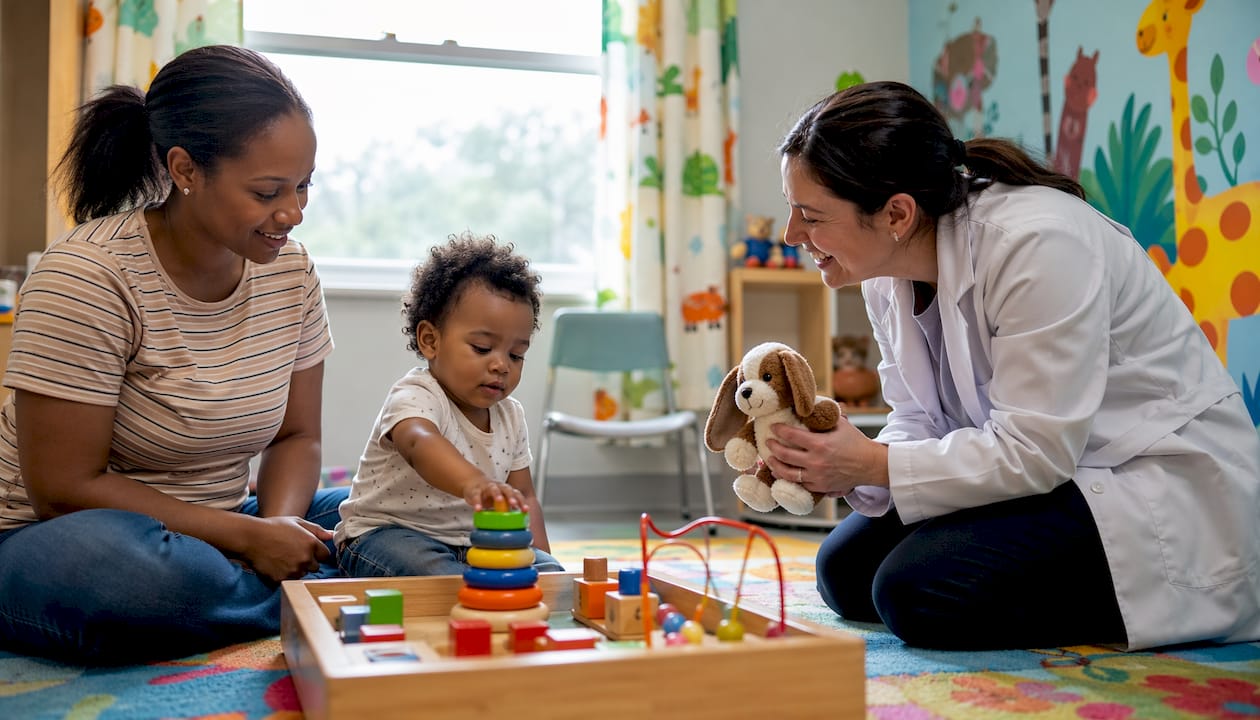
Conditions commonly evaluated and treated include:
Developmental disabilities:
- Autism Spectrum Disorder
- Cerebral palsy
- Speech and language delays
- Intellectual disabilities
Learning and attention disorders:
- ADHD
- Dyslexia and other learning disorders
- Processing disorders
Behavioral and emotional disorders:
- Oppositional Defiant Disorder
- Anxiety and depression
- Tics and Tourette syndrome
- Sleep and feeding problems
DBPs conduct comprehensive assessments that pull together medical history, family background, psychosocial context, educational records, and a neurodevelopmental exam. The goal is not just a diagnosis but a full understanding of how a child functions across every setting in their life. For parents navigating an autism evaluation specifically, the clinical assessment process can feel overwhelming, and knowing what to expect helps.
How do developmental-behavioral pediatricians work with families and care teams?
DBPs operate in a boundary-spanning way, meaning their work extends well past the exam room. They coordinate with schools, therapy providers, and community support agencies to make sure a child’s care plan actually functions in real life.
Practical collaboration looks like this:
- Partnering with parents to understand the child’s strengths, not just deficits
- Communicating directly with teachers and school psychologists about accommodations and IEP goals
- Coordinating with speech-language pathologists, occupational therapists, and psychologists on shared treatment goals
- Incorporating family priorities and cultural context into every care plan
Many DBP clinics run as multidisciplinary teams, with psychologists, nurse practitioners, and therapists working alongside the physician. Before your child’s first appointment, ask the clinic who is on the team and what each person’s role will be. Understanding the role of educational therapists alongside the DBP can also clarify how school-based support fits into the broader plan.
How to find a developmental-behavioral pediatrician in the United States
Finding a DBP takes some legwork, partly because demand outpaces supply in most regions. Your child’s primary care pediatrician is the natural first stop. A referral from them often speeds up the process and ensures the DBP gets relevant background information before the first visit.
Practical steps to locate a qualified specialist:
- Ask your pediatrician for a referral to a DBP or a developmental-behavioral pediatrics clinic
- Use the Autismdoctorsearch directory to search for autism and developmental specialists near you
- Check hospital-affiliated programs, since many children’s hospitals run dedicated DBP clinics with multidisciplinary teams
- Ask about wait times upfront, then request placement on a cancellation list to get seen sooner
- Verify the clinic’s team composition before committing, since some clinics offer full multidisciplinary evaluations while others do not
Preparing for the visit matters as much as finding the right provider. Gather school reports, therapy records, and any prior evaluations before the appointment. Schedule the visit at a time when your child is typically alert and cooperative, since the quality of the assessment depends partly on how your child presents that day.
Pro Tip: Ask the clinic whether they accept your insurance and what forms or questionnaires to complete in advance. Arriving prepared shortens the assessment timeline and gives the DBP a richer picture from the start.
What treatment approaches do developmental pediatricians typically recommend?
DBPs do not just diagnose. They build individualized treatment plans that draw from multiple disciplines, then monitor progress over time. The approach is strength-based, meaning it starts with what a child can do and builds from there.
Common treatment approaches include:
- Applied Behavior Analysis (ABA) for children with Autism Spectrum Disorder, focused on building communication and adaptive skills
- Behavioral therapy and parent training for ADHD and Oppositional Defiant Disorder
- Speech and language therapy for communication delays and language-based learning disorders
- Occupational therapy for sensory processing challenges and fine motor delays
- Medication management, when appropriate, for ADHD, anxiety, or mood disorders
- Educational accommodations coordinated with schools, including IEPs and 504 plans
- Play therapy and social skills groups for children who need support with peer relationships
The DBP typically does not deliver all of these therapies directly. Instead, they serve as the clinical anchor, referring to the right providers, reviewing progress, and adjusting the plan as the child grows. Families looking for autism therapy services can use Autismdoctorsearch to find vetted providers who work alongside DBPs in their area.
Key Takeaways
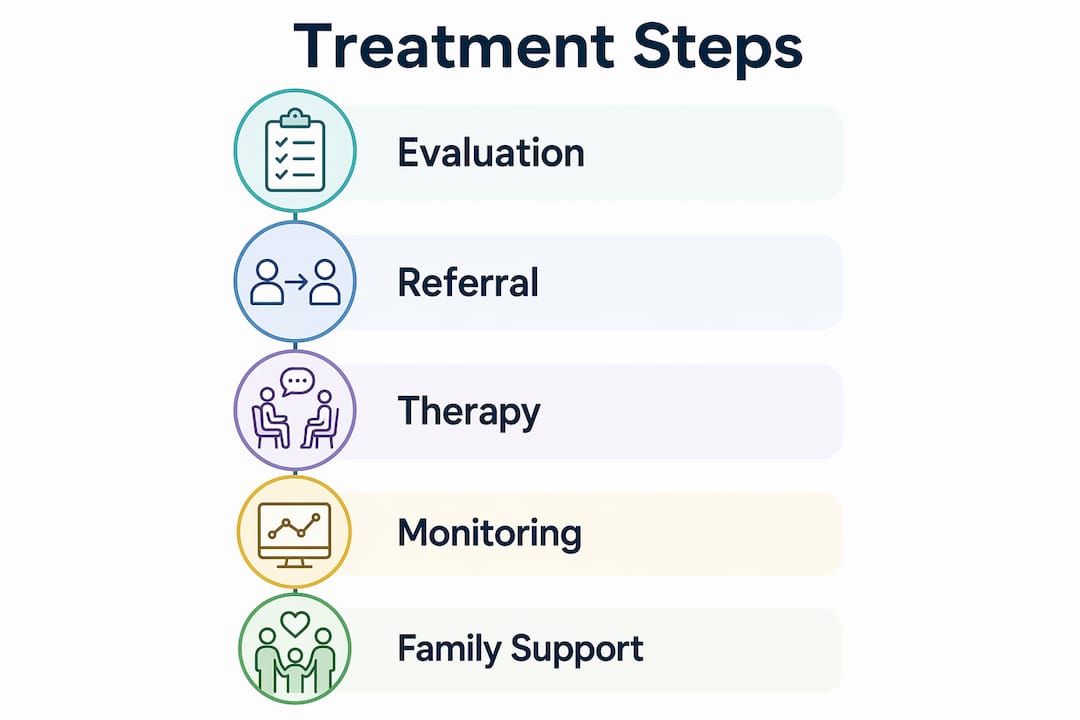
Developmental-behavioral pediatricians are the specialists best equipped to evaluate and manage the complex overlap of developmental, behavioral, and learning challenges that affect nearly 25% of children and adolescents in the United States.
| Point | Details |
|---|---|
| Specialized subspecialty | DBPs hold dual American Board of Pediatrics certifications and complete roughly ten years of post-bachelor’s training. |
| Broad conditions treated | They evaluate Autism Spectrum Disorder, ADHD, learning disorders, Oppositional Defiant Disorder, anxiety, and more. |
| Collaborative care model | DBPs coordinate with schools, therapists, and families, not just within the clinic. |
| High demand, limited supply | Nearly 25% of children and adolescents have relevant developmental, learning, behavioral, or emotional needs, but DBP availability is limited, so early referral and waitlist placement matter. |
| Finding one | Start with your pediatrician for a referral, then use resources like Autismdoctorsearch to locate specialists near you. |