
Many parents assume the strategies that worked for their autistic child will carry over seamlessly into the teenage years. This misconception can leave families unprepared for the distinct challenges that emerge during adolescence. Autistic teenagers face unique social pressures, hormonal changes, and increasing demands for independence that require adapted approaches. Understanding these shifts and implementing targeted support strategies can transform this developmental stage from overwhelming to manageable. This guide offers evidence-based methods to help you navigate autism during the teenage years, empowering you to support your teen’s growth, advocate effectively, and build a foundation for their future success.
Table of Contents
- Key takeaways
- Understanding autism in teenagers: changes and challenges
- Core strategies for supporting autistic teenagers
- Tailoring support: sensory, emotional, and independence needs compared
- Advocating and planning ahead for your autistic teen’s future
- Supporting your teen autism journey with expert services
- Frequently asked questions
Key Takeaways
| Point | Details |
|---|---|
| Predictable routines | Maintaining predictable routines helps autistic teens manage sensory overload and stay emotionally regulated during adolescence. |
| Clear teen communication | Tailor clear communication to teens by using concrete language and explicit explanations while recognizing evolving social and emotional reasoning. |
| Independence with scaffolding | Encourage independence gradually with appropriate scaffolding and defined steps to build confidence. |
| Respect sensory needs | Acknowledge sensory needs and validate emotions rather than viewing distress as misbehavior. |
Understanding autism in teenagers: changes and challenges
The teenage years bring dramatic shifts for all adolescents, but autistic teens face additional layers of complexity that many parents don’t anticipate. Autism presents distinct challenges in adolescence compared to childhood, requiring tailored parental approaches. Social expectations intensify as peer groups become more nuanced and unwritten rules multiply. Your teen may struggle to decode increasingly complex social hierarchies, sarcasm, and subtle emotional cues that neurotypical peers seem to grasp instinctively.
Communication patterns also evolve during these years. While your child may have developed functional communication skills earlier, the abstract thinking and emotional vocabulary required for teenage interactions can present new hurdles. Conversations about feelings, future planning, and hypothetical scenarios demand cognitive flexibility that may not come naturally. Many autistic teens can discuss concrete topics fluently but freeze when asked to interpret motivations or predict social outcomes.
Sensory sensitivities often amplify during puberty as hormonal changes affect nervous system regulation. The crowded hallways, fluorescent lights, and social chaos of high school can trigger sensory overload more frequently than elementary environments did. Parents sometimes mistake increased meltdowns or withdrawal as behavioral regression rather than recognizing them as responses to genuine sensory distress.
“The transition to adolescence requires parents to shift from managing autism to coaching their teen through it, recognizing their growing need for autonomy while providing appropriate scaffolding.”
Emotional regulation becomes more complex as autistic teenagers experience the same hormonal surges as their peers but may lack the social learning that typically helps teens navigate these feelings. Your teen might experience intense emotions without the framework to name them or the social scripts to express them appropriately. This can manifest as:
- Sudden mood shifts that seem disproportionate to triggers
- Difficulty identifying the source of their emotional distress
- Increased anxiety around social situations and performance expectations
- Rigid thinking patterns that intensify during times of stress
A common misconception is that autistic teens don’t want social connection. The reality is more nuanced. Most autistic teenagers desire friendships and belonging but struggle with the execution. They may want to connect but feel exhausted by the effort required to mask their differences or interpret social dynamics. Understanding this distinction helps you provide support that honors their social needs without forcing neurotypical interaction patterns. For foundational context on earlier developmental stages, explore our autism in children guide support strategies 2026.
Core strategies for supporting autistic teenagers
Effective support for autistic teens requires consistent implementation of evidence-based strategies tailored to their developmental stage. Maintaining predictable routines, using clear communication, encouraging independence, respecting sensory needs, and validating feelings are key strategies for autism in teens. These approaches work synergistically to create an environment where your teenager can thrive.

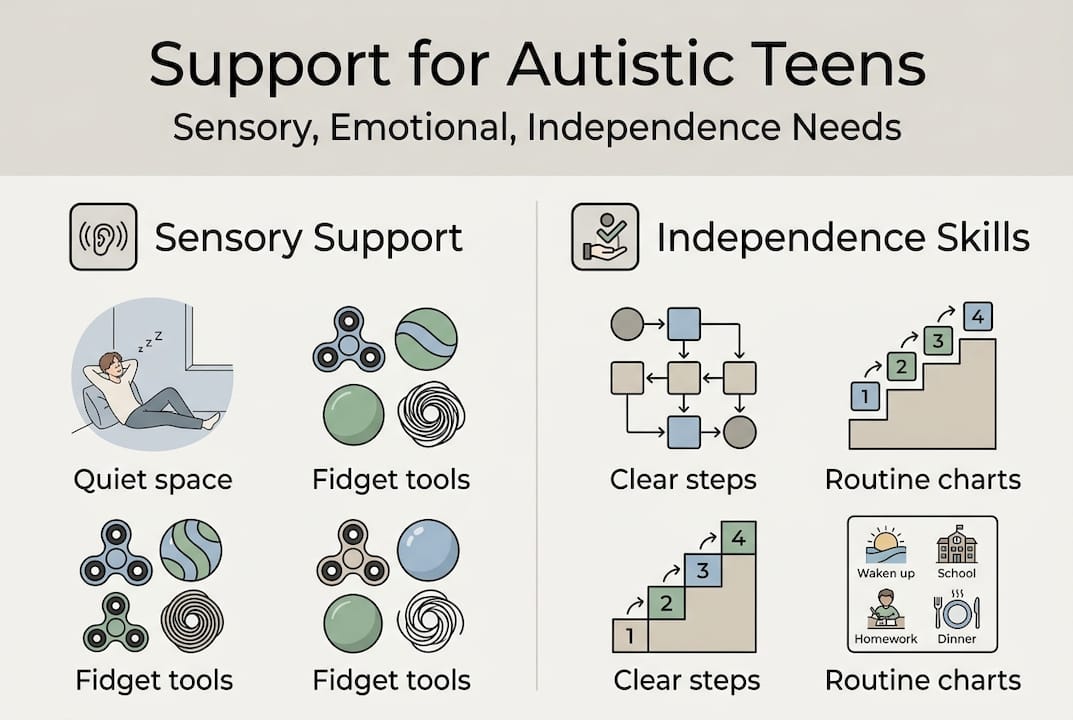
Establishing predictable routines provides the scaffolding your teen needs to manage increasing responsibilities. Create visual schedules that outline daily expectations, using apps or physical charts depending on your teen’s preferences. Build in transition warnings before schedule changes, giving at least 10 minutes notice when possible. Consistency doesn’t mean rigidity. The goal is creating a framework that reduces cognitive load, freeing your teen’s mental energy for learning and growth rather than constant environmental scanning.
Communication clarity becomes even more critical during the teenage years when abstract language dominates peer interactions. Follow these principles:
- Use concrete language that specifies exactly what you mean rather than implied expectations
- Break multi-step instructions into numbered sequences your teen can reference
- Confirm understanding by asking your teen to repeat back key points in their own words
- Avoid idioms, sarcasm, and figurative language unless you’re explicitly teaching these concepts
- Allow processing time after asking questions, resisting the urge to fill silence
Pro Tip: Record important instructions or expectations in a shared note-taking app your teen can reference later. This removes the pressure of immediate recall and provides a concrete resource during moments of stress or confusion.
Fostering independence requires patience and systematic skill-building. Identify one life skill per month to focus on, such as meal preparation, laundry, or public transportation use. Demonstrate the skill while narrating each step aloud. Practice together multiple times before expecting independent execution. Celebrate approximations and effort, not just perfect completion. This gradual approach builds competence without overwhelming your teen with simultaneous demands. Resources like support autism communication difficulties strategies 2026 can enhance your communication toolkit.
Sensory accommodations should evolve as your teen’s needs change. Conduct regular check-ins about what sensory inputs feel manageable versus overwhelming. Common teenage sensory challenges include:
- Cafeteria noise and social chaos during lunch periods
- Locker room environments during physical education
- Unexpected fire drills or announcements
- Classroom lighting and temperature fluctuations
Provide tools like noise-canceling headphones, fidget devices, or weighted lap pads that your teen can access independently. Designate a quiet space at home where they can decompress after school without social demands. Professional support from autism therapy services can help identify and address specific sensory patterns.
Emotional validation strengthens your relationship and teaches your teen that their experiences matter. When your teenager expresses distress, resist the urge to immediately problem-solve or minimize their feelings. Instead, reflect back what you hear without judgment. Simple phrases like “That sounds really frustrating” or “I can see why that would feel overwhelming” communicate acceptance. Once they feel heard, then collaboratively explore solutions. This pattern teaches emotional literacy and builds trust that encourages future communication.
Tailoring support: sensory, emotional, and independence needs compared
Every autistic teenager presents a unique profile of strengths and challenges. Respecting sensory needs and fostering independence are critical, but vary widely between autistic teens. Understanding where your teen falls on various spectrums helps you customize support rather than applying generic strategies that may not fit.
| Support area | High support needs | Moderate support needs | Lower support needs |
|---|---|---|---|
| Sensory regulation | Multiple accommodations required; frequent breaks needed; significant environmental modifications | Some accommodations helpful; occasional sensory overload; selective environment adjustments | Minimal accommodations; self-regulates effectively; communicates needs clearly |
| Emotional expression | Requires visual emotion charts; benefits from scripted responses; needs frequent co-regulation | Can identify basic emotions with prompting; developing self-regulation skills; occasional support needed | Recognizes and names emotions independently; uses coping strategies with minimal guidance |
| Independence level | Requires step-by-step guidance for most tasks; benefits from visual supports; needs supervision | Can complete familiar routines independently; needs support for novel tasks; occasional check-ins helpful | Manages most daily tasks autonomously; seeks help when needed; ready for increasing responsibility |
Sensory profiles exist on a continuum and can shift based on stress levels, sleep quality, and environmental factors. A teen who typically manages sensory input well may require more support during exam periods or social events. Conversely, a teen with significant sensory sensitivities might develop coping strategies over time that reduce their support needs. Regular assessment prevents you from either over-supporting, which can limit growth, or under-supporting, which creates unnecessary distress.
Pro Tip: Create a sensory profile document with your teen that identifies their specific triggers, early warning signs of overload, and effective calming strategies. Share this with teachers, therapists, and other caregivers to ensure consistent support across environments.
Emotional support strategies should match your teen’s current capacity for emotional awareness and regulation. Some autistic teenagers benefit from structured approaches like:
- Emotion thermometers that rate intensity from 1 to 10
- Feelings wheels that expand emotional vocabulary beyond basic categories
- If-then coping plans that link specific emotions to concrete regulation strategies
- Regular check-in schedules that normalize discussing emotional states
Others may find these tools patronizing and prefer open-ended conversations or journaling. Pay attention to what resonates with your specific teen rather than forcing methods that create resistance. The goal is building emotional literacy in whatever format facilitates their learning.
Independence development requires honest assessment of your teen’s current capabilities and systematic skill progression. Avoid the extremes of either doing everything for your teen out of concern or expecting immediate independence because of their age. Organizations like autism independence matters specialize in supporting this gradual transition. Break complex life skills into component parts, teaching each element separately before combining them. For example, independent grocery shopping involves:
- Creating a shopping list based on meal plans
- Navigating store layout and locating items
- Comparing prices and making purchasing decisions
- Using checkout procedures and payment methods
- Transporting groceries home safely
Master each component before expecting your teen to coordinate all elements simultaneously. This prevents the frustration and learned helplessness that develop when teens are set up for failure through unrealistic expectations.
Advocating and planning ahead for your autistic teen’s future
Parents play a critical role in advocating for therapy, educational supports, and healthcare planning for teens with autism. Effective advocacy requires understanding your teen’s legal rights, building collaborative relationships with service providers, and maintaining long-term perspective on transition planning. Your role evolves from primary decision-maker to coach who teaches your teen to advocate for themselves.
Educational advocacy starts with understanding the legal framework that protects your teen’s rights. Familiarize yourself with:
- Individualized Education Program requirements and your participation rights
- Section 504 accommodations available for students who don’t qualify for special education
- Transition planning mandates that must begin by age 14 in most states
- Your right to request evaluations, attend meetings, and dispute decisions
Prepare for school meetings by documenting specific examples of challenges your teen faces and proposed accommodations that could help. Bring your teen to appropriate portions of these meetings to practice self-advocacy skills. Frame discussions around your teen’s strengths and goals rather than deficits, which creates a more collaborative atmosphere and keeps the focus on growth.
Healthcare coordination becomes increasingly important as your teen approaches adulthood and potential transfer to adult service systems. Establish relationships with providers who understand autism in adolescence and can address both physical and mental health needs. Create a comprehensive health summary that includes:
- Diagnosis history and current evaluations
- Medication list with dosages and prescribing rationale
- Sensory sensitivities and communication preferences
- Effective crisis intervention strategies
This document ensures continuity of care when providers change and empowers your teen to communicate their needs as they take on more responsibility for their healthcare. Organizations like special needs planning institute can guide you through long-term planning considerations.
Transition planning should begin years before your teen leaves high school. Consider what adult life might look like across multiple domains: employment or continued education, residential arrangements, social connections, and ongoing support needs. Have honest conversations with your teen about their hopes and concerns. Reality-test plans together by visiting college disability services offices, job training programs, or residential options. These concrete experiences help your teen develop informed preferences rather than abstract ideas about their future.
Building a support network extends beyond immediate family. Connect with other parents of autistic teens through local support groups or online communities. These relationships provide emotional support, practical advice, and shared resources. Help your teen develop their own peer connections through special interest groups, structured social skills programs, or online communities centered on their passions. Social connection looks different for autistic individuals but remains essential for wellbeing.
Supporting your teen autism journey with expert services
While home strategies form the foundation of supporting your autistic teenager, professional services provide specialized expertise that complements your efforts. Autism therapy services offer evidence-based interventions tailored to your teen’s specific needs, from social skills development to anxiety management. These professionals bring training in autism-specific approaches and can identify patterns you might miss in daily interactions.
Applied Behavior Analysis remains one of the most researched interventions for autism across age ranges. The missing piece aba therapy and similar providers adapt ABA principles for teenage clients, focusing on functional skills like conversation maintenance, emotion regulation, and problem-solving rather than compliance-based goals appropriate for younger children. Quality ABA programs for teens emphasize collaboration and respect for autonomy while building genuine competencies.
Long-term planning requires specialized knowledge of legal, financial, and service systems. Special needs planning institute professionals help families navigate complex decisions about guardianship, special needs trusts, government benefits, and estate planning. These considerations become urgent as your teen approaches 18, when adult legal status takes effect. Early planning prevents crisis decision-making and ensures your teen’s interests remain protected.
Frequently asked questions
How can I help my autistic teenager develop social skills?
Use role-playing to practice specific social scenarios your teen finds challenging, like starting conversations or handling disagreements. Social stories that break down social expectations into concrete steps can clarify confusing interactions. Autism therapy services often include social skills groups where teens practice with peers in structured settings. Focus on skills your teen values rather than forcing neurotypical social performance that feels inauthentic.
What are effective ways to manage sensory overload in teens with autism?
Create designated sensory-friendly spaces at home where your teen can retreat without social demands or overwhelming input. Provide tools like noise-canceling headphones, weighted blankets, or dim lighting that help regulate their nervous system. Maintain consistent routines that minimize unexpected sensory triggers, and teach your teen to recognize early warning signs of overload so they can implement coping strategies proactively. Our autism friendly environment guide parents offers detailed environmental modification strategies.
How can I encourage my autistic teen to become more independent?
Break complex life skills into manageable steps and teach each component separately before expecting integration. Celebrate progress and effort rather than only recognizing perfect completion, which builds confidence and persistence. Provide choices within structured options to develop decision-making skills without overwhelming your teen. Resources like autism independence matters specialize in systematic independence skill-building that respects your teen’s pace and learning style.