
TL;DR:
- Multidisciplinary autism care involves coordinated teams from multiple sectors working together for the child’s benefit.
- Family participation and neurodiversity-affirming approaches are essential for effective, respectful autism support.
- Access, communication, and personalized planning are vital challenges with solutions for improving care outcomes.
One specialist, no matter how skilled, cannot cover every dimension of an autistic child’s life. Many families spend years cycling through individual appointments, only to realize that speech therapy, behavioral support, and medical care are happening in silos with no real coordination. Multidisciplinary autism care requires coordinated teams from health, allied health, social care, and education working together. When that coordination clicks, families stop repeating themselves at every appointment and start seeing real, lasting progress. This article maps out exactly how these teams work, what interventions they use, and how you can advocate for the most effective care for your child.
Table of Contents
- What is multidisciplinary autism care?
- Key components: Interventions, therapies, and individualized plans
- Including families and honoring neurodiversity
- Navigating challenges: Heterogeneity, transitions, and access
- Medical models vs neurodiversity: Balancing intervention and acceptance
- A fresh perspective: What families really need from multidisciplinary autism care
- Find the right multidisciplinary resources for your family
- Frequently asked questions
Key Takeaways
| Point | Details |
|---|---|
| Team-based care matters | Coordinated teams offer more comprehensive support and better outcomes than isolated specialists. |
| Individualized plans are essential | Personalized, multidisciplinary interventions respond more effectively to each child’s unique needs. |
| Family and neurodiversity | Successful care includes families in planning and uses neurodiversity-affirming approaches. |
| Real-world challenges exist | Barriers like diagnosis delays and access gaps mean parents must advocate for holistic support. |
What is multidisciplinary autism care?
Multidisciplinary autism care is a team-based model where professionals from different fields work together toward shared goals for one individual. Instead of a pediatrician, a therapist, and a teacher each doing their own thing, they communicate, share findings, and align strategies. The result is a care plan that treats the whole child, not just one symptom or skill gap.
Multidisciplinary teams typically include pediatricians, speech and language therapists, occupational therapists, physical therapists, social workers, and educational specialists. Each brings a distinct lens, but the magic happens when they share information and coordinate goals.
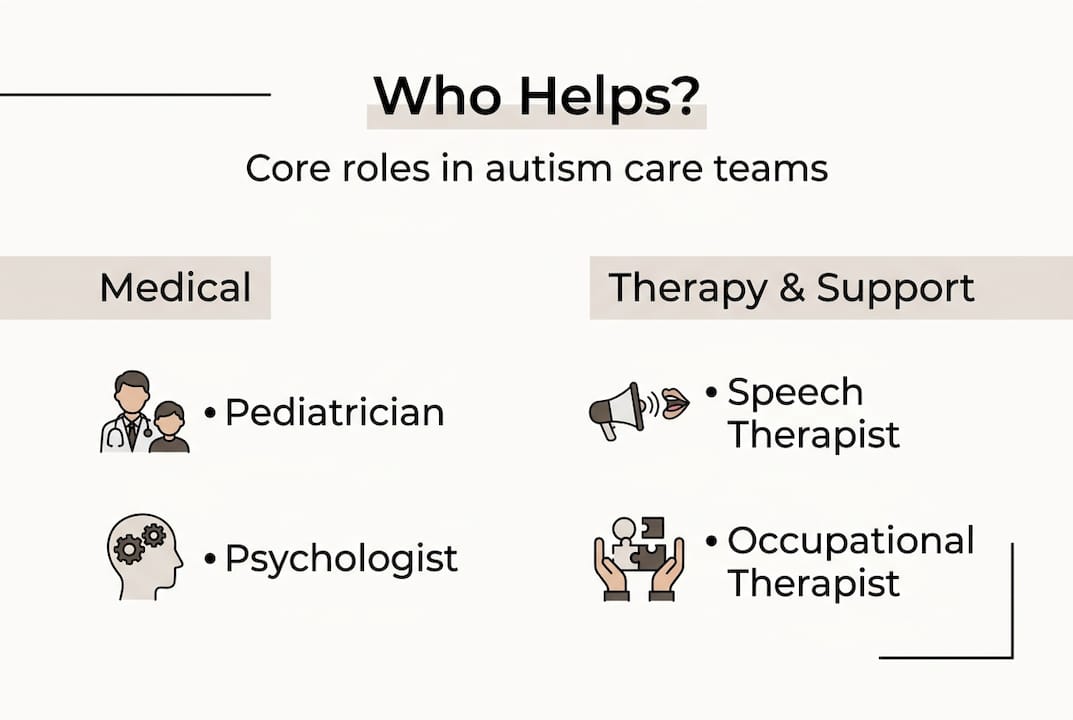
Here is a quick look at what each team member typically handles:
| Professional | Primary focus |
|---|---|
| Pediatrician | Medical oversight, diagnosis, medication management |
| Speech therapist | Communication, language, social interaction |
| Occupational therapist | Sensory processing, daily living skills |
| Psychologist | Behavioral assessment, mental health support |
| Social worker | Family support, community resources |
| Education specialist | Learning accommodations, school planning |
Understanding the role of autism doctors within this team helps families ask the right questions and push for the right referrals. Doctors often serve as the entry point, but they should be actively connecting you to the broader team.
Why does coordination matter so much? Because autism affects communication, behavior, sensory processing, learning, and health all at once. A child who is struggling to focus in school may be dealing with sleep issues, sensory overload, and anxiety simultaneously. No single clinician can address all of that. When teams meet regularly, share notes, and adjust plans together, outcomes improve significantly.
Family involvement is also built into this model. You are not a passive recipient of care. You are a core member of the team, holding knowledge about your child that no clinician can replicate.
“The most effective teams treat families as partners, not just recipients of information.”
Key components: Interventions, therapies, and individualized plans
Now that we have mapped the team, let us look at what kinds of interventions actually work in practice. Autism care draws from behavioral, educational, and medical approaches, and the best plans combine all three in a way that fits the individual child.
Behavioral approaches include Applied Behavior Analysis (ABA), the Early Start Denver Model (ESDM), and the TEACCH method. These methodologies also include environmental adjustments, parent training, and pharmacological support for co-occurring conditions like anxiety or ADHD. Each approach has a different emphasis, but they can and often should be used together.
| Approach | Core focus | Best used for |
|---|---|---|
| ABA | Skill building through reinforcement | Behavior, communication, daily skills |
| ESDM | Play-based, relationship-centered learning | Young children, early intervention |
| TEACCH | Structured visual supports | Independence, predictability |
| Parent training | Coaching caregivers in strategies | Generalizing skills at home |
Here is how a coordinated care plan typically comes together:
- A full assessment is completed by multiple team members.
- Goals are prioritized based on the child’s strengths and challenges.
- Each professional selects methods that align with those goals.
- Strategies are shared across settings, including home and school.
- Progress is reviewed regularly and the plan is adjusted.
High-intensity, combined approaches lead to higher cognitive and adaptive gains compared to single-method care. That is not a small difference. Families who access coordinated, intensive support early often see their children reach milestones that felt out of reach.
Connecting with speech and occupational therapists who work within a team framework makes a real difference. So does finding training and support centers that can coach you on how to reinforce strategies at home.
Pro Tip: When meeting a new provider, ask directly, “How do you communicate with the rest of my child’s care team?” If the answer is vague, that is a red flag worth addressing.
Including families and honoring neurodiversity
With interventions mapped out, let us talk about the vital role families play and how care can truly honor each child’s uniqueness.
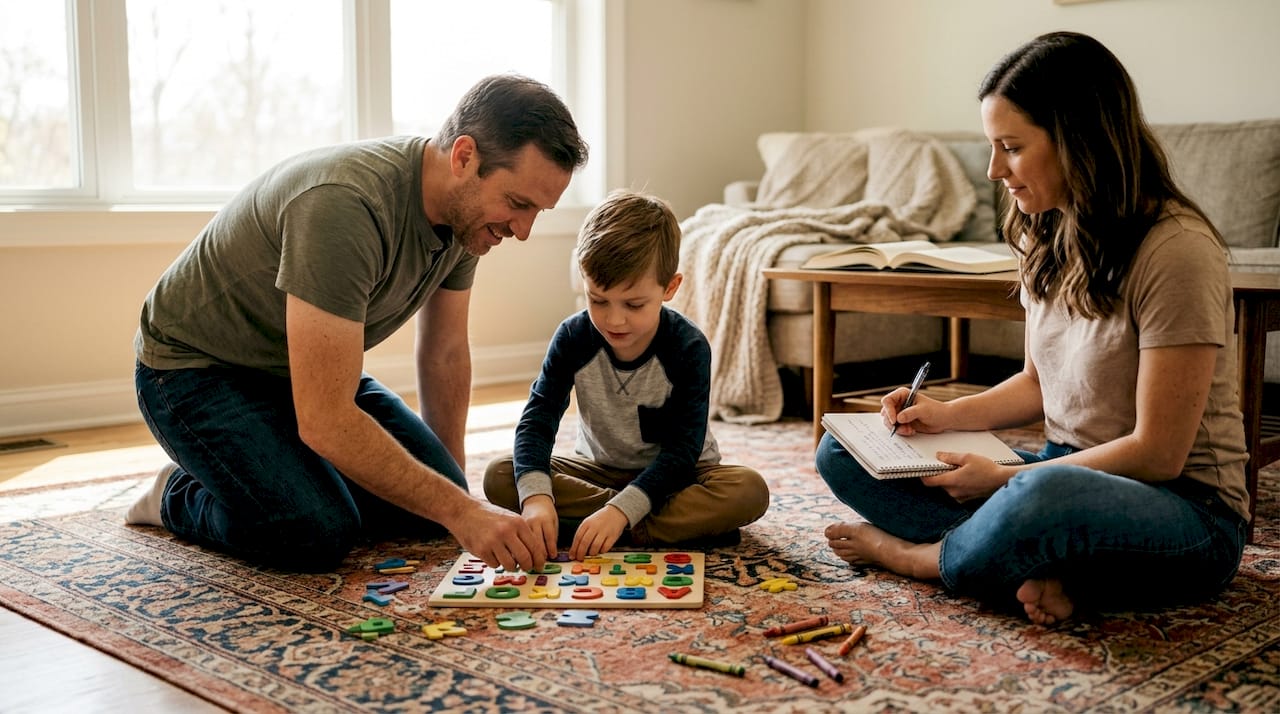
Parents and caregivers are not just support systems. They are the constant in a child’s life when therapists change, schools shift, and programs end. That makes your knowledge irreplaceable. When care teams genuinely include families in decision-making, the results are stronger and more sustainable.
Co-production and neurodiversity-affirming approaches enhance quality and outcomes for autistic individuals. Co-production means you are not just consulted. You are actively shaping the plan alongside professionals.
Here are practical ways families can participate:
- Attend all team meetings and bring written notes about what you observe at home.
- Ask for goals to be explained in plain language, not clinical jargon.
- Request that strategies be demonstrated so you can practice them confidently.
- Share your child’s communication preferences and sensory triggers with every provider.
- Advocate for your child’s identity and interests to be reflected in their goals.
Neurodiversity-affirming care means recognizing that autism is a different way of being, not a deficit to be corrected. This does not mean abandoning skill-building. It means building skills in ways that respect your child’s identity and reduce unnecessary distress. A child taught to make eye contact through force may comply in sessions but feel violated. A child supported to communicate in their preferred way builds genuine confidence.
Pro Tip: Look for providers who ask your child what they want, not just what you or the team want for them. Even young or minimally verbal children can express preferences when given the right tools.
Exploring family support strategies and connecting with communities that practice inclusive approaches can help you find providers who share these values.
Navigating challenges: Heterogeneity, transitions, and access
No team or system is perfect. Here is what parents should know about common challenges and real-world solutions.
Autism is not one thing. It presents differently in every person, which means a care model that works brilliantly for one child may miss the mark entirely for another. Access challenges include high-support-needs underrepresentation, diagnostic delays, and uneven communication between team members. Families of children with higher support needs often find that services are designed for more independent individuals, leaving significant gaps.
Here are the most common barriers families face:
- Long waitlists for assessment and therapy
- Providers who do not share records or communicate with each other
- School and clinical teams operating in completely separate silos
- Limited services for adolescents and adults
- Geographic and financial barriers to specialist access
Co-occurring conditions are present in 70 to 80 percent of autistic individuals, making individualized planning essential. Anxiety, ADHD, epilepsy, and gastrointestinal issues are common. A team that only focuses on autism-specific behaviors may miss these entirely.
Transitions are another underestimated challenge. Moving from early intervention to school, from elementary to middle school, or from pediatric to adult care can disrupt everything a family has built. Planning for transitions at least a year in advance is not overcautious. It is necessary.
- Request a transition plan meeting with your full team before any major change.
- Document all current strategies and share them with incoming providers.
- Involve your child in planning at whatever level they can participate.
- Identify new providers before the transition, not after.
Understanding the doctor’s role during these transitions helps families know who to call when coordination breaks down. Connecting with support and training resources can also help bridge gaps between systems.
Medical models vs neurodiversity: Balancing intervention and acceptance
Philosophies of autism care differ widely. Here is how parents can make sense of conflicting advice.
The medical model focuses on identifying and treating deficits. It drives evidence-based interventions like ABA and ESDM, and it has produced real gains for many autistic individuals. The neurodiversity movement, on the other hand, critiques normalization and centers autonomy, arguing that many interventions prioritize making autistic people appear neurotypical over supporting their actual wellbeing.
| Dimension | Medical model | Neurodiversity-affirming |
|---|---|---|
| Core goal | Reduce deficits, build skills | Support identity, increase autonomy |
| View of autism | Disorder requiring treatment | Difference requiring accommodation |
| Intervention style | Structured, therapist-led | Collaborative, child-led |
| Success measure | Observable skill gains | Quality of life, self-advocacy |
The tension between these models is real, but it does not have to be paralyzing. ABA meta-analyses show positive outcomes but only low-grade evidence overall, which means the science is promising but not definitive. That leaves room for families to weigh values alongside data.
Here is what families can do to navigate this:
- Ask providers to explain why a specific goal matters for your child’s life.
- Watch for interventions that cause distress and raise concerns immediately.
- Seek providers who can articulate both the benefits and the limitations of their approach.
- Trust your observations. If your child is thriving, something is working.
Exploring the full range of therapy service options available in your area gives you a starting point for comparing approaches and finding the right fit.
A fresh perspective: What families really need from multidisciplinary autism care
Here is an honest look at what really empowers families in this complex journey.
Most conversations about multidisciplinary care focus on team composition and intervention types. What gets far less attention is whether families actually feel heard. In our experience, the families who struggle most are not always those with the fewest resources. They are often the ones who have access to good teams but feel talked at rather than partnered with.
Real collaboration means providers ask what matters to your family, not just what the assessment reveals. It means a team that adjusts when something is not working, rather than insisting the plan is correct and the child is not trying hard enough. The research on holistic family support consistently points to family voice as a predictor of better outcomes. That is not a soft finding. It is a clinical one.
The families who report the most satisfaction are those whose teams genuinely partner with them at every stage, from goal-setting to crisis response.
Find the right multidisciplinary resources for your family
Ready to take actionable steps for your loved one? Here is where you can start finding trusted teams and therapies.
Autism Doctor Search is a curated directory built specifically for families navigating the complexity of autism care. Whether you are looking for autism therapy services that integrate behavioral and developmental approaches, ABA therapy providers with strong family involvement, or specialized autism therapeutics centers, our directory connects you to vetted options in your area. You deserve a team that coordinates, communicates, and truly partners with your family. Start your search today and find the right fit for your child’s unique needs.
Frequently asked questions
What professionals are included in a multidisciplinary autism care team?
Typical teams include doctors, speech therapists, occupational therapists, social workers, psychologists, and education specialists. Teams also include physical therapists and general practitioners depending on the individual’s needs.
How are interventions selected for autistic individuals?
Interventions are selected based on individual needs, combining behavioral, educational, and medical approaches for best results. Individualized care also incorporates environmental adjustments and parent and caregiver training.
Is multidisciplinary care more effective than single interventions?
Research shows combined approaches yield greater cognitive, language, and adaptive skill gains than single therapies alone. Combined ESDM and TEACCH outperforms single interventions on key outcomes.
What are neurodiversity-affirming approaches?
These approaches prioritize self-acceptance, autonomy, and tailored supports rather than trying to normalize autistic traits. Neurodiversity critiques focus on environmental adaptations over behavioral compliance.
How can parents actively participate in their child’s autism care?
Parents can join care planning, share their insights, and work closely with the team to adjust therapies for their child’s needs. Co-production and family involvement are consistently linked to more effective and sustainable care outcomes.