TL;DR:
- The ASPECTSS framework offers a structured checklist to evaluate autism-friendly school environments.
- Sensory-friendly modifications and visual supports significantly improve emotional regulation and routine adherence.
- Ongoing assessments and parent engagement are essential for ensuring continuous support and success.
Choosing the right school for your child with autism can feel overwhelming. Every parent wants a place where their child is safe, understood, and able to learn. But most school tours don’t show you what actually matters beneath the surface. The good news is that researchers have developed concrete tools to evaluate school environments objectively. The ASPECTSS framework gives parents and educators a structured way to assess whether a school is genuinely built for autistic learners, not just labeled as inclusive. This guide walks you through the features that research says make the biggest difference.
Table of Contents
- Understanding the ASPECTSS framework
- Sensory-friendly modifications: LISRAA and practical steps
- Visual supports and predictability features
- Social-emotional support, inclusion, and teacher training
- A new lens on autism-friendly schools: What truly matters
- Connect with autism-friendly support services
- Frequently asked questions
Key Takeaways
| Point | Details |
|---|---|
| Frameworks are essential | Evidence-based models like ASPECTSS allow parents to objectively assess schools for autism-friendly features. |
| Sensory adaptations matter | Features such as noise control and quiet zones dramatically improve behavior and focus for autistic students. |
| Visual supports boost independence | Schedules, signage, and color-coding empower routine adherence and reduce anxiety. |
| Teacher expertise is critical | Classroom quality, emotional support, and ASD-specific training directly enhance social competence and inclusion. |
| Continuous evaluation required | Regular post-occupancy reviews and collaborative improvement ensure lasting school success. |
Understanding the ASPECTSS framework
The ASPECTSS framework is a research-backed design model created specifically to evaluate how well school environments support autistic students. The name stands for seven core features: Acoustics, Spatial Sequencing, Escape, Compartmentalization, Transition, Sensory Zoning, and Safety. Each feature targets a specific way that physical space can either help or hinder a child with autism.
What makes this model powerful is that it moves beyond vague ideas like “supportive environment” and gives you a concrete checklist. When you visit a school, you can walk through each of these seven areas and ask specific questions. Does the building reduce echo and noise? Are there clearly defined zones for different activities? Is there a safe, quiet space a child can retreat to when overwhelmed?
Research confirms that ASPECTSS seven features are proven to improve school outcomes for autistic students across multiple settings. Post-occupancy evaluations, which are structured reviews of how a building performs after students move in, consistently show behavior improvements in schools that score well on these criteria.
Here is a quick breakdown of each feature:
| Feature | What to look for |
|---|---|
| Acoustics | Sound-absorbing walls, carpeted floors, low background noise |
| Spatial Sequencing | Logical flow between spaces, clear transitions |
| Escape | Quiet retreat rooms or calm corners |
| Compartmentalization | Separate zones for different tasks |
| Transition | Clear visual cues between activity areas |
| Sensory Zoning | Areas with controlled light, sound, and texture |
| Safety | Secure exits, visible supervision, no hazards |
Schools that apply autism-friendly environments principles tend to see fewer behavioral incidents and better engagement. The framework also works as a living tool. Post-occupancy evaluations and behavior scores are recommended as ongoing benchmarks, not just one-time checks. You can ask any school you visit whether they conduct these reviews and how often.
Pro Tip: When touring a school, bring the ASPECTSS checklist and rate each feature from 1 to 5. This turns an emotional decision into a structured comparison.
Exploring inclusive school practices alongside this framework gives you a fuller picture of what genuine inclusion looks like in action.
Sensory-friendly modifications: LISRAA and practical steps
Sensory overload is one of the most common reasons autistic children struggle in school. Bright fluorescent lights, loud hallways, and unpredictable sounds can make it nearly impossible to focus or regulate emotions. The LISRAA model (Lighting, Interior finishes, Sound, Retreat spaces, Air quality, and Arrangement) offers a practical framework for sensory-friendly school design.
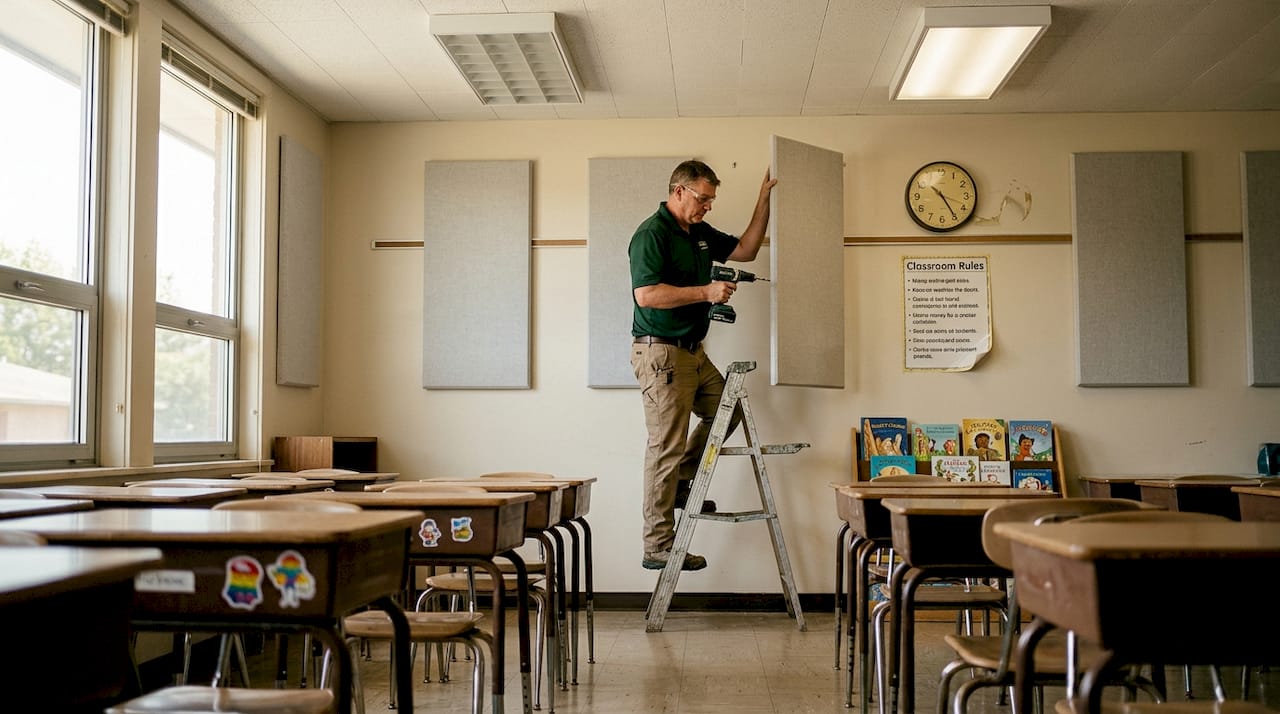
Empirical data shows that the LISRAA model significantly improved ABC behavior scores, which measure aggression, self-injury, and stereotypic behavior, in students with autism. These are not minor gains. Schools that applied sensory-friendly modifications saw measurable reductions in disruptive behavior and better emotional regulation across classrooms.
Here is what to look for when evaluating sensory-friendly school modifications:
- Lighting: Natural light with adjustable blinds, no harsh fluorescent glare
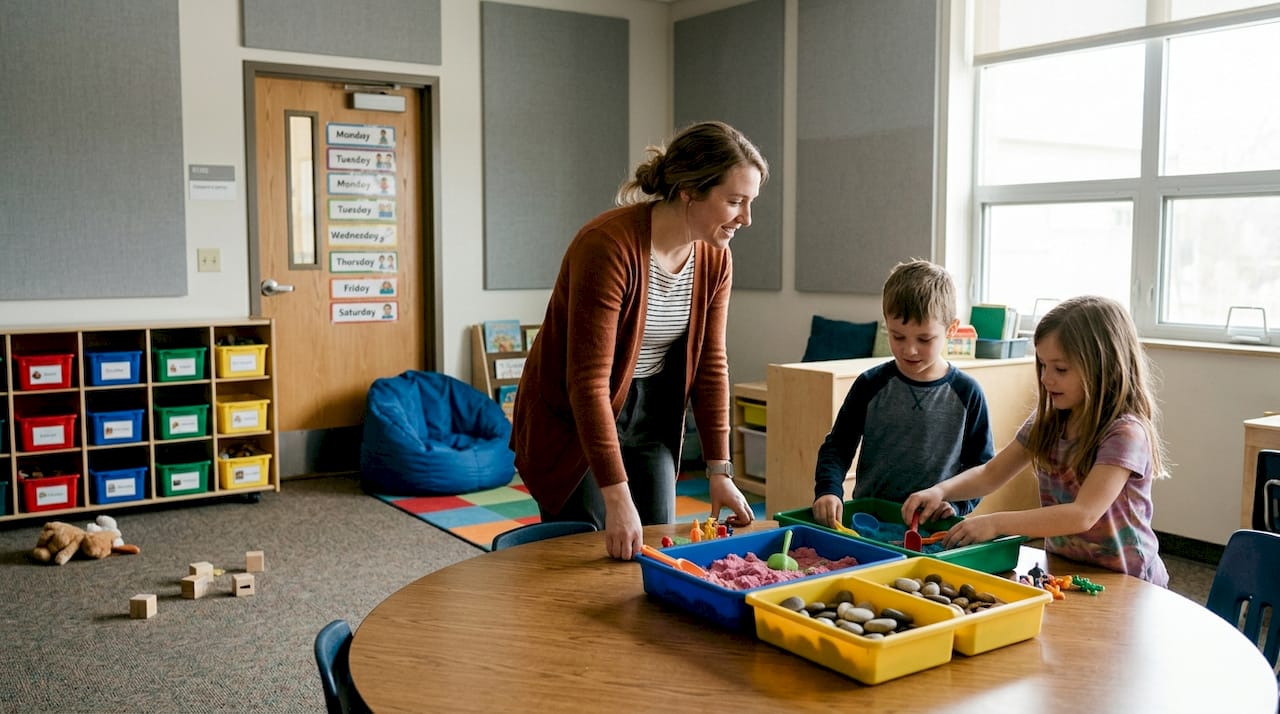
- Sound control: Acoustic panels, carpeted floors, soft furnishings that absorb noise
- Retreat spaces: A designated calm room or quiet corner that is always accessible
- Air quality: Good ventilation, minimal strong smells from cleaning products or cafeteria
- Arrangement: Clutter-free classrooms with predictable furniture layouts
These features are not expensive luxuries. Many can be added to existing classrooms with modest budgets. Sound-absorbing panels, for example, cost far less than the behavioral interventions needed when a child is chronically overwhelmed.
| Modification | Estimated impact |
|---|---|
| Acoustic panels | Reduces noise-triggered anxiety |
| Variable lighting | Lowers sensory overload incidents |
| Quiet retreat room | Decreases meltdown frequency |
| Clutter-free layout | Improves focus and task completion |
For a deeper look at how special school sensory adaptations compare across different settings, it helps to review schools that have implemented these changes and tracked outcomes.
Pro Tip: Ask the school whether their quiet room is available on demand or only by teacher permission. On-demand access is far more effective for self-regulation.
Reviewing sensory-friendly school outcomes research gives you the language to advocate confidently when speaking with school administrators.
Visual supports and predictability features
For many autistic children, uncertainty is the enemy of learning. When a child does not know what comes next, anxiety spikes and focus drops. Visual supports solve this problem by making routines visible, concrete, and consistent.
Visual supports and predictability enhance navigation and routine adherence in school environments, reducing anxiety and increasing independence for autistic learners. This is not just about posting a schedule on the wall. It is about designing the entire school experience around clear, consistent visual communication.
Types of visual supports that make a real difference include:
- Daily visual schedules: Step-by-step picture or symbol-based schedules posted at eye level
- Color-coded zones: Different colors for different activity areas (blue for quiet work, green for movement)
- Clear signage: Simple icons and words on every door and transition space
- First-then boards: Visual cards showing what happens now and what comes next
- Transition warnings: Timers or visual countdowns before activity changes
When evaluating a school, here is a practical checklist to follow:
- Walk the hallways and count how many visual cues guide student movement
- Check whether classrooms have individual schedules for each student, not just a group schedule
- Ask whether color-coding is used consistently throughout the building
- Look for transition spaces that signal a change in activity or expectation
- Ask teachers how they communicate schedule changes to students who struggle with spoken language
Case studies on modular design show that schools using flexible, visually organized layouts see stronger engagement and better routine adherence. The physical environment literally teaches the child what to expect.
Pro Tip: If a school only has group schedules posted at the front of the room, ask whether they can provide individual visual schedules. This small change can dramatically reduce morning anxiety.
Linking creating predictability in schools to physical design is one of the most underused strategies in autism-friendly education. Pairing visual tools with visual supports in classrooms guidance helps families know exactly what to request.
Social-emotional support, inclusion, and teacher training
A beautifully designed building means very little if the adults inside it are not trained to support autistic students. Teacher expertise is one of the strongest predictors of success for children with autism in school settings.
Higher classroom quality correlates with better social competence in autistic preschool boys, meaning the quality of teacher interactions directly shapes how children develop social skills. This is not about personality. It is about training, knowledge, and consistent practice.
Key features of strong social-emotional support include:
- Teachers trained in ASD-specific communication strategies
- Consistent daily routines that reduce unpredictability
- Peer support programs that teach classmates how to interact positively
- Safe spaces where students can process emotions without judgment
- Family involvement in goal-setting and progress reviews
“Teacher training in ASD knowledge, clear communication, and consistent routines are crucial for supporting students with special educational needs in both mainstream and specialized settings.”
Teacher training in ASD knowledge is one of the most cited facilitators of successful inclusion. Yet it remains inconsistent across schools.
Mainstream inclusion challenges are real. Empirical interventions often target social skills and behavior adaptation because autistic students in general education classrooms frequently face sensory overload, bullying, and exam-related stress without adequate support. These are not reasons to avoid mainstream settings entirely, but they are reasons to ask hard questions before enrolling.
Look for schools that offer teacher education for autism as an ongoing professional development priority, not a one-time workshop. Ask whether family participation in autism support is built into the school’s regular practice, not just offered at annual meetings.
Also check how the school handles classroom social competence research findings. Schools that stay current with evidence-based practices tend to adapt faster when a student’s needs change.
A new lens on autism-friendly schools: What truly matters
Here is something most school guides won’t tell you: a school can check every box on a framework and still fail your child. Frameworks like ASPECTSS and LISRAA are essential starting points, but they are not finish lines.
The schools that truly serve autistic students are the ones that treat these tools as living practices. They run post-occupancy evaluations every year. They adjust lighting when a student starts covering their ears. They notice when a child smiles more on Tuesdays because the schedule is more predictable that day. These subtle wins, fewer meltdowns, more eye contact, a child who asks to go to school rather than dreading it, are the real measures of success.
The families who get the best outcomes are not the ones who found the perfect school. They are the ones who stayed engaged, asked ongoing questions, and pushed for continuous improvement. Supporting autistic children well requires a team that includes families, educators, and clinicians working together over time, not just at enrollment.
Checklists matter. But relationships and ongoing commitment matter more.
Connect with autism-friendly support services
If you are ready to find schools and services that prioritize these autism-friendly features, the Autism Doctor Search Directory is here to help. We maintain an up-to-date directory of autism therapy services, specialized educators, and trained clinicians across the country. Whether you are looking for special schools for autism that apply sensory-friendly design or programs offering autism support training for teachers and families, our listings connect you directly to vetted resources. You deserve access to the best options available, and we make finding them straightforward.
Frequently asked questions
How can parents assess if a school is autism-friendly?
Parents should use the ASPECTSS checklist to evaluate sensory design, visual supports, clear routines, and staff ASD training during school visits. Asking whether the school conducts post-occupancy evaluations is also a strong indicator of ongoing commitment.
What accommodations help autistic students thrive at school?
Sensory modifications, visual schedules, quiet retreat spaces, emotional support, and trained teachers are the most impactful accommodations. LISRAA sensory-friendly models show measurable improvements in behavior and focus when these are applied consistently.
Does mainstream inclusion work well for autistic children?
Mainstream inclusion can offer real social benefits, but mainstream inclusion challenges like sensory overload and bullying are common without proper support. Safe spaces, peer programs, and specialized staff are the key factors that determine whether inclusion succeeds.
Why are visual supports important for autistic learners?
Visual supports and predictability reduce confusion and anxiety by making routines concrete and consistent, helping students navigate their day with greater independence. They also reduce the need for verbal reminders, which can increase stress for some children.
How is school quality measured for autistic students?
School quality is best measured through post-occupancy evaluations and behavior scores, combined with ongoing teacher and parent feedback on emotional and social outcomes. Tracking small behavioral changes over time gives the most accurate picture of whether an environment is truly working.