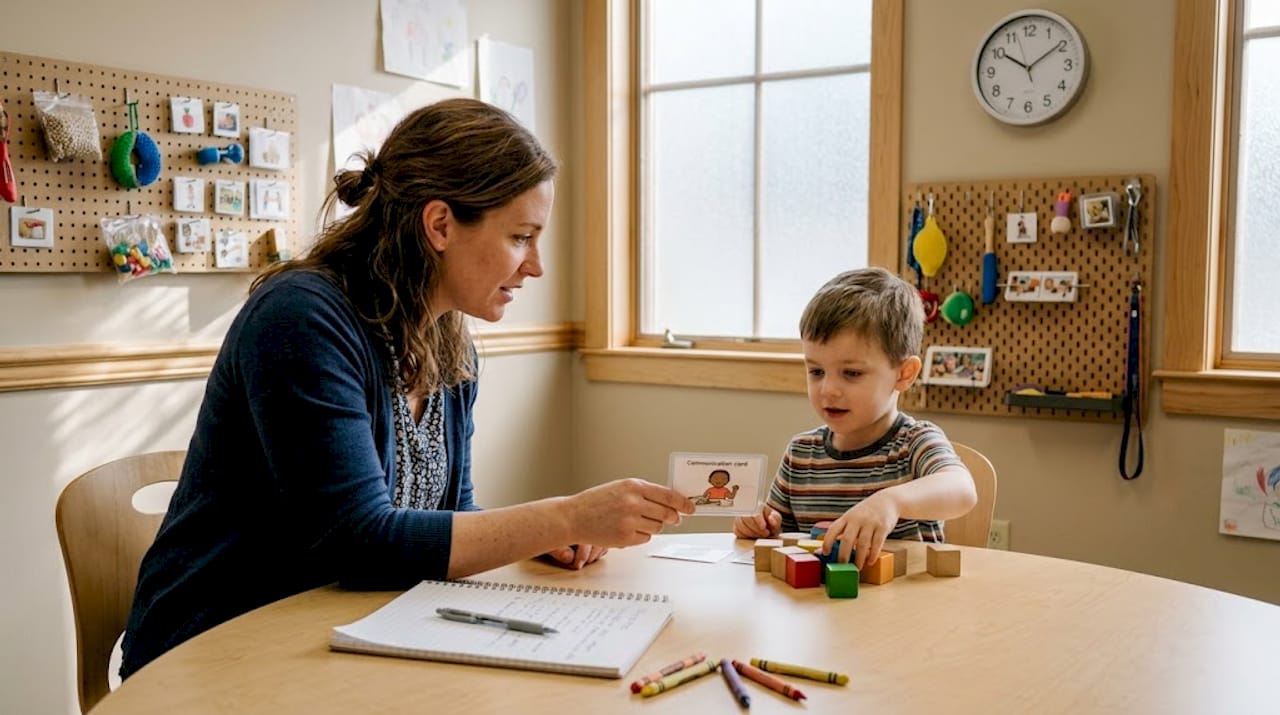
TL;DR:
- Allied health professionals focus on daily function and independence rather than medical diagnosis.
- Evidence-based interventions like ABA, TEACCH, music therapy, and exercise improve various autism skills.
- A neurodiversity-affirming model prioritizes individual strengths and supports family-centered, flexible care.
Most families navigating autism care think about two main pillars: medical doctors and school-based educators. But there is a third layer of support that quietly drives some of the biggest gains in daily life, communication, and independence. Allied health professionals work alongside families every day, yet their roles are widely misunderstood or simply unknown. This article walks you through who these specialists are, what the research says about their methods, and how you can put their expertise to work for your family.
Table of Contents
- Who are allied health professionals in autism care?
- Evidence-based allied health interventions for autism
- Person-centered, neurodiversity-affirming strategies
- Applying allied health support: Practical tips for families
- The overlooked power of allied health in autism care
- Find the right allied health support for your family
- Frequently asked questions
Key Takeaways
| Point | Details |
|---|---|
| Wide AHP roles | Allied health professionals support autism through a broad team including OTs, SLTs, physiotherapists, and others. |
| Evidence-based interventions | Approaches like ABA, TEACCH, music therapy, and exercise improve skills and quality of life for individuals with autism. |
| Neurodiversity focus | Person-centered, neurodiversity-affirming care is increasingly prioritized in allied health strategies. |
| Family-centered access | Families can use practical tips to find, advocate, and apply allied health support, including remote options. |
| Integrated support importance | Combining interventions and philosophy unlocks best outcomes—families benefit most from coordinated, flexible allied health care. |
Who are allied health professionals in autism care?
Not everyone on your child’s support team carries a medical degree, and that is actually a good thing. Allied health professionals (AHPs) are a distinct group of trained specialists who sit between medicine and education. They focus on function, participation, and quality of life rather than diagnosis or academic achievement alone.
Allied health professionals include occupational therapists (OTs), speech and language therapists (SLTs), physiotherapists, dietitians, and others who provide specialized support for individuals with autism. Each discipline targets a different area of daily living, and together they cover a wide range of needs that neither a pediatrician nor a classroom teacher is trained to address.
Here is a quick look at what each major AHP role brings to autism care:
- Occupational therapist (OT): Helps with sensory processing, self-care routines, handwriting, and participation in daily activities.
- Speech and language therapist (SLT): Addresses verbal and nonverbal communication, social language, and swallowing difficulties.
- Physiotherapist: Supports gross motor development, coordination, posture, and physical activity participation.
- Dietitian: Manages nutritional needs, selective eating patterns common in autism, and gastrointestinal issues.
- Behavior analyst: Designs and monitors behavior support plans, often using ABA-based frameworks.
One of the most common points of confusion is the difference between an AHP and a special education teacher. Teachers focus on curriculum and learning goals inside a school setting. AHPs focus on the underlying skills, such as attention, body awareness, and social communication, that make learning possible in the first place. They often work within schools, but their scope is not limited to academics.
Compare the core focus areas below:
| Professional | Primary focus | Typical setting |
|---|---|---|
| Occupational therapist | Sensory, self-care, motor | Clinic, school, home |
| Speech and language therapist | Communication, language | Clinic, school, telehealth |
| Physiotherapist | Movement, coordination | Clinic, community |
| Dietitian | Nutrition, feeding | Clinic, home |
| Special education teacher | Academic curriculum | School |
| Pediatrician | Medical health, diagnosis | Hospital, clinic |
Families searching for trusted providers can explore the allied autism group and autism therapy services listings to find qualified AHPs in their area.
Evidence-based allied health interventions for autism
Knowing who AHPs are is only the starting point. What matters equally is what they actually do, and whether it works. The research base for allied health interventions in autism has grown substantially, and several approaches now have strong evidence behind them.

1. Applied behavior analysis (ABA)
ABA remains one of the most studied approaches in autism care. ABA-based interventions show significant improvements in adaptive behavior, daily living skills, and language skills. The structured, data-driven nature of ABA makes it easier to track progress and adjust goals over time.
2. TEACCH (Treatment and Education of Autistic and related Communication-handicapped CHildren)
TEACCH uses visual supports, structured environments, and predictable routines. TEACCH interventions improve communication, daily living, motor, and social skills in children with autism. This approach is especially effective for individuals who respond well to visual schedules and consistent environments.
3. Music therapy
This one surprises many families. Music therapy moderately improves social interaction, verbal communication, behavior, and quality of life in autism. The rhythmic and predictable structure of music creates a natural scaffold for communication and emotional regulation.
4. Exercise interventions
Exercise interventions significantly improve gross motor skills including balance, locomotion, and object control, with medium-duration programs showing the best outcomes. Physiotherapists and OTs often integrate movement-based activities directly into therapy sessions.
Here is a summary of each intervention’s primary outcomes:
| Intervention | Key outcomes | Led by |
|---|---|---|
| ABA | Adaptive behavior, daily living, language | Behavior analyst, ABA therapist |
| TEACCH | Communication, social skills, motor | OT, SLT, special educator |
| Music therapy | Social interaction, verbal communication | Music therapist |
| Exercise therapy | Gross motor, balance, coordination | Physiotherapist, OT |
“The best intervention is not the most popular one. It is the one matched to the individual’s current profile, goals, and family priorities.”
Families looking for providers who use these methods can explore autism remediation, autism therapeutics, and the center for autism support and training resources.
Person-centered, neurodiversity-affirming strategies
Allied health care in autism is not static. Over the past decade, there has been a meaningful shift in how AHPs think about their work, moving away from trying to make autistic individuals appear neurotypical and toward supporting who they actually are.
This shift is captured in the neurodiversity-affirming model. Some critiques of behavior-focused interventions highlight concerns about practices like masking, where individuals suppress natural behaviors to fit social expectations. The field is now prioritizing approaches that address comorbidities, support identity, and build accommodations rather than focusing solely on changing core autism traits.
What does this look like in practice? Here are some key principles AHPs now apply:
- Focus on what the individual wants to do, not just what looks typical.
- Address anxiety, sensory pain, and mental health needs alongside communication goals.
- Build on existing strengths rather than targeting deficits only.
- Involve the autistic individual in goal-setting whenever possible.
- Respect communication preferences, including augmentative and alternative communication (AAC) devices.
For individuals with high support needs, specialized AHP roles and remote or family-centered care models are helping to close gaps in access. Telehealth has made it possible for families in rural or underserved areas to connect with qualified AHPs who previously would have been out of reach.
Pro Tip: When evaluating a new AHP, ask them directly: “How do you involve the autistic individual in setting their own goals?” Their answer tells you a great deal about their philosophy.
Resources like multidisciplinary autism care and providers such as autism included and autism included 2 reflect this newer, more integrated approach to support.
Applying allied health support: Practical tips for families
Understanding the philosophy behind these interventions, families can now focus on practical ways to use allied health resources for autism support. Knowing where to start makes the whole process less overwhelming.
Follow these steps to navigate allied health support effectively:
- Get a clear picture of your child’s needs. Talk to your pediatrician or autism specialist about which functional areas need the most attention, such as communication, sensory processing, or motor skills. This helps prioritize which AHP to seek first.
- Use verified directories to find providers. Generic web searches often return results that lack credentials or evidence-based methods. Specialized directories filter for qualified professionals who work specifically with autism.
- Ask about credentials and approach before booking. Look for AHPs registered with recognized professional bodies. Ask whether their methods are evidence-based and whether they follow neurodiversity-affirming principles.
- Participate actively in sessions. Allied health professionals provide support tailored to individual needs, but the biggest gains happen when families carry strategies into everyday routines at home.
- Track progress with the AHP using measurable goals. Vague goals like “improve communication” are hard to evaluate. Specific goals such as “initiate three conversations per day using AAC” give everyone a clear target.
- Review and adjust regularly. A plan that works at age five may need significant changes by age eight. Schedule formal reviews every few months and speak up if something is not working.
Pro Tip: Keep a simple progress journal with brief weekly notes on what your child found easy or difficult. Sharing this with your AHP saves therapy time and speeds up adjustments.
For additional strategies on communication support, the autism communication strategies resource offers practical, family-tested guidance.
The overlooked power of allied health in autism care
Here is something worth saying plainly: allied health is still the most underutilized layer of autism support available to families. Many caregivers spend months navigating waitlists for specialists and school accommodations, never realizing that an OT or SLT could start making a tangible difference in daily life right now.
The real power of allied health does not live inside a clinic. It lives in the routines you build at home, the communication tools your child uses at the dinner table, and the movement breaks that reduce anxiety before a difficult task. AHPs teach families to be the intervention, not just the observers.
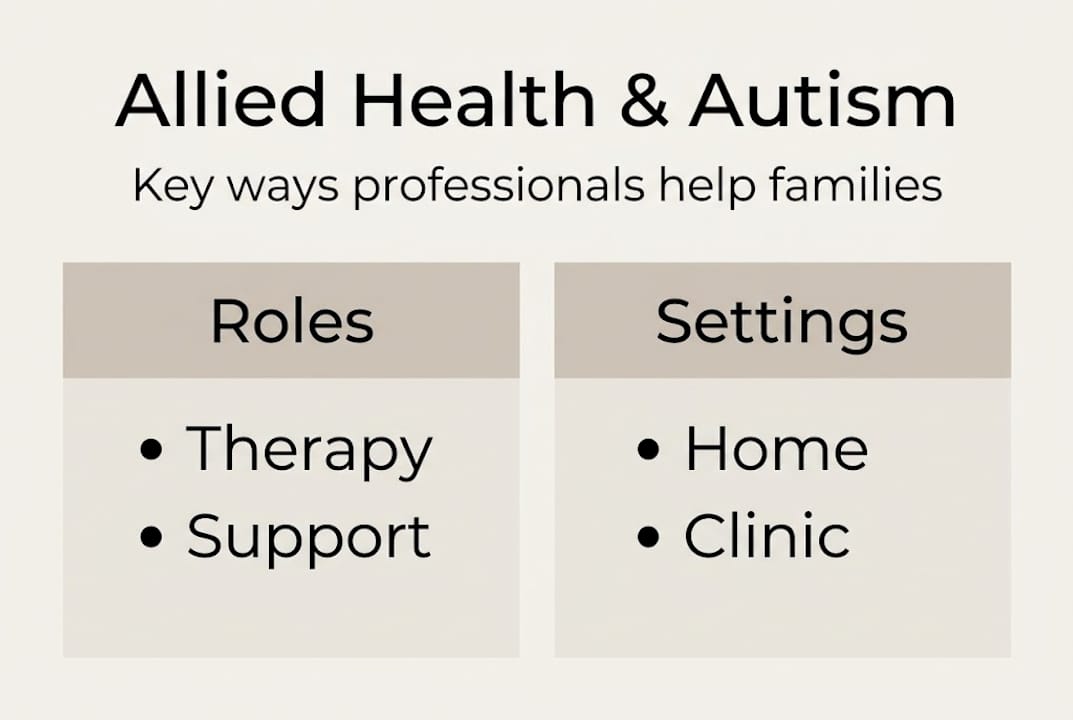
There is also a tendency to chase the single “best” therapy, when the research consistently points toward integrated, collaborative support as the most effective model. Exploring multidisciplinary autism care is not a luxury for complex cases. It is the standard that every family deserves access to. The families who see the biggest gains are almost always the ones who build a flexible, coordinated team around their child.
Find the right allied health support for your family
Ready to take the next step toward personalized autism care? Start with these trusted resources. Autism Doctor Search connects families with a broad network of qualified, evidence-informed providers across therapy types. Whether you need autism therapy services that span communication and behavioral support, a specialized ABA therapy provider, or guidance from an occupational therapy association, our directory is built to help you find the right fit quickly. Browse listings by specialty, location, and approach to find a team that truly matches your child’s needs.
Frequently asked questions
Which allied health professionals work with autism?
Allied health professionals working in autism include occupational therapists, speech and language therapists, physiotherapists, dietitians, and behavior analysts, each addressing different functional areas of daily life.
How effective are allied health interventions for autism?
Interventions like ABA, TEACCH, music therapy, and exercise therapy all show measurable gains. For example, ABA-based interventions improve language skills, adaptive behavior, and daily living, while music therapy moderately improves social interaction and communication.
How can families access allied health services for autism?
Families can start with a referral from a pediatrician, use specialized therapy directories, and advocate clearly for their child’s needs to connect with qualified allied health professionals.
What is a neurodiversity-affirming approach, and how do AHPs support it?
Neurodiversity-affirming care focuses on supporting strengths, identity, and practical accommodations rather than changing core autism traits. Affirming approaches prioritize comorbidities and individual identity over behavioral normalization.
Are there options for remote or family-centered allied health care?
Yes. Remote and family-centered care models now help families in underserved or rural areas access specialized AHP support, reducing barriers related to location and transportation.