
TL;DR:
- Preparing necessary paperwork and obtaining a referral streamlines the autism specialist booking process.
- Choosing the right specialist depends on your child’s age, needs, and insurance coverage.
- Persistent follow-up and advocacy are key to securing appointments and accessing interim supports during wait times.
Trying to get your child an autism specialist appointment can feel like navigating a maze with no map. You call offices, get put on waitlists, run into insurance walls, and often wonder if you’re even contacting the right people in the right order. You are not alone in that frustration. This guide breaks down every step of the booking process, from gathering your paperwork to managing the wait, so you can move forward with confidence instead of confusion. Consider this your practical roadmap, built around real family experiences and current clinical guidance.
Table of Contents
- What you need before you book: Requirements and preparation
- Finding and choosing the right autism specialist
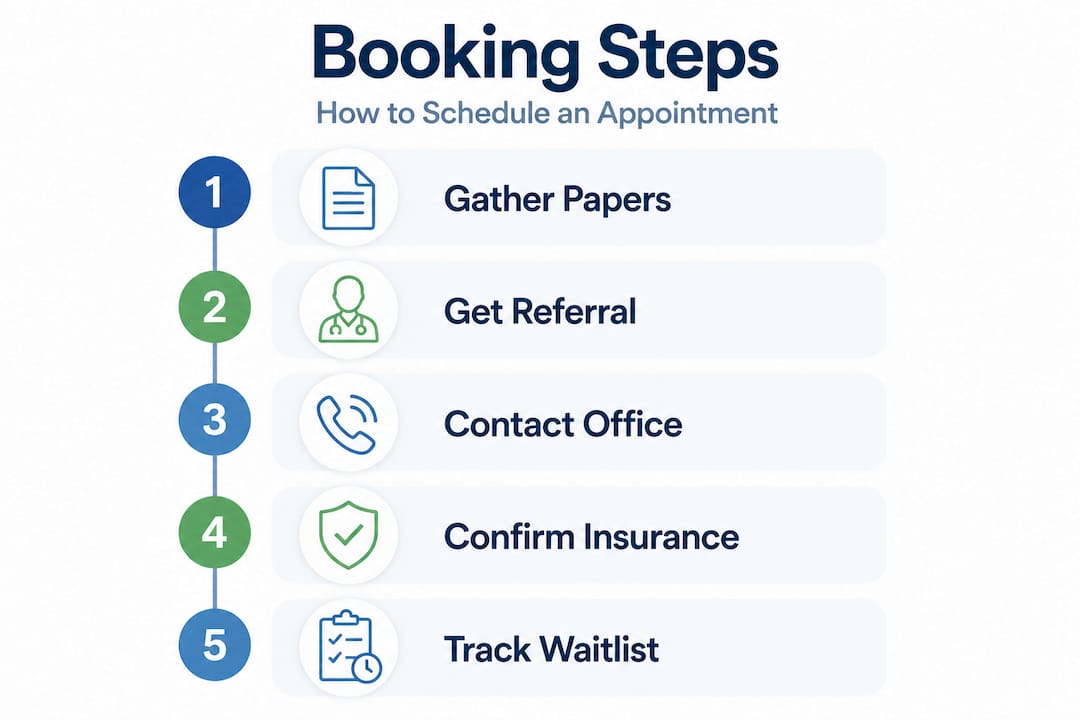
- Step-by-step: How to book an autism specialist appointment
- What to do while waiting: Accessing interim supports and services
- Our perspective: Rethinking the booking process for autism care
- Connect with autism specialists and support today
- Frequently asked questions
Key Takeaways
| Point | Details |
|---|---|
| Prepare documents early | Having medical referrals, insurance info, and developmental history ready will streamline the booking. |
| Choose the right specialist | Research different specialist types to match your child’s needs and your insurance. |
| Book proactively | Follow a clear step-by-step process to secure appointments and keep thorough records. |
| Access supports while waiting | Leverage Early Intervention or school services during wait times to support your child’s development. |
| Advocate persistently | Regularly follow up with offices and tap into community resources to minimize delays. |
What you need before you book: Requirements and preparation
With frustration fresh in mind, let’s make sure you have everything needed to avoid new headaches before you ever pick up the phone or log in to book. Getting organized upfront is not just helpful. It is often the difference between a smooth scheduling experience and weeks of avoidable back and forth.
Most autism specialist offices will ask for several items before they even schedule an intake call. Knowing what to prepare means you won’t lose momentum once you’ve finally identified the right provider.
Common documentation you’ll need:
- Referral form from your child’s primary care physician (pediatrician)
- Insurance card (front and back) and your insurance member ID
- Prior authorization number if your insurer requires it (check this before calling)
- Child’s developmental history, including milestones, school records, and any previous evaluations
- Behavioral or teacher observation reports from school or daycare
- Any previous speech, occupational, or psychological therapy records
Your child’s primary care provider plays a central role here. Most pediatricians can write the referral letter and sometimes help you identify appropriate specialists within your insurance network. Don’t skip this step, even if it feels like bureaucracy. That referral unlocks access to specialists who may otherwise decline to see your child.

Insurance variability is real and significant. Some insurers require prior authorization or specific diagnostic documentation before they will authorize services like ABA therapy or a formal evaluation. Your plan may also have rules about which providers are in network, what diagnostic codes are covered, and whether you need a specific type of specialist. Our therapy services insurance requirements resource can help you understand what to look for in your policy.
| Document | Why it’s needed | Who provides it |
|---|---|---|
| Physician referral | Required by most specialists and insurers | Your child’s pediatrician |
| Insurance prior auth | Allows insurer to cover the visit | You request from insurer |
| Developmental history | Helps specialist prepare for evaluation | You compile it |
| School/behavioral records | Supports clinical picture | School or therapist |
| Prior evaluation reports | Avoids duplicate testing | Previous providers |
Pro Tip: Create a dedicated folder, physical or digital, where you store every form, approval letter, and communication related to this process. Name files with dates so you can track exactly what was submitted and when. This single habit prevents the most common delay families experience.
For a broader look at navigating the referral system, our medical referrals guide walks you through how to advocate effectively with your pediatrician.
Finding and choosing the right autism specialist
Once you have your paperwork and approvals lined up, it’s time to find a specialist who truly fits your child’s unique needs. Not all autism specialists are the same, and the right choice depends on your child’s age, specific concerns, and what kind of evaluation or support you are seeking.
Understanding the different provider types saves you from booking the wrong appointment entirely. Here’s a practical breakdown:
| Specialist type | What they do | Best for |
|---|---|---|
| Developmental pediatrician | Evaluates developmental delays and behavior, diagnoses autism | Initial diagnosis, especially in young children |
| Child psychologist | Provides psychological testing and behavioral assessments | Formal diagnosis, co-occurring conditions like anxiety |
| Pediatric neurologist | Rules out neurological causes, evaluates complex cases | Children with seizures, genetic concerns, or complex presentations |
| Behavioral therapist | Provides ABA and behavior-based interventions | Ongoing therapy, skill building post-diagnosis |
| Occupational therapist | Addresses sensory processing and daily living skills | Sensory issues, fine motor delays |
Keep in mind that autism diagnosis relies on developmental history and behavioral observations, not a simple test. Specialist appointments typically include structured questionnaires, standardized tools like the ADOS-2 (Autism Diagnostic Observation Schedule), and often a review of records you provide. Knowing this sets realistic expectations and helps you arrive prepared.
Key factors when choosing a specialist:
- Insurance acceptance: Always confirm the provider is in network before booking
- Age and population experience: Some specialists focus on toddlers, others on school-age children or teens
- Wait times: These vary dramatically by location and provider type
- Evaluation process: Ask what tools and methods they use for diagnosis
- Team approach: Some clinics use a multidisciplinary team, which can be more thorough
Our detailed guide to specialist types for parents can help you compare options based on your child’s situation.
Pro Tip: Call the office before committing and ask two direct questions: “What is your current wait time for a new evaluation?” and “Can you walk me through what the evaluation appointment includes?” Offices that give you clear, confident answers are usually better organized and easier to work with throughout the process.
Step-by-step: How to book an autism specialist appointment
Now that you’ve targeted the right specialist, here’s exactly how to secure that all-important appointment. Following these steps in order prevents the most common mistakes parents make, like calling before insurance approval is in place.
The booking process, step by step:
-
Get the referral. Ask your pediatrician for a written referral to the specific type of specialist you need. Confirm it includes your child’s diagnosis codes and reason for referral.
-
Contact your insurance. Call the member services number on your card and ask whether a prior authorization is required for the evaluation. Get the authorization number in writing.
-
Search for in-network providers. Use your insurer’s portal or our directory to find specialists who accept your plan. Having two or three options ready saves time if one has an unworkable wait.
-
Call or message the specialist’s office. Have your referral, insurance information, and child’s date of birth ready. Ask specifically about new patient availability and their intake process.
-
Submit documentation. Most offices will send a new patient packet. Complete it thoroughly and return it quickly. Delays here often push your appointment back weeks.
-
Verify insurance coverage. Ask the office to confirm they’ve verified your insurance before the appointment date. This prevents billing surprises.
-
Get written confirmation. Request a confirmation of your appointment date, time, location, and what to bring. Keep this in your folder.
-
Prepare your child’s history summary. Before the appointment, write a one-to-two page narrative of your child’s developmental timeline, key concerns, and any prior interventions. Specialists appreciate this and it speeds up the evaluation.
One of the most overlooked parts of this process is what to do when you land on a waitlist. And that is very common. Research and clinical experience consistently show that wait times for autism evaluations can stretch from several weeks to over a year in high-demand areas. Do not let the wait be passive. Ask the office to place you on a cancellation list. Some families get appointments weeks earlier simply by calling back every two to three weeks.
According to pediatric guidance from HealthyChildren.org, families should continue pursuing supports during the wait and ask their pediatrician for referrals to programs such as Early Intervention for children under age three or school-based evaluation services for children three and older. Waiting is not the same as doing nothing.
Our evaluation process guide walks through what actually happens during an autism assessment, so you and your child can arrive without surprises. And before your first appointment, reviewing essential questions to ask helps you use every minute of that visit productively.
Pro Tip: Every time you call or email about your appointment, write down the date, the name of the person you spoke with, and the outcome. If a paperwork issue delays your booking, this log becomes your proof of follow-through and can help resolve disputes quickly.
What to do while waiting: Accessing interim supports and services
Even with your appointment scheduled, families often face weeks or months of anxious waiting, so here’s how to support your child and ensure steady progress right now. The wait does not have to be wasted time.
Immediate steps you can take while waiting:
- Contact Early Intervention (if your child is under three years old). This federally funded program provides free evaluations and therapy services and does not require a formal autism diagnosis to begin.
- Request a school district evaluation (if your child is three or older). Under federal law, school districts must evaluate children suspected of having a disability at no cost to you.
- Connect with local nonprofits that provide therapy referrals, support groups, and sometimes direct services while you wait.
- Keep a developmental journal. Document your child’s behaviors, communication patterns, and progress weekly. This record becomes genuinely valuable during the specialist appointment.
- Ask your pediatrician about speech or occupational therapy referrals. These services often have shorter wait times than diagnostic evaluations and can support your child right now.
“Continue supports while waiting; ask your pediatrician for directed referrals to early intervention or school-based services so your child receives help before a formal diagnosis is in place.” — HealthyChildren.org guidance on autism evaluation access
Parent support groups, both in person and online, are often underestimated as a resource. Other parents who have navigated the same system in your area can share which offices have shorter waits, what insurance tricks worked for them, and how they kept their child engaged and supported through the process. This peer knowledge is practical and specific in ways that no guide can fully replicate.
Our directory of community support and training centers can help you find local organizations ready to connect you with the right interim resources.
Our perspective: Rethinking the booking process for autism care
After covering all the practical actions, let’s dig into what actually matters most when facing this process, straight from real families and professionals who’ve been through it.
Here is something that surprises many parents: the families who get appointments fastest are rarely the ones with the most perfectly organized paperwork. They are the ones who follow up consistently, ask direct questions, and advocate firmly without being aggressive. The system rewards persistence more than perfection.
Most advice tells you to get your documents in order, which matters. But over-investing in perfect paperwork while being passive about follow-up is a trap. We’ve seen families spend two weeks assembling a flawless packet and then wait months because they assumed the office would call them. Offices are overwhelmed. A polite call every two to three weeks genuinely moves you up in informal priority.
The emotional weight of this process is real and should not be minimized. Parents often carry guilt, fear, and exhaustion into every phone call they make. Recognizing that this is a hard system to navigate, not a reflection of your effort or your child’s worth, is critical for your mental stamina. Celebrate every step forward, not just the diagnosis or the first appointment. Getting the referral is a win. Submitting the paperwork is a win. Getting on the waitlist is a win.
The other thing worth saying plainly: early action matters enormously. The earlier supports begin, the better the long-term outcomes tend to be. So even if the specialist appointment is months away, everything you do now, from requesting a school evaluation to enrolling in Early Intervention, contributes to your child’s progress. Our autism info hub is a solid starting point if you want to understand the full landscape of what’s available.
Connect with autism specialists and support today
If you’re ready to take action and want curated resources, here are focused tools to help make booking an autism specialist easier than ever. The Autism Doctor Search Directory exists specifically to help families like yours cut through the noise and find verified, up-to-date resources fast.
Start by browsing find therapy services to locate ABA providers, occupational therapists, and mental health services that accept your insurance. If you’re exploring educational placements alongside therapy, our guide to special schools for autism helps you understand your options. You can also search directly for children’s autism centers near you that specialize in comprehensive evaluations and ongoing care. Every resource in our directory is maintained to ensure it’s current and relevant to families navigating this process right now.
Frequently asked questions
What documents are usually required when booking an autism specialist?
You typically need a referral from your primary care doctor, insurance information, and any previous evaluations or developmental history records. Some insurers require prior authorization or specific diagnostic documentation before authorizing services like ABA.
How can I speed up getting an appointment with a specialist?
Check waitlists at multiple offices, ask specifically about cancellations, and call back every two to three weeks so you are top of mind when an opening appears.
What should I do while waiting for an autism evaluation appointment?
Pursue Early Intervention if your child is under three, or request a school district evaluation if your child is three or older. Established pediatric guidance recommends continuing all available supports while waiting and asking your pediatrician for directed referrals.
Are there different kinds of specialists for autism evaluations?
Yes, developmental pediatricians, child psychologists, neurologists, and behavioral therapists can all be involved in autism evaluations and supports. The CDC confirms that diagnosis relies on developmental history and behavioral observations rather than a single test, so the evaluation type varies by specialist.
Will insurance cover all autism specialist services?
Coverage varies widely. Some insurance requires prior authorization or limits coverage to specific diagnostic codes or provider types, so reviewing your policy carefully before booking is essential.