
TL;DR:
- Preparing organized documents and records streamlines access to autism evaluations and therapies.
- Telehealth navigation significantly reduces wait times and improves access to early intervention services.
- Building a network of support, including parent groups and navigators, enhances service coordination and effectiveness.
Getting your child the right autism medical care can feel like navigating a maze with no map. Waitlists stretch for months, insurance paperwork piles up, and the sheer number of therapy types can leave any parent feeling lost. The good news is that a clear, structured approach can cut through the confusion and get your child connected to the right support much faster. This guide walks you through every stage, from gathering your first documents to planning for adult care, so you can spend less time figuring out the system and more time focused on your child.
Table of Contents
- Preparing for an autism medical journey: what you need
- Step-by-step: how to access autism medical and therapy services
- Choosing effective and safe therapies for your child
- Overcoming barriers and using telehealth to support your journey
- Preparing for transitions: from childhood to adult autism services
- Our take: what truly works and what’s often overlooked
- Find the right autism medical services and therapy for your family
- Frequently asked questions
Key Takeaways
| Point | Details |
|---|---|
| Early preparation matters | Collecting documents and understanding requirements can significantly shorten your child’s wait for services. |
| Use navigation and telehealth | Programs and remote services help speed up access, cut down delays, and match the effectiveness of in-person care. |
| Choose evidence-based therapies | Work with your child’s medical team to avoid unproven treatments and focus on proven methods tailored to your child’s needs. |
| Plan for major transitions | Think ahead for the move to adult care and update plans with new resources and technology. |
| Support beats going solo | Using available navigation programs and family support networks makes your journey smoother and more effective. |
Preparing for an autism medical journey: what you need
After understanding the need for actionable guidance, the first step is solid preparation. Many families lose weeks, sometimes months, simply because they show up to appointments missing a key document or unclear on what their insurance covers. That gap between wanting help and actually getting it is painful, but it is largely preventable.
Research shows that children with autism have significantly higher medical and mental health needs than other children, and that families face real barriers including lack of knowledge about resources and provider shortages in time and training. A coordinated medical home helps reduce unmet needs, but that coordination rarely happens on its own. You have to build the foundation yourself.
Here is what to gather before your first appointment:
- Prior evaluation reports from schools, psychologists, or pediatricians
- Current insurance card and policy documents, including any pre-authorization requirements for specialist visits
- Immunization and medical history records
- A written summary of your child’s behaviors and developmental concerns, with dates and examples
- Contact information for all current providers, including teachers and therapists
- Referral documents from your primary care physician if your plan requires them
Organization is not just about being tidy. It is about reducing the friction that slows down every step of the process. Disorganized records cause providers to repeat assessments, insurance claims get denied because of missing codes, and families fall through the cracks in the coordination process.
| Document | Why it matters | Where to get it |
|---|---|---|
| Previous evaluations | Avoids duplicate testing | Pediatrician, school district |
| Insurance pre-auth | Prevents claim denial | Insurance company website or phone |
| Medical history | Guides provider decisions | Primary care physician |
| Behavioral notes | Supports accurate diagnosis | Your own written records |
| Referral letter | Required by many specialists | Primary care physician |
Pro Tip: Create a single physical or digital folder labeled with your child’s name. Every time a provider gives you a document, scan it immediately and save it to that folder. Set up a simple spreadsheet to track who has each record and when it was last updated. This one habit will save you hours across the entire journey.
For more context on how to organize this process, visit our autism service navigation tips to see a full breakdown of service coordination strategies.
Step-by-step: how to access autism medical and therapy services
With essential preparation done, you are ready for the service access process. The path to getting your child evaluated and enrolled in therapies follows a fairly predictable sequence, but knowing what each step involves prevents you from getting stuck or waiting too long between stages.
- Contact your child’s pediatrician first. Ask directly for a developmental screening using the M-CHAT-R or a similar tool. Request a formal referral to a developmental pediatrician, child psychologist, or autism clinic. Ask about waitlist times immediately and get on multiple lists.
- Request an evaluation through your school district. Under IDEA (Individuals with Disabilities Education Act), your school district is required to evaluate children suspected of having a developmental disability at no cost to you. This runs parallel to the medical evaluation and can unlock early intervention services faster.
- Attend your diagnostic appointment. Bring all your documents and your behavioral notes. Be specific about what you observe at home, not just what you worry about. The evaluator needs examples.
- Receive the diagnostic report. Read it carefully. Ask the evaluator to explain every recommendation and what each service type involves.
- Follow up on all referrals within one week. Do not wait. Waitlists for speech therapy, occupational therapy, and ABA services can be six months or longer in many areas.
- Confirm insurance coverage before starting services. Ask the provider’s billing department to verify benefits before the first session. This one step prevents most billing surprises.
One of the most powerful tools available right now is telehealth navigation. A randomized trial found that telehealth family navigation reduced the average time to early intervention eligibility from 120 days down to 66.5 days. Referral rates jumped from 42 percent to 70 percent, and 23.8 percent of children in navigated programs gained educational autism eligibility within six months. Those are striking numbers, and they show that how you navigate the system matters as much as which services you find.
| Access path | Average time to services | Referral rate | Notes |
|---|---|---|---|
| Standard path | 120+ days | 42% | Longer waits, less coordination |
| Telehealth navigation | 66.5 days | 70% | Faster, higher success rate |
Pro Tip: Ask your child’s evaluator specifically whether they offer a family navigator or can connect you with a navigation program. Many hospital-based autism clinics have navigators on staff whose entire job is to move your family through the process quickly.
You can search for local autism therapy services in our directory to find credentialed providers near you, including those offering telehealth options.
Choosing effective and safe therapies for your child
Once you have access, choosing the right therapies becomes crucial. The autism therapy landscape is wide, and not every option you encounter online or hear about in a parent group is backed by solid research. Making an informed choice protects your child and your family’s time and financial resources.
Evidence-based therapies with strong research support include:
- Applied Behavior Analysis (ABA): Focuses on building communication, social, and daily living skills through structured reinforcement. It is individualized and should be delivered by a Board Certified Behavior Analyst (BCBA).
- Speech-language therapy: Addresses both verbal and nonverbal communication, including augmentative and alternative communication (AAC) devices.
- Occupational therapy (OT): Targets sensory processing, fine motor skills, and daily routines like dressing and eating.
- Parent-mediated interventions: Trains parents to implement evidence-based strategies at home. Research shows these are highly effective because they extend learning into everyday situations.
- Social skills groups: Help children practice interaction in structured peer settings.
A key distinction to understand is the difference between behavioral and developmental approaches. Behavioral approaches like ABA focus on measurable skill development. Developmental approaches like the Early Start Denver Model focus on relationship-based, play-driven learning. Current evidence supports both approaches, and the best fit depends on your child’s age, profile, and learning style. Personalization is not optional. It is the whole point.
“Avoid unproven or potentially dangerous complementary therapies such as chelation and secretin. Always discuss any therapy you are considering with your child’s pediatrician before starting.” American Academy of Pediatrics, via HealthyChildren.org
Unproven therapies are a real risk. Some alternative treatments marketed for autism, including chelation therapy and secretin injections, carry serious health risks and lack evidence of benefit. The desperation that families feel is completely understandable, and that is exactly what makes these offers dangerous. If a therapy claims to “cure” autism or is not recommended by your child’s medical team, treat that as a red flag.

You can explore proven autism therapies in our directory, and review behavioral intervention options to compare approaches before your next appointment.
Overcoming barriers and using telehealth to support your journey
Even with strong preparation and good choices, barriers can arise. Provider shortages, insurance denials, and geographic limitations are not personal failures on your part. They are systemic realities that affect millions of families. Knowing how to respond to each one puts you back in control.
Common barriers families face include:
- Long waitlists at developmental pediatricians and autism specialty clinics, often six to eighteen months in many regions
- Insurance coverage gaps, especially for ABA therapy, which may have session limits or require repeated prior authorizations
- Geographic limitations, particularly in rural areas where specialists may be hours away
- Caregiver stress and burnout, which affects parents’ ability to advocate effectively and follow through on referrals
- Communication gaps between providers, where your child’s school, therapist, and doctor are not sharing information with each other
Telehealth is changing all of this in meaningful ways. A systematic review of telehealth for autism found that remote services improve access, reduce parental stress, and match in-person care for effectiveness across diagnosis support, parent training, and therapy coordination. This is not a compromise. For many families, telehealth is actually superior because it eliminates travel, reduces sensory disruptions for children, and makes scheduling significantly more flexible.
Key statistic: Telehealth navigation cut the average time from initial concern to early intervention eligibility nearly in half, from 120 days to 66.5 days. That is weeks of critical developmental time returned to your child.
Practical steps for using telehealth effectively:
- Ask every provider you contact whether they offer telehealth options
- Check your state Medicaid and private insurance policy for telehealth parity laws, which require coverage equal to in-person visits in most states
- Set up a quiet, consistent space at home for telehealth sessions so your child associates it with therapy time
- Use the time saved on commuting to practice skills between sessions
You can find remote parent training support in our directory for families who need flexible, accessible options.
Preparing for transitions: from childhood to adult autism services
Looking ahead means preparing for key transitions in your child’s care. Many families are caught off guard when their child ages out of pediatric services, and the gap between the children’s system and the adult system can feel enormous. Early planning closes that gap significantly.
Why does this matter? Adult autism services are organized completely differently from pediatric services. Eligibility criteria change, funding sources shift, and many adults with autism fall off the care map entirely without intentional planning. Programs like CAST at Ohio State University are specifically designed to ease primary care access for autistic patients between ages 18 and 35, demonstrating that structured programs make a measurable difference in this vulnerable transition period.
Here is a transition checklist to start early, ideally when your child is between 14 and 16 years old:
- Request a transition plan update in your child’s IEP (Individualized Education Program) that addresses post-secondary goals including employment, housing, and continued therapy.
- Contact your state’s developmental disability agency to understand adult waiver programs and get on waitlists early, as some lists have multi-year waits.
- Consult an attorney about guardianship or supported decision-making options before your child turns 18, since medical and legal rights transfer automatically at that age.
- Update emergency plans and medical summaries to reflect your child’s current medications, triggers, and communication needs.
- Identify adult primary care providers who have experience with autism, since most general practitioners receive minimal training in adult autism care.
- Review insurance coverage transitions, particularly if your child is on a parent’s plan, which typically ends at age 26, or if Medicaid eligibility rules change at adulthood.
Pro Tip: Start building your child’s personal medical summary document now. It should be a one to two page overview of their diagnosis, key behavioral information, communication strategies, and emergency contacts. Update it every six months. This document becomes essential at every adult care transition.
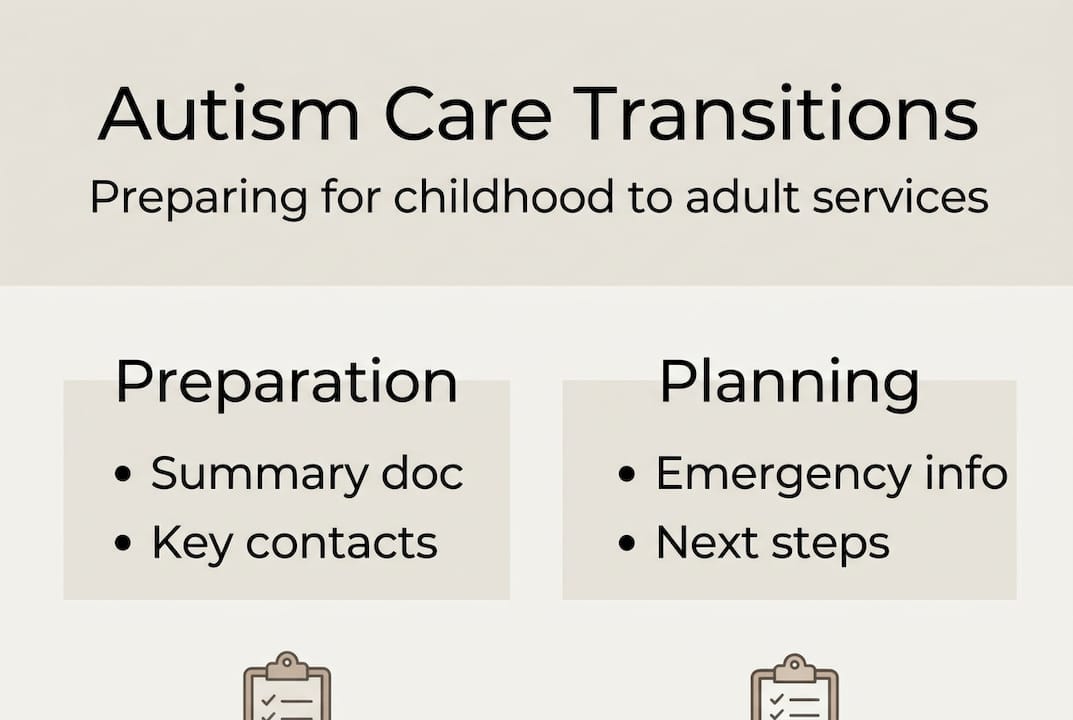
Emergency planning is also often overlooked. If your child has limited communication, first responders need to know how to interact safely. Programs like the Safe and Sound registry in many states allow families to register their child’s information with local law enforcement and emergency services.
Our take: what truly works and what’s often overlooked
Here is the uncomfortable truth most service guides skip: the biggest obstacle most families face is not the system itself. It is the invisible work of staying organized, following up relentlessly, and knowing when to ask for help.
Families who get faster, better access to autism services are almost never the ones who got lucky. They are the ones who showed up to every appointment prepared, documented every conversation, and treated effective service navigation as a skill worth learning. Organization is not a personality trait. It is a strategy, and it can be built.
The other underestimated factor is the power of peer networks. Parent support groups, online communities, and nonprofit navigation programs consistently surface resources that no single provider knows about. A parent in your county who has already found a great BCBA or navigated your specific insurance plan is worth more than a dozen hours of internet searching.
Solo navigation feels like the default, but it is rarely the most effective path. Seek out parent advocates, family navigation programs, and organizations that specialize in connecting families to services. The families who thrive are the ones who build a team around themselves, not just around their child.
Find the right autism medical services and therapy for your family
You now have a clear picture of how to prepare, access, and evaluate autism services at every stage of your child’s development. The next step is finding qualified, vetted providers who match your child’s specific needs. Autism Doctor Search makes that search faster and more reliable. Browse autism therapy options by location and service type, or explore therapy clinics near you to find ABA providers, occupational therapists, mental health services, and more. Our directory is built specifically for families like yours, so you can spend less time searching and more time moving forward.
Frequently asked questions
How soon should I seek medical services for suspected autism?
Start as soon as you notice concerns because early intervention is critical for developmental outcomes. Waiting for certainty before acting costs valuable time.
What documents are needed to start autism medical services?
Bring prior evaluations, current insurance information, and a referral from your pediatrician if your plan requires one. Families often face delays because of missing records or limited knowledge of what is needed, so preparing these in advance removes the most common bottleneck.
Are telehealth services as effective as in-person autism interventions?
Yes. A systematic review confirms that telehealth matches in-person care for autism diagnosis support, parent training, and therapy, while also improving access and reducing caregiver stress.
What’s the biggest barrier to accessing autism medical services?
Long waitlists, insurance complications, and family knowledge gaps about available resources are the most common obstacles. Using a family navigator or a structured directory significantly reduces how long it takes to break through these barriers.