TL;DR:
- Inclusive education involves teaching all students together with necessary supports for full participation. It emphasizes changing school culture through evidence-based practices, leadership, and collaboration to promote genuine belonging. Blended models combining general classroom time with targeted supports are most effective for autistic students.
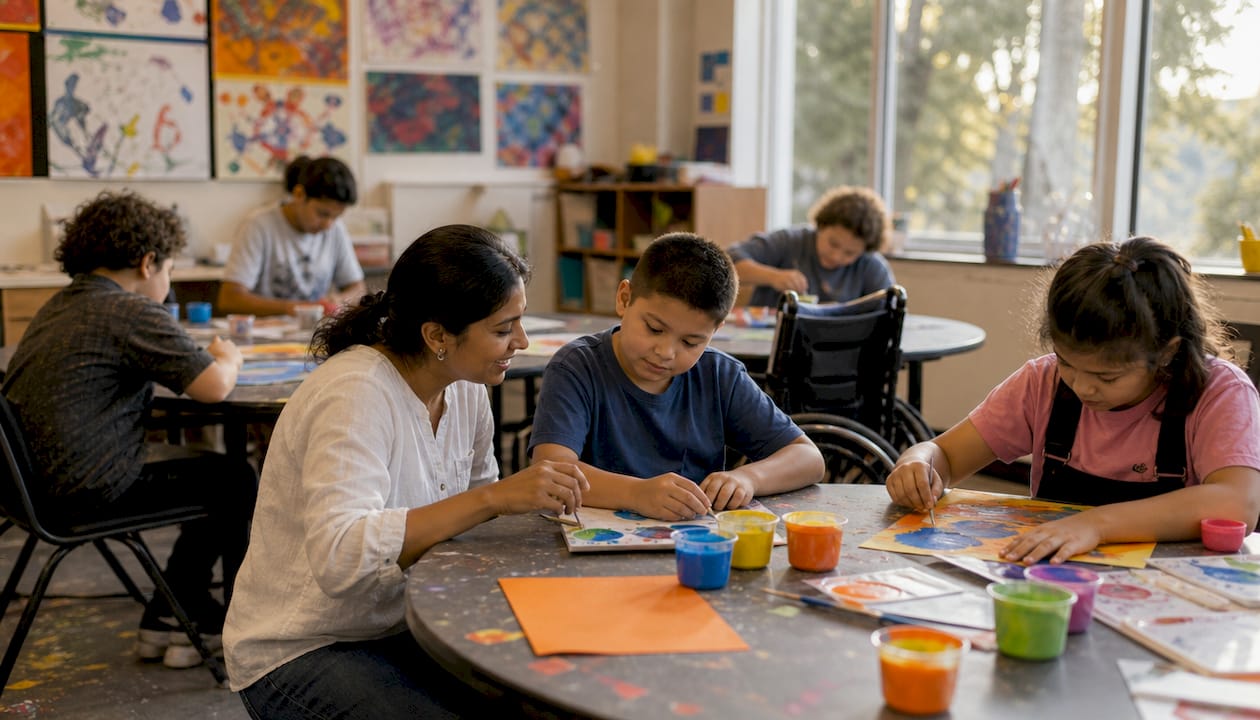
Inclusive education is the practice of teaching all students together in general education settings, with the adaptations and supports each learner needs to participate fully. The U.S. Department of Education’s 2025 guidance requires individualized programs with trained staff, specialized equipment, and structured supports so students with disabilities, including those with autism, can access the same curriculum as their peers. Universal Design for Learning (UDL) and positive behavioral supports are the two primary frameworks that make this possible. Inclusive education is both a legal standard under the Individuals with Disabilities Education Act and an ethical commitment to belonging for every child.
What is inclusive education and why does it matter?
Inclusive education is defined as a model where students with disabilities learn alongside their general education peers, supported by deliberate instructional design rather than separated by diagnosis. This is distinct from simply placing a student in a general classroom and hoping for the best. True inclusion requires UDL and behavioral supports that adapt curriculum, environment, and teaching methods to meet each learner’s needs.

The model matters because it changes outcomes beyond academics. Students with autism who learn in inclusive settings gain social skills, build peer relationships, and develop a sense of belonging that segregated settings rarely provide. Research confirms that active belonging requires changing school culture, not just adjusting the student’s schedule.
Inclusive education also benefits students without disabilities. Exposure to diverse learners builds empathy, communication skills, and adaptability in all students. Schools that commit to inclusion consistently report stronger community cohesion and more positive classroom climates.
What are the key components and principles of inclusive education?
The Autism CRC’s national guidance, built from analysis of over 500 studies and broad stakeholder input, identifies four pillars that make inclusive classrooms work:
- Student wellbeing: Emotional safety, sensory comfort, and a sense of belonging must come before academic demands.
- Pedagogy: Teaching methods must be flexible, evidence-based, and designed for diverse learners from the start.
- Collaboration: Educators, families, specialists, and students must plan together, not in silos.
- Physical environment: Classroom layout, lighting, noise levels, and sensory spaces directly affect participation.
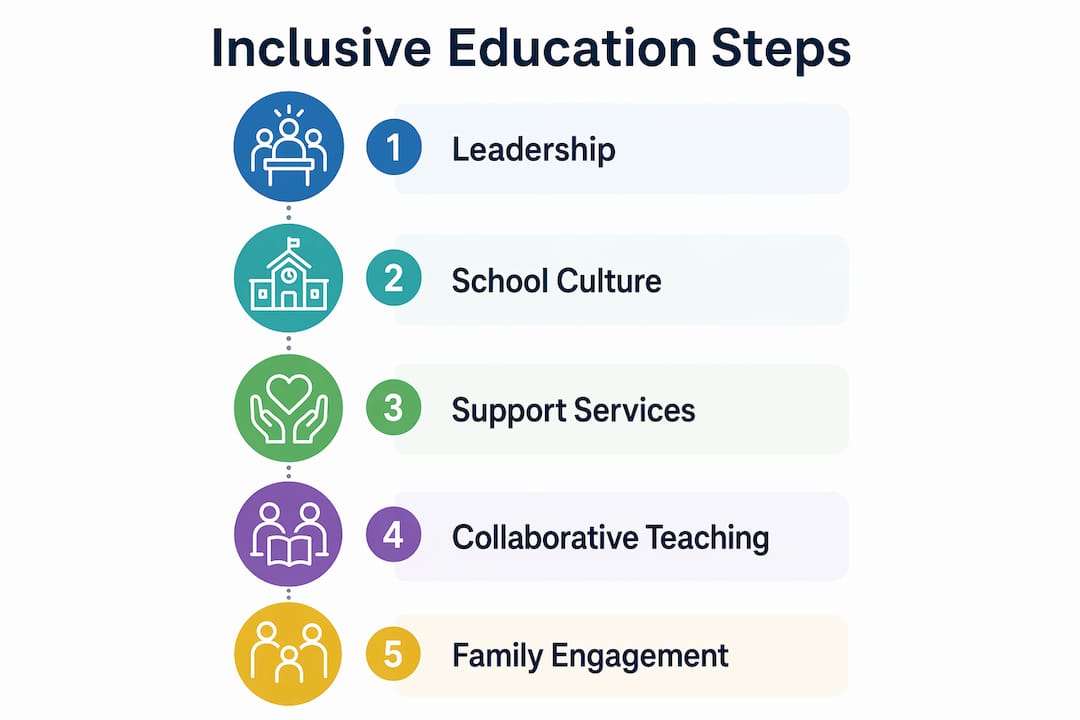
Strong school leadership is the foundation beneath all four pillars. Principals and administrators who model inclusive values set the tone for teacher attitudes, resource allocation, and family engagement. Without leadership commitment, even well-trained teachers struggle to sustain inclusive practices.
School culture is the factor most often underestimated. Stigma and limited autism knowledge among staff and peers undermine social integration even when physical access is in place. Professional development focused on autism awareness, communication differences, and sensory needs is not optional. It is the mechanism that turns policy into practice.
Pro Tip: Avoid the common mistake of treating inclusion as a placement decision. Ask instead: “What does this student need to genuinely participate?” That question shifts the focus from logistics to learning.
How does inclusive education differ from special education?
Inclusive education and special education are not opposites. They serve overlapping goals through different structures. Understanding the distinction helps parents and educators make better placement and support decisions.
Inclusive education prioritizes social integration and participation in general classrooms with adaptations. Special education emphasizes individualized skill-building, often in separate or structured settings designed for intensive support. Both models aim to improve outcomes for students with disabilities, but they differ in environment, pacing, and instructional focus.
| Feature | Inclusive education | Special education |
|---|---|---|
| Primary setting | General education classroom | Specialized or separate classroom |
| Core goal | Social participation and academic access | Individualized skill development |
| Instructional approach | UDL, adapted curriculum for all | Highly individualized, targeted instruction |
| Peer interaction | Daily, with general education peers | Limited or structured peer contact |
| Best suited for | Students needing environmental supports | Students needing intensive skill-building |
| Blended approach | Possible with pull-out services | Can include time in general classroom |
Blended approaches are the most common real-world solution. A student with autism might spend most of the day in a general classroom with UDL supports, then receive targeted speech or occupational therapy in a separate setting. This model captures the social benefits of inclusion while preserving access to specialized instruction. For families weighing options, Autismdoctorsearch offers a detailed look at special education school roles to help clarify when each model fits best.
What practical strategies support inclusive education for autistic learners?
Effective inclusion for autistic students requires specific, evidence-based strategies. General goodwill is not enough. The following approaches have strong research support and practical track records in schools.
-
Apply Universal Design for Learning. UDL means designing lessons with multiple ways to engage, represent information, and demonstrate knowledge. A student who struggles with written tests might show mastery through a verbal explanation or a visual project instead.
-
Use the Autistic SPACE framework. This framework addresses five domains: Sensory, Predictability, Acceptance, Communication, and Empathy. Originally developed for healthcare settings, it has been adapted for schools and provides practical ideas for each domain. A predictability strategy might mean posting a visual daily schedule. A sensory strategy might mean offering noise-canceling headphones during independent work.
-
Implement positive behavioral supports. Positive behavioral supports focus on teaching replacement behaviors and reinforcing success rather than punishing difficulty. They reduce anxiety and increase engagement for autistic students who may struggle with unexpected changes or unclear expectations.
-
Use collaborative teaching models. Collaborative teaching, assistive technology, and visual supports are among the most effective classroom strategies. Co-teaching, where a general educator and a special educator share one classroom, allows real-time differentiation without pulling students out.
-
Adapt the physical environment. Flexible seating, reduced visual clutter, designated quiet spaces, and clear physical boundaries help autistic students regulate and focus. These changes benefit all students, not just those with autism.
-
Build a coordinated support team. Collaboration among educators, families, and healthcare providers produces better outcomes than any single intervention. Regular team meetings, shared goals, and consistent communication across home and school are non-negotiable for sustainable inclusion.
Pro Tip: Co-produce the student’s inclusion plan with the autistic student and their family. Students who help shape their own supports are more likely to use them. Families who are genuine partners, not just recipients of information, provide consistency that school alone cannot.
Families supporting autistic children at home and school can also benefit from resources on emergency preparedness for children with autism, which reinforces the value of consistent planning across all environments.
What are the benefits and challenges of inclusive education for autistic students?
Inclusive education produces measurable benefits for autistic students when implemented with adequate supports and genuine commitment.
Core benefits include:
- Social integration: Daily contact with general education peers builds communication skills, friendship networks, and social confidence that are difficult to replicate in segregated settings.
- Academic access: Exposure to grade-level curriculum with appropriate supports raises expectations and outcomes for students who might otherwise receive a watered-down program.
- Emotional wellbeing: Belonging to a school community reduces isolation and supports mental health. Students who feel seen and valued show higher engagement and lower rates of anxiety.
Common challenges include:
- Stigma and attitudes: Positive attitudes from teachers, families, and peers are as critical as resources. Negative attitudes or low expectations from adults directly undermine a student’s sense of belonging.
- Resource gaps: Specialized teacher training, adapted materials, and assistive technologies vary widely across schools and districts. Resource disparities create unequal access to effective inclusion.
- Lack of training: Teachers who have not received autism-specific professional development often feel unprepared. This leads to reactive rather than proactive support.
“Resources alone cannot ensure true belonging without cultural change. Inclusion requires a school-wide commitment to shifting attitudes, not just adding supports.”
Addressing these challenges requires systemic action. Equitable resource distribution, ongoing professional development, and leadership accountability are the levers that move a school from token inclusion to genuine belonging. Parents and advocates play a critical role in holding schools accountable to these standards.
Key Takeaways
Inclusive education succeeds when schools commit to changing culture, not just changing classroom placement.
| Point | Details |
|---|---|
| Inclusive education definition | All students learn together in general settings with individualized supports and adapted instruction. |
| Four core pillars | Student wellbeing, pedagogy, collaboration, and physical environment drive effective inclusion. |
| Inclusion vs. special education | Blended models combining general classroom time with targeted services produce the strongest outcomes. |
| Autistic SPACE framework | Addresses sensory, predictability, acceptance, communication, and empathy needs in school settings. |
| Culture over placement | Positive staff attitudes and co-produced plans matter as much as resources for genuine belonging. |
Inclusion is about culture, not just classrooms
The most persistent mistake I see in schools is treating inclusion as a scheduling problem. Administrators move a student into a general classroom, assign a paraprofessional, and call it done. What they miss is that the policy debate has shifted from where students are placed to how they are taught. Stronger evidence exists for instructional approaches than for placement decisions alone. That is a significant finding, and most schools are not acting on it.
The schools that get inclusion right share one trait: they treat it as a cultural project, not a compliance exercise. Teachers receive ongoing coaching, not just a one-day workshop. Autistic students and their families are genuine co-designers of the support plan, not afterthoughts. And leadership publicly models the values of belonging and respect.
Token inclusion, where a student is physically present but socially invisible, is worse than a thoughtful blended model. It creates the appearance of equity without the substance. Parents should ask schools not just “Is my child in a general classroom?” but “How is my child participating, and who is accountable for that?”
The research from Autism CRC and the U.S. Department of Education points in the same direction: systemic commitment, co-produced plans, and evidence-based instruction are the path forward. Schools that invest in these areas now will be the ones producing genuinely inclusive graduates in a decade.
— Keith
Finding the right support for inclusive education
Autismdoctorsearch connects families, educators, and advocates with the autism resources they need to make inclusion work in practice. The directory includes autism therapy services that support autistic learners across educational and home settings, from ABA therapy to occupational therapy and mental health services. Whether you are a parent building a support team or an educator looking for specialized providers, Autismdoctorsearch offers a current, complete listing of vetted resources. Finding the right combination of school supports and clinical services is one of the most effective steps a family can take toward sustainable, meaningful inclusion.
FAQ
What is the inclusive education definition in simple terms?
Inclusive education means all students, including those with disabilities, learn together in general classrooms with the supports and adaptations each student needs to participate fully.
How does inclusive education benefit autistic students?
Inclusive education builds social skills, increases academic access, and supports emotional wellbeing by placing autistic students in peer-rich environments with structured, individualized supports.
What is the difference between inclusive education and special education?
Inclusive education prioritizes participation in general classrooms with adaptations, while special education focuses on individualized skill-building, often in separate settings. Blended approaches combine both.
What strategies help implement inclusive education for autistic learners?
Universal Design for Learning, the Autistic SPACE framework, positive behavioral supports, collaborative teaching, and visual supports are the most evidence-backed strategies for autistic students in inclusive classrooms.
Why do inclusive education efforts sometimes fail?
Inclusion fails most often when schools treat it as a placement decision rather than a cultural commitment. Without positive staff attitudes, adequate training, and co-produced student plans, physical presence in a classroom does not produce genuine belonging.