TL;DR:
- An autism parent journal helps parents record their child’s behaviors and emotional responses for clinical and personal use. Starting small with one focus area and using the ABC method creates meaningful data and reduces caregiver stress. Regular review and emotional reflection build resilience and improve advocacy and support planning.
An autism parent journal is a structured record where parents document their child’s behaviors, triggers, and progress alongside their own emotional responses. This dual-purpose practice serves two distinct functions: it generates clinical data useful for therapy teams and IEP meetings, and it creates a private outlet for processing the emotional weight of parenting an autistic child. The ABC method (Antecedent-Behavior-Consequence), recognized as the industry standard for behavioral tracking in autism care, gives parents a concrete framework to start with. Autismdoctorsearch connects families to ABA therapists, occupational therapists, and special education resources who rely on exactly this kind of parent-generated data.
How to start your autism parent journal: what you need first
The right format matters more than most parents expect. A paper notebook works well for parents who prefer writing by hand and want no screen time after a long day. Digital options, including notes apps or dedicated behavior-tracking apps, make searching past entries faster and allow photo attachments. Neither format is superior. The best one is the format you will actually use consistently.

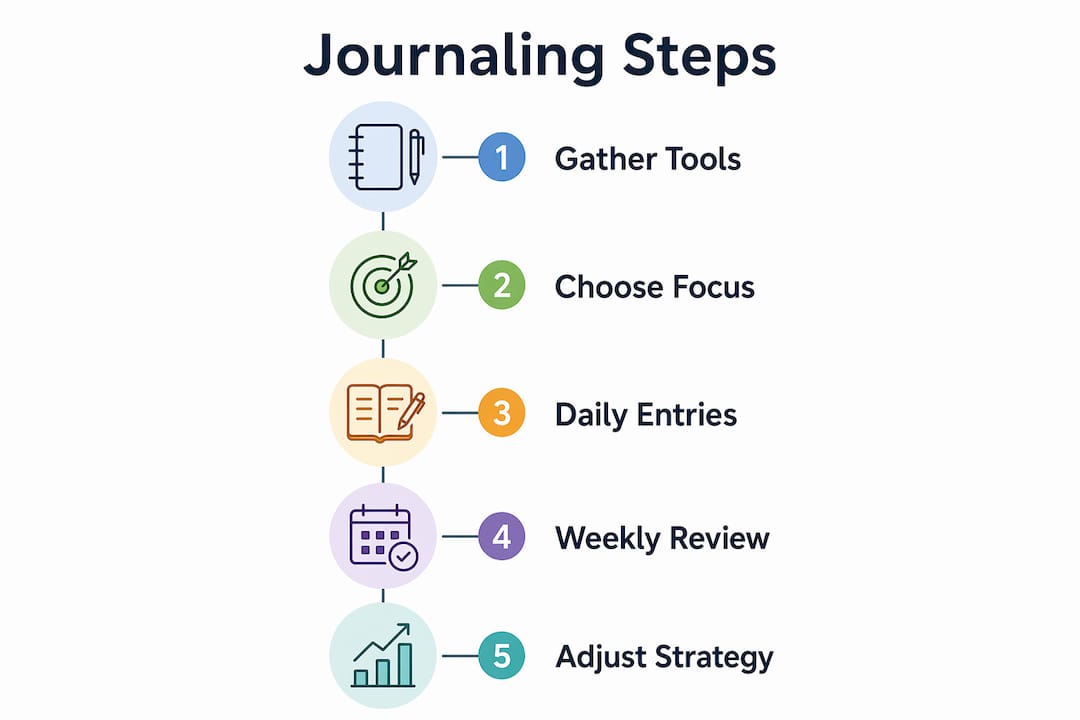
Before writing a single entry, gather three basic tools: a dedicated notebook or app, a simple template with fields for date, time, location, and behavior, and a timer or clock for noting duration. Templates prevent vague entries like “bad day” and push you toward specific, usable observations. Structured behavioral logs include fields for date, time, location, antecedents, behavior details, duration, intensity, response strategies, and recovery notes. That level of detail transforms a diary into a clinical asset.
| Journal format | Best for | Key limitation |
|---|---|---|
| Paper notebook | Low-tech, tactile preference | Hard to search past entries |
| Notes app (phone/tablet) | Quick capture on the go | No built-in structure |
| Behavior-tracking app | Structured data, charts | Learning curve, subscription cost |
| Printable templates | Guided, consistent entries | Requires printing and filing |
Pro Tip: Start with a single printed ABC template per day for the first week. One page per day feels manageable and builds the habit before you add complexity.
Autismdoctorsearch’s guide on autism record keeping explains why consistent documentation directly improves the quality of care your child receives.
Step-by-step guide to beginning your autism parent journal
The single most common mistake parents make is trying to track everything at once. Starting with one specific area for 7 days establishes a baseline before expanding scope. That baseline is what makes patterns visible and therapy conversations productive.
Follow these steps to build your journaling practice from day one:
- Choose one focus area. Pick sleep, meltdowns, or a specific behavior your child’s therapist has flagged. Track only that area for the first week.
- Apply the ABC method. For each incident, record the Antecedent (what happened right before), the Behavior (what your child did, described objectively), and the Consequence (what happened after). The ABC tracking method over 1–2 weeks produces data strong enough to inform a behavioral intervention plan.
- Write objectively. “He screamed for 4 minutes after the TV was turned off” is useful. “He had a meltdown” is not. Describe what you saw and heard, not what you interpreted.
- Log the details. Record date, time, location, duration, and intensity on a scale you define (1 = mild, 5 = severe). Consistent scales make week-over-week comparison possible.
- Do a weekly review. Spend 10 minutes each Sunday reading the week’s entries. Note any patterns: same time of day, same location, same trigger.
- Expand gradually. After the first week, add a second tracking area only if the first feels manageable.
Pro Tip: Set a phone alarm labeled “Journal 5 min” at the same time each evening. Habit stacking, attaching journaling to an existing routine like after dinner cleanup, cuts the friction of starting.
| Week | Focus area | Review action |
|---|---|---|
| 1 | One behavior (e.g., meltdowns) | Identify top 2 triggers |
| 2 | Add sleep tracking | Compare sleep quality to behavior frequency |
| 3–4 | Add a third area if ready | Summarize patterns for therapist |
Autismdoctorsearch’s ABA therapy checklist pairs directly with this step-by-step approach, giving you a ready-made framework to align your journal entries with your child’s ABA goals.
How to integrate emotional journaling into your autism parent diary
Behavioral tracking is only half the picture. Journaling provides caregivers a private emotional outlet distinct from clinical data tracking, where parents can process frustration, grief, pride, and joy. That processing builds resilience over time. Without it, clinical tracking alone can feel mechanical and draining.
Research by Neff and Faso (2015) found that self-compassion journaling is inversely related to parental stress and depression, independent of a child’s symptom severity. That finding matters because it means your emotional state is something you can actively influence through writing, regardless of how your child’s week went.
Writing a letter to yourself as if you were a close friend offering comfort is one of the most effective self-compassion exercises available. Describe your week honestly, then respond with the warmth you would offer someone you love. This practice, drawn from self-compassion research, reframes self-criticism into self-support.
Practical prompts to add to your emotional journaling practice:
- What went well today? Name one specific moment, no matter how small.
- What was hardest? Write it out without judgment or solution-seeking.
- What do I need right now? Rest, connection, information, or something else.
- What am I proud of this week? As a parent, not as a caregiver.
Emotional entries do not need to be long. Three sentences written honestly outperform three paragraphs written out of obligation. For parents navigating co-parenting dynamics alongside autism caregiving, co-parenting mental health support offers strategies that complement this kind of reflective writing.
How to organize your journal for healthcare and personal growth
A journal full of raw entries is only useful if you can extract meaning from it. The goal is to create concise summaries before every therapy appointment, IEP meeting, or medical visit. Reviewing journal data quarterly optimizes its usefulness for clinical decision-making. Quarterly reviews also reveal slow-building progress that weekly entries can obscure.
Therapist Frances Fishman emphasizes that noting “small wins” is critical evidence of progress that clinics cannot observe. A child who made eye contact during breakfast or asked for help instead of melting down represents real skill generalization. Your journal is the only place that evidence exists.
Use these practices to keep your journal organized and clinically useful:
- Create a monthly summary page. List the top 3 triggers identified, the 2 most effective response strategies, and one progress milestone.
- Flag entries for appointments. Use a sticky note or colored tab to mark entries relevant to an upcoming meeting.
- Share selectively. Bring your summary page, not the full journal, to appointments. Therapists need patterns, not every entry.
- Track milestones separately. Keep a running list of wins, no matter how small, on a dedicated page at the back of your journal.
- Set a review schedule. Weekly micro-reviews (10 minutes), monthly summaries (30 minutes), and quarterly deep reviews (1 hour) create a sustainable rhythm.
Pro Tip: Before each therapy appointment, write three bullet points: the most frequent trigger this month, the strategy that worked best, and one question you want answered. Hand that page to your therapist at the start of the session.
Tracking autism treatment progress is covered in depth by Autismdoctorsearch, with guidance on connecting parent observations to measurable therapy outcomes.
Common mistakes to avoid when starting an autism parent journal
Most parents who abandon their journals do so within the first three weeks. The cause is almost always the same: they started too big. Experts recommend starting small and building gradually to sustain the practice long-term. A journal you maintain for six months with simple entries beats a detailed system you abandon in week two.
Watch for these common pitfalls:
- Over-documentation. Logging every moment of every day creates data overload and burns you out fast. Track one or two areas with intention.
- Vague entries. “Rough morning” tells you nothing in three months. Write what happened, when, and for how long.
- Skipping emotional entries. Treating the journal as purely clinical removes the personal benefit that sustains the habit.
- Inconsistent formats. Switching between methods mid-stream makes pattern recognition impossible. Pick one format and stick with it for at least a month.
- Guilt over missed days. Missing a day is not failure. Pick up where you left off without commentary.
If journaling starts to feel like a burden rather than a tool, scale back rather than stop. Two entries a week with real detail outperform seven rushed, vague ones. When you feel stuck on how to frame observations or structure your notes, Autismdoctorsearch’s documentation management guide offers practical templates and organizational frameworks.
Key takeaways
An autism parent journal works best when it combines structured behavioral tracking with honest emotional reflection, starting small and building gradually over time.
| Point | Details |
|---|---|
| Start with one focus area | Track a single behavior for 7 days before expanding to avoid burnout. |
| Use the ABC method | Record Antecedent, Behavior, and Consequence to create data-driven therapy support. |
| Add emotional entries | Self-compassion journaling reduces parental stress independent of your child’s symptoms. |
| Summarize before appointments | Bring a monthly summary page, not raw entries, to therapy and IEP meetings. |
| Review on a schedule | Weekly, monthly, and quarterly reviews reveal patterns that daily entries alone cannot show. |
What I’ve learned from years of watching parents journal their way to better care
The parents who get the most out of journaling are not the most organized ones. They are the ones who treat the journal as a conversation with themselves rather than a report for someone else. I have seen parents arrive at IEP meetings with months of ABC data and completely change the direction of their child’s support plan. That kind of advocacy is only possible when you have written evidence behind you.
What surprises most parents is how quickly the emotional entries become as valuable as the behavioral ones. You start writing about a hard week and realize you have been carrying the same fear for three months without naming it. Naming it changes something. The therapeutic power of journaling is not a soft benefit. It is a measurable one, and the research on self-compassion backs that up.
My honest advice: do not wait until you have the perfect system. Write one ABC entry tonight. Write one sentence about how you feel. That is your journal. Build from there.
— Keith
Autism therapy services that work alongside your journal
Your journal documents what is happening. Autism therapy services determine what happens next. Autismdoctorsearch connects families to ABA therapy providers, occupational therapists, mental health services, and special education resources across the country. The patterns you identify in your journal, specific triggers, effective strategies, and skill milestones, become the starting point for every conversation with a provider. Browse autism therapy services on Autismdoctorsearch to find vetted providers near you who can turn your documented observations into a structured support plan for your child.
FAQ
What is an autism parent journal?
An autism parent journal is a structured record where parents document their child’s behaviors, triggers, and progress alongside their own emotional responses. It serves both as a clinical data source for therapy teams and as a personal outlet for processing caregiving stress.
How do I start documenting autism progress without feeling overwhelmed?
Start by tracking one specific area for 7 days, such as sleep or meltdowns, before expanding. One focused category prevents burnout and produces cleaner data for therapy discussions.
What is the ABC method in autism journaling?
The ABC method records the Antecedent (trigger), Behavior (what the child did), and Consequence (what followed). It is the industry standard for behavioral tracking in autism care and produces data strong enough to support behavioral intervention plans.
How often should I review my autism parent journal?
A weekly 10-minute review, a monthly summary, and a quarterly deep review create the most useful rhythm. Quarterly reviews are particularly valuable for informing therapy adjustments and IEP meetings.
Does emotional journaling actually help autism parents?
Yes. Research by Neff and Faso (2015) found that self-compassion journaling reduces parental stress and depression independent of a child’s symptom severity. The emotional benefit is measurable, not just anecdotal.