
Finding the right behavioral therapist for your child with autism can feel overwhelming. You want someone skilled, compassionate, and experienced, but the search process often leaves parents confused about where to start, what credentials matter, and how to verify quality care. This guide walks you through every step of locating and selecting a qualified autism behavioral therapist, from understanding essential qualifications to evaluating candidates and ensuring ongoing progress. You will learn practical strategies to simplify your search, avoid common pitfalls, and connect with professionals who can truly support your child’s development and well-being.
Table of Contents
- Understanding Autism Behavioral Therapists And Required Qualifications
- Preparing To Find The Right Autism Behavioral Therapist
- Step-By-Step Guide To Finding And Evaluating Autism Behavioral Therapists
- Common Challenges And Tips For Verifying And Maintaining Quality Care
- Explore Trusted Autism Behavioral Therapy Providers
- Frequently Asked Questions
Key takeaways
| Point | Details |
|---|---|
| Verify credentials | Always confirm BCBA certification and state licensure before starting therapy |
| Prepare thoroughly | Assess your child’s needs and gather medical records to inform your search |
| Use trusted directories | Leverage specialized resources to find qualified therapists in your area |
| Ask key questions | Interview candidates about experience, methods, and family involvement |
| Monitor progress | Track therapy outcomes regularly and maintain open communication with providers |
Understanding autism behavioral therapists and required qualifications
Autism behavioral therapists specialize in helping children with autism spectrum disorder develop essential skills, reduce challenging behaviors, and improve daily functioning. These professionals use evidence-based techniques to create individualized treatment plans that address communication, social interaction, self-care, and behavioral regulation. The most widely recognized and effective approach is Applied Behavior Analysis, commonly known as ABA therapy. ABA breaks down complex skills into smaller, teachable steps and uses positive reinforcement to encourage desired behaviors while systematically addressing problematic ones.
When searching for a therapist, you need to understand the credential hierarchy in this field. Board Certified Behavior Analyst (BCBA) certification is a key credential for autism behavioral therapists. BCBAs have completed graduate-level education, extensive supervised fieldwork, and passed a rigorous certification exam administered by the Behavior Analyst Certification Board. They design treatment plans, oversee therapy implementation, and train other team members. Registered Behavior Technicians (RBTs) work under BCBA supervision to deliver direct therapy sessions with children. While RBTs receive specialized training and certification, they operate within treatment plans created by BCBAs.
Other professionals you might encounter include Board Certified Assistant Behavior Analysts (BCaBAs), who have undergraduate-level training and can assist BCBAs with certain responsibilities, and developmental therapists who may use behavioral approaches but lack formal behavior analysis certification. Understanding these distinctions helps you identify the level of expertise your child needs. For comprehensive ABA therapy programs, a BCBA should lead the treatment team. Some families also work with occupational therapists, speech therapists, and special education teachers who collaborate with behavioral therapists to address multiple developmental areas simultaneously.
Key qualifications to verify include:
- Current BCBA or BCaBA certification through the Behavior Analyst Certification Board
- State licensure where applicable, as requirements vary by location
- Specialized training and experience working with autism spectrum disorder
- Liability insurance and adherence to professional ethics codes
- Continuing education to stay current with research and best practices
Pro Tip: Visit the Behavior Analyst Certification Board website to verify any therapist’s certification status using their online registry. This quick check confirms credentials and reveals any disciplinary actions or lapses in certification. The center for autism support and training can also provide guidance on credential verification.
Preparing to find the right autism behavioral therapist
Successful therapist searches begin with thorough preparation. Before contacting potential providers, take time to understand your child’s unique needs, strengths, and challenges. Review recent evaluations from psychologists, developmental pediatricians, or school assessments to identify specific behavioral concerns, communication deficits, sensory sensitivities, and adaptive skill gaps. This information helps you articulate what you are looking for in a therapist and ensures you find someone experienced with your child’s particular profile. Children with high support needs require therapists skilled in managing significant behavioral challenges, while those with milder presentations may benefit from focused interventions targeting social skills or executive functioning.
Setting clear therapy goals before your search keeps you focused and helps you evaluate whether potential therapists align with your priorities. Work with your child’s pediatrician, school team, and other providers to identify realistic, measurable objectives. Goals might include reducing aggressive behaviors, improving toilet training, expanding verbal communication, developing play skills, or increasing independence with daily routines. Gathering comprehensive information about your child’s needs helps match them with the best-suited therapist. Prioritize your top three to five goals so you can discuss them during therapist consultations and assess whether candidates have relevant experience.
Organizing documentation streamlines the intake process once you select a provider. Create a folder containing:
- Autism diagnosis reports and psychological evaluations
- Individualized Education Programs (IEPs) or 504 plans from school
- Previous therapy reports and progress summaries
- Medical records including medication lists and relevant health conditions
- Insurance information and coverage details for behavioral health services
- Contact information for your child’s care team members
Prepare a list of questions and preferences to guide your therapist interviews. Consider practical factors like location, scheduling flexibility, and whether you prefer home-based or clinic-based services. Think about your family’s values and communication style. Do you want a therapist who provides daily updates, or are weekly summaries sufficient? How much parent training and involvement do you expect? What is your comfort level with different behavior management techniques? Having these preferences clarified helps you make confident decisions when comparing candidates.

Pro Tip: Schedule a meeting with your child’s school team before beginning your search. Special education teachers and school psychologists often have insights about local therapists, can recommend providers they have successfully collaborated with, and may identify therapy goals that align with educational objectives. This coordination creates consistency across settings and maximizes your child’s progress. Connect with autistic services inc for additional support in this preparation phase.
Step-by-step guide to finding and evaluating autism behavioral therapists
Locating qualified therapists requires using multiple search strategies to build a comprehensive list of candidates. Start with specialized directories designed specifically for autism services, as these platforms vet providers and include detailed credential information. General healthcare directories often lack the specificity needed to identify therapists with autism expertise. Professional organizations like the Behavior Analyst Certification Board maintain searchable databases of certified practitioners. State autism societies and advocacy groups frequently maintain referral lists of recommended providers. Your child’s pediatrician, school district, and early intervention program can provide referrals based on families they have worked with previously.
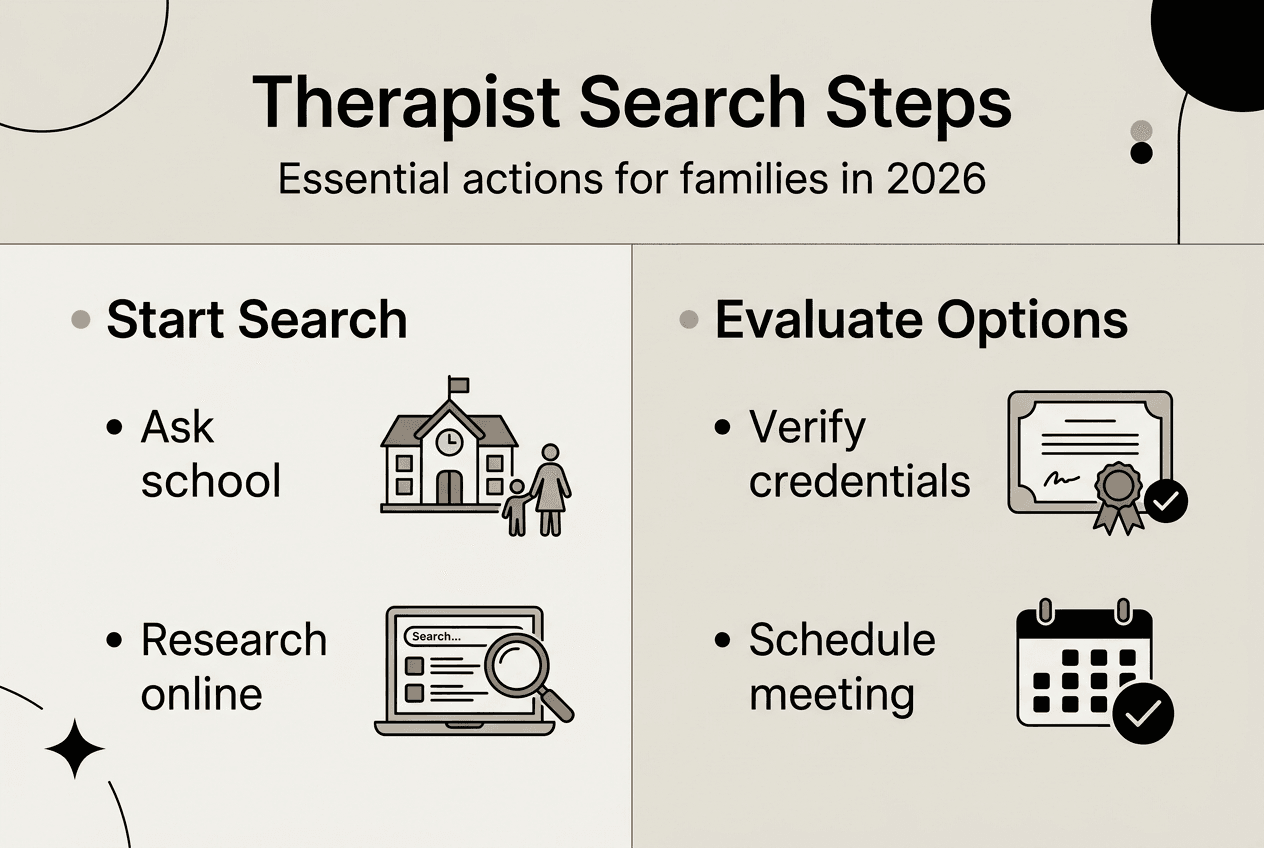
Once you identify potential therapists, verify their credentials before proceeding. Using multiple trusted directories increases the chances of finding qualified therapists near you. Check BCBA certification status through the official registry, confirm state licensure with your state’s licensing board, and search for any disciplinary actions or complaints. Many states require behavior analysts to hold professional licenses in addition to BCBA certification. Review therapist websites and online profiles for information about their training background, years of experience, age ranges served, and treatment approaches. Look for evidence of continuing education and specializations relevant to your child’s needs.
Follow this systematic process to narrow your options:
- Create a spreadsheet listing 8 to 10 potential therapists with their contact information, credentials, and locations
- Call or email each provider to confirm availability, insurance acceptance, and basic service details
- Eliminate candidates who do not meet your essential criteria such as location, schedule, or insurance
- Schedule consultations with your top 3 to 5 choices to meet them and discuss your child’s needs
- Prepare identical questions for each consultation to enable fair comparisons
- Observe how each therapist interacts with your child if possible during the meeting
- Request and check references from other families who have used their services
- Review service agreements, fees, and cancellation policies before making your final decision
During consultations, ask targeted questions that reveal the therapist’s expertise and approach. Inquire about their experience with children similar to yours, specific behavioral challenges they have successfully addressed, and their philosophy regarding parent involvement. Ask how they measure progress, how often they conduct assessments, and their process for modifying treatment plans when goals are not met. Discuss their communication style and frequency of updates. Request information about their supervision structure if RBTs will deliver direct services. Understanding their crisis management protocols and approach to challenging behaviors is essential for your peace of mind.
Comparing different therapy models helps you understand your options:
| Therapy Type | Setting | Intensity | Best For |
| — | — | — |
| Comprehensive ABA | Home or clinic | 20 to 40 hours weekly | Children needing intensive early intervention |
| Focused ABA | Home, clinic, or school | 5 to 15 hours weekly | Targeting specific skill deficits or behaviors |
| School-based services | Educational setting | Varies by IEP | Integrating therapy with educational goals |
| Parent training | Home or telehealth | 2 to 5 hours weekly | Building parent skills to support generalization |
Explore resources like autism therapy services and your autism coach to find providers offering these various service models.
Common challenges and tips for verifying and maintaining quality care
Even with careful preparation, parents encounter obstacles during their search and throughout therapy. Therapist availability ranks among the most common frustrations. High-quality BCBAs often have waitlists stretching several months, particularly in underserved areas. When facing long waits, ask about interim support options such as parent training sessions, consultation services, or recommendations for other qualified providers. Some agencies offer priority placement for children with urgent behavioral needs, so communicate the severity of your situation clearly. Consider expanding your geographic search radius or exploring telehealth options, which have become increasingly viable for parent coaching and treatment plan oversight.
Insurance challenges create significant stress for many families. Coverage for autism behavioral therapy varies widely by state, plan type, and specific policy terms. Some states mandate autism coverage, while others leave it to individual insurers. Even with coverage, you may face limitations on authorized hours, approved providers, or prior authorization requirements. Contact your insurance company before starting services to understand your benefits, obtain necessary authorizations, and confirm that your chosen therapist is in network. Ask therapists about their experience working with your specific insurance carrier, as some providers excel at navigating reimbursement processes while others struggle with paperwork and claim denials.
Matching therapeutic styles with your family’s values and your child’s temperament matters tremendously for long-term success. Some therapists use highly structured, table-based teaching methods, while others prefer naturalistic approaches embedded in play and daily routines. Neither is inherently superior, but fit matters. During consultations, discuss scenarios that concern you and listen to how therapists would handle them. If you feel uncomfortable with their proposed strategies or sense a personality mismatch, trust your instincts. A technically skilled therapist who clashes with your parenting philosophy or fails to build rapport with your child will produce limited results.
Once therapy begins, maintaining quality requires active engagement and monitoring. Regular progress review meetings are essential to maintain effective therapy outcomes. Schedule formal progress reviews every three to six months to examine data, discuss goal attainment, and adjust treatment plans. Between formal reviews, maintain open communication channels through your preferred method, whether text updates, email summaries, or brief phone calls. Request access to data collection systems so you can monitor your child’s progress in real time. Many therapy agencies use digital platforms that allow parent access to session notes, graphs, and skill acquisition data.
Pro Tip: Keep a therapy log documenting your observations of your child’s behavior at home, questions that arise between sessions, and notable successes or setbacks. This record helps you remember important points to discuss during meetings and provides valuable information about how skills are generalizing outside therapy sessions. Your observations complement the therapist’s data and create a complete picture of your child’s development.
Strategies for ensuring ongoing quality include:
- Observing therapy sessions periodically to see techniques in action
- Asking for explanations when you do not understand the purpose of specific interventions
- Requesting regular parent training to learn how to support skills at home
- Advocating immediately if you have concerns about therapist conduct or effectiveness
- Staying informed about autism research and evidence-based practices
Quality therapy requires partnership between families and professionals. Your insights about your child are invaluable, and effective therapists welcome your input, answer your questions thoroughly, and adjust their approach based on your feedback. Never hesitate to advocate for your child’s needs or seek a second opinion when something feels wrong.
Connect with the center for autism support and training for additional guidance on maintaining quality care standards.
Explore trusted autism behavioral therapy providers
Now that you understand how to find and evaluate autism behavioral therapists, you can begin your search with confidence. Autism Doctor Search Directory offers comprehensive listings of qualified providers specializing in ABA therapy and behavioral interventions for children with autism. Our directory includes detailed profiles of licensed BCBAs, therapy agencies, and autism support centers across the country, making it easier to find professionals who match your child’s specific needs and your family’s preferences.
Browse verified listings to discover providers near you, compare services and approaches, and access contact information to schedule consultations. Each listing includes credential verification, service descriptions, and location details to streamline your decision-making process. Whether you need intensive early intervention, focused behavioral support, or parent training programs, our directory connects you with experienced professionals ready to help.
Start exploring today by visiting autism therapy services, the missing piece ABA therapy, and autism therapeutics to find qualified behavioral therapists committed to supporting your child’s growth and development.
Frequently asked questions
How do I verify the credentials of an autism behavioral therapist?
Check certification status through the Behavior Analyst Certification Board’s online registry by searching the therapist’s name. This database shows current certification, credential type, and any disciplinary actions. Verifying BCBA certification can be done through the Behavior Analyst Certification Board website. Additionally, confirm state licensure through your state’s professional licensing board website, as many states require separate licenses for behavior analysts beyond BCBA certification.
What questions should I ask during a therapist interview?
Inquire about their experience working specifically with children who have autism spectrum disorder and ask how many years they have practiced. Discuss the therapy methods they use, whether they follow a naturalistic or structured approach, and how they involve families in treatment. Ask about their availability for sessions, typical response time for questions, and frequency of progress updates. Request information about how they measure outcomes and modify plans when progress stalls.
How long does it usually take to see progress with autism behavioral therapy?
Progress timelines vary significantly based on your child’s age, skill level, therapy intensity, and specific goals being addressed. Some families notice improvements in targeted behaviors within the first few months, particularly for focused interventions addressing specific skills. Comprehensive programs typically show measurable progress within three to six months of consistent therapy. However, meaningful skill development is an ongoing process requiring patience and regular assessment to ensure interventions remain effective as your child grows and develops.
Can insurance help cover autism behavioral therapy costs?
Many insurance plans cover autism behavioral therapy, but coverage varies widely by state, plan type, and specific policy terms. Some states mandate autism coverage including ABA therapy, while others do not require insurers to provide these benefits. Contact your insurance company to understand your specific benefits, including covered hours, prior authorization requirements, and whether your chosen provider is in network. Ask potential therapists about their experience with your insurance carrier, as some providers handle billing and authorization processes more effectively than others, reducing your administrative burden.