


TL;DR:
- Effective autism team communication relies on structured, repeatable steps that clarify roles, goals, and processes for all members. These steps include thorough preparation, clear meeting frameworks like the before-during-after model, and ongoing collaboration supported by models like COMPASS to ensure consistent implementation. Proper coordination, legal compliance, and family inclusion are essential for meaningful progress and avoiding conflicting messages to the child.
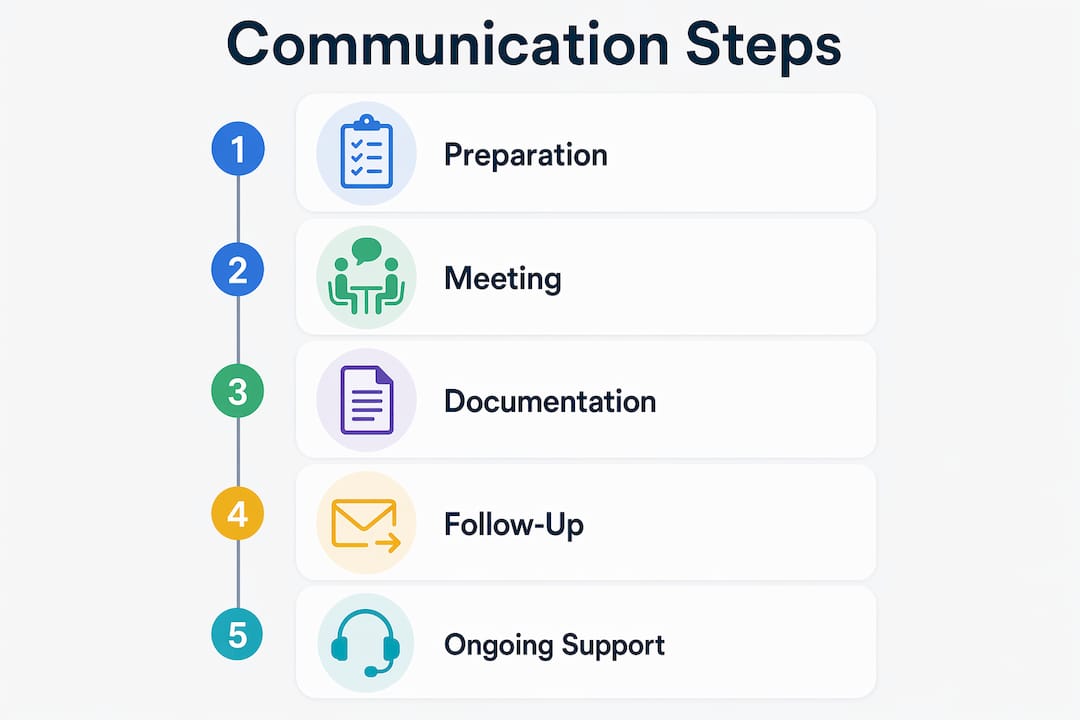
Autism team communication steps are structured, repeatable actions that improve collaboration between parents, educators, therapists, and specialists supporting autistic individuals. When these steps are missing, teams send conflicting messages, meetings stall, and children lose ground. When they are in place, every member of the support team knows their role, shares the same goals, and moves in the same direction. This guide covers the prerequisites, the meeting phases, the established frameworks like COMPASS, and the troubleshooting strategies that make the difference between a team that talks and a team that delivers.
What are the autism team communication steps that actually work?
Structured team communication in autism support is not informal check-ins or occasional emails. It is a defined process built on preparation, clear roles, and documented follow-through. The industry term for this practice is interdisciplinary collaboration, and it applies to any team that includes applied behavior analysis (ABA) therapists, speech-language pathologists (SLPs), occupational therapists (OTs), special education teachers, and parents working together under a shared plan.

The core insight is this: effective autism communication starts with administrative clarity, not just information sharing. A team that agrees on who facilitates, who takes notes, and what the meeting is for will outperform a team with more credentials but no structure. Three named entities anchor this approach: the Individuals with Disabilities Education Act (IDEA), the Individualized Education Program (IEP), and the COMPASS model developed by the Autism Research Institute.
What prerequisites and tools ensure smooth team communication?
Before any meeting happens, three things must be locked in: a clear purpose, assigned roles, and proper notification. Skipping any one of these creates the confusion that derails even well-intentioned teams.
Defining purpose and assigning roles
Every meeting needs a stated reason. Is this an annual IEP review? A data check-in? A problem-solving session about a specific behavior? Without a written agenda sent in advance, participants arrive with different expectations and the meeting loses focus fast. Assign a facilitator to keep discussion on track, a note-taker to capture decisions, and a timekeeper to respect everyone’s schedule. These three roles alone reduce meeting drift significantly.
Notifying all participants correctly
IDEA regulations require that parents receive early, detailed notice of IEP meetings including the purpose, time, location, and names of attendees. This is not a courtesy. It is a legal requirement, and it exists because late or insufficient notices undermine meaningful parent participation. Annual review invitations must go out at least two weeks prior and include all relevant service providers.
Pro Tip: Send meeting invitations with a one-paragraph summary of what will be discussed. Parents who arrive informed ask better questions and contribute more to decisions.
Choosing the right communication tools
| Tool type | Best use | Key limitation |
|---|---|---|
| In-person IEP meetings | Annual reviews, major plan changes | Scheduling conflicts across providers |
| Secure digital platforms | Ongoing updates, data sharing, family messaging | Requires consistent adoption by all parties |
| Email with shared documents | Agenda distribution, recap summaries | No real-time coordination |
| Phone or video calls | Quick clarifications between meetings | No documentation trail |
Digital platforms designed for autism care now offer integrated features including social feeds, profile libraries, and direct messaging that connect families and professional caregivers in one place. This matters because scattered communication across texts, emails, and verbal updates is where critical information gets lost.
How do you execute communication before, during, and after meetings?
The before-during-after framework is the most practical structure for autism teamwork steps. Each phase has specific actions that build on the previous one.
Before the meeting
- Write a clear agenda with no more than two shared targets for the session.
- Gather current data on the learner’s IEP goals, including progress notes from each provider.
- Send the agenda and data summary to all participants at least five business days in advance.
- Confirm attendance and resolve any scheduling conflicts before the meeting date.
- Verify that all participants have access to any digital platform or shared documents being used.
During the meeting
- Open by stating the shared goal for the session, not individual provider updates.
- Use plain language. Avoid acronyms without explanation. If you say “AAC” or “FBA,” define it immediately.
- Keep discussion focused on the learner’s functional goals and current data, not past frustrations.
- Capture every decision in writing as it is made, not from memory afterward.
- Before closing, confirm the action items: who does what, by what date.
After the meeting
- Send a recap email within 24 hours summarizing decisions and action items.
- Update the IEP or behavior plan to reflect any changes agreed upon.
- Schedule the next check-in before everyone leaves the current meeting.
Pro Tip: Limit each meeting agenda to one or two shared targets. Teams that try to cover everything in one session rarely resolve anything completely.
Structured workflows that assign clear roles and document action items with a “who does what by when” format are the single most reliable predictor of follow-through in interdisciplinary autism teams. This is not a soft skill. It is a process discipline.
What frameworks support ongoing autism team collaboration?
One-time meetings do not sustain progress. Ongoing collaboration requires a repeatable framework that keeps the team aligned between formal IEP reviews.
The COMPASS model
The COMPASS model, developed by the Autism Research Institute, integrates shared decision-making, coaching, and progress monitoring directly aligned with the child’s IEP and strengths. What separates COMPASS from generic meeting formats is its emphasis on implementation support. Communication is not just about exchanging data. It includes coaching team members on how to carry out agreed strategies with fidelity. This closes the gap between what gets decided in a meeting and what actually happens in the classroom or therapy room.
Interdisciplinary ABA collaboration workflow
An interdisciplinary team built around ABA principles operates with one shared plan, not separate plans from each provider. The ABA therapist, SLP, OT, and teacher each contribute their domain expertise, but the outputs converge into a single document with shared goals and one designated owner for each next step. This “information-to-action pipeline” prevents the most common failure in autism team communication: conflicting instructions reaching the child from different adults.
Using IDEA progress reporting as a communication cadence
IDEA mandates that IEPs include measurable progress monitoring and that parents receive reports at least as often as report cards, typically quarterly. These reporting cycles are not just compliance checkboxes. They are built-in communication checkpoints. Teams that align their check-in meetings with these cycles use data to drive decisions rather than opinions or assumptions. Reserve additional meetings for situations where data shows a goal is not being met. That discipline keeps teams focused and prevents meeting fatigue.
Multidisciplinary care teams that use structured digital platforms to share updates between these formal cycles report stronger coordination and a greater sense of connection between families and professionals.
How can you troubleshoot common autism team communication problems?
Even well-structured teams hit friction. The most common problems are predictable, and each has a direct fix.
Unclear meeting notices. When parents receive vague or last-minute invitations, they arrive unprepared or not at all. The fix is a standardized invitation template that includes purpose, time, location, attendees, and a brief agenda summary. Use it every time without exception.
Conflicting messages to the child. When the ABA therapist uses one prompt strategy and the classroom teacher uses another, the child receives mixed signals. One shared plan with a single source of truth for each strategy eliminates this. Every provider reads from the same document.
Inconsistent data sharing. Progress data that stays siloed inside one provider’s notes cannot inform team decisions. Agree on a shared format and a shared location for data, whether that is a digital platform or a shared folder, and make updating it part of each provider’s weekly routine.
Role confusion during meetings. When no one is clearly facilitating, conversations loop, decisions do not get made, and parents feel sidelined. Rotate the facilitator role if needed, but always name one person before the meeting starts.
Digital tool adoption gaps. Not every family or provider is comfortable with new platforms. Offer a brief orientation, keep the tool simple, and designate one team member as the point of contact for technical questions. Inclusion in the digital workflow matters as much as inclusion in the meeting room.
Pro Tip: Keep every communication anchored to the learner’s functional goals and documented strengths. When discussions drift toward deficits or blame, redirect to what the data shows and what the next step is.
Key takeaways
Effective autism team communication requires structured steps at every phase: preparation, execution, and follow-through, anchored by legal frameworks like IDEA and evidence-based models like COMPASS.
| Point | Details |
|---|---|
| Preparation is non-negotiable | Send agendas, assign roles, and notify all participants at least two weeks before IEP meetings. |
| Use the before-during-after framework | Structure every meeting with pre-meeting data sharing, in-meeting role clarity, and a 24-hour recap email. |
| One shared plan prevents conflict | Interdisciplinary teams must converge on a single document with one owner per action item. |
| IDEA sets your communication cadence | Align team check-ins with quarterly IEP progress reporting cycles to keep decisions data-driven. |
| Digital platforms extend team reach | Structured platforms improve coordination and family connection between formal meetings. |
Why structured steps changed how I think about autism team collaboration
I have reviewed hundreds of IEP meeting records and team communication logs over the years, and the pattern is consistent. The teams that struggle are not short on expertise. They are short on process. A room full of skilled therapists, educators, and caring parents can still produce confusion when no one has defined who owns the follow-up or what the shared goal for the session actually is.
What I find most underappreciated is the role of the family voice in this structure. Parents are not just attendees at IEP meetings. They are the only members of the team who see the child across every setting. When communication tools and meeting formats are designed to include them fully, not just notify them, the quality of decisions improves measurably. The family’s role in autism care is not peripheral. It is the connective tissue of the entire team.
The COMPASS model gets this right. It treats communication as an ongoing coaching relationship, not a series of scheduled events. That reframe matters. Teams that adopt it stop asking “did we have the meeting?” and start asking “did the plan actually get implemented?” Those are very different questions, and only the second one leads to real progress for the child.
My advice: start with the simplest possible version of these steps. One clear agenda. One assigned facilitator. One recap email. Build from there. The teams that wait for a perfect system never build one.
— Keith
Find the right autism support team for your child
Knowing the steps is the starting point. Finding the right professionals to execute them is the next one. Autismdoctorsearch maintains a current directory of autism therapy services including ABA therapy providers, occupational therapists, and communication-focused specialists who work within structured interdisciplinary teams. Whether you are building a new support team or strengthening an existing one, the directory gives you direct access to vetted providers in your area. You can also explore ABA therapy options and occupational therapy resources to complete your child’s team with professionals who understand collaborative care.
FAQ
What are autism team communication steps?
Autism team communication steps are structured actions that guide how parents, educators, therapists, and specialists share information, make decisions, and follow through on plans supporting an autistic individual. They cover preparation, meeting execution, and post-meeting documentation.
How often should an autism support team communicate?
Teams should align formal check-ins with quarterly IEP progress reporting cycles as required by IDEA, with additional meetings scheduled when data shows a goal is not being met. Digital platforms can support ongoing updates between formal meetings.
What is the COMPASS model in autism team communication?
The COMPASS model is an evidence-based framework from the Autism Research Institute that integrates shared decision-making, coaching, and progress monitoring aligned with a child’s IEP. It treats communication as part of implementation support, not just information exchange.
What should a meeting recap email include?
A recap email sent within 24 hours should list every decision made, each action item with a named owner, and a deadline for completion. This single document becomes the team’s shared reference until the next meeting.
How do you handle conflicting information from different providers?
The fix is one shared plan with a single source of truth for each strategy, as outlined in interdisciplinary ABA workflows. Every provider reads from the same document, and any updates go through a designated team lead before reaching the child’s environment.


