TL;DR:
- Parent training for autism teaches caregivers strategies to support their child’s development during everyday routines, complementing professional therapy.
- Effective programs involve instruction, coaching, practice, and feedback, adapting flexibly to each family’s unique circumstances.
Most parents are told to wait for the therapist, follow the schedule, and let the professionals handle the hard stuff. Here’s what that advice misses: the hours between therapy sessions, the mealtime meltdowns, the bedtime battles, the grocery store moments. You are there for all of them. Parent training for autism refers to structured programs where parents and caregivers are taught specific strategies to support their child’s learning, behavior, and daily functioning across everyday routines. This guide breaks down how these programs work, what the evidence actually says, and how to find an approach that fits your real family life.
Table of Contents
- What is parent training for autism?
- How parent training works: methods, models, and everyday application
- What does parent training really achieve? Evidence and outcomes
- Tailoring parent training to your family: flexibility, culture, and sibling involvement
- A fresh perspective: what most guides miss about parent training for autism
- Connect with evidence-based autism therapy support
- Frequently asked questions
Key Takeaways
| Point | Details |
|---|---|
| Parent training explained | It involves teaching caregivers practical skills to support their child in everyday life. |
| Evidence-backed results | Parent-mediated interventions consistently improve adaptive functioning and reduce disruptive behaviors. |
| Personalization is key | Parent training works best when tailored to your family’s unique needs, routines, and culture. |
| Choose ongoing support | Look for programs that offer coaching and progress checks to maintain and strengthen gains. |
What is parent training for autism?
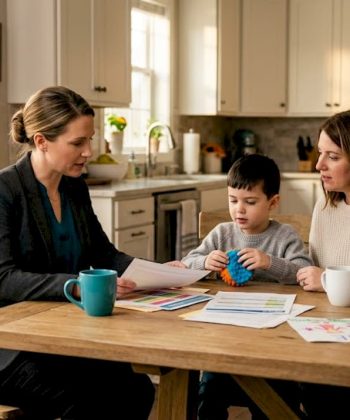
Parent training is not a replacement for professional therapy. Think of it as the bridge between what happens in a clinic and what happens at your kitchen table. Structured programs coach caregivers to apply proven techniques during the moments that already exist in your day, like bath time, meals, and play.
Parent Training in Autism Spectrum Disorder defines these programs as structured approaches where caregivers learn specific strategies to support their child’s learning, behavior, and daily functioning. The role of family in autism care cannot be overstated, because parents interact with their children far more hours per week than any therapist ever will.
Core components found in most quality programs include:
- Education: Learning why certain behaviors occur and how development works in autistic children
- Demonstration: Watching a trained professional or video model use a specific technique
- Hands-on practice: Actually trying the strategy with your child while a coach observes
- Feedback: Receiving specific, constructive feedback on what worked and what to adjust
- Repetition: Returning to the same skills across multiple sessions until they feel natural
Most programs address four major areas: communication (helping your child express wants and needs), social skills (turn-taking, joint attention, play), behavior management (reducing challenging behaviors with consistent responses), and daily living skills (dressing, eating, self-care routines).
“Parent training is not about turning parents into therapists. It’s about giving families the tools they already have the power to use, every single day, in every situation professionals will never witness.”
How parent training works: methods, models, and everyday application
Understanding the definition and goals gives us the foundation. Now let’s see how parent training actually looks in practice.
Most high-quality programs are built on two interacting components. First, there is direct instruction where a trainer explains a concept or strategy clearly. Then comes coaching with feedback, where the parent tries the strategy with their child and receives real-time or video-based guidance. Research confirms that instruction plus coaching is the combination that allows parents to implement skills with good fidelity outside therapy sessions, which significantly improves how well children generalize skills to real-life settings.
Several established program models exist, and specific manualized models targeting social communication include PACT (Preschool Autism Communication Therapy) and parent-implemented variants like Project ImPACT, which is especially well-researched for toddlers and preschoolers.
| Program model | Age target | Main focus | Core method | Strengths |
|---|---|---|---|---|
| PACT | 2 to 11 years | Social communication | Video feedback coaching | Strong research base, naturalistic |
| Project ImPACT | Toddlers, preschoolers | Language, social skills | Parent coaching in play routines | Robust language outcomes |
| Pivotal Response Training (PRT) | 2 to 10 years | Motivation, initiation | Natural environment teaching | Child-led, high engagement |
| ESDM (Early Start Denver Model) | 12 months to 5 years | Broad developmental | Play-based, relationship-focused | Very early intervention |
| ABA-based parent training | All ages | Behavior, skill acquisition | Behavior analysis, reinforcement | Highly individualized |
A typical parent training session might look like this:
- The trainer reviews a short clip of the parent interacting with their child from the previous week.
- Together, they identify one or two specific moments where a different response might have supported communication better.
- The trainer explains and demonstrates the alternative technique.
- The parent practices with their child while the trainer watches.
- The trainer gives immediate, specific feedback: “That pause you gave before prompting was perfect. Next time, try getting down to his eye level first.”
- A short goal is set for the week ahead.
Pro Tip: Ask your program coordinator whether sessions include video feedback. Research shows that watching yourself on video, even briefly, accelerates skill-building faster than verbal feedback alone. Many parents find it uncomfortable at first but transformative within a few sessions.
You can find vetted autism support and training programs and specialized autism coaching techniques through the Autism Doctor Search directory, which lists programs across a wide range of approaches and family needs.
What does parent training really achieve? Evidence and outcomes
With a sense of how parent training is structured, let’s look at what the best research tells us about its real-world impact.
The honest answer is: meaningful but nuanced. Parent-mediated interventions produce clinically meaningful benefits for parent-rated adaptive functioning and several other outcomes, though effects vary by measure and study quality. Here is what the evidence supports most clearly:
- Adaptive functioning: Parent-rated improvements in daily living skills, independence, and flexibility are among the most consistent findings across multiple studies.
- Disruptive behavior: Parent-mediated programs show moderate-certainty evidence for reducing challenging behaviors at home, which is significant given how much disruptive behavior affects family quality of life.
- Language and communication: Programs like Project ImPACT show strong effects for language development in young children, particularly when started early.
- Parent-child interaction: Most studies show improvements in the quality of interactions, including more responsiveness and fewer directive, intrusive patterns from parents.
| Outcome measure | Evidence level | Certainty | Most responsive group |
|---|---|---|---|
| Adaptive functioning (parent-rated) | Clinically meaningful | Moderate to high | Toddlers and preschoolers |
| Disruptive behavior | Positive effect | Moderate | All ages |
| Language and communication | Strong effect | Moderate to high | Under age 5 |
| Core autism symptoms (clinician-rated) | Limited effect | Low to moderate | Variable |
| Parent stress | Mixed results | Low | Variable |
It’s worth being honest about limits. Current studies show less consistent effect on core autism symptoms as measured by clinicians, and parent stress does not always improve even when child outcomes do. This is not a reason to skip parent training. It’s a reason to set realistic expectations and choose programs that measure progress across multiple areas.
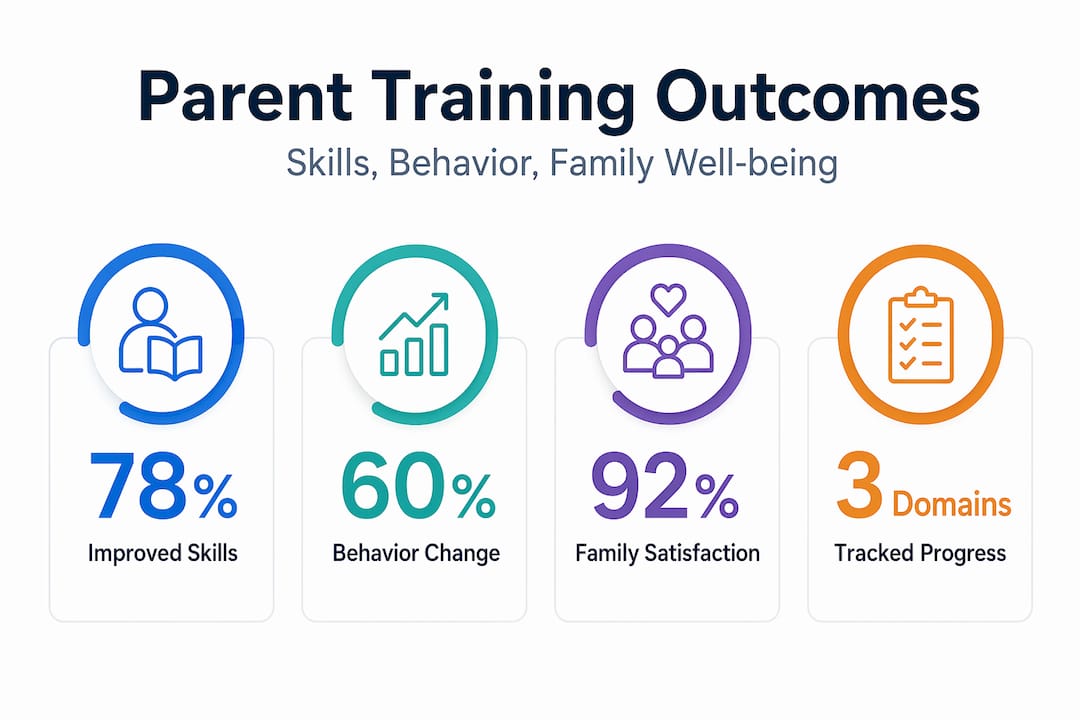
Pro Tip: When evaluating any program, ask for their outcome data. Good programs track progress across at least three areas: child behavior, skill development, and parent confidence. If a program cannot show you any data, keep looking.
For families wanting to go deeper on skill-building at home, autism communication strategies offer practical next steps. For children who need more structured skill-building, autism remediation programs and special schools for autism can work alongside parent training as part of a coordinated support plan.
Tailoring parent training to your family: flexibility, culture, and sibling involvement
The outcomes are promising. But families are all different. Here’s how parent training programs can and should adapt to your family’s real-world reality.
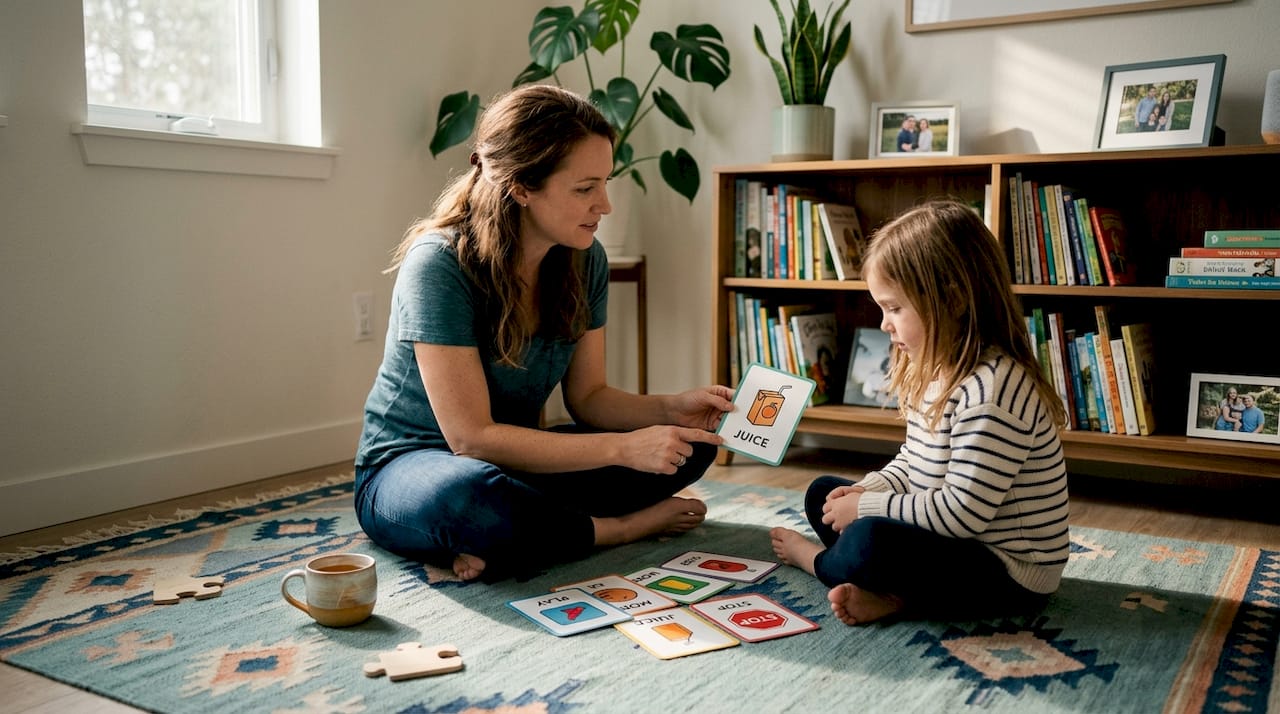
One of the biggest misconceptions about parent training is that it requires families to operate a certain way. A two-parent household with flexible work schedules and a dedicated playroom is not the standard. Neither is it the baseline. Real families have night shifts, single-parent households, multigenerational homes, non-English-speaking grandparents, siblings with their own needs, and cultural values that shape how adults interact with children.
Research from PACT focus groups confirms that parent-child play was not a shared starting point for all participating families. Cultural and family dynamics significantly influenced how parents could implement strategies and what outcomes they experienced. This finding matters because it means good programs must offer flexible, individualized support rather than assuming every family enters from the same place.
Key principles for making parent training work in your real life:
- Start where you are, not where the manual expects. If structured floor play doesn’t fit your culture or schedule, a good coach will help you find equivalent routines that do.
- Involve siblings intentionally. Parent training programs can include siblings as well as parents in strategy practice, and sibling involvement can actually strengthen how well a child with autism generalizes new skills to different people and contexts.
- Communicate your constraints openly. Whether it’s a demanding work schedule, a smaller living space, or a child who has a very short window of cooperation each day, your coach needs this information to help you succeed.
- Honor your cultural values. Strategies like eye contact prompting, physical play, or verbal praise carry different cultural weight in different families. Effective programs adapt, not override.
“No family is typical. The parents who get the most from training are not the ones who perfectly follow the manual. They are the ones who tell their coaches the truth about what their home life actually looks like.”
The family role in autism extends well beyond the parent doing the primary training. When siblings understand why their brother or sister communicates differently and how they can help, the entire family dynamic shifts toward support and connection rather than frustration and confusion.
Flexibility is not a weakness in parent training. It is a design feature of the best programs. If a program feels rigid or dismissive of your family’s real circumstances, that is not a reflection of your parenting. It is a mismatch between the program and your needs.
A fresh perspective: what most guides miss about parent training for autism
Here is the perspective most guides never share, and it might actually be the most useful thing you read today.
Parent training is described in research papers as a skills-based intervention. In practice, it is something closer to a mindset shift. The families who benefit most are not the ones who execute every strategy perfectly. They are the ones who stay in the process even when it feels awkward, slow, or uncertain.
Most guides focus on what to do. Few talk honestly about how it feels to practice a new communication strategy for the fourteenth time while your child is escalating and dinner is burning. Messy practice is still practice. Inconsistent application is better than no application. The research on evidence-based communication strategies backs this up: repetition in natural contexts, even imperfect repetition, is what drives skill transfer for autistic children.
Here is what we think most families genuinely need to hear. A one-time parent training workshop does very little. The research clearly favors programs with ongoing coaching and regular check-ins. If a program offers four sessions and calls it done, ask what happens next. Real skill development takes months, not weeks. The best programs build in regular review cycles where you revisit strategies, adjust for your child’s growth, and troubleshoot what isn’t working.
Trust your instincts about fit. If a program’s approach feels fundamentally at odds with your values, your relationship with your child, or your understanding of who your child is, that discomfort is information. Not every evidence-based program will be the right evidence-based program for your family. You are allowed to ask questions, request adjustments, and advocate for methods that respect your child as a whole person.
There is no correct pace. Some families see meaningful change in eight weeks. Others need eighteen months before things feel genuinely different. Both paths are real. The goal is consistent, supported effort over time, not a fixed timeline someone else set.
Connect with evidence-based autism therapy support
Parent training works best when it doesn’t stand alone. Combining what you learn at home with expert support from qualified professionals creates a much stronger foundation for your child’s growth. At Autism Doctor Search, we’ve built a directory specifically so families don’t have to figure out this landscape alone. Browse verified autism therapy services near you or explore specialized providers like The Missing Piece ABA Therapy that integrate parent coaching directly into their ABA model. Our directory is updated regularly and covers ABA therapy, occupational therapy, mental health services, special education, and more, all in one place, all focused on your family’s needs.
Frequently asked questions
How does parent training differ from traditional autism therapy?
Parent training teaches caregivers to use strategies during everyday home routines, while traditional therapy is usually delivered by licensed professionals in a clinic or school setting. The two approaches work best when combined, with structured caregiver programs reinforcing what professionals work on in sessions.
Can parent training improve my child’s communication skills?
Yes, particularly for younger children. Project ImPACT is a parent-implemented model with well-documented, robust effects for language and communication development in toddlers and preschoolers.
Will parent training reduce disruptive behaviors?
Evidence supports a moderate-certainty effect on disruptive behavior when parents consistently apply strategies learned in training, making it one of the more reliable outcomes families can expect.
Does insurance cover parent training for autism?
Coverage varies widely by state, insurer, and plan type. Check with your insurance provider directly and ask specifically whether parent training is covered as part of ABA services, which often includes a caregiver training component under most autism mandates.