
Many families feel uncertain about whether autism support groups truly matter. You might wonder if sharing personal struggles with strangers will actually help or just add another commitment to your already packed schedule. Support groups offer genuine emotional relief and practical community connections that reduce isolation and strengthen your ability to navigate autism care. This article explores the specific benefits these groups provide, the different formats available, common challenges you may face, and actionable steps to find and engage with groups that fit your family’s needs.
Table of Contents
- Key takeaways
- Emotional and practical benefits of autism support groups
- Building community, resilience, and measurable improvements for families
- Formats, accessibility, and addressing challenges in autism support groups
- How to find and make the most of autism support groups
- Find autism therapy services and support near you
- Frequently asked questions
Key Takeaways
| Point | Details |
|---|---|
| Emotional relief | Support groups provide safe spaces to share experiences without judgment, reducing emotional isolation and helping caregivers feel less overwhelmed. |
| Practical resources | Groups share toolkits and expert guidance on therapy options, school programs, and community services to help families navigate complex systems. |
| Advocacy skills | Members learn how to communicate with schools, insurers, and providers, including what documentation matters and how to escalate concerns when needed. |
| Formats and reach | Groups offer varied formats to fit schedules and accessibility, and online options extend reach to more families. |
Emotional and practical benefits of autism support groups
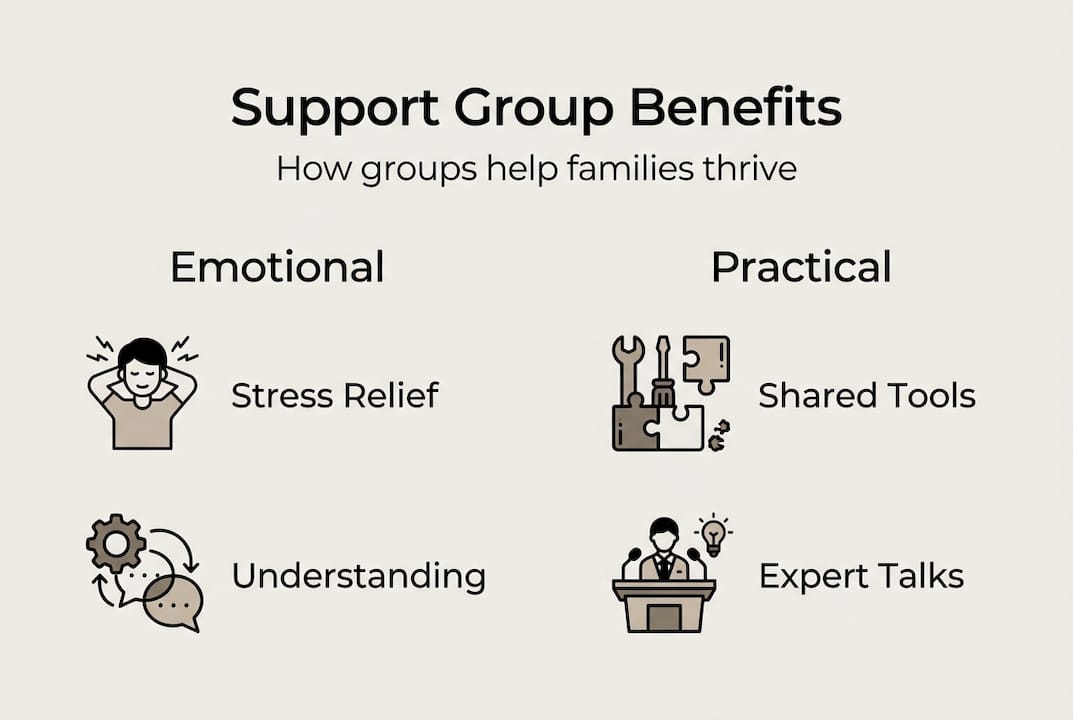
Support groups create safe spaces where you can share experiences without judgment. Parents report feeling less overwhelmed and more hopeful after joining groups, which directly addresses the emotional isolation many caregivers face. When you connect with others navigating similar challenges, you realize you’re not alone in the daily struggles of managing therapy schedules, school accommodations, and behavioral concerns.
These communities provide more than emotional validation. Groups share resource toolkits and include expert guest speakers to guide families through complex systems. You’ll gain practical information about therapy options, education programs, and community services that might otherwise take months to discover on your own. Many groups invite professionals who explain how to navigate Individualized Education Programs, access state benefits, or implement strategies to support communication difficulties at home.
Active participation amplifies these benefits significantly. When you engage in discussions rather than passively listening, you build stronger connections and receive more targeted advice. Other parents often share specific tactics that worked for their children, giving you tested approaches to try immediately. This exchange of real-world solutions complements professional guidance and helps you develop a comprehensive support strategy for your child.
Pro Tip: Ask questions during group sessions and share your own experiences, even when it feels uncomfortable at first. This active engagement creates reciprocal relationships that provide ongoing support beyond scheduled meetings.
The collective wisdom in support groups extends to advocacy work as well. Experienced parents teach newer members how to communicate effectively with school administrators, insurance companies, and medical providers. You’ll learn which documentation matters most, what language to use in formal requests, and how to escalate concerns when initial efforts fail. This practical knowledge transforms abstract rights into actionable steps that protect your child’s access to appropriate services.
“Finding a support group changed everything for our family. We went from feeling completely lost to having a network of people who understood our daily reality and could offer concrete help.”
Building community, resilience, and measurable improvements for families
Over two-thirds of parents participate in support groups, creating strong community bonds that extend beyond formal meetings. These connections often develop into lasting friendships where families support each other during crises, celebrate milestones together, and share childcare responsibilities. The sense of belonging you gain from this community directly strengthens your resilience when facing new challenges or setbacks in your child’s development.
Research demonstrates concrete improvements for both children and parents who engage with support groups. Group interventions improve child adaptive functioning and reduce disruptive behavior through parent-mediated strategies learned in these settings. When you implement techniques discussed in group sessions, your child benefits from more consistent approaches across different environments. The collaborative learning environment helps you refine your responses to challenging behaviors and recognize subtle progress that might otherwise go unnoticed.
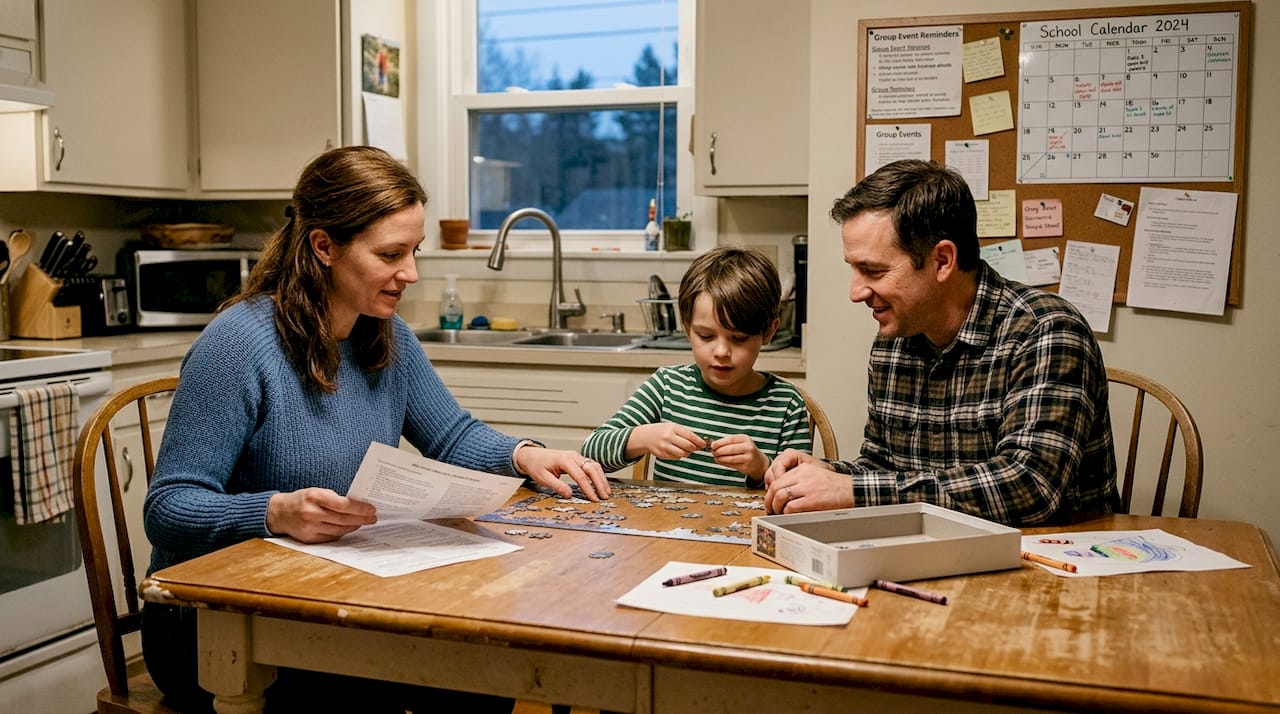
Parental outcomes show equally impressive results. Significant reductions in parental stress and increases in self-efficacy are documented in randomized controlled trials examining group participation. Your confidence grows as you master new skills and see positive changes in your child’s behavior. This increased self-efficacy creates a positive cycle where you feel more capable of handling difficult situations, which reduces stress and improves your overall mental health.
| Outcome Category | Effect Size | Practical Impact |
|---|---|---|
| Child adaptive skills | Medium to large | Noticeable improvements in daily functioning |
| Child disruptive behavior | Small to medium | Reduced frequency and intensity of challenging behaviors |
| Parental stress levels | Large | Substantial decrease in overwhelm and anxiety |
| Parent self-efficacy | Medium to large | Increased confidence in caregiving abilities |
Structured programs within support groups typically produce stronger outcomes than informal gatherings. When groups follow evidence-based curricula or include professional facilitation, you receive systematic skill-building that complements emotional support. These programs often include homework assignments, role-playing exercises, and progress tracking that reinforce learning between sessions. The Center for Autism Support and Training offers examples of such structured approaches that maximize family benefits.
Pro Tip: Prioritize groups that combine peer support with educational components led by trained facilitators. This combination delivers both emotional validation and practical skill development for optimal family outcomes.
The measurement of these improvements matters because it validates your investment of time and emotional energy. When you can point to specific behavioral changes or reduced stress levels, you gain motivation to continue participating even during busy periods. This evidence also helps you advocate for support group access as a legitimate intervention component when working with insurance providers or service coordinators. You can find additional autism information to understand how group participation fits within comprehensive care plans.
Formats, accessibility, and addressing challenges in autism support groups
Support groups come in diverse formats that accommodate different family needs and preferences. Groups use in-person meetings, online forums, peer-led sessions, and psychoeducation formats to enhance accessibility for various situations. Face-to-face meetings offer rich personal connections and nonverbal communication that some families prefer. Video calls provide real-time interaction without travel requirements. Asynchronous forums let you participate whenever your schedule allows, making them ideal for parents managing unpredictable caregiving demands.
| Format Type | Accessibility Level | Interaction Intensity | Best Suited For |
|---|---|---|---|
| In-person meetings | Requires local availability and travel | High, with immediate feedback | Families seeking deep personal connections |
| Video conferencing | Needs internet and device access | High, with real-time exchange | Those balancing geographic or mobility constraints |
| Online forums | Accessible anytime with internet | Medium, with delayed responses | Parents with irregular schedules or preference for reflection |
| Specialized subgroups | Varies by specific focus area | Medium to high | Families with particular cultural or situational needs |
Despite these options, barriers still prevent some families from participating. Time constraints, location limitations, and stigma concerns create significant obstacles for many caregivers. You might worry about judgment from other parents or fear that discussing challenges means admitting failure. Work schedules, childcare responsibilities, and transportation issues compound these concerns, making participation feel impossible even when you recognize the potential benefits.
Online and telehealth options directly address many accessibility problems. You can join groups from home after your child goes to bed, eliminating childcare and travel barriers. Geographic limitations disappear when you access national or international communities that match your specific situation. The Allied Autism Group and Autism Included demonstrate how organizations expand reach through virtual programming.
Culturally sensitive groups better serve families from diverse backgrounds by addressing unique challenges and values. When facilitators understand your cultural context, you feel more comfortable sharing honestly about family dynamics and parenting approaches. These specialized groups might focus on specific ethnic communities, religious traditions, language preferences, or socioeconomic situations that shape your autism journey differently than mainstream narratives suggest.
- Evaluate whether group timing works with your family routines and work schedule
- Consider if the format matches your communication preferences and comfort level
- Check if the group addresses your child’s age range and specific challenges
- Assess whether cultural or linguistic factors matter for your full participation
- Determine if professional facilitation or peer-led structure better fits your needs
- Verify accessibility features like closed captioning or translation services if required
How to find and make the most of autism support groups
Locating suitable support groups starts with identifying resources in your area and online. Begin by contacting local autism centers, hospitals with developmental pediatrics departments, and school district special education offices for recommendations. These organizations often maintain lists of active groups and can describe their formats and focuses. Online searches using terms like “autism parent support” plus your city name typically yield multiple options worth exploring.
Once you identify potential groups, evaluate them against your family’s specific needs. Consider the group’s primary focus, whether it emphasizes emotional support, skill-building, advocacy training, or a combination of approaches. Check the meeting format and schedule to ensure compatibility with your availability. Ask about group size, typical attendee demographics, and whether professional facilitation occurs. Structured programs like psychoeducation improve social skills and parent outcomes, with telehealth making access easier for remote families.
- Research available groups through autism organizations, healthcare providers, and online directories
- Contact group coordinators to ask about format, focus areas, and typical participation expectations
- Attend introductory or trial sessions at multiple groups before committing to regular participation
- Evaluate your comfort level with group dynamics, facilitation style, and member interactions
- Commit to consistent attendance for at least three months to build relationships and assess benefits
- Engage actively by asking questions, sharing experiences, and following up on resources mentioned
- Apply strategies learned in group settings to your daily routines and track resulting changes
Active engagement maximizes the value you receive from group participation. Come prepared with specific questions or challenges you’re currently facing. Take notes during sessions so you can remember resources, strategies, and contact information shared by other members. Follow up on recommendations between meetings and report back on what worked or didn’t work for your family. This feedback loop helps everyone learn more effectively and strengthens group cohesion.
Pro Tip: Commit to attending at least six consecutive sessions before deciding if a group works for you. Initial discomfort often fades as relationships develop, and the full benefits become apparent only with consistent participation over time.
Leverage expert guest sessions and resource toolkits provided by established groups. When professionals present on topics like insurance navigation, educational rights, or therapeutic approaches, prepare questions in advance to maximize learning. Request copies of presentations, handouts, or recommended reading lists. Many groups compile resource libraries with contact information for service providers, legal advocates, and community programs that members have vetted through personal experience.
Include culturally responsive and family-centered considerations when selecting groups. If your family’s cultural background, language, or values differ from mainstream approaches, seek groups that explicitly welcome diversity or focus on your specific community. Family-centered groups recognize that autism affects entire family systems and may include siblings, grandparents, or other relatives in programming. This inclusive approach provides more comprehensive support that addresses everyone’s needs and strengthens family functioning overall. Explore autism therapy services and the Center for Autism Support and Training for additional family-focused resources.
Find autism therapy services and support near you
Autism Doctor Search connects families with local and online therapy services and support resources tailored to your specific needs. Our comprehensive directory helps you locate specialized ABA therapy providers, community support programs, and professional services in your area. You can explore options like autism therapy services and The Missing Piece ABA Therapy to find qualified professionals who understand your family’s journey. The Center for Autism Support and Training offers additional resources to complement your support group participation and create a complete care network for your child.
Frequently asked questions
What are autism support groups?
Autism support groups are communities where families and caregivers connect to share experiences, resources, and emotional support related to raising children with autism. These groups vary in format, including in-person meetings, online forums, video conferences, and specialized subgroups focused on specific ages, challenges, or cultural backgrounds. They provide both emotional validation and practical guidance on topics like therapy options, educational advocacy, and daily caregiving strategies. Most groups welcome parents, grandparents, siblings, and other family members affected by autism.
How do autism support groups help reduce parental stress?
Sharing experiences with others who understand your daily reality reduces the isolation and overwhelm that fuel parental stress. You gain perspective on your challenges and learn that struggles you face are common rather than personal failures. Group participation significantly reduces parental stress and increases self-efficacy through access to proven coping strategies and emotional validation. This combination of understanding and practical tools builds your confidence in managing difficult situations, which directly lowers anxiety levels.
What types of autism support groups are available?
Families can choose from face-to-face group meetings held at community centers, hospitals, or schools that offer personal connection and immediate interaction. Virtual meetings and online forums provide flexibility for those with scheduling constraints or geographic limitations. Groups include in-person sessions, online forums, psychoeducation programs, cognitive behavioral therapy approaches, and culturally specific sessions to meet diverse family needs. Peer-led groups emphasize shared experiences, while expert-guided groups incorporate professional facilitation and structured curricula for skill-building.
How can I find the right autism support group for my family?
Use online directories, contact local autism centers, and ask your child’s healthcare providers or school for recommendations to identify available groups. Online tools and local resources help locate support groups, so consider accessibility factors like meeting times, format preferences, and whether the group addresses your child’s specific age and challenges. Start by attending introductory meetings at several groups to gauge fit before committing to regular participation. Evaluate group dynamics, facilitation style, cultural sensitivity, and whether the focus aligns with your current needs.