
TL;DR:
- Diagnosis age in autism influences intervention timing and symptom profiles. Early diagnosis enables targeted support during brain neuroplasticity, improving outcomes. A delayed diagnosis often results from access barriers and can still provide necessary understanding and services later.
Diagnosis age in autism is defined as the age at which a child receives a formal autism spectrum disorder (ASD) evaluation and confirmed diagnosis. This timing is not a bureaucratic detail. It shapes which developmental windows are still open, which interventions are most effective, and what symptom profile a child is likely to show. The CDC reports autism affects about 1 in 31 eight-year-old children in the United States. That scale makes understanding why diagnosis age matters one of the most practical things a caregiver can do.
Why diagnosis age matters for symptom development and genetic profiles
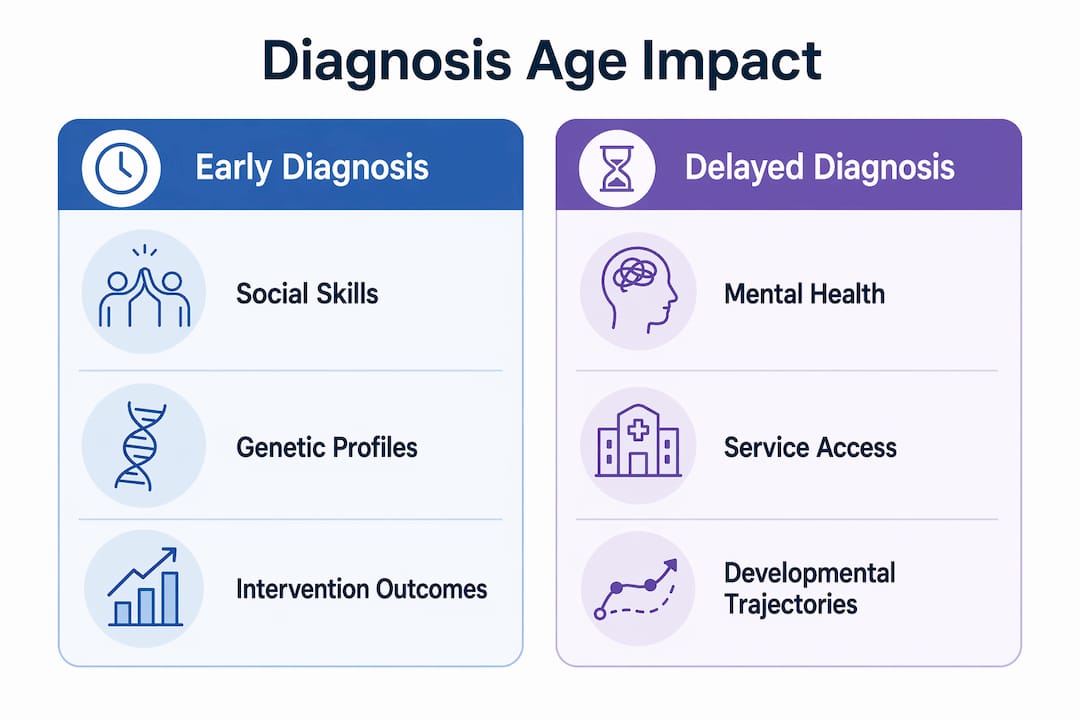
Diagnosis age correlates with distinct genetic profiles and developmental trajectories, according to 2026 findings from SFARI and research published in Nature Genetics. Children diagnosed earlier tend to show pronounced differences in social communication and early language development. Children diagnosed later tend to show adolescent-emerging behavioral difficulties, social challenges, and a higher rate of mental health comorbidities like anxiety and depression.

This distinction matters because autism is biologically heterogeneous. Two children with the same diagnosis label can have very different underlying profiles. Diagnosis age helps clarify which profile a child fits, which in turn guides the type of support that will be most useful.
Key differences researchers have identified between early and later diagnosis groups include:
- Early diagnosis (before age 3): Marked differences in joint attention, eye contact, and early language milestones; genetic risk factors often tied to neurodevelopmental pathways active in infancy
- Later diagnosis (after age 6): Social difficulties that emerge more clearly in complex peer settings; higher rates of anxiety, depression, and masking behaviors, particularly in girls
- Sex differences: Females are diagnosed later on average than males, partly because their symptom presentation differs and partly because clinicians historically calibrated diagnostic tools to male presentations
Pro Tip: If your daughter is showing social difficulties but has not received a diagnosis, ask the evaluating clinician specifically about female autism presentation. Many standard screening tools underdetect autism in girls.
Understanding genetic factors in autism can also help caregivers interpret why their child’s profile looks different from another child’s, even when both carry the same diagnosis.
How does early diagnosis improve intervention outcomes?
Parent-mediated early intervention started by 18 months produces measurable gains in language, social communication, and adaptive behavior. This is because the infant and toddler brain is in a period of high neuroplasticity. Neural connections form rapidly, and targeted input during this window shapes developmental pathways in ways that become harder to replicate later.
The practical steps that follow from an early diagnosis are concrete:
- Request a developmental evaluation immediately. Do not wait for a school referral. Pediatricians can refer families to developmental pediatricians, child neurologists, or autism specialty clinics.
- Start parent-mediated strategies before formal therapy begins. Techniques like following the child’s lead, narrating daily activities, and building joint attention can begin the day a concern is identified.
- Connect with early intervention services under IDEA Part C. Children under age 3 in the United States qualify for free early intervention services regardless of formal diagnosis status.
- Target the specific skill domains lagging now. Early social communication trajectories from 12 to 24 months predict later language outcomes. Targeting these skills early supports language development even before a diagnosis is confirmed.
- Plan for a baseline assessment. Knowing a child’s current cognitive and adaptive functioning helps clinicians predict which interventions will produce the strongest response.
A 10-year follow-up study on Early Intensive Behavioral Intervention (EIBI) found that long-term outcome differences between EIBI and standard care faded after researchers controlled for baseline IQ. This finding does not undermine the value of early intervention. It clarifies that baseline cognitive and adaptive characteristics are powerful predictors of response, meaning the intervention plan needs to match the child, not just the diagnosis timing.
Pro Tip: Ask your child’s evaluator for a full cognitive and adaptive behavior profile, not just a diagnostic label. That profile tells you far more about which interventions to prioritize.
What are the consequences of delayed autism diagnosis?
Between 33% and 50% of children with autism in the United States are diagnosed after age 6. That means millions of children reach school age without the targeted support that could have been in place years earlier. The consequences are real and well-documented.
Barriers driving delayed diagnosis include:
- Long waitlists: Specialist evaluations in many regions take 12 to 24 months from referral to appointment
- Geographic access gaps: Rural and underserved communities have far fewer developmental pediatricians and autism diagnostic centers
- Clinician bias: Providers sometimes attribute early concerns to temperament, bilingualism, or “late blooming,” delaying referrals
- Masking: Some children, particularly girls and children with higher cognitive ability, learn to camouflage autistic traits, making difficulties less visible until social demands increase
“Delayed diagnosis leaves families without a framework for understanding their child’s behavior, which creates emotional strain that persists even after the diagnosis eventually arrives.” — Qualitative research with autistic adults and their families, published in the Journal of Autism and Developmental Disorders, 2026
Qualitative research with autistic adults confirms that late diagnosis is associated with persistent mental health challenges and significant regret about missed opportunities. For caregivers, a later diagnosis still has real value. It provides a framework for understanding a child’s needs, opens access to school-based services, and supports family planning. The goal is not to create panic about timing but to remove barriers that slow the process unnecessarily.
Practical steps for families navigating a delayed or pending diagnosis include requesting a clinical autism assessment through their pediatrician, contacting their local school district for a free educational evaluation, and documenting specific behavioral observations with dates to share with evaluators.
How do parental observations lead to earlier diagnosis?
Parent-reported concerns predict earlier diagnostic ages, with caregivers who actively report concerns achieving diagnosis around 18 months compared to 24 to 36 months in groups where concerns were not raised or were dismissed. This gap represents a year or more of potential early intervention time.
Caregivers are the most consistent observers of their child’s development. Clinicians see a child for 20 minutes in a clinical setting. Parents see hundreds of hours of behavior across contexts. That observational advantage is clinically significant.
Signs that warrant raising a concern with a pediatrician include:
- No babbling by 12 months
- No single words by 16 months
- No two-word phrases by 24 months
- Loss of previously acquired language or social skills at any age
- Persistent lack of eye contact, pointing, or response to name
- Unusual sensory responses, such as extreme distress at sounds or textures
Structured developmental screening tools like the M-CHAT-R (Modified Checklist for Autism in Toddlers, Revised) are designed to capture these concerns systematically. Caregivers can recognize early autism signs and bring specific examples to every well-child visit. If a concern is dismissed once, raise it again at the next visit with documented examples. Persistence matters.
Understanding the autism evaluation process before the appointment reduces anxiety and helps caregivers provide the most useful information to clinicians. Knowing what to expect makes the process faster and more productive.
Key Takeaways
Early diagnosis age is the single most modifiable factor that determines how quickly a child with autism accesses targeted developmental support and intervention.
| Point | Details |
|---|---|
| Diagnosis age shapes symptom profile | Children diagnosed earlier show social and communication differences; those diagnosed later show behavioral and mental health challenges. |
| Early intervention works best before 18 months | Parent-mediated interventions started in infancy improve language, social communication, and adaptive behavior during peak neuroplasticity. |
| Baseline functioning predicts outcomes | A child’s cognitive and adaptive profile at diagnosis predicts intervention response more reliably than diagnosis age alone. |
| Delayed diagnosis affects millions | Between 33% and 50% of US children with autism are diagnosed after age 6, often due to waitlists and access barriers. |
| Parental concerns accelerate diagnosis | Caregivers who actively report concerns achieve diagnosis around 18 months earlier than those whose concerns go unraised. |
The part no one tells you about diagnosis timing
I have spent years reading the research on autism diagnosis timing, and the finding that consistently surprises caregivers is this: diagnosis age is not just about clinical delay. It reflects genuinely different biological subtypes. A child diagnosed at age 2 and a child diagnosed at age 8 are not simply the same child caught at different points in the system. They often have different genetic risk profiles, different symptom trajectories, and different intervention needs.
That realization changes how I think about the advice to “get diagnosed as early as possible.” The goal is not just speed. The goal is getting the right profile, at the right time, matched to the right support. A rushed or incomplete evaluation that misses a child’s actual profile does less good than a thorough one that takes a few months longer.
What I tell caregivers consistently is this: do not wait for a diagnosis to start supporting your child. If you see a lag in communication, target communication now. If sensory responses are disrupting daily life, address sensory needs now. The support strategies for autistic children that work best are the ones that match what the child needs today, not the ones that wait for a label to arrive.
The emotional weight of a delayed diagnosis is also real and should not be minimized. Families who receive a diagnosis late often carry years of confusion, self-doubt, and grief. Rapid linkage to support services after diagnosis, regardless of the child’s age, is not optional. It is part of the clinical response.
— Keith
Finding autism therapy and support through Autismdoctorsearch
Autismdoctorsearch maintains a current directory of autism therapy providers, medical centers, and support services across the United States. Whether your child was diagnosed at 18 months or at age 10, the right intervention team makes a measurable difference in developmental outcomes. The directory includes ABA therapy providers, play therapy specialists through the Association for Play Therapy, and a broad range of autism therapy services searchable by location and specialty. Families can also access child and family support resources for post-diagnosis planning. Use Autismdoctorsearch to find local providers and reduce the time between diagnosis and the first therapy appointment.
FAQ
What is diagnosis age in autism?
Diagnosis age is the age at which a child receives a formal autism spectrum disorder diagnosis. It correlates with distinct genetic profiles, symptom patterns, and intervention needs.
Why does early diagnosis lead to better outcomes?
Early diagnosis opens access to intervention during peak brain neuroplasticity, typically before age 3. Parent-mediated interventions started by 18 months show measurable gains in language and social communication.
Can a later diagnosis still help my child?
A later diagnosis still provides a framework for understanding your child’s needs and opens access to school-based services and targeted therapies. The impact of early diagnosis on treatment is significant, but support at any age produces meaningful benefits.
How can I help my child get diagnosed sooner?
Report specific developmental concerns to your pediatrician at every well-child visit and ask for a referral to a developmental specialist. Parent-reported concerns are linked to diagnosis around 18 months earlier than in cases where concerns were not raised.
Does diagnosis age predict how well my child will do long term?
Diagnosis age is an important factor but not the sole predictor of outcomes. A 10-year follow-up study found that baseline cognitive and adaptive functioning predicts long-term intervention response more reliably than diagnosis timing alone.