TL;DR:
- A caregiver checklist helps parents assess if a child care provider meets safety, training, and autism-specific needs. It emphasizes physical safety, caregiver credentials, sensory-friendly environments, and detailed emergency protocols tailored for children with autism. Parents should observe real-time staff interactions and review licensing and documentation to ensure quality and compliance.
A child care provider checklist is a structured evaluation tool parents use to verify that a provider meets the safety, training, and developmental standards required to care for a child with autism. Generic daycare guides cover the basics. This checklist goes further, addressing sensory needs, autism-specific emergency protocols, and caregiver communication styles that standard resources miss. Autismdoctorsearch compiled this guide using 2026 expert guidance from sources including the Colorado Department of Early Childhood, Wonderschool, and DaycarePath to give you a complete, autism-focused framework.
1. What are the most critical safety and training criteria?
Safety is the first filter on any child care provider checklist. Four safety questions cover the essentials when time is short: Is the physical space safe? Do caregivers hold CPR, first aid, and child development training? Are daily activities appropriate? Are emergency protocols written and practiced? These four questions come from Colorado Department of Early Childhood 2026 guidance, and they work because they expose the most common failure points quickly.
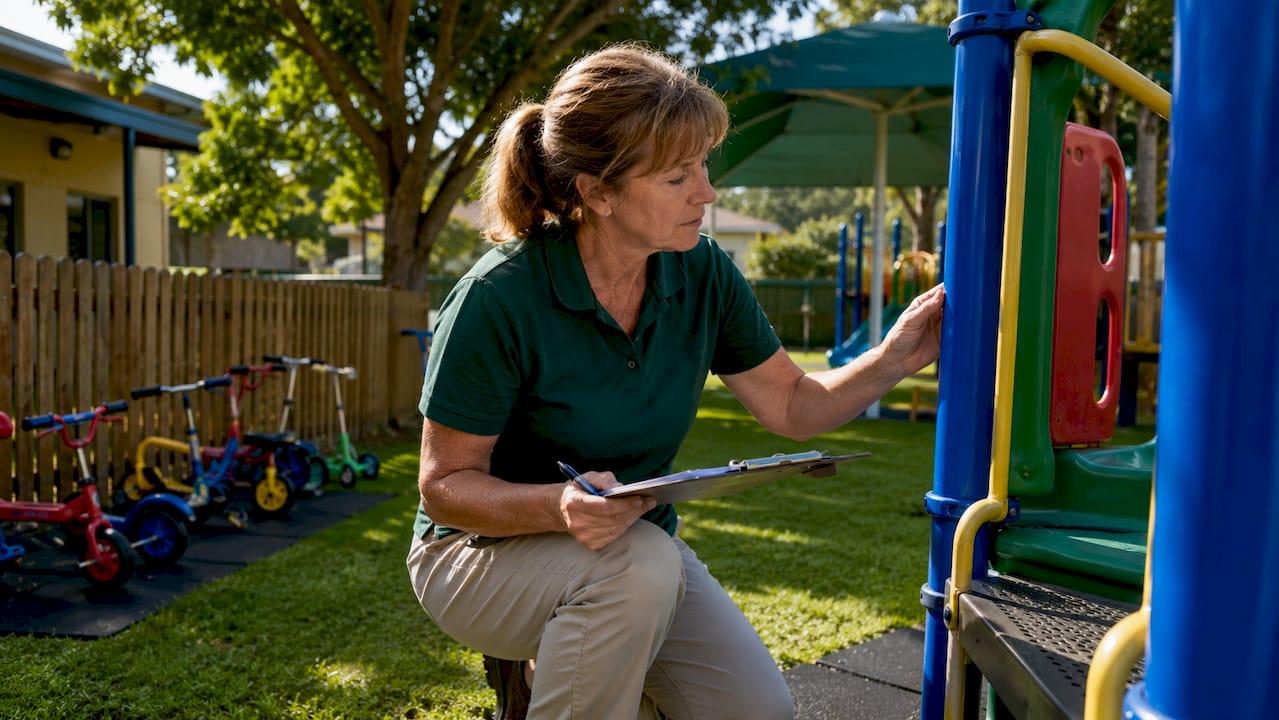
Physical safety checks go beyond a quick glance around the room. Chemicals and medications must be locked. Electrical outlets must be covered. Outdoor play areas must be fenced, with equipment free of rust or damage and no choking hazards within reach. For children with autism, these checks carry extra weight because sensory-driven exploration often means touching, mouthing, or climbing objects that neurotypical children might avoid.
Caregiver training requirements in 2026 go beyond basic CPR. Look for staff trained in child development, autism-specific communication strategies, and sensory overload de-escalation. A provider who can recite their certifications but cannot describe how they calm a child in sensory distress has a gap that paperwork will not reveal.
Pro Tip: Ask the director to describe the last time a child had a sensory meltdown and what staff did. The specificity of that answer tells you more than any certificate on the wall.
“Caregivers who appear warm, engaged, and attentive reflect care quality beyond checklist metrics.” — Wonderschool
2. Which enrollment documents must parents have in place?
Standard enrollment documentation covers 11 essential categories, including immunization records, medical history, emergency contacts, pickup authorizations, and photo release forms. State-specific forms add legal requirements on top of those basics. California mandates form LIC 700. Texas requires Form 2935. Submitting the wrong version or an incomplete set can delay enrollment or create liability gaps for the provider.
For children with autism, two document categories rise above the rest. First, written allergy action plans detail exactly what staff must do if a child has an allergic reaction, including which medications to administer and in what order. Second, medication authorization forms must specify dosage, timing, and the staff member responsible for administration. Vague or unsigned forms create dangerous ambiguity during a medical event.
Digital enrollment platforms help parents track which forms are complete and flag expiration dates on authorizations. That matters for children with autism because their medical needs often change, and outdated forms can leave providers without current guidance during an emergency.
| Document Category | Autism-Specific Consideration |
|---|---|
| Medical history | Include sensory sensitivities and behavioral triggers |
| Allergy action plan | Specify medication name, dose, and response steps |
| Medication authorization | Name the responsible staff member explicitly |
| Emergency contacts | List behavioral health provider alongside family contacts |
| Pickup authorization | Note any court orders or custody restrictions |
3. How should parents evaluate the environment for autistic children?
The physical environment is a direct predictor of how well a child with autism will function in a setting. Indoor safety checks cover clean surfaces, stable furniture, adequate lighting, proper ventilation, and allergen control. For sensory-sensitive children, fluorescent lighting that flickers or HVAC systems that hum loudly can trigger distress before the school day even begins.
Outdoor spaces require the same level of scrutiny. Fencing must be secure with no gaps a child could slip through. Surfacing under climbing equipment must cushion falls. Shade structures matter for children who overheat quickly, which is common in autism. A beautiful playground that lacks a quiet retreat area is not autism-friendly.
Sensory-friendly indoor modifications are the clearest signal that a provider understands autism. Look for a designated quiet space where a child can decompress without stimulation. Check that art supplies and sensory bins use non-toxic, skin-safe materials. Observe whether the noise level during free play is managed or chaotic.
Pro Tip: Visit during drop-off, not during nap time. Drop-off is the highest-stimulation moment of the day, and it reveals how staff actually manage transitions for children who struggle with change.
Staffing ratios during peak times reveal the truth that posted ratios hide. Actual caregiver availability during busy transitions shows whether the provider maintains real compliance or just meets the number on paper. Count the adults in the room yourself during your visit.
4. What caregiver qualities indicate quality care for children with autism?
Credentials are the starting point, not the finish line. Look for caregivers holding a Child Development Associate (CDA) credential or an Early Childhood Education (ECE) degree. Ongoing training in autism-specific skills, including Applied Behavior Analysis principles and augmentative communication strategies, separates providers who understand autism from those who simply tolerate it.
Interaction style during your tour is the most honest data point you will collect. Parents’ gut feelings during daycare tours reflect emotional care quality that checklists alone cannot capture. Watch whether caregivers get down to the child’s eye level, adjust their tone and pacing for each child, and respond to bids for attention promptly. Staff who talk over children or ignore nonverbal cues will do the same with your child.
Curriculum quality separates good providers from great ones. High-quality child care features purposeful curriculum tailored to individual developmental stages rather than a rigid, one-size approach. For children with autism, that means activities matched to the child’s current communication level, not the calendar age on their file.
Low staff turnover is a structural quality indicator. Consistent caregivers matter enormously for children with autism, who often need weeks to build trust with a new adult. Ask directly: what is the average tenure of classroom staff? A high turnover rate signals instability that will repeatedly disrupt your child’s routine.
“Staff must actively adjust communication styles, including tone, volume, and pacing, to the child’s sensory and verbal needs during a visit rather than relying solely on verbal claims.” — Wonderschool
5. What emergency preparedness practices protect children with autism?
Emergency preparedness for children with autism requires protocols that go beyond standard fire drill procedures. Written plans must address sensory-overload incidents and flight behaviors specifically. A child who bolts when overwhelmed needs a provider with a written, practiced response, not improvised staff judgment in the moment.
The five emergency preparedness items to verify at every provider visit:
- Written sensory-overload protocol. The plan must name specific de-escalation steps, not just “calm the child.”
- Flight risk management plan. Doors must be secured, and staff must know the response sequence if a child elopes.
- Fire and medical drill records. Ask to see the log. Drills practiced regularly produce muscle memory. Drills on paper do not.
- Child release procedures. Authorized pickup lists must be current, signed, and cross-referenced against photo ID requirements.
- Medication and allergy response guidelines. These must be posted in the classroom, not filed in an office drawer.
Parents should also verify licensing and inspection histories using state-specific search tools like ColoradoShines.com. Inspection records reveal compliance patterns that a polished tour will never show. A provider with repeated citations for supervision failures is a risk no checklist score can offset.
For children with autism-specific care needs, the emergency plan should also include the contact information for the child’s behavioral health provider, so staff can consult a specialist during a prolonged crisis rather than managing it alone.
Key takeaways
A complete child care provider checklist for children with autism must cover safety, training, documentation, environment, caregiver quality, and written emergency protocols tailored to autism-specific behaviors.
| Point | Details |
|---|---|
| Safety comes first | Check locked chemicals, covered outlets, and secure outdoor areas before anything else. |
| Enrollment forms are legally specific | State-mandated forms like California LIC 700 and Texas Form 2935 are required, not optional. |
| Environment must be sensory-friendly | Quiet spaces, controlled noise, and non-toxic materials are non-negotiable for children with autism. |
| Caregiver quality shows in real time | Watch staff interaction during your visit rather than relying on posted credentials alone. |
| Emergency plans must name autism behaviors | Written protocols for sensory overload and flight risk are required, not implied by generic plans. |
What I’ve learned from watching parents use these checklists
Parents often arrive at a provider visit with a printed checklist and leave having checked every box, yet still feel uncertain. That uncertainty is data. The checklist captures structure. It does not capture whether the lead teacher made eye contact with the child in the waiting room, or whether the aide stepped away from a crying toddler to answer a phone. Those moments matter more than any credential.
The most effective approach I have seen is to use the checklist as a floor, not a ceiling. Meet the minimum on paper, then spend the last ten minutes of your tour watching a transition, whether that is from outdoor play to lunch or from free time to circle. Transitions are where children with autism are most vulnerable, and they are where provider skill either shows or collapses.
Tailor your checklist to your child’s specific profile. A child who is nonverbal needs you to ask different questions than a child who is verbal but has significant sensory sensitivities. Bring your child’s ABA therapy progress notes to the visit and share them with the director. Providers who engage seriously with that information are the ones worth trusting.
Advocate for transparency on documentation. Ask to see the actual emergency protocol binder, not a summary. Ask to read the allergy action plan template before you sign it. Providers who welcome that scrutiny are confident in their systems. Providers who deflect it are telling you something important.
— Keith
Autism Doctor Search: finding the right provider for your child
Autismdoctorsearch maintains a directory of specialized autism resources designed to help parents move from checklist to confirmed placement. The directory includes listings for autism therapy services covering ABA therapy, occupational therapy, and behavioral health providers who work alongside child care settings. Parents can also find listings for ABA therapy providers that complement daily child care with evidence-based behavioral support. For families who need a broader network, the directory connects you to child and family resources that support the full range of developmental and therapeutic needs. Use the checklist to evaluate providers, and use Autismdoctorsearch to find the specialists who make that care work.
FAQ
What is a child care provider checklist for autism?
A child care provider checklist for autism is a structured tool parents use to evaluate whether a provider meets safety, training, and developmental standards specific to children with autism. It covers physical safety, caregiver credentials, enrollment documents, sensory-friendly environments, and written emergency protocols.
What documents are required for daycare enrollment?
Standard enrollment requires 11 document categories, including immunization records, medical history, emergency contacts, and authorization forms. State-specific forms like California LIC 700 and Texas Form 2935 are legally mandatory.
How do I know if a caregiver is trained for autism?
Ask caregivers to describe how they handle sensory overload and communication with nonverbal children. Credentials like a CDA or ECE degree are a starting point, but real-time observation of staff interaction during your tour is the most reliable indicator.
What emergency protocols should a provider have for autism?
Providers must have written protocols addressing sensory-overload incidents and flight risk behaviors, not just generic fire and medical plans. Staff should practice these protocols regularly, and the plans should be accessible in the classroom, not stored in an office.
How can I verify a provider’s licensing history?
Use state-specific licensing portals to review inspection records and compliance history. Tools like ColoradoShines.com provide objective compliance data that a provider tour cannot reveal.