
TL;DR:
- The neurodiversity movement views neurological differences as natural human variations rather than disorders needing correction. It advocates for social justice, inclusion, and environments designed to accommodate diverse minds. The movement emphasizes self-acceptance, autonomy, and participatory research to reshape support systems and societal perceptions.
The neurodiversity movement is defined as a social justice campaign that recognizes neurological differences, including autism, ADHD, and dyslexia, as natural human variations rather than deficits requiring correction. The movement advocates for civil rights, equal participation, and genuine inclusion for neurodivergent people. Its foundation rests on the social model of disability, which holds that society’s barriers, not individual neurology, create most of the disadvantage neurodivergent people face. Understanding this movement matters for anyone working toward a more just and inclusive world.
What is the neurodiversity movement and where did it come from?
The neurodiversity movement originated in the late 1980s and early 1990s among autistic self-advocacy groups who connected through early internet forums. That timing is significant. Before online communities existed, autistic people had almost no way to organize collectively or develop a shared political identity.
Several key figures shaped the movement’s early philosophy. Sociologist Judy Singer coined the term “neurodiversity” in the late 1990s to describe the natural variation in human neurological functioning. Nick Walker, an autistic scholar and educator, later formalized core principles that distinguished neurodiversity advocacy from clinical frameworks. Their work gave the movement intellectual grounding beyond personal testimony.
The disability rights movement provided the political blueprint. Activists who fought for the Americans with Disabilities Act of 1990 demonstrated that systemic change was possible through organized advocacy. Neurodiversity advocates borrowed that model and applied it specifically to neurological conditions.
The Autistic Self Advocacy Network, known as ASAN, became one of the most influential organizations to emerge from this tradition. ASAN’s formation marked a critical milestone because it centered autistic leadership, not just autistic subjects, in shaping policy and public understanding. That distinction, autistic people speaking for themselves rather than being spoken for, defines the movement’s core ethic.
- Self-advocacy groups form online (late 1980s–early 1990s): Autistic people connect and begin developing shared language and goals.
- Judy Singer coins “neurodiversity” (1998): The term enters academic and public discourse.
- Disability rights movement influences strategy: Activists adopt civil rights framing for neurological difference.
- ASAN is founded (2006): Autistic-led organization shapes policy at national and international levels.
- Academic research expands: Participatory research models begin including autistic co-researchers.
Pro Tip: If you want to understand the movement’s roots, read Nick Walker’s essay collection “Neuroqueer Heresies.” It explains the philosophical shift from pathology to identity more clearly than most academic papers.
What are the core principles of neurodiversity advocacy?
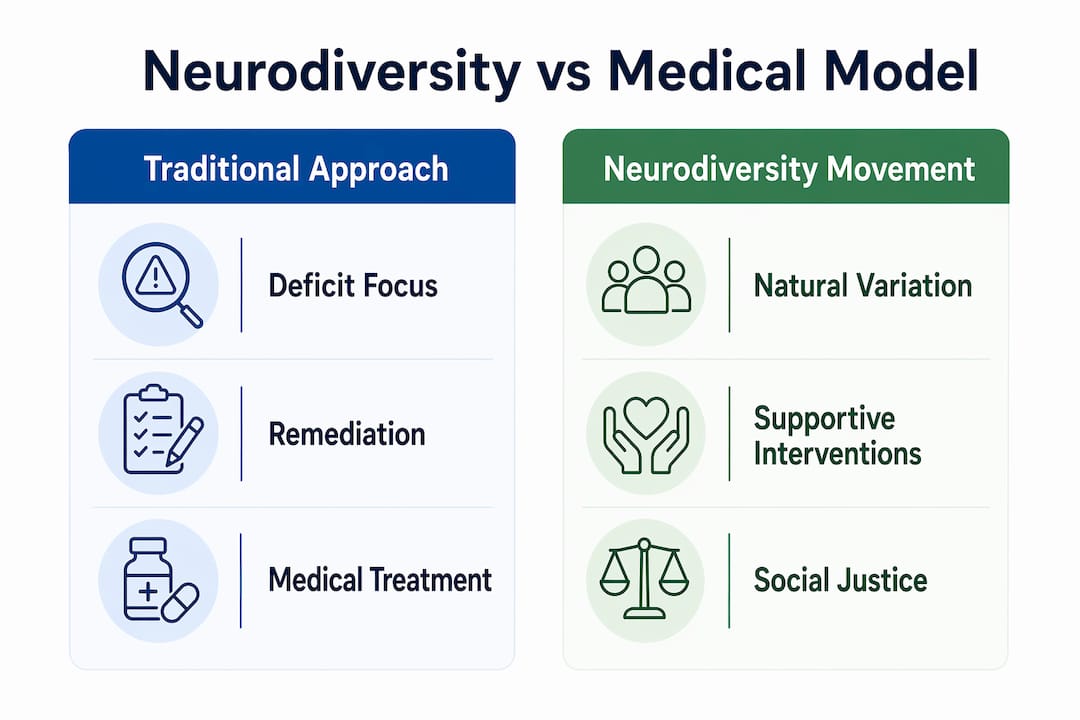
The neurodiversity movement rejects the medical model’s central assumption: that neurological difference is a problem to be fixed. An integrative framework published in 2025 outlines six core principles that now guide advocacy and practice across education, healthcare, and research.
Those six principles are:
- Self-acceptance: Neurodivergent identity is valid and worth affirming, not suppressing.
- Support quality: Supports must promote well-being and participation, not conformity to neurotypical norms.
- Autonomy: Individuals retain the right to make decisions about their own lives and care.
- Participatory research: Neurodivergent people must be co-producers of knowledge, not just research subjects.
- Non-deficit identity: Neurological difference is not inherently a disorder or a lesser state of being.
- Inclusive design: Environments and systems should adapt to human variation, not the reverse.
These principles work together. Self-acceptance without quality support leaves people without the tools they need. Quality support without autonomy becomes control. The movement insists all six must operate simultaneously.
The language question is genuinely complex. Some autistic people prefer identity-first language (“autistic person”) because they see autism as part of who they are. Others prefer person-first language (“person with autism”) to separate identity from diagnosis. Neurodiversity advocacy respects individual preference rather than imposing one standard. Following a person’s lead on language is the simplest way to show respect.
Pro Tip: When supporting a neurodivergent person, ask directly which language they prefer. Do not assume. This single habit signals that you see them as the authority on their own experience.
How does the neurodiversity movement differ from the medical model?
The medical model treats neurological difference as a pathology located inside the individual. The neurodiversity movement treats it as a natural variation that becomes disabling only when society fails to accommodate it. That is not a subtle distinction. It changes everything about how support, education, and policy get designed.
“The ideal of a ‘normal’ brain is a cultural construct used to justify inequality. Inclusion is a matter of social justice, not just kindness. Shifting resources from eradication efforts toward accommodations and universal design is the logical outcome of accepting that neurological diversity is natural.” — De-mystifying and De-pathologising Neurodiversity
The movement does not reject medical treatment outright. Neurodiversity advocates support interventions that help individuals thrive on their own terms. What they oppose is treatment designed to make a person appear neurotypical, suppress natural behaviors, or eliminate a neurotype entirely. The target of opposition is normalization, not medicine.
This distinction matters because critics often misrepresent the movement as anti-science or as denying that autism can be disabling. A neurotype can be both a natural variation and a source of genuine difficulty. Accepting that both things are true simultaneously is one of the movement’s most sophisticated positions. Acknowledging lived challenges does not contradict celebrating neurodivergent identity.
The movement also takes a firm stand against eugenics. Prenatal screening aimed at eliminating autism from the population, or research focused on preventing neurodivergent people from being born, directly contradicts the movement’s values. Advocacy organizations like ASAN have been vocal opponents of research agendas that prioritize cure over quality of life.
Representation is an ongoing challenge. Critics within the movement itself note that high-profile advocacy has historically centered autistic people who communicate verbally and require fewer daily supports. Participatory research must include people with intellectual disabilities and high support needs, or the movement risks speaking only for a narrow slice of the neurodivergent population.
How does the neurodiversity movement shape inclusion and support in practice?
The practical impact of neurodiversity advocacy shows up most clearly in how supports get designed and delivered. Supports that promote autonomy and belonging align with neurodiversity values. Supports that demand behavioral conformity to neurotypical standards do not.
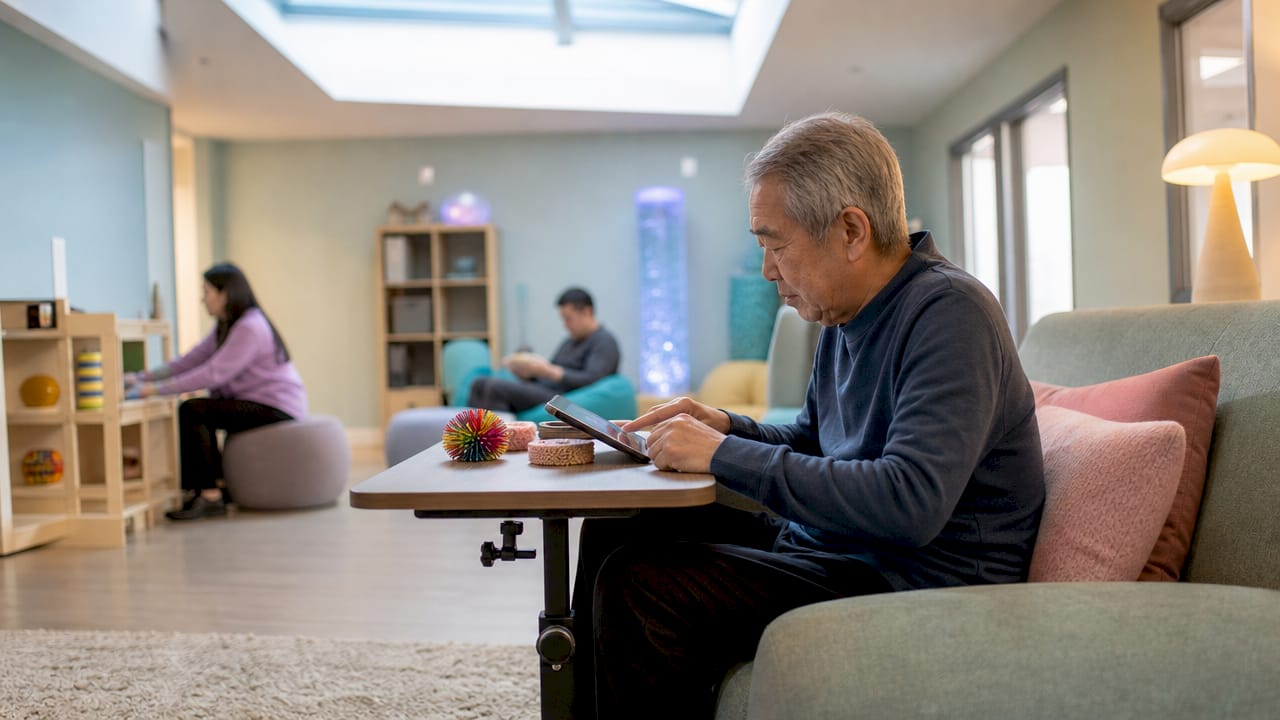
Universal design is the movement’s most concrete contribution to built environments and institutions. Rather than retrofitting accommodations for individuals after the fact, universal design builds flexibility into systems from the start. Sensory-friendly classrooms, flexible work schedules, and multiple formats for communication all reflect this approach.
| Area | Traditional approach | Neurodiversity-aligned approach |
|---|---|---|
| Education | Remediation of deficits | Flexible learning environments |
| Workplace | Standardized performance metrics | Individualized accommodation plans |
| Healthcare | Normalization-focused treatment | Autonomy-centered care planning |
| Research | Autistic people as subjects | Autistic people as co-researchers |
The distinction between independence and autonomy is one the movement draws carefully. Independence, doing things without help, is not the goal. Autonomy, making meaningful choices about one’s own life, is. A person who uses significant daily supports can still exercise full autonomy. Conflating the two leads to support systems that withhold help in the name of “building independence” while actually reducing quality of life.
Healthcare innovation frameworks that incorporate neurodiversity principles are beginning to reshape how clinicians approach patient communication, consent, and care planning. This shift is slow but measurable.
- Schools that adopt neurodiversity-affirming practices report fewer behavioral incidents and higher student engagement.
- Workplaces with formal neurodiversity programs, including those at major technology companies, report that neurodivergent employees often excel in pattern recognition, detail orientation, and systems thinking.
- Healthcare providers trained in autism-inclusive practices deliver better outcomes because they adapt communication rather than expecting patients to adapt to clinical norms.
Key Takeaways
The neurodiversity movement reframes neurological difference as natural human variation and demands that society adapt its systems, not its people, to achieve genuine inclusion.
| Point | Details |
|---|---|
| Social justice foundation | The movement treats neurological difference as a civil rights issue, not a medical problem to solve. |
| Six core principles | Self-acceptance, support quality, autonomy, participatory research, non-deficit identity, and inclusive design guide advocacy. |
| Medical model contrast | The movement opposes normalization, not medicine. Helpful interventions are supported; cure-focused ones are not. |
| Representation gap | Advocacy must include people with high support needs, not only those who communicate verbally. |
| Universal design | Adapting environments and systems from the start is more effective than individual accommodations added later. |
Why the neurodiversity movement deserves more than lip service
The social justice framing of neurodiversity is the part most institutions quietly ignore. Organizations will add sensory rooms and call it inclusion. They will hire a neurodiversity consultant and check a box. What they rarely do is restructure decision-making to include neurodivergent voices at the table where policy gets made.
I have watched this pattern repeat across education, healthcare, and corporate settings. The language of neurodiversity gets adopted while the power structure stays exactly the same. Autistic people are consulted after decisions are made, not before. Research gets designed by neurotypical researchers who then recruit autistic participants. Support programs get built around what neurotypical professionals think neurodivergent people need, not what neurodivergent people say they need.
The autism spectrum advocacy community has been clear about this for years. Authentic inclusion requires structural change, not aesthetic change. It means autistic researchers leading studies, autistic educators shaping curriculum, and autistic adults sitting on the boards of organizations that claim to serve them.
The movement’s most uncomfortable truth is this: accepting neurodiversity fully means accepting that the way most institutions currently operate is the problem. That is a harder pill to swallow than buying fidget tools for the break room. The organizations that genuinely get this are still rare. They are also the ones producing the best outcomes for neurodivergent people.
— Keith
Neurodiversity-aligned autism support resources
Autismdoctorsearch maintains one of the most complete directories of autism resources in the United States, specifically curated to help families and advocates find support that respects neurodivergent identity. The directory includes autism therapy services aligned with neuro-affirming practices, covering ABA therapy, occupational therapy, mental health services, and special education. Every listing is vetted and kept current so you spend less time searching and more time connecting with providers who understand the difference between supporting a person and trying to change who they are. Autismdoctorsearch also lists autism independence-focused resources that apply the social model of disability directly to care planning.
FAQ
What is the neurodiversity movement in simple terms?
The neurodiversity movement is a social justice campaign that treats neurological differences like autism and ADHD as natural human variations, not disorders to be cured. It advocates for civil rights, inclusion, and support systems that respect neurodivergent identity.
Does the neurodiversity movement oppose all medical treatment?
No. The movement supports medical interventions that help individuals thrive on their own terms. It opposes treatments designed to normalize behavior or eliminate neurotypes, not medicine in general.
Who started the neurodiversity movement?
The movement grew from autistic self-advocacy groups in the late 1980s and early 1990s. Sociologist Judy Singer coined the term “neurodiversity,” and organizations like the Autistic Self Advocacy Network later became central institutional voices.
What is the social model of disability and why does it matter?
The social model of disability separates impairment from disability, arguing that societal barriers, not neurological differences, create most of the disadvantage neurodivergent people experience. It shifts responsibility for inclusion from the individual to the environment.
How can I support the neurodiversity movement?
Follow the lead of autistic-led organizations like ASAN, use the language individuals prefer, and advocate for universal design in schools, workplaces, and healthcare settings. Supporting participatory research that includes neurodivergent co-researchers is one of the most direct ways to advance the movement’s goals.