

TL;DR:
- Autistic individuals process social cues differently due to neurological differences like Theory of Mind impairments and alexithymia. Teaching these cues requires patience, visual supports, role-play, and natural environment practice to build genuine connections. Avoid forcing eye contact and focus on shared attention to reduce sensory overload and support social understanding.
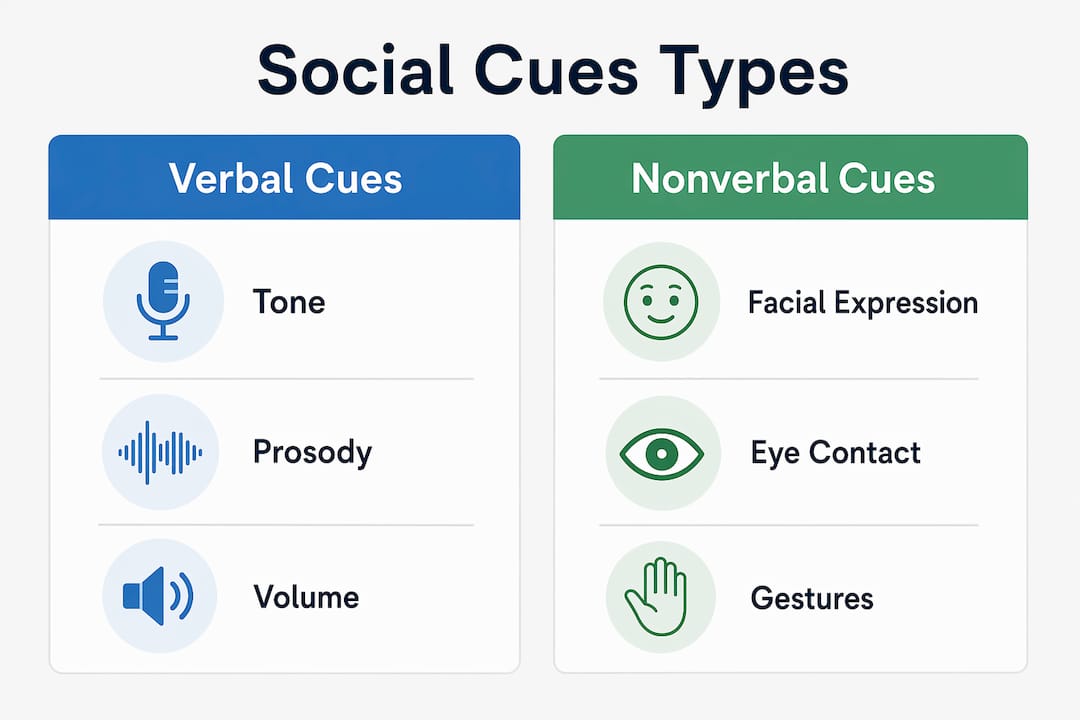
Social cues are the verbal and nonverbal signals people exchange to communicate meaning beyond words. For autistic individuals, understanding social cues in autism means recognizing that these signals are processed differently, not ignored. Up to 60% of autistic individuals experience alexithymia, a condition that affects how emotions are recognized and interpreted. Experts estimate that over 90% of communication is nonverbal, which means the gap between what is said and what is understood can be wide. Parents, caregivers, and educators who understand this gap are better positioned to build real, supportive connections.
What neurological differences affect social cue perception in autism?
The brain processes social information through several overlapping systems, and autism affects more than one of them. Understanding which systems are involved helps caregivers respond with accuracy rather than frustration.
Theory of Mind is the ability to recognize that other people have thoughts, feelings, and intentions different from your own. A 2024 meta-analysis of over 16,000 participants found large effect size impairments in Theory of Mind among neurodivergent youth. That finding means autistic children are not being rude or indifferent. They are working with a cognitive framework that makes inferring others’ mental states genuinely difficult.
Three other neurological factors compound this challenge:
- Alexithymia. 60% of autistic individuals have difficulty identifying their own emotions. When you cannot read your own internal state clearly, reading someone else’s becomes even harder.
- Detail-focused face processing. Autistic individuals often focus on specific facial features rather than reading the whole expression at once. This affects recognition of complex emotions like sarcasm, embarrassment, or mixed feelings.
- Manual processing of social cues. Neurotypical people decode social signals automatically. Many autistic individuals decode them consciously and deliberately, which is cognitively demanding and leads to fatigue over time.
Prosody, the rhythm and tone of speech, also presents a challenge. Autistic individuals may interpret tone literally, missing the emotional layer carried by how something is said. A sarcastic “Oh, great” sounds identical to a genuine one without the automatic emotional filter most people apply without thinking.
Which social cues are most challenging for autistic individuals?
Not all social cues carry equal weight, and not all are equally difficult. The ones that require rapid, automatic interpretation tend to be the hardest.
- Facial expressions. A slight frown, a raised eyebrow, or a half-smile can signal disapproval, surprise, or irony. These micro-expressions pass in fractions of a second, which is faster than manual processing can track.
- Body language. Crossed arms, leaning away, or turning toward someone all carry social meaning. Autistic individuals may not register these postures as signals at all.
- Eye contact. Direct eye contact is socially expected in many American contexts, but for many autistic individuals it is sensory overload. Forcing it pulls attention away from the actual conversation.
- Tone of voice. Literal language processing means the words carry the message, not the delivery. Sarcasm, teasing, and indirect requests often land as their literal meaning.
- Group dynamics. Reading a room requires tracking multiple people’s expressions, body language, and conversational turns at once. That simultaneous processing load is exceptionally high for autistic individuals.
- Sensory overstimulation. Loud environments, bright lights, or crowded spaces consume cognitive resources. When sensory input is high, capacity for social processing drops sharply.
Pro Tip: When an autistic child seems to miss a social cue, check the environment first. Reducing sensory load often frees up the cognitive space needed for social awareness.
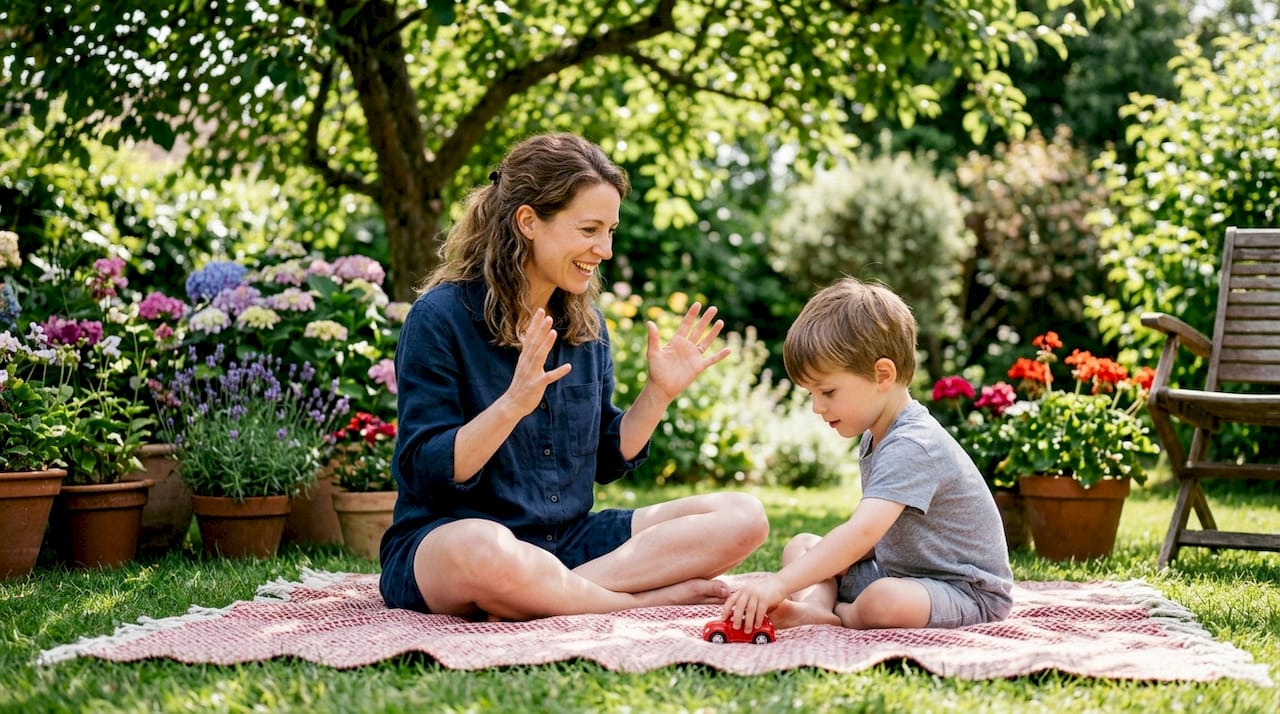
The shared attention on objects approach works well here. Instead of directing a child to look at your face, point to something you are both looking at together. Joint attention on a shared object builds social connection without the sensory cost of direct eye contact.
For a broader look at supporting autistic children’s growth, Autismdoctorsearch offers caregiver resources that address sensory and social challenges together.
How can parents and educators teach social cues effectively?
Teaching social cues works best when it is broken into small, concrete steps and practiced in low-pressure settings. The goal is not to produce neurotypical behavior. The goal is to give autistic individuals tools they can choose to use.
- Break cues into single components. Teach one cue at a time. Start with a clear, exaggerated example, such as a wide smile paired with the word “happy,” before moving to subtle expressions.
- Use visual supports. Emotion cards, social stories, and picture-based scripts give autistic learners a reference they can return to. Visual supports reduce reliance on real-time processing.
- Practice through role-play. Structured role-play in a safe setting lets children rehearse responses without the stakes of a real social situation. Keep scenarios short and specific.
- Train in natural environments. Once a skill is practiced in a controlled setting, transfer it to real contexts gradually. A playground, a family dinner, or a classroom transition each offer natural teaching moments.
- Use parallel narration instead of questions. Avoid question-heavy exchanges that feel like tests. Instead, narrate what you observe: “You smiled when she sat next to you. That told her you were happy to see her.” This builds awareness without pressure.
- Incorporate AAC tools. Augmentative and alternative communication tools do not hinder speech development. Research shows they support verbal language growth and reduce frustration for children who struggle with spoken expression.
- Follow the child’s lead. Child-led interaction reduces anxiety and improves communication outcomes. When a child directs the activity, they are more engaged and more likely to attempt communication.
Pro Tip: Create a “social cue journal” with your child. After a social situation, write down one cue you both noticed and what it meant. Over time, this builds a personal reference library that is far more memorable than any worksheet.
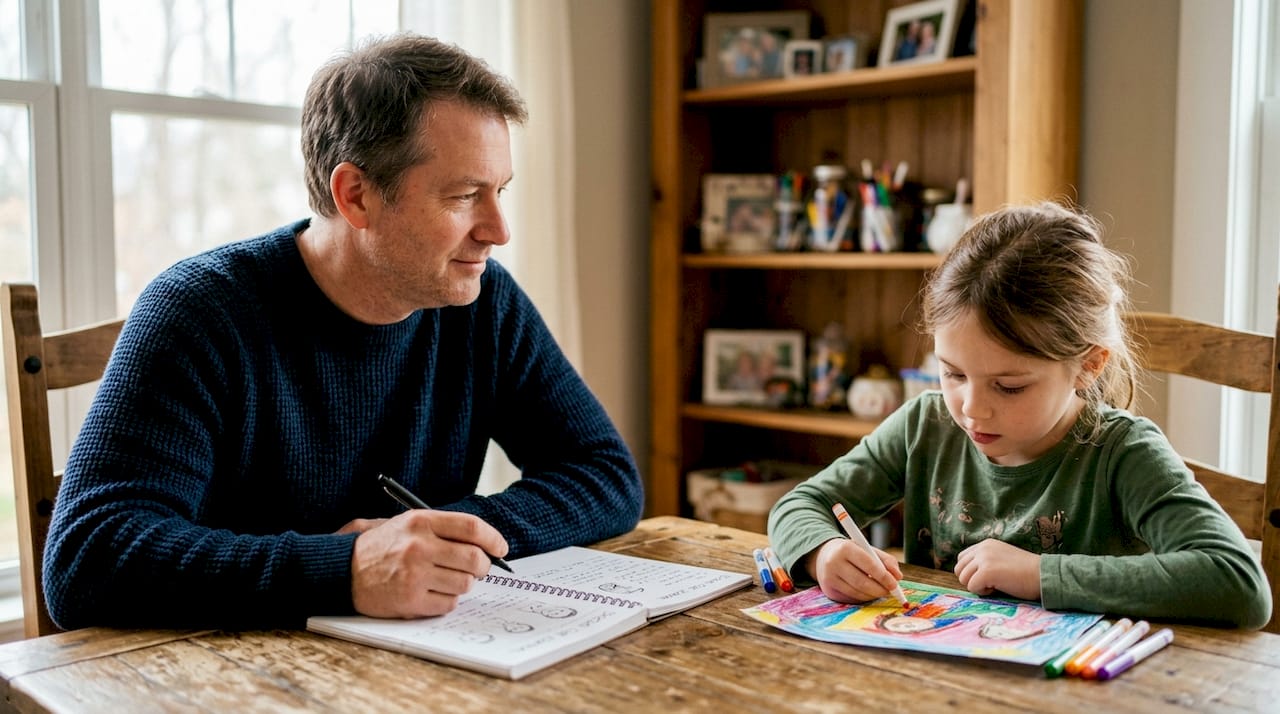
Patience is not optional here. Autistic individuals need more processing time than neurotypical peers. Waiting quietly after a statement, rather than filling silence with more questions, gives the brain time to respond. For evidence-based communication strategies, Autismdoctorsearch has compiled guidance specifically for parents working on these skills at home.
What are common misconceptions about social cues and autism?
The most damaging misconception is that autistic individuals do not want social connection. The research does not support this. Most autistic people want relationships. They process the signals that build those relationships differently.
- “Missing a cue means not caring.” Missing a social cue is a processing difference, not indifference. Manual processing of social information is cognitively demanding. An autistic person may be working very hard to decode a conversation while appearing disengaged.
- “Forcing eye contact teaches social skills.” Forcing eye contact increases stress and reduces communication effectiveness. It does not improve social understanding. It teaches compliance at the cost of comfort.
- “Masking is a sign of progress.” Masking means suppressing autistic behaviors to appear neurotypical. It is exhausting and is associated with higher rates of anxiety and burnout. Authentic communication, even if it looks different, is healthier than performance.
- “Social skills training means learning to act neurotypical.” The goal of social skills support is connection, not imitation. Teaching social awareness means giving autistic individuals options, not scripts they are required to follow.
“Reading the room is not innate for anyone. For autistic individuals, it is a skill that can be learned progressively, in safe environments, without the pressure of perfection.”
Educators play a specific role here. Classroom settings that reward neurotypical social behavior and penalize autistic communication styles send the wrong message. Classroom strategies that account for processing differences create space for genuine participation rather than performance. For more on special education approaches that address these dynamics, Autismdoctorsearch lists specialized schools and programs across the country.
Key Takeaways
Autistic individuals process social cues through manual, conscious effort rather than automatic interpretation, which means teaching these skills requires patience, low-pressure environments, and individualized approaches.
| Point | Details |
|---|---|
| Neurological basis is real | Theory of Mind and alexithymia create genuine processing differences, not behavioral choices. |
| Nonverbal cues dominate communication | Over 90% of communication is nonverbal, making explicit teaching of these cues critical. |
| Avoid forcing eye contact | Shared attention on objects builds connection without the sensory cost of direct eye contact. |
| Use narration over questions | Descriptive statements build social awareness without triggering the anxiety of a testing dynamic. |
| AAC tools support, not hinder | Augmentative communication tools promote verbal language development and reduce frustration. |
What I have learned from watching families navigate social cues
After years of working alongside families and educators in the autism space, the pattern I see most often is this: caregivers focus on the wrong goal. They want the autistic child to perform social fluency. What actually builds connection is something quieter and slower.
The families who make the most progress are the ones who stop treating social interaction as a test. They narrate, they wait, they follow the child’s lead. They celebrate a shared glance at a dog in the park as a genuine social moment, because it is. They do not hold out for a scripted exchange that looks neurotypical.
The other thing I have noticed is that sensory environment gets underestimated constantly. A child who seems socially withdrawn in a loud cafeteria may be entirely present and engaged in a quiet corner of the library. The social skill did not change. The cognitive load did.
My honest advice to educators: social skills groups work best when they are structured around shared interests, not social scripts. When autistic children connect over something they genuinely care about, the social cues follow naturally. You cannot manufacture that with a worksheet.
Build trust first. Social skills follow.
— Keith
Finding the right support through Autismdoctorsearch
Parents and educators who want professional support for social communication skills do not have to search alone. Autismdoctorsearch maintains one of the most complete directories of autism resources in the country, including ABA therapy, occupational therapists, mental health services, and special education schools. These providers specialize in the exact skills covered here: reading social signals, building communication, and reducing anxiety in social settings. Browse autism therapy services listed on Autismdoctorsearch to find vetted providers near you. Whether you need a therapist, a school, or a communication specialist, the directory connects you with professionals who understand autistic communication from the inside out.
FAQ
What are social cues in the context of autism?
Social cues are verbal and nonverbal signals, including facial expressions, tone of voice, and body language, that communicate meaning in social interactions. Autistic individuals often process these signals manually rather than automatically, which makes them harder to interpret in real time.
Why do autistic individuals miss social cues?
Missing social cues is linked to neurological differences including Theory of Mind impairments and alexithymia, which affects up to 60% of autistic people. These differences make decoding social signals cognitively demanding, not a matter of disinterest.
Should I force eye contact to teach social skills?
Forcing eye contact increases stress and reduces communication effectiveness for autistic individuals. Shared attention on a mutual object is a more effective and less stressful alternative for building social connection.
What is the best way to teach social cues at home?
Use parallel narration instead of questions, break cues into single teachable components, and practice in low-pressure natural settings. Following the child’s lead consistently improves communication outcomes more than scripted drills.
Do AAC tools interfere with speech development?
Research shows AAC tools support verbal language development rather than replacing it. They reduce frustration and give autistic children a reliable way to communicate while spoken language continues to develop.


