TL;DR:
- Most autistic individuals experience co-occurring mental health conditions, which heavily impact their daily lives. Recognizing causes like sensory overload, masking, and social rejection is crucial for early intervention and support. Tailored, ASD-informed therapies, along with proactive mental health assessments, lead to better outcomes and overall well-being.
Most parents focus intensely on autism-specific therapies, communication tools, and educational plans, yet mental health often stays in the background until a crisis hits. That’s a costly oversight. Approximately 70% of autistic individuals have at least one co-occurring mental health condition, with 40% managing two or more simultaneously. This guide exists to change how you think about your child’s well-being. We’ll cover why mental health challenges are so common in autism, what causes them, how to get an accurate diagnosis, and which strategies actually deliver results.
Table of Contents
- The hidden connection: Autism and mental health
- Why mental health issues arise: Causes and risk factors
- Navigating diagnosis: Challenges and best practices
- Supporting well-being: Effective strategies and tailored therapies
- What most caregivers miss about autism and mental health
- Find the help your family needs for autism and mental health
- Frequently asked questions
Key Takeaways
| Point | Details |
|---|---|
| High co-occurrence rates | Most autistic individuals experience mental health conditions that need attentive support. |
| Complex causes | Mental health challenges stem from a mix of neurobiology, social, and environmental factors. |
| Diagnosis requires expertise | Accurate assessment depends on ASD-specific tools and trained evaluators. |
| Tailored therapies work best | Neuroaffirmative approaches and personalized strategies improve outcomes. |
| Resources are critical | Accessible therapy and clinician networks are essential for ongoing well-being. |
The hidden connection: Autism and mental health
Most people assume autism and mental health are separate conversations. They aren’t. The two are deeply intertwined in ways that shape every area of a child’s daily life, from how they sleep to how they cope at school.
The numbers are striking. Research confirms that over 90% of young autistic children meet criteria for at least one additional psychiatric condition. That’s not a small overlap. That’s the overwhelming rule, not the exception. Yet many families spend years chasing autism-specific goals without ever getting a clear mental health evaluation.
Most common co-occurring conditions
The mental health challenges that appear alongside autism aren’t random. They follow recognizable patterns:
- Anxiety disorders (social anxiety, generalized anxiety, specific phobias): the most frequent co-occurring condition
- ADHD (attention-deficit/hyperactivity disorder): affects attention, impulse control, and executive functioning
- Depression: especially common in adolescence and young adulthood
- OCD (obsessive-compulsive disorder): often confused with autism-specific repetitive behaviors
- Sleep disorders: affect up to 80% of autistic children and worsen mental health across the board
- PTSD (post-traumatic stress disorder): linked to bullying, medical trauma, and repeated social rejection
| Condition | Estimated prevalence in autism | General population prevalence |
|---|---|---|
| Anxiety disorders | 40–60% | 18% |
| ADHD | 30–50% | 8–10% |
| Depression | 20–40% | 7% |
| OCD | 17–37% | 2–3% |
| Sleep disorders | 50–80% | 10–30% |
“Co-occurring mental health conditions are not edge cases in autism. They are the norm, and treating autism without addressing mental health is like treating a broken arm without checking for internal injuries.” — National Mental Health Authority
When these conditions go untreated, the consequences compound. A child with unmanaged anxiety may refuse school, lose friendships, or develop physical symptoms like stomachaches and headaches. Depression can slow skill development and deepen social withdrawal. For deeper background on the autism spectrum itself, exploring reliable autism information can help you see the full picture before approaching mental health professionals.
The bottom line is simple: mental health is not a side issue for autistic individuals. It’s central to everything else you’re working toward.
Why mental health issues arise: Causes and risk factors
Understanding where these challenges come from helps you spot warning signs earlier, advocate more clearly with clinicians, and stop blaming your child or yourself when things get hard.
Mental health challenges in autism don’t come from one cause. They come from several overlapping forces that reinforce each other over time. As research consistently shows, co-occurring conditions arise from neurobiological overlap, sensory overload, masking, social challenges, bullying, and access barriers. Let’s break each one down.
Neurobiological overlap
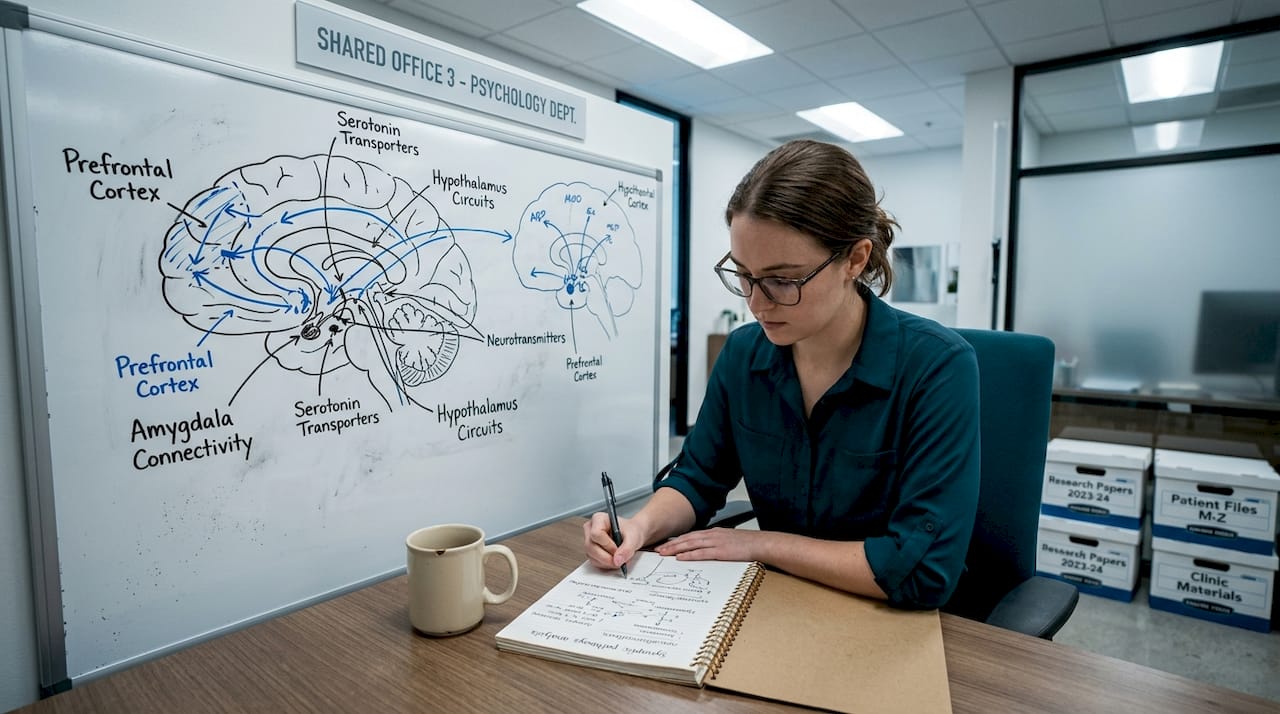
Autism and conditions like anxiety or ADHD share overlapping brain regions and genetic pathways. The same neurological wiring that shapes how autistic individuals process information also affects emotional regulation, stress response, and executive function. This isn’t a failure of parenting. It’s biology.
Sensory overload and the stress response
Many autistic individuals experience intense reactions to sound, light, texture, and smell. Every overwhelming environment activates the body’s HPA axis (the hypothalamic-pituitary-adrenal axis), which is the system that controls the fight-or-flight stress response. When that system fires constantly, the result is chronic stress, anxiety, and exhaustion. Over time, repeated sensory overload physically rewires how the brain responds to stress.
Masking and burnout
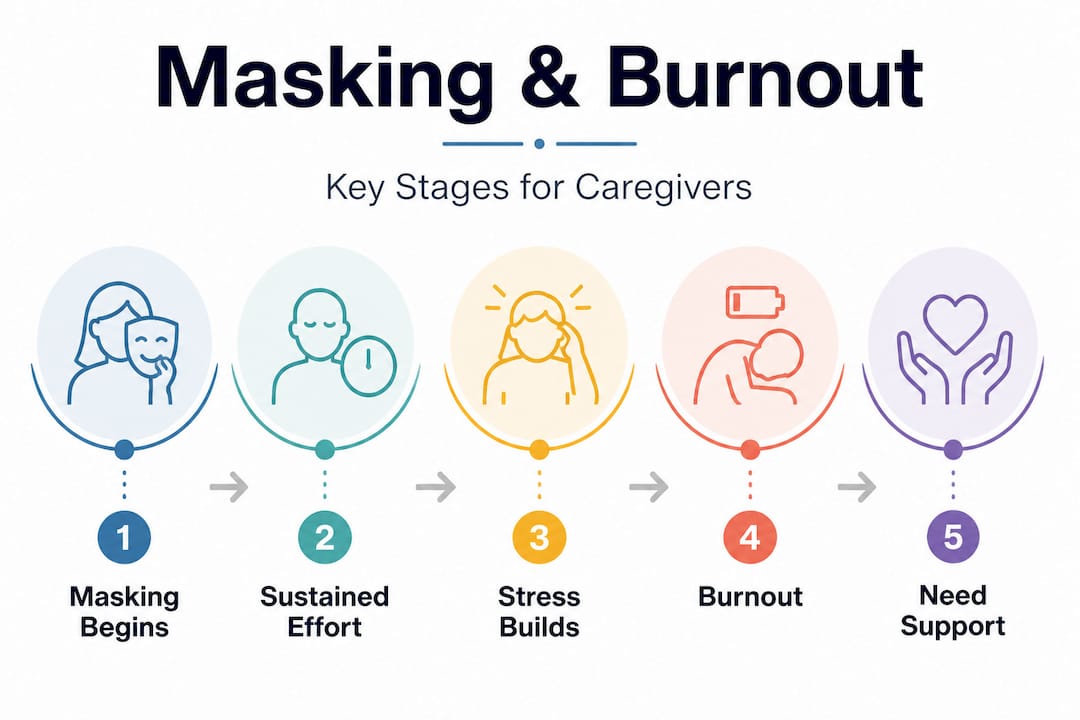
Masking means suppressing natural autistic behaviors to appear neurotypical. Autistic children often mask at school, copying peers, forcing eye contact, and scripting conversations. This takes enormous mental energy. Over months and years, masking leads to autistic burnout, a state of deep exhaustion, loss of skills, and emotional shutdown that looks a lot like depression but doesn’t respond to standard depression treatment.
Pro Tip: If your child seems “fine” at school but completely falls apart at home, masking is likely a significant factor. Talk to clinicians specifically about masking behavior and how it may be hiding mental health struggles during evaluations.
Social exclusion and bullying
Autistic children face rejection, teasing, and exclusion at far higher rates than their neurotypical peers. These experiences don’t just hurt feelings. They cause real psychological harm, increasing vulnerability to depression, anxiety, and PTSD. Building proactive communication support strategies can reduce social friction and lower the risk of these harmful experiences.
Key risk factors to watch for:
- Significant sensory sensitivities in multiple areas
- Signs of masking at school (copying peers, exhaustion after social situations)
- Social rejection or bullying history
- Family history of anxiety or depression
- Major life transitions (new school, puberty, family changes)
- Limited access to ASD-informed mental health care
The earlier you recognize these risk factors, the sooner you can connect your child with the right support before a crisis develops.
Navigating diagnosis: Challenges and best practices
Getting a mental health diagnosis for an autistic child is genuinely difficult. It requires more than a standard screening test, and going in unprepared can lead to misdiagnosis or missed diagnoses entirely.
Standard mental health tools were not built with autism in mind. Widely used instruments like the PHQ-9 (for depression) and GAD-7 (for anxiety) are not validated for ASD, meaning they can produce inaccurate results. A child may describe physical symptoms of anxiety rather than emotional ones, or they may struggle to articulate internal states at all because of alexithymia (difficulty identifying one’s own emotions). Standard questions simply don’t capture these nuances.
The comparison: Standard vs. ASD-informed assessments
| Assessment approach | Standard mental health tool | ASD-informed evaluation |
|---|---|---|
| Tools used | PHQ-9, GAD-7, Beck inventories | Autism-adapted rating scales |
| Informants | Primarily self-report | Parent, self-report, and clinician |
| Masking consideration | Rarely assessed | Central to evaluation |
| ASD trait overlap accounted for | No | Yes |
| Gender-specific considerations | Limited | Included for females and nonbinary |
How to seek the best evaluation
- Request an ASD-trained evaluator. Ask clinicians directly whether they have experience working with autistic patients and use assessment tools adapted for autism.
- Bring multiple informants. Bring your own notes, school reports, and teacher observations to the evaluation. Your perspective as a caregiver reveals what clinicians cannot observe in a one-hour session.
- Discuss masking explicitly. Tell the evaluator if your child behaves differently at home versus school. Masking is especially common in autistic females and can hide severe symptoms during clinical appointments.
- Ask about alexithymia. If your child struggles to describe emotions, the evaluator needs to know this upfront so they adjust how they gather information.
- Follow up after the evaluation. One evaluation is rarely the complete picture. Symptoms change with age, stress, and environment. Reassessment matters.
Accessing a complete ASD assessment guide can help you prepare the right questions before your appointment. Going in informed makes a real difference in the quality of care your child receives.
Supporting well-being: Effective strategies and tailored therapies
Once you have an accurate picture of your child’s mental health, you need strategies that actually fit how their brain works. Standard therapies can help, but they work best when adapted for autism.
The most effective approach to supporting mental health in autism combines accurate diagnosis with therapies adapted to autistic traits. As current evidence recommends, prioritizing multi-informant assessments and ASD-specific training for clinicians leads to far better outcomes than standard care pathways.
Neuroaffirmative CBT
Cognitive behavioral therapy (CBT) is one of the most studied interventions for anxiety and depression. But standard CBT assumes the client can easily identify emotions, engage in abstract thinking about thoughts, and generalize skills to new settings quickly. Autistic clients often need adaptations:
- Visual supports and concrete worksheets instead of purely verbal processing
- Extended sessions or more repetition to build generalization
- Explicit teaching of emotional vocabulary for children with alexithymia
- Focus on environmental modifications alongside thought-challenging techniques
Neuroaffirmative CBT goes further. It treats autistic traits as valid differences to accommodate, not deficits to eliminate. This approach produces far better engagement and outcomes for autistic clients.
Building an accessible care network
- ABA therapy can address behavioral challenges connected to anxiety and emotional regulation when delivered by trained providers
- Occupational therapy addresses sensory processing, which directly reduces a major trigger for mental health crises
- School-based support through special education resources ensures mental health accommodations extend into the classroom
- Parent coaching helps caregivers develop consistent, informed responses to their child’s emotional needs at home
Pro Tip: Don’t treat each provider as a separate silo. The most effective care happens when your child’s therapist, occupational therapist, and school team communicate regularly. Ask each provider to share progress notes with the others.
Finding the right professionals starts with knowing where to look. Resources like therapy services for autism and autism therapeutics can connect you with ASD-trained clinicians in your area who specialize in exactly these kinds of tailored approaches.
Practical steps you can take today:
- Start a mental health log tracking your child’s mood, sleep, and stress triggers
- Schedule a review of current therapies with a question specifically about mental health integration
- Contact your child’s school about mental health accommodations in their IEP or 504 plan
- Join a parent support group focused on co-occurring conditions in autism
What most caregivers miss about autism and mental health
Here’s an uncomfortable truth that most resources won’t say directly: mental health support for autistic individuals is often treated as optional when it should be foundational.
We see families who have pursued years of speech therapy, ABA, and social skills groups, all valuable, yet their child’s anxiety or depression was never formally assessed. The assumption is that once autism-specific skills improve, mental health will follow. Sometimes that’s true. More often, it isn’t.
Mental health is not a downstream problem that resolves when autism support improves. It’s a parallel track that requires its own attention, its own specialists, and its own strategies. A child who is making excellent progress in communication but struggling with untreated anxiety will eventually hit a wall. The anxiety will limit everything: social participation, learning, and independent functioning.
There’s also a broader misconception that mental health support is crisis management. Parents often don’t seek mental health services until their child is in acute distress, refusing school, showing self-harm behaviors, or completely shutting down. That’s understandable. But it means families miss the window where early, lighter interventions could prevent the crisis entirely.
The most effective caregivers we’ve seen treat mental health proactively. They build support structures before burnout hits. They use resources like autism inclusion resources to stay connected to the broader community and access early support. They advocate for their child to be seen as a whole person, not just a set of autism-related behaviors.
Validation matters enormously here. Autistic children who feel understood and accepted by their caregivers show better mental health outcomes than those who feel constantly corrected or redirected. You don’t have to fix everything. You have to start by seeing what’s actually there.
Find the help your family needs for autism and mental health
You’ve learned a lot in this guide, and the next step is turning that knowledge into real action for your child. The Autism Doctor Search Directory exists specifically to make that step easier. We maintain one of the most complete, up-to-date directories of autism resources available, covering everything from ABA therapy and mental health services to occupational therapists and special education schools. Whether you’re searching for neuroaffirmative CBT providers, ASD-trained psychiatrists, or sensory-focused occupational therapists, you can search autism therapy services or browse autism therapeutics to find credentialed professionals in your area. Your family deserves support that actually fits.
Frequently asked questions
How common are mental health issues in autistic individuals?
About 70% of autistic individuals have at least one mental health condition, and 40% have two or more, making co-occurring conditions the norm rather than the exception.
Why are mental health diagnoses difficult for people with autism?
Standard tools like the PHQ-9 and GAD-7 are not validated for autism, and masking can hide severe symptoms during evaluations, so ASD-trained evaluators and multi-informant assessments are strongly recommended.
What kinds of therapies work best for autistic children with mental health challenges?
Neuroaffirmative CBT, multi-informant diagnostic approaches, and care delivered by ASD-trained professionals who adapt techniques to autistic traits consistently produce the strongest outcomes.
Does mental health impact physical health in autistic people?
Yes. Unaddressed mental health challenges, especially those driven by sensory overload and masking, lead to autistic burnout and can worsen physical health, social participation, and long-term functioning across the board.