TL;DR:
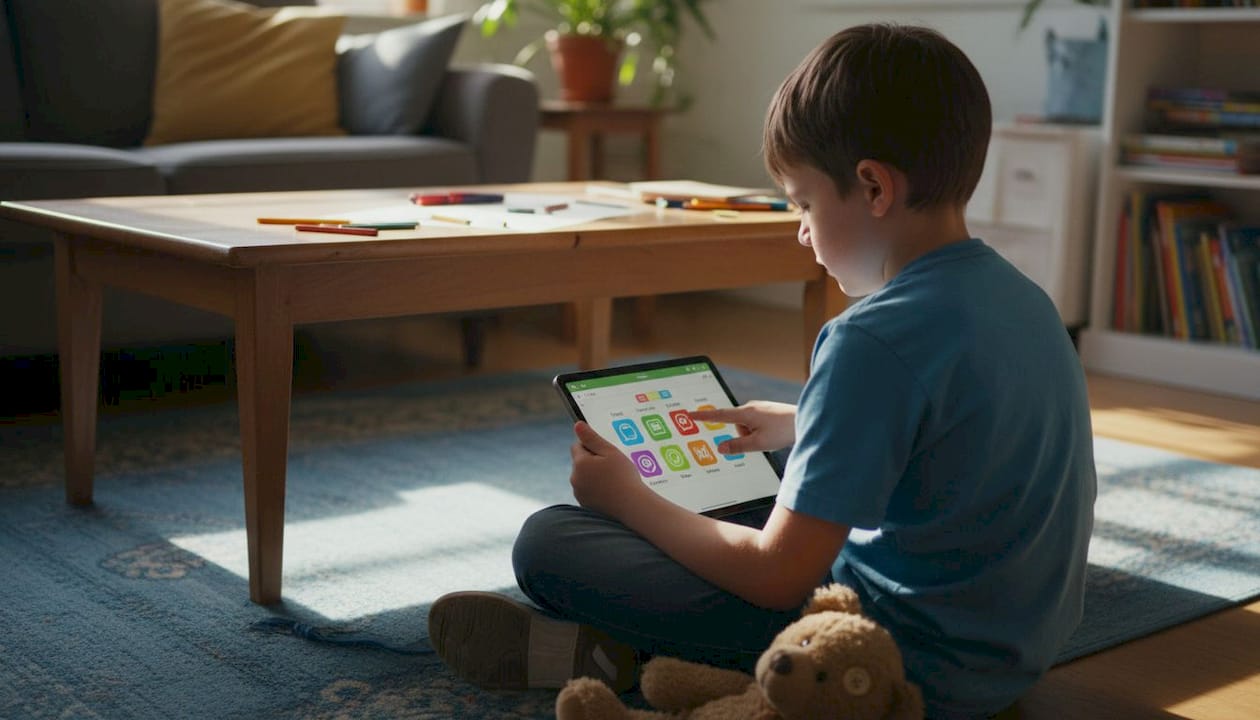
- Over 80% of children with autism benefit from assistive technology, especially in communication and independence.
- Assistive technology includes low-tech tools like picture cards and high-tech devices such as AAC systems and VR programs.
- Effective AT use requires tailored approaches, professional guidance, persistent effort, and collaboration among families and care teams.
Over 80% of children with autism benefit from assistive technology, particularly in communication and daily living skills. That number surprises most parents who first hear it. Many families assume AT is a last resort or a luxury add-on, something to consider only after other approaches have been exhausted. The reality is quite different. Assistive technology is often the bridge that connects a child to the world around them, opening doors to self-expression, independence, and genuine participation in daily life. This article walks you through the most effective tools, what the research actually shows, and how you can start using AT to support your child right now.
Table of Contents
- Understanding assistive technology for autism
- How assistive technology enhances communication
- Assistive technology and daily living skills
- What the evidence says: Success rates and limitations
- Barriers to adoption and how families overcome them
- Our perspective: AT is not optional, it is foundational
- Find the right AT support through Autism Doctor Search
- Frequently asked questions
Key Takeaways
| Point | Details |
|---|---|
| Proven communication boost | Assistive technology, especially AAC, enables most children with autism to express themselves more clearly. |
| Improves daily independence | AT tools build real-life skills, making everyday routines like dressing and organizing easier for children with autism. |
| Results vary by child | Individual responses differ, with some children gaining more than others and skills sometimes fading over time. |
| Success requires teamwork | Families get the best outcomes when therapists, teachers, and caregivers actively support AT use. |
Understanding assistive technology for autism
Assistive technology, commonly called AT, refers to any device, software, or tool that helps a person with a disability perform tasks they would otherwise find difficult or impossible. For children with autism, AT is not a single product. It is a wide spectrum of solutions tailored to individual needs.
AT falls into two broad categories:
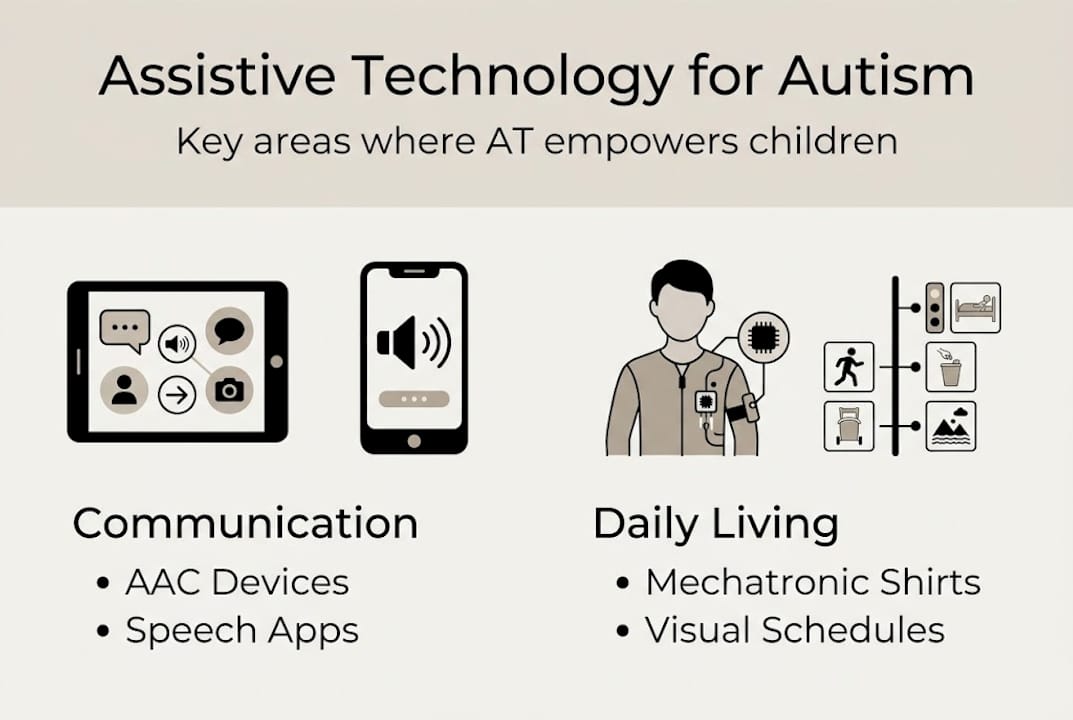
- Low-tech options: Picture cards, visual schedules, communication boards, fidget tools, and sensory aids. These require no batteries or screens and are often the starting point for young children.
- High-tech options: Speech-generating devices, tablet apps, augmentative and alternative communication (AAC) systems, virtual reality programs, and wearable technology. These offer more dynamic and personalized support.
The primary goals of AT in autism care are to enhance communication, promote independence, and build daily living skills. A Frontiers review of AT for autism confirms that these tools are not supplemental. They are central to effective support.
One common misconception is that AT replaces human connection or therapy. It does not. AT works best alongside therapists, educators, and caregivers. Another myth is that only nonverbal children need it. In fact, children across the entire autism spectrum use AT to strengthen communication strategies for autism and manage sensory or organizational challenges. AAC devices, apps, and picture exchange systems all serve different children in different ways, and no single tool fits every child.
How assistive technology enhances communication
For children who are nonverbal or minimally verbal, the inability to communicate basic needs can lead to intense frustration, behavioral challenges, and social isolation. AT directly addresses this gap.
AAC, or augmentative and alternative communication, is the most studied category of communication AT. It includes speech-generating devices, tablet-based apps like Proloquo2Go, and picture exchange communication systems (PECS). A critical concern many parents raise is whether using AAC will stop their child from developing spoken language. Research consistently shows that AAC does not hinder speech. It actually improves functional communication and often supports the development of verbal language over time.
| AT tool | Best for | Setting |
|---|---|---|
| Speech-generating device | Nonverbal children | Home, school, therapy |
| Tablet AAC app | Minimally verbal children | Home, school |
| PECS (picture exchange) | Early communicators | Classroom, home |
| Visual schedules | Routine support | Home, school |
Studies on AAC devices show success rates above 81% in enabling children to express needs and reduce frustration-driven behaviors. That is a significant outcome for families who have struggled to understand what their child is trying to communicate.
Pro Tip: Start with a low-tech picture board at home while working with a speech-language pathologist to identify the right high-tech AAC device. Combining both approaches gives your child more ways to communicate across different situations.
In school settings, AAC tools help children participate in group activities, answer questions, and build relationships with peers. At home, they allow children to make choices, express discomfort, and engage in family routines. Exploring proven communication strategies alongside AT gives families a fuller toolkit.
Assistive technology and daily living skills
Empowering communication is just the start. Assistive tech also builds confidence and ability in everyday routines, from getting dressed in the morning to managing time and completing household tasks.

Research published in Scientific Reports found that mechatronic shirts led to an 80% improvement in dressing skills, and VR simulations helped children successfully practice tasks like grabbing bread and making phone calls. These are not abstract lab results. They represent real children gaining real independence.
Here is a snapshot of measurable outcomes from different AT tools:
| AT tool | Skill targeted | Reported improvement |
|---|---|---|
| Mechatronic shirt | Dressing independently | 80% improvement |
| VR simulation | Daily task practice | Mastery of bread grabbing, phone use |
| Task management apps | Organization, time management | Reduced caregiver prompting |
| Low-tech visual prompts | Morning/evening routines | Faster task completion |
Beyond these specific examples, AT supports a broader range of daily living skills:
- Psychomotor skills like buttoning, tying, and writing
- Organizational skills like packing a bag or following a schedule
- Time management with visual timers and app-based reminders
- Social skills through scripted practice in VR environments
A Springer study on AT and daily living skills reinforces that these gains transfer to real-world settings when tools are used consistently. Connecting AT use with remediation therapies for autism and professional therapy services significantly strengthens outcomes for children.
What the evidence says: Success rates and limitations
While the examples above sound promising, it is crucial to understand what research really says about the effectiveness and limitations of assistive technology.
“Digital AT tools show an 82.2% success rate in supporting communication for children with autism, while low-tech tools demonstrate measurable reductions in dysfunctional behaviors.”
That figure comes from a ScienceDirect review of AT outcomes, and it reflects a broadly positive picture. But the full story is more nuanced.
Here is what the evidence shows, step by step:
- Digital AT achieves the highest success rates for communication support, particularly AAC devices and apps.
- Low-tech tools are highly effective for reducing challenging behaviors and supporting routine-based skills.
- Behavioral and academic benefits include improved motivation, sustained attention, and stronger reading comprehension.
- Some children see limited gains, particularly those with co-occurring conditions that affect motor control or cognitive flexibility.
- Skill maintenance is not guaranteed. Cochrane reviews show that AAC gains are not always maintained long-term, and the overall quality of evidence remains mixed.
One important nuance is the gap between parent and child ratings of AT effectiveness. Parents often rate tools as more helpful than children self-report, which suggests that perceived benefit and actual functional use do not always align. A Springer analysis of AT outcomes highlights this discrepancy as an area needing more research.
For families, the practical takeaway is this: AT works well for most children, but it requires consistent use, professional guidance, and realistic expectations. Exploring therapeutic outcomes for autism with your child’s care team helps you set meaningful, measurable goals.
Barriers to adoption and how families overcome them
Knowing what is possible is empowering. But for many families, real-life hurdles can get in the way. Here is how to move forward.
Common barriers to AT adoption include lack of family-centered delivery, insufficient training for caregivers, and child reluctance to use unfamiliar devices. Cost is another major factor, as high-tech devices can run into thousands of dollars without insurance coverage.
Families frequently encounter these specific obstacles:
- High upfront cost of devices and apps
- Limited training provided by schools or clinics
- Child resistance to new or unfamiliar tools
- Inconsistent use across home and school environments
- Stigma or fear that AT labels their child as different
The good news is that families and care teams have found effective ways to push through these barriers. AT barriers research points to collaboration between parents, therapists, and educators as the single most reliable factor in successful AT adoption.
Pro Tip: Ask your child’s school about their AT evaluation process. Under IDEA (Individuals with Disabilities Education Act), schools are required to consider AT for children with disabilities. This can reduce or eliminate out-of-pocket costs for families.
Gradual introduction matters too. Forcing a child to use a device before they are comfortable with it often backfires. Start with short, low-pressure sessions during preferred activities. Peer modeling, where children see other kids using AT naturally, also reduces resistance significantly. Finding the right support for autism families makes navigating these decisions far less overwhelming.
Our perspective: AT is not optional, it is foundational
After reviewing the research and working alongside families navigating autism care, one thing stands out clearly. Assistive technology is still treated as an optional enhancement in too many schools and clinics, when the evidence says it should be a foundational part of every child’s support plan from the start.
The conventional wisdom is that you try behavioral therapy first, speech therapy second, and then consider AT if nothing else is working. That sequence is backwards. AT does not compete with therapy. It amplifies it. A child who can communicate using an AAC device participates more actively in ABA sessions. A child who masters dressing with a mechatronic shirt builds the confidence to attempt other independent tasks.
We also think the focus on “success rates” can mislead families. An 82% success rate sounds impressive, but the 18% who see limited gains are not failures. They are children who may need a different tool, a different approach, or more time. AT is not a one-size solution. It is a process of matching the right tool to the right child at the right developmental stage.
The families who see the best outcomes are not the ones who found the perfect device on the first try. They are the ones who stayed curious, stayed connected to their care team, and kept adjusting. That persistence is what makes the difference.
Find the right AT support through Autism Doctor Search
Navigating assistive technology options is much easier when you have the right professionals in your corner. At Autism Doctor Search, we connect families with occupational therapists, speech-language pathologists, ABA therapy providers, and special education schools that have real experience with AT tools. Our directory is built specifically for families like yours, with up-to-date listings across the full range of autism support services. Whether you are just starting to explore AT or looking to expand what your child already uses, finding the right provider makes all the difference. Search our directory today and take the next step toward the right support for your child.
Frequently asked questions
Does using AAC devices prevent children with autism from developing verbal speech?
No. AAC supports speech development rather than replacing it, and research consistently shows that using these tools improves functional communication without delaying verbal language.
What types of assistive technology can help with daily activities?
Tools like VR simulations and mechatronic kits help children with autism build independence in dressing, time management, and other daily routines, alongside task management apps and low-tech visual prompts.
Are AT tools equally effective for all children with autism?
Effectiveness varies by child. While most children see positive results, some gains may not persist long-term, and children with co-occurring conditions may experience more limited benefits.
What should parents do if their child resists using AT devices?
Work with therapists to introduce tools gradually during preferred activities, and use peer modeling when possible. Child reluctance is a common barrier that consistent collaboration between families and care teams can overcome effectively.