
Navigating autism services often feels overwhelming for parents and caregivers trying to secure the right support for their child. With autism affecting approximately 1 in 31 children in the U.S. each year, understanding how to access early intervention, transition to school services, and overcome common barriers becomes essential. This guide provides a clear, step-by-step framework to help you secure effective support, avoid critical delays, and empower your family with the resources needed for your child’s developmental success.
Table of Contents
- Understanding Autism Services And Why You Need A Navigation Plan
- Step 1: Preparing To Access Early Intervention Services
- Step 2: Navigating The Transition To School-Age Special Education Services
- Step 3: Overcoming Common Barriers And Accessing Ongoing Support
- Explore Trusted Autism Support Services
- What Is The Typical Wait Time For An Autism Evaluation?
- How Can I Get Training To Better Support My Child With Autism?
- What Should I Expect During The Transition To Special Education Services?
- How Can I Overcome Barriers To Accessing Autism Healthcare?
Key takeaways
| Point | Details |
|---|---|
| Early intervention drives progress | Accessing services before age three maximizes developmental gains and builds foundational skills. |
| Parent training builds confidence | Programs teach behavior management and communication strategies that reduce stress and improve outcomes. |
| Transition planning prevents gaps | Understanding IEP processes at age three ensures continuity of support in school settings. |
| Barriers require proactive strategies | Long wait times and provider knowledge gaps demand documentation, advocacy, and peer support networks. |
Understanding autism services and why you need a navigation plan
Autism spectrum disorder requires specialized services that address communication, behavior, social skills, and daily living abilities. The service landscape includes early intervention programs for children under three, therapeutic services like speech and occupational therapy, and special education supports within school systems. Each service type plays a distinct role in your child’s development, but accessing them requires knowledge of eligibility criteria, referral processes, and available resources.
Timely access to appropriate services directly impacts developmental outcomes. Delays in autism evaluations result in missed critical developmental windows when interventions prove most effective. Children who receive early, consistent support demonstrate stronger communication skills, improved adaptive behaviors, and better social integration compared to those who experience service gaps.
Creating a navigation plan helps you anticipate transitions, prepare documentation, and advocate effectively for your child’s needs. Without a structured approach, families often encounter unexpected wait times, confusing paperwork, and fragmented service delivery. A proactive plan positions you to secure services quickly, maintain continuity during transitions, and address barriers before they delay support.
Common barriers include:
- Limited availability of autism specialists in certain geographic areas
- Lengthy evaluation wait times that postpone intervention
- Insurance coverage gaps for specific therapies
- Difficulty coordinating services across multiple providers
- School system resource limitations
“The most successful families treat service navigation as an ongoing project, not a one-time task. They build relationships with providers, document everything, and connect with other parents who’ve navigated similar challenges.”
Understanding the full scope of available services empowers you to make informed decisions about your child’s care. Resources like the Center for Autism Support and Training provide specialized guidance tailored to your family’s unique situation, helping you identify appropriate services and navigate complex systems with greater confidence.
Step 1: Preparing to access early intervention services
Early Intervention (EI) programs serve children from birth to age three who demonstrate developmental delays or disabilities, including autism. These federally mandated services focus on building foundational skills during the period when brain development occurs most rapidly. Eligibility typically requires either a confirmed diagnosis or documented developmental delays in areas like communication, motor skills, or social interaction.
Early intervention services include speech therapy, occupational therapy, physical therapy, and developmental support. Providers deliver these services in natural environments like your home or your child’s daycare, making it easier to integrate therapeutic strategies into daily routines. Services are usually free or low-cost through state programs, removing financial barriers that might otherwise delay access.
To apply for EI services, contact your state’s early intervention program directly or ask your pediatrician for a referral. The intake process includes:
- Initial screening to determine potential eligibility
- Comprehensive evaluation by a multidisciplinary team
- Development of an Individualized Family Service Plan (IFSP)
- Assignment of a service coordinator to manage your case
Wait times vary significantly by location and service type. Urban areas often have more providers but higher demand, while rural regions may struggle with specialist availability. Expect two to eight weeks between initial contact and service start, though some areas experience longer delays.
| Service Type | Typical Frequency | Primary Focus |
|---|---|---|
| Speech Therapy | 1-2 times weekly | Communication and language development |
| Occupational Therapy | 1-2 times weekly | Sensory processing and fine motor skills |
| Developmental Support | 2-4 times monthly | Social skills and adaptive behaviors |
| Physical Therapy | 1-2 times weekly | Gross motor skills and mobility |
Pro Tip: Create a dedicated folder for all autism-related documents including evaluation reports, service plans, provider contact information, and insurance correspondence. Organize materials chronologically and bring copies to every appointment. This preparation helps you answer questions quickly, track progress over time, and advocate effectively when discussing your child’s needs with new providers.
Providers like Autism Therapy Services and Autistic Services Inc specialize in early intervention approaches that align with evidence-based practices. Connecting with experienced therapists early establishes consistency and builds the foundation for future transitions.
Step 2: Navigating the transition to school-age special education services
At age three, children transition from Early Intervention to public school special education with an Individualized Education Program (IEP) tailored to their needs. This shift represents a significant change in service delivery, moving from home-based therapy to school-based supports. Understanding this transition helps you maintain continuity and ensure your child receives appropriate accommodations.

Initiate the transition process at least six months before your child’s third birthday. Contact your local school district’s special education department to request an evaluation. The district conducts assessments to determine eligibility for special education services under the Individuals with Disabilities Education Act (IDEA). These evaluations examine academic skills, adaptive behaviors, communication abilities, and social-emotional development.
An IEP is a legally binding document that outlines:
- Your child’s present levels of academic and functional performance
- Measurable annual goals with specific objectives
- Special education and related services to be provided
- Accommodations and modifications for classroom participation
- Plans for measuring and reporting progress
Schools offer various support options including specialized instruction, speech and language services, occupational therapy, behavioral support, and assistive technology. Services may be delivered in general education classrooms with support, specialized classrooms, or a combination depending on your child’s needs. The IEP team, which includes you as an equal member, determines the least restrictive environment where your child can make meaningful progress.
Effective advocacy during IEP meetings requires preparation and clear communication. Review evaluation reports before meetings, identify your priorities, and prepare questions about proposed services. Bring data about your child’s strengths and challenges, including observations from home and therapy settings. Don’t hesitate to request clarification when educational jargon becomes confusing or to ask for additional time to consider proposed changes.
Pro Tip: Keep a communication log documenting all interactions with school staff including emails, phone calls, and meeting notes. Record dates, participants, topics discussed, and any commitments made by either party. This record proves invaluable when resolving disagreements, tracking implementation of services, or preparing for annual IEP reviews.
Resources like the Center for Children with Special Needs & Autism offer guidance on navigating school systems and understanding your rights under special education law. Their expertise helps families advocate effectively and secure appropriate supports.
Step 3: Overcoming common barriers and accessing ongoing support
Systemic and geographic barriers frequently delay or limit access to autism services. Average wait times for autism evaluations exceed six months, with longer delays in rural areas where specialist availability remains limited. These delays postpone intervention during critical developmental periods, making it essential to develop strategies that minimize wait times and maximize available resources.
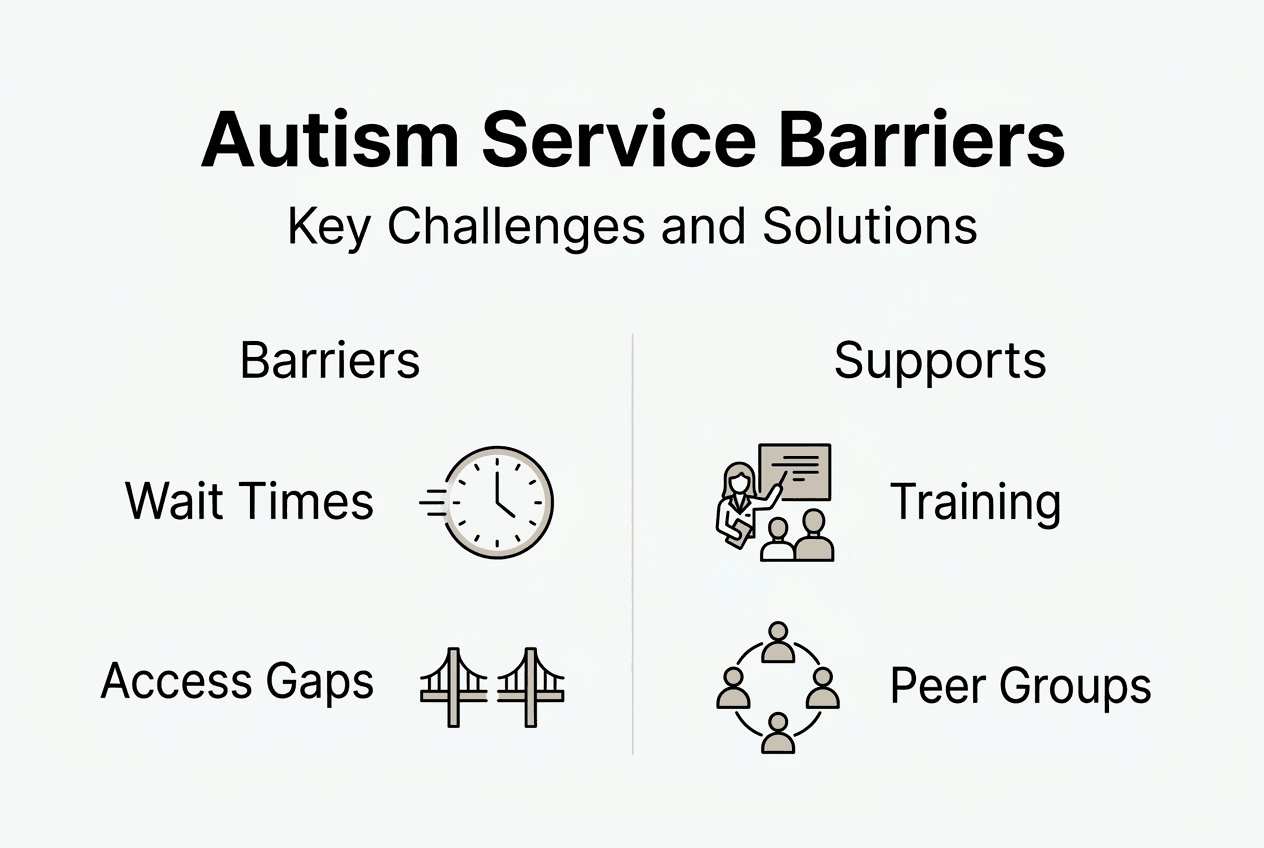
| Barrier Type | Common Examples | Mitigation Strategies |
|---|---|---|
| Geographic | Limited specialists in rural areas | Telehealth services, regional centers, travel planning |
| Financial | Insurance coverage gaps | State programs, sliding scale fees, nonprofit support |
| Systemic | Long evaluation wait times | Multiple referrals, private evaluations, advocacy |
| Knowledge | Provider unfamiliarity with autism | Specialist directories, second opinions, education |
Reducing evaluation delays requires proactive approaches. Submit referrals to multiple providers simultaneously rather than waiting for responses sequentially. Consider private evaluations if your insurance covers them or if you can afford out-of-pocket costs, as private providers often have shorter wait times than public clinics. Some families pursue evaluations in neighboring regions or states where availability is better.
Parent training and support programs empower caregivers with behavior management and communication strategies. These programs teach evidence-based techniques for addressing challenging behaviors, promoting skill development, and creating supportive home environments. Training reduces parental stress, improves family quality of life, and enhances the effectiveness of professional interventions by ensuring consistency across settings.
Find parent training through:
- Hospital-based autism centers offering family education programs
- Community organizations providing workshops and support groups
- Online platforms delivering virtual training modules
- School districts offering parent education as related services
Healthcare access barriers include limited autism-specific knowledge among providers and communication difficulties during medical appointments. Many healthcare professionals receive minimal autism training, leading to misunderstandings about sensory sensitivities, communication differences, and behavioral presentations. Preparing providers before appointments improves care quality and reduces stress for your child.
Communicate effectively with healthcare providers by:
- Sending a brief information sheet about your child’s communication style and sensory needs before appointments
- Requesting longer appointment times to accommodate processing differences
- Bringing comfort items or preferred activities to reduce anxiety
- Asking providers to explain procedures in advance using visual supports
Specialized services like ear care for complex medical needs demonstrate how healthcare can be adapted to support autistic individuals more effectively. These approaches recognize that standard protocols may need modification to accommodate sensory differences and communication preferences.
Pro Tip: Connect with local or online parent support groups where caregivers share experiences, recommend providers, and offer practical advice based on firsthand knowledge. These communities provide emotional support during challenging times and serve as valuable sources of information about navigating local service systems. Experienced parents often know which providers have shorter wait times, which schools implement IEPs effectively, and which strategies work best for specific challenges.
The Center for Autism Support and Training offers comprehensive resources for families facing barriers to service access, providing both direct support and connections to additional community resources.
Explore trusted autism support services
Navigating autism services becomes easier when you have access to reliable, specialized providers who understand your child’s unique needs. Our directory connects you with experienced professionals offering evidence-based therapies including ABA therapy, occupational therapy, speech therapy, and comprehensive developmental support. Each listing provides detailed information about provider credentials, service offerings, and contact details to help you make informed decisions.
Explore options like Autism Therapy Services for comprehensive therapeutic approaches, The Missing Piece ABA Therapy for behavior-focused interventions, or the Center for Autism Support and Training for family education and guidance. These trusted providers bring specialized expertise to support your child’s development and empower your family with practical strategies. Contact providers directly through our platform to discuss your specific needs and begin building the support team your child deserves.
What is the typical wait time for an autism evaluation?
Wait times for autism evaluations vary significantly by location and provider type. Recent data shows median wait times ranged between 264 and 357 days between April and December 2024, with some regions experiencing even longer delays. Rural areas typically face extended wait times due to limited specialist availability, while urban centers may have more providers but higher demand. Private evaluations often have shorter wait times than publicly funded clinics, though they require insurance coverage or out-of-pocket payment. Submitting referrals to multiple providers simultaneously and considering telehealth options can help reduce overall wait times.
How can I get training to better support my child with autism?
Parent training programs improve knowledge, coping skills, and reduce stress while teaching evidence-based strategies for supporting your child’s development. Many autism centers, hospitals, and community organizations offer structured training covering behavior management, communication techniques, and daily living skills. Check with your child’s school district, as some offer parent education as a related service within special education programs. Online platforms provide virtual training modules that allow you to learn at your own pace. The Center for Autism Support and Training offers comprehensive family education programs designed specifically for parents and caregivers navigating autism support.
What should I expect during the transition to special education services?
At age three, children move to public school with an Individualized Education Program (IEP) that outlines specialized instruction and related services. The transition process begins with school district evaluations to determine eligibility and appropriate supports. You’ll participate in IEP meetings where a team including teachers, specialists, and administrators develops goals and services tailored to your child’s needs. Services may include specialized instruction, speech therapy, occupational therapy, behavioral support, and classroom accommodations. Prepare by reviewing evaluation reports, identifying your priorities, and documenting your child’s strengths and challenges. The Center for Children with Special Needs & Autism provides guidance on navigating school systems and advocating effectively during this transition.
How can I overcome barriers to accessing autism healthcare?
Healthcare access barriers include provider knowledge gaps about autism and sensory issues that complicate medical appointments. Prepare providers in advance by sending brief information about your child’s communication style, sensory sensitivities, and behavioral needs. Request extended appointment times to accommodate processing differences and reduce rushed interactions. Bring comfort items, visual schedules, or preferred activities to help your child feel more secure during visits. Seek providers with autism-specific training or experience when possible. Specialized services like ear care for complex medical needs demonstrate how standard healthcare procedures can be adapted to better serve autistic individuals through sensory accommodations and communication modifications.