


Set up an effective parent-teacher autism meeting by preparing a one-page “All About Me” profile, bringing objective progress data, and agreeing on 1–3 measurable goals with a clear follow-up plan. That combination, done consistently, produces better IEP outcomes than any amount of general conversation.
Under the Individuals with Disabilities Education Act (IDEA), your child is entitled to a free appropriate public education, and you are a full, equal member of the IEP team. You are never required to sign an IEP during the meeting. Take it home, review it, request changes, or attach a written disagreement before signing.
Before the meeting, run through this checklist:
- Schedule a quiet, private space (or request a remote option for sensory or logistical needs)
- Invite the right staff: classroom teacher, special educator, case manager, and BCBA if behavioral goals are on the table
- Gather two or three short data examples: a progress chart, a work sample, or a behavior log
- Write down your top 1–3 questions or concerns
- Draft a brief follow-up plan so you leave with agreed next steps, not just good intentions
Table of Contents
- How should you prepare for an autism parent-teacher meeting?
- What should you say and do during the meeting?
- How do you follow up after an autism parent-teacher meeting?
- What questions and scripts actually work in these meetings?
- What are your rights under IDEA, and what data should you bring?
- Key Takeaways
- What most parents underestimate about these meetings
- Find local autism support providers through Autismdoctorsearch
- Useful sources and next steps
How should you prepare for an autism parent-teacher meeting?
Preparation is where most of the meeting’s value gets created or lost. Parents who arrive with organized, specific information consistently get clearer, more enforceable goals than those who rely on memory and general impressions.

Gather the right documents
Pull together recent progress-monitoring reports, your child’s current IEP or 504 plan, two or three representative work samples, behavioral incident logs from school and home, and any independent evaluations from an occupational therapist, speech-language pathologist, or neuropsychologist. You do not need to bring everything. Two well-labeled charts and one work sample carry more weight in a 30-minute meeting than a thick binder.
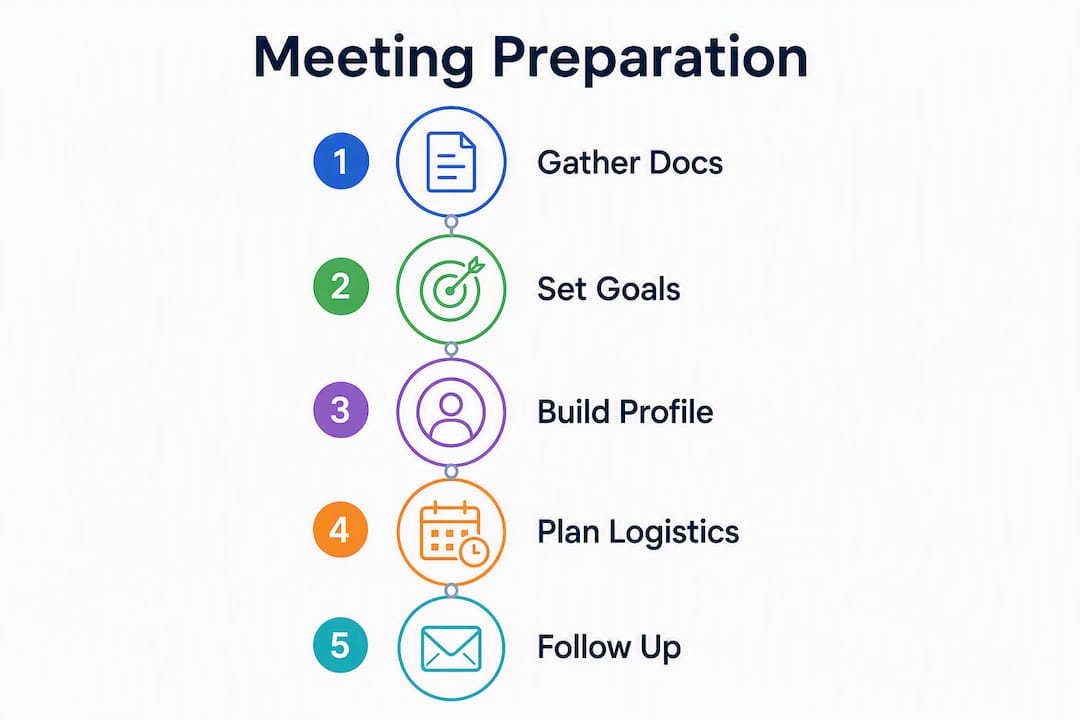
Set clear meeting goals
Pick 1–3 priorities before you walk in. Academic progress, a specific behavior, or a new accommodation request each deserves its own focused conversation. For each priority, decide in advance what a measurable outcome looks like. “I want reading support” is a starting point. “I want a goal that tracks oral reading fluency in words per minute, measured weekly by the reading specialist” is something a team can actually write into an IEP.
Build your “All About Me” one-pager
Teachers are far more likely to read and use a concise one-page profile than a lengthy report. Keep it to one page, use plain language, and attach one or two short data charts or work samples behind it. Here is a simple template:
| Field | What to include |
|---|---|
| Strengths and interests | Specific topics, activities, or skills your child excels at |
| Communication style | AAC device, key phrases, gestures, or preferred modality |
| Sensory triggers | Sounds, textures, lighting, or transitions that cause dysregulation |
| Effective reinforcers | What motivates your child (specific items, activities, praise styles) |
| Calming strategies | What helps your child recover when dysregulated |
| Successful routines | Structures at home that transfer well to school |
| Safety notes | Any medical, elopement, or behavioral safety considerations |
Logistics that matter
Many schools use scheduling tools like MyConferenceTime to coordinate conference slots. When you book, request a quiet, private room or a remote video option if your child’s sensory needs make the school environment difficult for you to think clearly in. Ask for enough time to cover your priorities plus a Q&A window. Thirty minutes is often too short for a meaningful IEP-related conversation; a longer time is more realistic.
Pro Tip: Keep the “All About Me” sheet to one page and attach no more than two data charts. Teachers read short, action-focused pages. A document that takes five minutes to scan gets used; one that takes twenty minutes gets filed.
What should you say and do during the meeting?
Structure matters as much as content. A meeting that starts with a complaint and ends with unresolved tension rarely produces the specific, measurable commitments your child needs.

Open with strengths
Starting with a positive observation about your child sets a collaborative tone and reduces defensiveness from the outset. Something brief works: “I want to start by saying how much Marcus has been enjoying the morning circle routine. His teacher mentioned he’s been more engaged, and we’ve seen that at home too.” That one sentence shifts the room from evaluation mode to partnership mode.
Use evidence, not emotion
Present your data first, then your concern. “His incident log shows three meltdowns during unstructured transitions last month. At home, a five-minute visual schedule before transitions has cut that to near zero. Can we try something similar here?” That framing is harder to dismiss than “he seems really stressed at school.”
Phrases that keep the meeting productive
- Opening: “I’m here because I want us to leave with a shared plan, not just a conversation.”
- Raising a concern: “The data I’m seeing at home suggests X. What are you observing here?”
- Requesting an accommodation: “Can we add a movement break after 30 minutes of desk work and track whether it reduces off-task behavior?”
- Defusing tension: “I hear that resources are limited. What’s the smallest version of this we could try and measure?”
- Closing a goal: “Before we move on, can we agree on who tracks this, how often, and what we’ll do if the target isn’t met?”
The partnership reframe
Reframe advocacy as asking for help rather than demanding compliance. “How can we support what you’re already doing in the classroom?” shifts the dynamic entirely. Asking how you can support the teacher’s efforts typically produces more student-centered outcomes than a confrontational stance, even when you have every right to push harder.
Pro Tip: For every proposed goal, ask “How will we know this is working?” That single question forces the team to attach a measurement method, a frequency, and a timeline before moving on.
How do you follow up after an autism parent-teacher meeting?
The meeting is only as good as what happens in the 48 hours after it. Agreements made verbally and never documented tend to fade.
Send a follow-up email within 48 hours. Keep it short: summarize the agreed actions, name who is responsible for each, and state the deadline. Attach the one-page profile and any data you discussed. A clear subject line like “Follow-up: [Child’s name] meeting on [date] — agreed next steps” creates a trackable paper trail and signals that you are organized and serious.
For ongoing goals, request a simple progress metric and a data-collection schedule. Short, specific communication and templates reduce misunderstandings and keep everyone aligned between formal meetings. A weekly brief note from the teacher, a monthly data review, and a scheduled next meeting date are a reasonable baseline.
If the meeting produced IEP changes, remember: you are not required to sign immediately. Take the document home, read it carefully, and request amendments in writing if anything is missing or inaccurate. Log every communication, including emails and phone calls, with dates.
Post-meeting timeline:
- Within 48 hours: Send follow-up email with agreed actions and responsible parties
- Week 1: Confirm data-collection method is in place with the teacher
- Monthly: Review progress data; flag concerns early rather than waiting for the next formal meeting
- Before next review: Compile new data and update the “All About Me” sheet if your child’s needs have changed
What questions and scripts actually work in these meetings?
Knowing what to ask is half the battle. Vague questions get vague answers. Specific questions get specific commitments.
Questions by goal type
Academic goals:
- “What curriculum-based measurement are you using to track reading progress, and how often is it collected?”
- “If he’s not hitting the benchmark by [date], what’s the next step?”
Behavior goals:
- “How is the frequency of [behavior] being recorded? Who collects the data and when?”
- “What’s the replacement behavior we’re teaching, and how will we measure it?”
Sensory and health:
- “Is there a sensory break schedule in place? Can we add one and track whether it reduces dysregulation?”
- “Who does [child’s name] go to when she’s overwhelmed, and what’s the protocol?”
Social skills:
- “Is there a structured social skills group, and how is progress measured?”
- “What does success look like for this goal at the end of the semester?”
Communication:
- “How is AAC use being tracked in the classroom? Is the device accessible throughout the day?”
Short scripts for common scenarios
- Requesting accommodations: “Based on what we’ve seen at home, extended time on written tasks has made a real difference. Can we formalize that in the IEP and note who monitors it?”
- Asking for data: “Can you share the progress monitoring data from the last four weeks so we can look at it together?”
- Addressing a safety concern: “I want to flag an elopement incident from last week. Can we schedule a separate call this week to go through the safety plan in detail?” For sensitive concerns, call or request an in-person conversation rather than putting details in a written note.
What not to do
- Do not lecture the teacher for the first ten minutes. You will lose the room.
- Do not make requests so vague they cannot be measured. “More support” is not a goal.
- Do not put sensitive behavioral concerns in a home-school notebook that others may read.
- Do not agree to a goal you do not understand. Ask for plain-language clarification before moving on.
Rehearse two or three of your key questions aloud before the meeting. Hearing yourself say them reduces the chance you will freeze or go blank when the conversation gets difficult.
What are your rights under IDEA, and what data should you bring?
Your legal standing in these meetings is stronger than most parents realize. Under IDEA, you are an equal member of the IEP team. You have the right to review all educational records, request an independent educational evaluation, and propose changes to the IEP. You can also bring objective data to support your requests, and the team is required to consider it.
For a deeper look at how the IEP functions within your child’s school supports, the guide on why an IEP matters for autism covers the structure and legal framework in plain language.
What data to bring and how to use it
| Data type | What it shows | How to use it in the meeting |
|---|---|---|
| Progress monitoring reports | Academic growth over time (e.g., oral reading fluency) | Compare to IEP benchmarks; flag gaps |
| Behavior incident logs | Frequency, duration, and triggers of specific behaviors | Propose replacement behaviors and measurement methods |
| Work samples | Quality and consistency of academic output | Illustrate discrepancy between ability and performance |
| Independent evaluations (OT, SLP, neuropsych) | Functional skills, sensory profile, cognitive profile | Support requests for specific services or accommodations |
| Home data charts | Behavior or skill patterns outside school | Show what works at home; propose school-based trials |
Parents who bring short progress charts and ask for specific measurement — who collects the data, how often, and by what method — consistently get clearer, more enforceable goals than those who rely on general impressions.
Pro Tip: Organize your data into one concise packet: a cover page with your top three priorities, two or three labeled charts, and the one-page profile. Teachers respond to short, well-labeled materials. A five-page packet with a clear cover page gets read; a 20-page binder gets set aside.
Key Takeaways
Effective autism parent-teacher meetings require a one-page child profile, objective progress data, and measurable goals with a documented follow-up plan.
| Point | Details |
|---|---|
| Prepare a one-page profile | An “All About Me” sheet covering strengths, sensory triggers, and communication style gets used; long reports do not. |
| Bring objective data | Progress charts, behavior logs, and work samples convert vague concerns into specific, enforceable IEP goals. |
| Know your IDEA rights | You are an equal IEP team member and are never required to sign an IEP at the meeting. |
| Request measurable goals | Ask “How will we know this is working?” for every goal to lock in a measurement method and timeline. |
| Autismdoctorsearch | Use the Autismdoctorsearch directory to find local ABA, OT, SLP, and special education providers who can support your child’s school plan. |
What most parents underestimate about these meetings
The conventional advice for autism parent-teacher meetings focuses almost entirely on what to bring and what to say. That is useful, but it misses the deeper dynamic: most of these meetings fail not because parents lack information, but because the framing is adversarial from the first sentence.
Teachers are not the obstacle. They are usually overextended, under-resourced, and genuinely trying. When a parent walks in with a thick binder and a list of demands, the teacher’s first instinct is self-protection, not collaboration. The meeting becomes a negotiation rather than a planning session.
The parents who consistently get the best outcomes are the ones who treat the teacher as a partner with constraints, not an adversary with excuses. That means asking “What would make it easier for you to implement this?” as often as “Can you add this to the IEP?” It means offering to share the one or two strategies from home that actually work, in one or two sentences, and asking which ones the teacher wants to try first. It means leaving the teacher feeling like the meeting was worth their time, not like they survived an audit.
Data still matters. Rights still matter. But the parents who use both as tools for collaboration, rather than weapons for compliance, tend to leave with agreements that actually get implemented.
Find local autism support providers through Autismdoctorsearch
After a productive meeting, the next step is often connecting your child with the right outside providers, whether that is an ABA therapist to reinforce school goals at home, an occupational therapist to address sensory needs, or a speech-language pathologist to support communication. Finding vetted, local providers takes time most families do not have.
Autismdoctorsearch is a free, searchable directory of autism-specific resources across the U.S., covering ABA therapy, occupational therapy, speech therapy, special education programs, mental health services, and more. Browse autism therapy services near you to find providers who can work alongside your child’s school team. Always verify credentials, insurance acceptance, and fit directly with any provider before committing.
Useful sources and next steps
- IDEA guidance (U.S. Department of Education) — official source for IEP rights, team membership rules, and parent procedural safeguards
- Understood.org: Questions to ask before and during your child’s IEP meeting — printable question lists organized by meeting stage
- Goldman School: An illustrated guide to IEP advocacy — practical guide on converting vague goals into measurable IEP language
- A Day in Our Shoes: All About Me printable worksheets — free, downloadable one-page profile templates
- Inclusive ABA: How to talk to your autistic child’s teacher — practitioner guidance on building home-school communication
- Autismdoctorsearch: How to talk to teachers about autism — practical scripts and communication strategies for ongoing teacher outreach
Next steps you can take today:
- Email your child’s teacher to request a meeting and ask for a quiet, private space
- Draft your “All About Me” one-pager using the template above
- Pull two short data examples (a progress chart or behavior log) to bring with you
- Search the Autismdoctorsearch directory for local providers who can support your child’s school plan
This article provides general information about U.S. special education processes and is not legal advice. Confirm current IEP rights and procedures with your school district or a qualified special education advocate.


