


Start preparing today: request draft documents in writing, pack key records and a sensory toolkit, and set one to three clear priorities before any autism-related appointment, IEP meeting, or diagnostic evaluation. CDC ADDM Network data estimates about 1 in 31 children in the U.S. are identified with autism, which means millions of families are navigating exactly these meetings every year. Under the Individuals with Disabilities Education Act (IDEA), you are a full member of your child’s IEP team with the right to request records, review evaluations, and refuse to sign anything on the spot. Autismdoctorsearch can help you locate local therapy providers, diagnostic clinics, and occupational therapists when you need supporting evaluations or follow-up services.
Your immediate action list:
- Email the school or clinic today requesting draft IEP documents or evaluation reports.
- Print or copy the current IEP, 504 plan, recent progress reports, and any private evaluations.
- Write down your top one to three priorities for the meeting before you walk in.
- Confirm a support person (partner, advocate, or trusted friend) can attend with you.
- Prepare a one-page parent input statement summarizing your child’s current strengths and challenges.
Table of Contents
- What should you bring to every autism appointment?
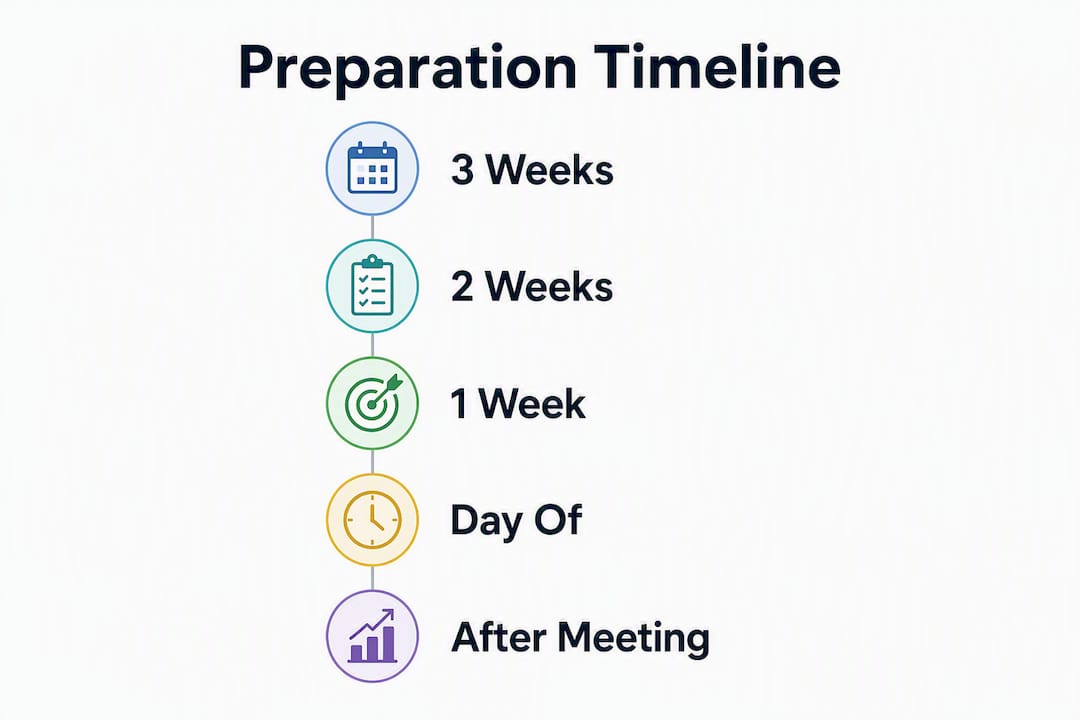
- How to use the 3-2-1 timeline to prepare for your meeting
- What should you bring based on the type of meeting?
- How do you communicate clearly and document decisions during the meeting?
- What are your legal rights under IDEA at these meetings?
- Day-of strategies for your child and for yourself
- What should you do after the meeting?
- Key Takeaways
- The part most parents underestimate about these meetings
- Finding local autism providers after your meeting
- Useful sources and where to verify the details
What should you bring to every autism appointment?
A complete meeting bag covers three categories: documents, people, and sensory items. Missing any one of them costs you either credibility or your child’s cooperation.
Documents to bring:
- Current IEP or 504 plan (the signed version you received before this meeting)
- Recent progress monitoring reports and teacher notes
- Private evaluations: neuropsychological, speech-language, or occupational therapy reports
- Medical records and a current medication list
- Incident logs or behavior data you have collected at home
- A concise written parent input statement (one to two pages)
Who to bring:
- A partner, family member, or trusted friend to take notes while you speak
- An independent advocate or BCBA if the meeting involves disputed services
- Your child’s outside therapist when their clinical data directly supports a request
Sensory toolkit for your child:
Pack items your child already knows and likes. For long appointments, noise-canceling headphones, comfortable clothing, preferred fidgets, a visual timer, and familiar snacks all reduce dysregulation during testing or extended meetings.
For virtual meetings:
- Charge your device the night before and test your camera and microphone
- Have all documents saved as PDFs and open in a second window
- Use a wired internet connection when possible; a dropped call mid-meeting loses momentum fast
Pro Tip: Keep a dedicated folder, physical or digital, that holds every document from the list above. Updating it after each meeting takes five minutes and saves hours before the next one. The autism documentation management guide on Autismdoctorsearch walks through exactly how to organize these records.
How to use the 3-2-1 timeline to prepare for your meeting

The 3-2-1 method is the most structured approach to IEP preparation: gather documents three weeks out, build your position two weeks out, and finalize everything one week out.
Three weeks before:
- Send a written request (email is fine) for the draft IEP, evaluation reports, and all supporting data the team will reference.
- Pull together previous records: prior IEPs, outside evaluations, therapy reports, and medical summaries.
- Note which goals were met, partially met, or not addressed at all.
Two weeks before:
- Narrow your focus to one to three priorities. Trying to address everything usually means nothing gets resolved.
- Draft your parent input statement. Specific, recent examples of daily challenges are more useful to clinicians than general descriptions. Document routines, triggers, and social situations from the last six months.
- Write out proposed goal language or specific service requests so you can hand the team something concrete.
One week before:
- Finalize your question list and practice your opening statement aloud.
- Print two copies of every document: one for you, one to offer the team.
- Confirm all attendees and the meeting format (in-person or virtual).
Sample email to request documents:
What should you bring based on the type of meeting?
Preparation shifts depending on whether you are walking into an IEP review, a diagnostic evaluation, or a therapy intake. The documents and expectations differ enough that a single generic checklist leaves gaps.
| Meeting type | Top documents to bring | Typical format |
|---|---|---|
| IEP/team meeting | Draft IEP, progress reports, incident logs, parent input statement, proposed goals | — |
| Diagnostic evaluation | Developmental history, medical records, school reports, teacher questionnaires, therapy reports | Multi-hour or multi-session; clinician-led assessment |
| Therapy intake | Referral forms, insurance info, recent assessments, current programs, home strategy examples | — |
For a diagnostic evaluation, bring a rough chronological timeline of developmental milestones. Clinicians value collateral history from parents, and a handwritten timeline often captures details a polished report misses. Diagnostic evaluations frequently take multiple hours or sessions, so plan for breaks and pack energy-supporting snacks.
For a therapy intake, short written examples of strategies that already work at home give the therapist a faster start. “He responds well to a two-minute warning before transitions” is more useful than “he struggles with change.”
How do you communicate clearly and document decisions during the meeting?
Open with a brief, child-centered statement that sets your priorities without putting the team on the defensive. Something like: “My main focus today is [specific goal]. I want to make sure we leave with a clear plan and someone responsible for each step.”
Questions that get specific answers:
- “What is the baseline data for this goal, and how will progress be measured?”
- “Who on the team is responsible for delivering this service, and how often?”
- “Can you explain what that term means in plain language?”
When the team proposes something you are unsure about, ask for Prior Written Notice before agreeing. PWN is a formal document explaining why the district is proposing or refusing a change. Requesting it creates a paper trail and gives you time to consult an advocate.
Bring a support person whose only job is to take notes. When you are emotionally invested in the outcome, it is nearly impossible to listen, respond, and write simultaneously. Clarity and documentation produce better outcomes than volume or emotion.
If an outside therapist or BCBA has data relevant to a goal, ask them to attend or submit a brief written summary. Their data carries clinical weight the team cannot easily dismiss.
What are your legal rights under IDEA at these meetings?
You have more standing at these meetings than most school teams will volunteer. Here is what the law actually gives you.
- Full team membership: IDEA requires parents to be included as full IEP team members, not observers.
- Document access: Request draft IEPs and evaluations at least five business days before the meeting so you have time to review them. Put the request in writing.
- No obligation to sign: You are not required to sign the IEP at the meeting. Take it home, review it, and consult an advocate if needed.
- Independent Educational Evaluation (IEE): If you disagree with the district’s evaluation, you can request an IEE at public expense.
- Prior Written Notice: Any time the district denies a request or proposes a change, ask for PWN in writing. It documents their rationale and your options.
- Recording: Recording rules vary by state. Some states allow one-party consent (only you need to agree); others require all-party consent. Check your state’s law before recording and, if required, give written notice in advance.
Day-of strategies for your child and for yourself
Explain the visit to your child the night before in simple, honest terms. “We are going to meet someone who wants to learn how your brain works” is accurate, neutral, and far less anxiety-producing than vague reassurances. For younger children, a brief practice visit to the building or a visual schedule of the day can help.
Stick entirely to familiar sensory items. Avoid introducing new or special snacks or comfort objects on evaluation days. Clinicians need to observe your child’s typical behavior, and a novel treat can shift their mood or attention in ways that affect the assessment. Sensory-friendly daily routines in the days leading up to the appointment also help keep your child regulated going in.
Pro Tip: Schedule buffer time after the appointment. A long evaluation or a tense IEP meeting leaves both you and your child depleted. A low-demand activity afterward, a walk, a favorite show, or a quiet snack, helps everyone decompress before the rest of the day resumes.
For yourself: if you feel overwhelmed during the meeting, it is completely acceptable to say “I need a moment to think about that” before responding. You do not owe the team an immediate answer on anything.
What should you do after the meeting?
Follow-up is where most of the work gets lost. A productive meeting with no written record is just a conversation.
-
Within 24–48 hours: Send a brief email summarizing what was agreed, who is responsible for each action, and any items left open.
-
Request any unsigned documents: If you did not sign the IEP, confirm in writing that you are taking it home to review and state a date by which you will respond.
-
Build your records file: Store signed and unsigned drafts, all letters, PWN documents, and progress-monitoring data together. The Autismdoctorsearch documentation guide covers how to organize these for future disputes or annual reviews.
-
Monitor implementation in the first 30 days: Check whether services are starting on schedule. If they are not, send a written inquiry and request a follow-up meeting rather than waiting for the next annual review.
If you disagree with an evaluation, request an IEE and schedule a follow-up meeting. That combination creates a legal record and gives you time to bring in outside expertise before the district’s position hardens.
Key Takeaways
Preparing for an autism appointment or IEP meeting requires the 3-2-1 timeline, a complete document and sensory kit, and written follow-up within 48 hours to convert decisions into delivered services.
| Point | Details |
|---|---|
| Use the 3-2-1 timeline | Request documents 3 weeks out, set priorities 2 weeks out, finalize prep 1 week out. |
| Bring documents and a sensory kit | Pack the current IEP, evaluations, medication list, and familiar sensory items for your child. |
| Know your IDEA rights | You can request records, refuse to sign at the meeting, and ask for Prior Written Notice on any denial. |
| Follow up in writing | Send a summary email within 48 hours and track service delivery in the first 30 days. |
| Use Autismdoctorsearch | Find local therapy providers, diagnostic clinics, and OT services to support post-meeting next steps. |
The part most parents underestimate about these meetings
The families who get the best outcomes at IEP and clinical meetings are not the loudest ones. They are the most prepared. A parent who walks in with a one-page input statement, three specific questions, and a support person taking notes has more practical influence than one who arrives with a long list of grievances and no documentation.
What often gets missed is that your home observations are primary clinical data. A clinician who has never seen your child at 7 AM on a school morning, or during a routine change, or after a sleepless night, is working from a narrow sample. The specific, recent examples you bring, written down, dated, and concrete, fill gaps that no standardized assessment can. That is not a soft contribution. It is often the most diagnostically useful information in the room.
Bringing an advocate or outside therapist is not an act of aggression. When done with a collaborative framing, it signals that you are serious about getting the right supports, not that you are preparing for a fight. Most experienced school teams respect that distinction.
Finding local autism providers after your meeting
After a meeting, you often leave with a list of recommended services and no clear path to finding them. Autismdoctorsearch makes that next step faster. The directory covers autism therapy services, ABA providers, occupational therapists, diagnostic clinics, and special education resources across the U.S., all searchable by location. If the team recommended an independent evaluation or a new therapy provider, you can use the directory to identify local options who can supply supporting assessments or attend follow-up meetings. Search by service type, read provider details, and contact the ones that fit your child’s needs directly.
Useful sources and where to verify the details
- CDC Autism Data and Research — prevalence estimates and surveillance methodology
- U.S. Department of Education, IDEA — federal parental rights, IEP procedures, and Prior Written Notice requirements
- Wrightslaw — state-by-state recording consent rules and special education legal resources
- Autismdoctorsearch, Documentation Management Guide — organizing records for appointments and IEP meetings
- Autismdoctorsearch, IEP and Special Education Tips — consent, documentation, and advocacy during school-based meetings
This article provides general information for educational purposes. It is not legal or medical advice. Confirm current federal and state rules with a qualified special education attorney, advocate, or your state’s Parent Training and Information Center.


