

TL;DR:
- Home safety for autistic children involves layered physical barriers, behavioral training, and regular assessments. Preventing wandering, water hazards, and furniture tip-overs requires specific, reinforced measures tailored to each child’s triggers. Ongoing planning and professional support are essential for adapting safety strategies as children develop.
Autism home safety steps are specific, structured strategies caregivers use to reduce injury risk and create a secure environment for children with autism. Approximately 50% of children with autism will attempt to wander or elope from home at some point. That statistic alone makes proactive home safety planning non-negotiable. Drowning is one of the leading causes of accidental death among autistic individuals, which means water hazards require layered protections, not just a single lock. Autismdoctorsearch connects families with the therapists, ABA providers, and occupational therapists who can help put these safety measures into practice.
What are the key autism home safety steps for wandering prevention?
Wandering, also called elopement, is the most documented safety risk for autistic children. Wandering now carries a specific diagnostic code in autism assessments, which means medical necessity for preventive measures like locks and tracking devices can be formally recognized. That recognition matters because it opens the door to insurance coverage for safety equipment.
Standard childproof locks are not enough. High-level security hardware such as double-keyed deadbolts and commercial-grade locks is recommended for children who persistently problem-solve their way past standard barriers. One critical caveat: any lock system must comply with fire safety codes so exits remain accessible during emergencies.
Door and window alarms add a second layer of protection. These devices alert caregivers the moment a door or window opens, giving you time to respond before a child reaches the street or a body of water. Perimeter fencing with self-latching, locked gates provides a physical barrier that slows elopement even if an interior door is breached.
Visual cues also reduce wandering attempts. A simple stop sign at eye level on the front door, or a visual schedule showing the day’s routine, can redirect a child before the impulse to leave becomes action. Wandering triggers differ individually, so understanding what drives your child toward the door, whether anxiety, sensory overload, or a fixation on something outside, shapes which prevention strategy works best.
- Install double-keyed deadbolts or commercial-grade locks on all exterior doors
- Add door and window alarms on every exit point, including garage doors
- Use perimeter fencing with a self-latching, keyed gate
- Place visual stop signs or boundary cues at child eye level on doors
- Identify your child’s specific wandering triggers and address them behaviorally
Pro Tip: GPS tracking devices are useful, but many are not waterproofed, which limits their effectiveness if a child reaches a pool or lake. Confirm waterproof ratings before purchasing any wearable tracker.
How to safeguard water hazards and other common household dangers
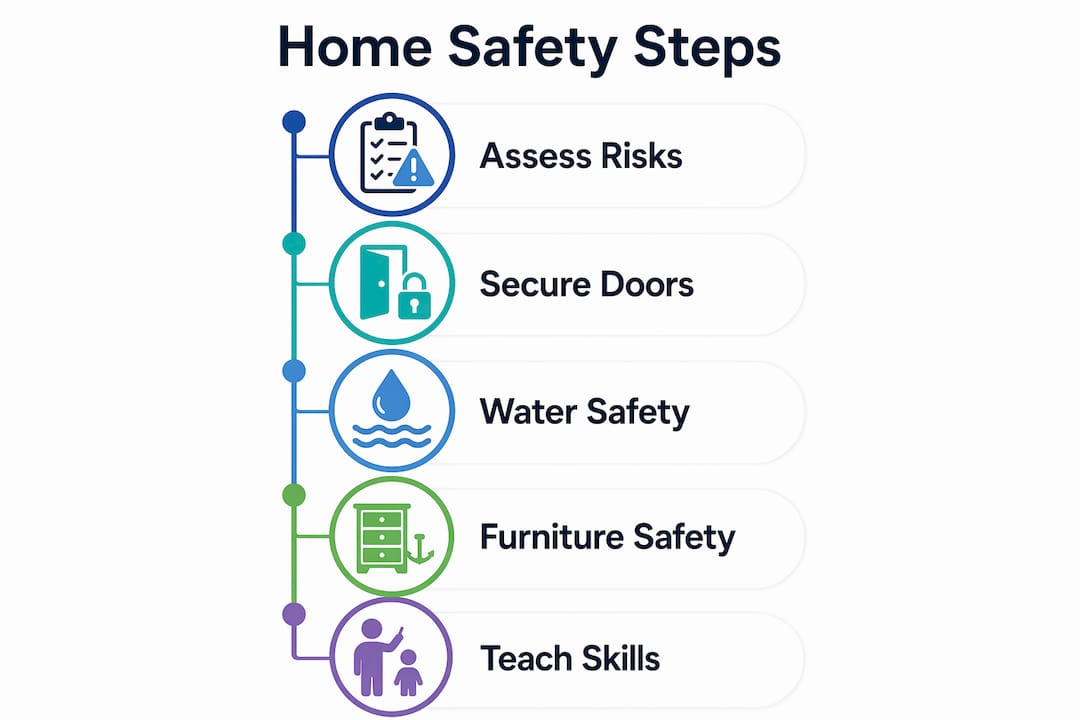
Drowning is one of the leading causes of accidental death among individuals with autism. A single layer of protection, such as a pool fence alone, is not sufficient. Layered protection means combining rigid pool covers, four-sided fencing, gate alarms, and keyed locks so that a child must bypass multiple barriers to reach the water.
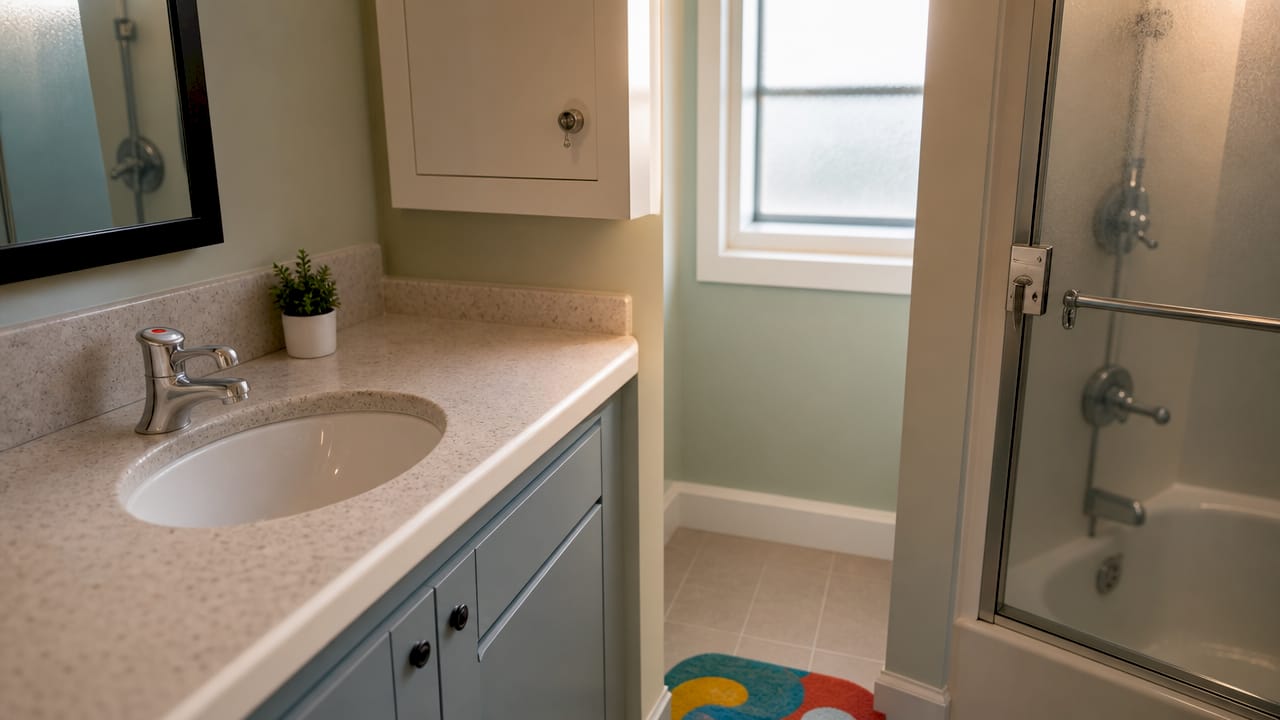
Bathroom safety is equally critical and often underestimated. Hair dryers, curling irons, and similar appliances pose real hazards because sensory fixations can draw children toward electrical items they find visually or texturally interesting. Store these items in locked cabinets or behind doors with keyed locks, not just high shelves a child can climb.
Hot water scalding is another bathroom risk. Set your water heater to 120°F or below to reduce burn risk from faucets. Anti-scald faucet covers add a physical barrier that prevents a child from turning the hot water handle fully.
Chemical and medication storage requires the same layered thinking. Cleaning products, medications, and vitamins should be stored in locked cabinets placed outside a child’s daily reach. Standard cabinet latches are often defeated quickly by persistent children.
Layered water and household safety checklist:
- Install four-sided pool fencing with a self-latching, keyed gate
- Add a rigid pool cover rated for child weight
- Place a pool alarm that sounds when the water surface is disturbed
- Lock bathroom electrical appliances in a dedicated cabinet
- Set the water heater to 120°F or below
- Store all medications and cleaning products in locked cabinets
Key hazard categories to address:
- Pool and open water access
- Bathroom electrical appliances
- Hot water faucets and scalding risk
- Medications, vitamins, and cleaning chemicals
- Unsecured sharp kitchen tools
What steps can be taken to prevent injury from furniture and household layout?
Furniture tipping and falls are underreported injury risks in homes with autistic children. Anchoring all tall furniture to walls with anti-tip brackets and moving furniture away from windows reduces both fall and tip-over risk. A bookshelf or dresser that seems stable under normal use can topple when a child climbs it during a sensory-seeking moment.
Window safety is a specific concern caregivers often overlook. Window screens are designed to keep insects out, not to support a child’s weight. Relocating furniture away from windows removes the climbing path that leads to a screen. Window guards or stops that limit how far a window opens provide the actual physical protection.
Sharp furniture edges cause lacerations during falls or high-energy movement. Rubber or foam bumpers on coffee table corners, hearth edges, and low shelving protect children who run, spin, or fall frequently. These bumpers are inexpensive and take minutes to install.
| Furniture safety action | Why it matters |
|---|---|
| Anti-tip brackets on tall furniture | Prevents tip-overs during climbing or leaning |
| Move furniture away from windows | Removes climbing path to unprotected screens |
| Install window stops or guards | Limits window opening to a safe distance |
| Rubber bumpers on sharp edges | Reduces laceration risk during falls or movement |
| Clear floor clutter and cords | Reduces tripping and strangulation hazards |
Pro Tip: Walk through your home at your child’s eye level, literally crouch down, and look for hazards from their perspective. You will spot risks that are invisible from adult height.
How can caregivers teach safety skills and independence at home?
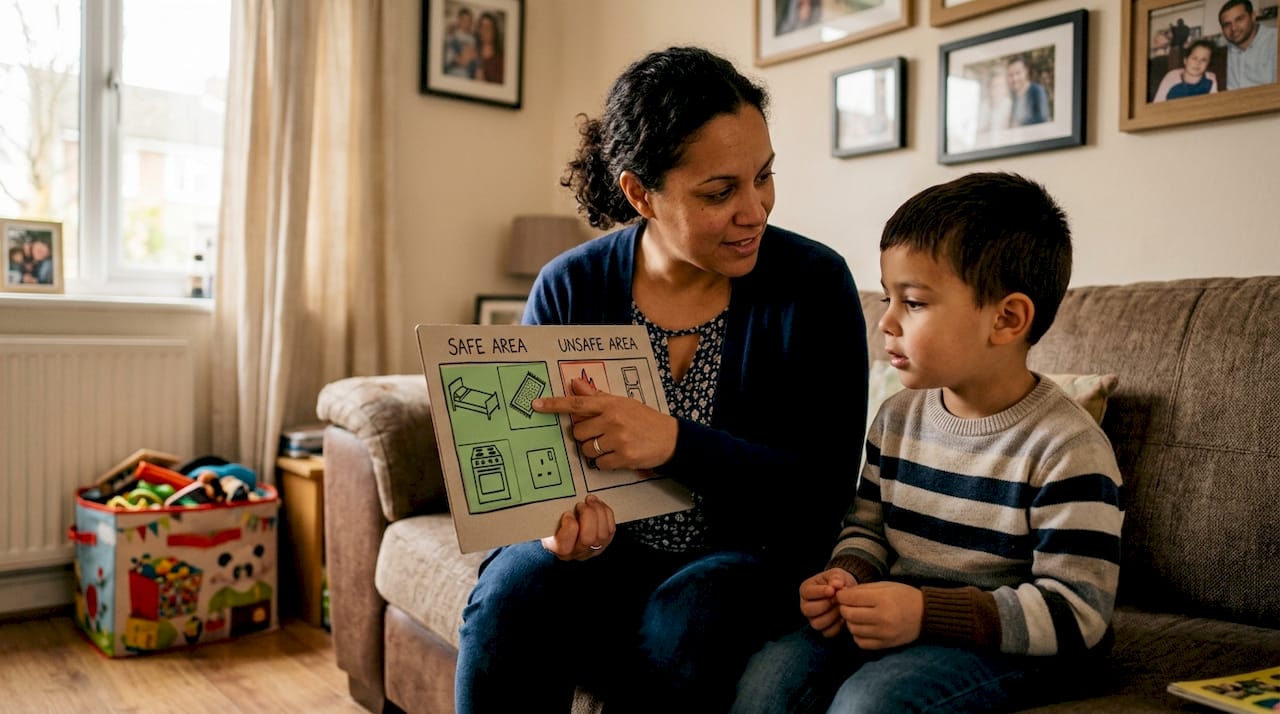
Teaching safety skills to a child with autism requires breaking each skill into small, concrete steps matched to the child’s current ability. Structured games, visual cue cards, and step-by-step task breakdowns improve independent safety behavior more reliably than verbal instruction alone. A child who cannot yet read can still follow a picture-based sequence showing what to do when the smoke alarm sounds.
Visual schedules and social stories are two of the most effective tools for this work. A social story walks a child through a safety scenario in simple, first-person language: “When I hear the alarm, I walk to the door with my caregiver.” Repeated exposure to the story builds a mental script the child can draw on during an actual event.
Practicing safety skills in natural home settings, such as the kitchen, front doorway, and sidewalk, produces better real-life results than practicing in a clinic. The environment itself becomes a cue. A child who has practiced stopping at the front door dozens of times in that exact spot is more likely to stop automatically.
Positive reinforcement accelerates skill retention. Pair each correct safety behavior with immediate, specific praise or a preferred reward. Avoid vague praise like “good job.” Instead, say “You stopped at the door. That was the right choice.” Specificity helps the child connect the reward to the exact behavior.
Collaboration with an ABA therapy provider strengthens home safety training. ABA therapists use evidence-based methods to assess a child’s current skill level, design a teaching sequence, and train caregivers to deliver consistent instruction. The special education strategies used in school settings can also be adapted for home safety practice.
Step-by-step independence training sequence:
- Identify one target safety skill, such as stopping at the front door
- Break it into two or three observable steps the child can perform
- Create a visual cue card or picture sequence for each step
- Practice the skill in the actual home location, not a simulated one
- Deliver immediate positive reinforcement after each correct step
- Increase complexity gradually as the child masters each step
Supporting tools and methods:
- Visual schedules posted at key locations (doors, bathroom, kitchen)
- Social stories written at the child’s comprehension level
- Role play with caregivers modeling the correct behavior
- Video modeling using recordings of the child or a peer performing the skill
- Consistent practice across all caregivers in the home
Key Takeaways
Effective autism home safety requires layered physical modifications, individualized behavioral strategies, and consistent skill-building practice across every caregiver in the home.
| Point | Details |
|---|---|
| Wandering prevention is the top priority | Install commercial-grade locks, door alarms, and perimeter fencing before other modifications. |
| Water hazards require layered protection | Combine pool fencing, rigid covers, gate alarms, and keyed locks for any water access point. |
| Furniture and layout changes reduce injury | Anchor tall furniture, install window stops, and add rubber bumpers on sharp edges. |
| Teach safety skills in natural settings | Practice at actual home locations to build real-life retention and independence. |
| Collaborate with ABA professionals | Therapists design structured, evidence-based safety skill programs tailored to each child. |
What I’ve learned from watching families get home safety wrong
Most caregivers I’ve observed make the same mistake: they treat home safety as a one-time project rather than an ongoing practice. They install the locks, add the pool fence, and consider the job done. Then their child figures out the lock within a week, or a new sensory fixation creates a hazard nobody anticipated.
The families who get this right treat safety planning the way good coaches treat game preparation. They reassess regularly. They watch for new behaviors and new fixations. They update their approach when the child changes, and children with autism change constantly as they grow and develop.
The second mistake is separating physical modifications from behavioral teaching. A lock keeps a child safe today. A taught skill keeps a child safe for life. Both are necessary, and neither replaces the other. Creating an autism-friendly environment at home is the foundation, but building your child’s own safety awareness is the long-term goal.
The third thing I’d push back on is the idea that safety planning is driven by fear. The caregivers who approach this work with the most confidence are the ones who have a written plan, know their child’s specific triggers, and have practiced emergency responses until they feel automatic. Preparation is the opposite of fear. It is the thing that makes fear unnecessary.
— Keith
Professional support that strengthens your home safety plan
Home safety modifications work best when they are paired with professional guidance tailored to your child’s specific profile. Autismdoctorsearch maintains a current directory of certified autism therapy services including ABA providers, occupational therapists, and behavioral health specialists who work directly with families on safety and independence goals. These professionals assess your child’s current skill level, identify the highest-priority risks in your home, and design a teaching plan that caregivers can implement consistently. The autism in children guide on Autismdoctorsearch also provides updated strategies for 2026 that complement the physical safety steps covered here.
FAQ
What percentage of autistic children are at risk for wandering?
Approximately 50% of children with autism will attempt to wander or elope from home at some point. This makes wandering prevention the single highest-priority home safety concern for most families.
Are standard childproof locks enough for autistic children?
Standard childproof locks are often insufficient. Double-keyed deadbolts and commercial-grade hardware are recommended for children who persistently attempt to defeat standard locks.
What is the most effective way to teach safety skills at home?
Breaking each skill into small steps and practicing in the actual home location produces the best results. Visual cue cards, role play, and positive reinforcement accelerate skill retention and real-life application.
How do I protect my child from water hazards at home?
Use layered protection: four-sided pool fencing, a rigid pool cover, a water disturbance alarm, and a keyed gate lock. Drowning is one of the leading causes of accidental death among individuals with autism, so no single barrier is adequate on its own.
Can GPS trackers replace physical home safety measures?
GPS trackers supplement safety measures but do not replace them. Many trackers are not waterproofed, which limits their usefulness in the water-related incidents that pose the greatest risk to autistic children.


