


Sensory integration is the neurological process by which the brain organizes and gives meaning to information arriving from seven sensory systems, then uses that organized input to produce appropriate behavioral and motor responses. The framework was conceptualized by Dr. A. Jean Ayres, Ph.D., in the 1970s and is now formally known as Ayres Sensory Integration (ASI). Ayres was guided by the principle that “intersensory integration is foundational to function,” meaning that when this process breaks down, the effects ripple into development, learning, and emotional regulation. A child who cannot button a shirt, tolerate a crowded cafeteria, or sit still long enough to follow a lesson may not have a behavioral problem. The brain may simply be struggling to make sense of the sensory world.
The seven sensory systems involved in sensory integration are:
- Visual (sight)
- Auditory (hearing)
- Tactile (touch)
- Gustatory (taste)
- Olfactory (smell)
- Vestibular (balance and movement through space)
- Proprioceptive (awareness of body position via muscles and joints)
Table of Contents
- What is sensory integration, and how does it work in the brain?
- The seven sensory systems and what they each do
- How sensory modulation dysfunction shows up in daily life
- Dyspraxia subtypes connected to sensory integration difficulties
- How sensory integration therapy works and what sessions look like
- What does the clinical evidence say about sensory integration?
- How sensory integration develops in children over time
- How sensory integration issues are assessed and diagnosed
- How sensory integration disorder differs from autism and ADHD
- Key Takeaways
What is sensory integration, and how does it work in the brain?
Sensory integration describes how the nervous system takes raw input from the senses and converts it into action. Think of it as the brain’s traffic control system: signals from the eyes, ears, skin, muscles, and inner ear all arrive simultaneously, and the brain must sort, prioritize, and respond to them in real time.
Two structures are central to this process. The limbic system and amygdala regulate how sensory input is registered and modulated, directly influencing emotional responses. Amygdala hyperactivation, for instance, is one reason individuals with autism spectrum disorder (ASD) often avoid eye contact: the brain treats that social signal as threatening rather than neutral. The vestibular system, housed in the inner ear, decides whether a stimulus warrants a response at all, while the posterior parietal cortex integrates visual, motor, and tactile signals to support postural stability and spatial orientation.
When the system works well, you catch a falling glass without thinking, adjust your grip on a pencil, and filter out the hum of an air conditioner. When it does not, everyday tasks become genuinely hard.
The seven sensory systems and what they each do
Each of the seven systems contributes a distinct type of information, and all seven must work together for smooth, coordinated behavior.
- Visual: Processes light, color, depth, and motion. A child with visual processing difficulty may struggle to track words across a page or judge distances on a playground.
- Auditory: Interprets sound frequency, volume, and location. Difficulty here often shows up as hypersensitivity to background noise or trouble following spoken instructions in a noisy room.
- Tactile: Registers touch, pressure, pain, and temperature through skin receptors. Tactile defensiveness, an extreme reaction to light touch, is one of the most commonly reported sensory complaints in children with processing differences.
- Gustatory: Processes taste and oral texture. Children with gustatory sensitivity often have a very limited diet, rejecting foods based on texture rather than flavor alone.
- Olfactory: Detects and identifies smells. The olfactory system connects directly to the limbic system, which is why certain scents can trigger immediate emotional or behavioral reactions.
- Vestibular: Monitors head position and movement through space via the inner ear. Poor vestibular processing can cause gravitational insecurity (fear of having feet off the ground) or, conversely, a constant need for spinning and swinging.
- Proprioceptive: Receives input from muscles and joints to tell the brain where the body is in space. When impaired, it can produce behaviors like hand flapping or crashing into furniture, as the child seeks stronger input to locate their own body.
How sensory modulation dysfunction shows up in daily life
Sensory modulation dysfunction occurs when the brain cannot regulate the intensity of its response to sensory input. Two primary subtypes define the clinical picture.
Over-responsivity means the nervous system reacts to ordinary stimuli as though they were extreme. A child who screams when a tag touches their neck, or who covers their ears at a sound level others find comfortable, is showing over-responsivity. The behavioral result is often a fight, flight, or freeze pattern: aggression, withdrawal, or a complete shutdown.
Under-responsivity is the opposite: the nervous system registers too little. A child who does not notice a scraped knee, who seems unaware of personal space, or who constantly seeks intense physical input (crashing, jumping, biting) may be under-responsive. The brain is essentially asking for more signal.
Sensory integration issues are frequently mistaken for willful misbehavior. They are neurological reactions, not choices. A child who melts down over a sock seam is not being dramatic; their nervous system is genuinely overwhelmed. Recognizing this distinction changes how caregivers and educators respond.
Common clinical signs of sensory modulation dysfunction include:
- Extreme distress in response to loud noises, bright lights, or unexpected touch
- Avoidance of certain textures in food, clothing, or play materials
- Repetitive self-stimulatory movements (rocking, spinning, hand flapping)
- Aggression or emotional outbursts triggered by sensory overload
- Apparent indifference to pain or temperature extremes
- Constant seeking of deep pressure, heavy work, or intense movement
Not all sensory differences are disabling. The goal of assessment and intervention is to improve participation and regulation, not to eliminate every sensory preference a child has.
Dyspraxia subtypes connected to sensory integration difficulties
Dyspraxia, in the context of sensory integration, refers to difficulty with motor planning: the ability to conceive, organize, and execute a sequence of unfamiliar movements. It is not a muscle weakness problem. The body is physically capable; the brain struggles to plan and sequence the action.
Two subtypes are directly tied to sensory integration dysfunction:
- Vestibular bilateral integration and sequencing: Difficulty coordinating both sides of the body and sequencing movements in order. Children with this subtype often struggle with tasks like skipping, catching a ball, or learning to ride a bike. They may avoid crossing the midline of their body and have trouble with rhythmic activities.
- Somatodyspraxia: Difficulty planning and executing novel motor tasks based on poor tactile and proprioceptive processing. A child with somatodyspraxia may appear clumsy, have trouble with buttons and zippers, and struggle to imitate physical demonstrations. They often need many more repetitions than peers to learn a new physical skill.
Both subtypes affect academic performance, self-care, and social participation. A child who cannot manage scissors or a pencil grip is at a real disadvantage in a standard classroom.
How sensory integration therapy works and what sessions look like
Sensory integration therapy is a play-based, neurological training method developed by Dr. Ayres, designed to improve the brain’s ability to process and organize sensory input. Sessions are conducted primarily by occupational therapists and take place in specially equipped spaces filled with swings, trampolines, weighted vests, sensory brushes, climbing walls, and textured materials.

The central concept is the “just-right challenge”: activities are calibrated to be slightly harder than what the child can currently do, but not so hard that they trigger frustration or shutdown. This sweet spot stimulates the nervous system to reorganize and build new, more efficient processing patterns. A session might look like free play, but every activity is deliberately chosen to target specific sensory systems.
Typical therapy activities target:
- Proprioceptive input: Heavy work like pushing weighted carts, carrying books, or joint compression exercises
- Vestibular input: Swinging, spinning, balance beam work, and movement sequences
- Tactile input: Playing in sand, shaving cream, or textured materials; using sensory brushes
- Auditory and visual integration: Sequenced movement tasks that require tracking and listening simultaneously
The ultimate goal of sensory integration therapy is to improve the nervous system’s sensory processing, organization, integration, and motor planning, so the child can respond more adaptively to everyday demands. Outcomes regularly collected by therapists include changes in stress response, concentration, and social interaction.
Pro Tip: When selecting a therapist, look specifically for SIPT or STAR certification. Not all occupational therapists receive postgraduate training in Ayres Sensory Integration; these credentials signal a level of specialized expertise that general pediatric OT training does not guarantee.
For families exploring occupational therapy options or looking for structured at-home strategies, Autismdoctorsearch also has a practical sensory diet guide that complements clinic-based therapy.
What does the clinical evidence say about sensory integration?
The neurological basis of sensory integration is well established. The limbic system, amygdala, vestibular nuclei, and posterior parietal cortex all play documented roles in how sensory input is registered, filtered, and acted upon. Research linking amygdala hyperactivation to social avoidance in ASD, for example, provides a concrete neurological explanation for behaviors that once seemed purely behavioral.
Between 90 and 95% of children with autism are estimated to have sensory processing difficulties, making sensory integration one of the most clinically relevant frameworks in developmental pediatrics. Sensory integration therapy is used by occupational therapists across the United States to address ASD, ADHD, developmental coordination disorders, and related conditions.
Sensory integration therapy positively affects stress response, adaptive responses to sensory stimuli, concentration, and social interaction. The approach is recognized and applied across home, school, clinic, and community settings. For families navigating ASD support, connecting with a qualified provider through a resource like iMind Mental Health Solutions can help identify whether sensory integration therapy is appropriate alongside other interventions.
How sensory integration develops in children over time
Sensory integration does not arrive fully formed at birth. It develops in a predictable sequence, with each stage building on the last.
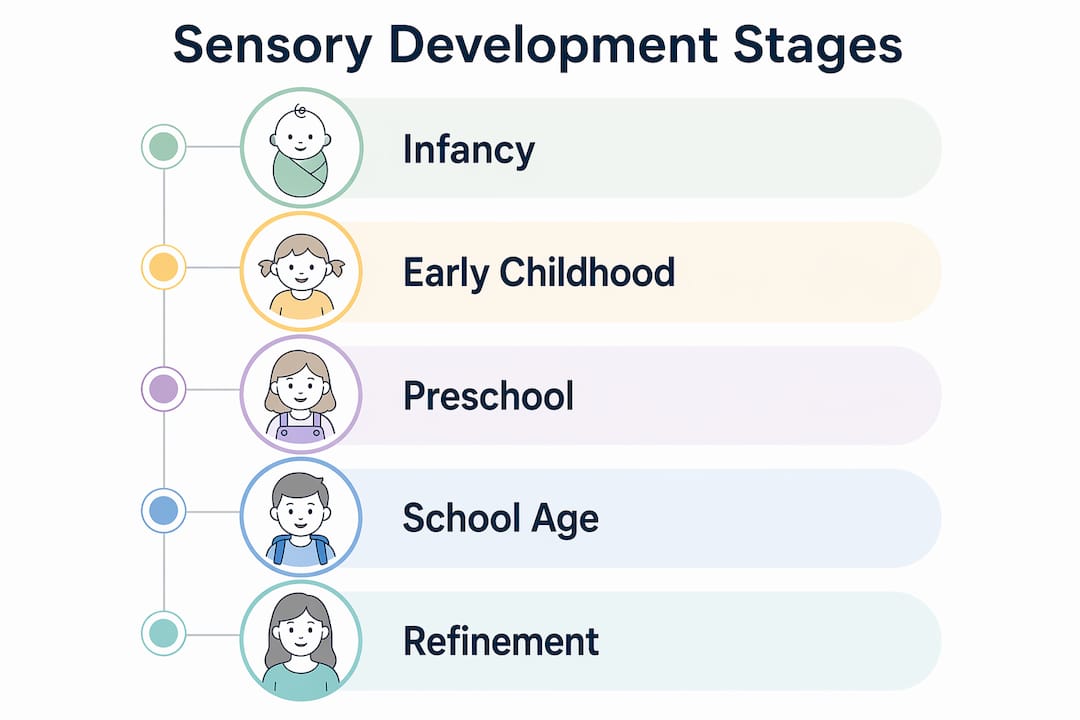
In the first year of life, the tactile and proprioceptive systems are most active. Infants learn to suck, grasp, and orient toward sound, laying the groundwork for more complex integration. Between ages one and three, the vestibular system matures rapidly: children learn to walk, climb, and coordinate both sides of the body. The ability to cross the body’s midline, a key milestone, typically emerges around age three.
From ages three to seven, children refine sensory discrimination: they get better at identifying objects by touch alone, judging force, and filtering irrelevant sensory input in busy environments. By age seven, most children have developed the foundational sensory processing capacity needed for formal learning. When this timeline is significantly delayed or disrupted, it often signals that sensory integration support is warranted.
How sensory integration issues are assessed and diagnosed
Assessment typically begins with a referral to a licensed occupational therapist with specialized training in sensory processing. The most widely used standardized tool is the Sensory Integration and Praxis Tests (SIPT), developed by Dr. Ayres, which measures performance across multiple sensory and motor domains. Therapists also use caregiver questionnaires such as the Sensory Processing Measure (SPM) and the Sensory Profile to gather information about how a child functions across home, school, and community settings.
Clinical observation is equally important. A skilled evaluator watches how a child responds to movement, touch, and novel motor tasks during structured and unstructured play. Parent and teacher interviews add context that standardized scores alone cannot capture. The full picture, combining test scores, observational data, and reported functional impact, determines whether sensory integration difficulties are present and how severe they are.
How sensory integration disorder differs from autism and ADHD
Sensory integration dysfunction is a distinct neurological condition, not a symptom category within ASD or ADHD. The three can and frequently do co-occur, but they are not the same thing. Not every individual with autism or ADHD has sensory processing difficulties, and not everyone with sensory processing difficulties has autism or ADHD.
ASD is defined by persistent differences in social communication and the presence of restricted, repetitive behaviors. ADHD is characterized by inattention, impulsivity, and hyperactivity. Sensory integration dysfunction, by contrast, is specifically about how the nervous system receives, organizes, and responds to sensory input. A child can have all three conditions simultaneously, or any one of them independently. Assessment matters precisely because the interventions differ: a child whose inattention stems from sensory overload needs a different approach than one whose inattention is primarily driven by executive function deficits.
Autismdoctorsearch provides detailed autism information and clinical context to help families understand these distinctions and find appropriate support.
Key Takeaways
Sensory integration is the brain’s process of organizing input from seven sensory systems to produce coordinated, appropriate responses, and when it breaks down, targeted therapy can meaningfully improve daily function.
| Point | Details |
|---|---|
| Seven sensory systems | Sensory integration involves visual, auditory, tactile, gustatory, olfactory, vestibular, and proprioceptive systems working together. |
| Two dysfunction subtypes | Over-responsivity and under-responsivity describe opposite ends of how the nervous system reacts to sensory input. |
| Dyspraxia connection | Vestibular bilateral integration and sequencing, and somatodyspraxia, are distinct subtypes tied directly to sensory integration difficulties. |
| Therapy uses play with purpose | Sessions target proprioceptive, vestibular, and tactile systems through the “just-right challenge” to build more efficient processing. |
| Distinct from ASD and ADHD | Sensory integration dysfunction is a separate neurological condition that frequently co-occurs with autism and ADHD but is not the same diagnosis. |
Autismdoctorsearch connects families with qualified occupational therapists, ABA providers, and sensory integration specialists across the United States. Browse the autism therapy services directory to find credentialed providers in your area who specialize in sensory processing support.


