


TL;DR:
- A sensory diet is a personalized schedule of sensory activities designed to help regulate a child’s nervous system and improve focus.
- It involves brief activities targeting seven sensory systems, scheduled every 90 minutes to 2 hours to prevent overload.
A sensory diet is a personalized, scheduled plan of sensory activities designed to regulate a child’s nervous system and improve focus, behavior, and daily functioning. The term has nothing to do with food. Patricia and Julia Wilbarger coined the phrase in 1991 to describe “feeding” the nervous system with the right type and amount of sensory input. For parents of children with autism, understanding what is a sensory diet can be the difference between a child who melts down repeatedly and one who moves through the day with greater calm and control.
Sensory processing challenges affect approximately 40% of children with neurodevelopmental differences. That number climbs to 95% in children with certain specific neurodevelopmental conditions. A sensory diet, developed with an occupational therapist, gives your child’s brain the input it needs before overwhelm sets in.
What is a sensory diet and what does it include?
A sensory diet targets seven sensory systems, not just the five most people learned in school. The systems addressed are tactile (touch), vestibular (balance and movement), proprioceptive (body position and pressure), auditory (sound), visual (sight), olfactory (smell), and gustatory (taste). Each child’s plan focuses on the systems where their brain struggles most.

Activities are short by design. Effective sensory diets schedule 3–5 minute activities every 90 minutes to 2 hours throughout the day. The goal is to keep the nervous system regulated before it tips into overload, not to fix it after a meltdown has already started.
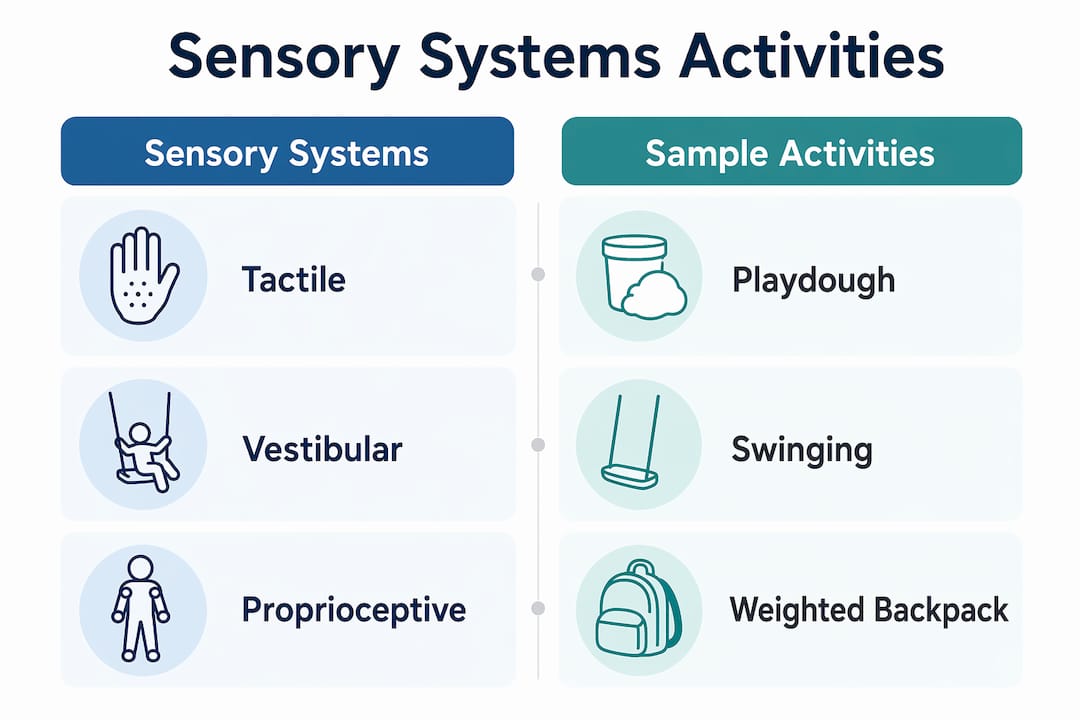
The table below shows each sensory system with sample activities you can use at home or school.
| Sensory system | Sample activities |
|---|---|
| Tactile | Playdough, finger painting, brushing skin with a therapy brush |
| Vestibular | Swinging, spinning on a therapy disk, bouncing on a trampoline |
| Proprioceptive | Carrying a weighted backpack, wall push-ups, bear hugs |
| Auditory | Noise-canceling headphones, rhythm clapping, listening to white noise |
| Visual | Dimming lights, using sunglasses indoors, visual tracking exercises |
| Olfactory | Scented playdough, aromatherapy diffusers, smelling familiar objects |
| Gustatory | Crunchy snacks, chewy tubes, sour candies under therapist guidance |
For a broader list of ideas, Autismdoctorsearch has compiled sensory activities for autistic kids that work across home and classroom settings.
Pro Tip: Keep each sensory diet to no more than five activities at a time. More activities create confusion and reduce follow-through for both children and caregivers.
A sensory diet is also distinct from a sensory break. A sensory break is reactive. It happens after a child is already dysregulated. A sensory diet is proactive. It delivers input on a schedule so dysregulation is less likely to occur in the first place.
How do sensory diets work to regulate the brain?
The brain of a child with autism often struggles to organize incoming sensory information. Sudden behavioral outbursts frequently reflect a child seeking sensory input their brain is not receiving in a useful way. A sensory diet addresses that gap directly by delivering targeted input before the brain reaches a crisis point.
“A sensory diet feeds the nervous system the specific input it needs to stay organized and regulated throughout the day. Without that input, the brain goes looking for it on its own, often in ways that disrupt learning and relationships.”
Occupational therapy practice, as described in the Wilbarger framework
Sensory diets improve neurological processing by giving the brain the sensory data it needs to organize information effectively. This reduces behavior problems caused by sensory overload. The improvement is not cosmetic. It reflects actual changes in how the nervous system responds to the environment.
The proactive nature of a sensory diet is what separates it from most behavioral interventions. Sensory diets prevent dysregulation by delivering timely input rather than managing a crisis after it begins. Think of it like eating regular meals to avoid hunger-driven irritability, rather than waiting until your child is in tears before offering food.
Pro Tip: Post the sensory diet schedule visually in your home using pictures or icons. Children with autism respond better to visual cues than verbal reminders, and the schedule itself becomes a calming anchor.
How to create a sensory diet for your child
Building a sensory diet is a collaborative process. No parent should attempt it alone, and no therapist should build one without your input. The steps below reflect best practice in occupational therapy.
-
Get a sensory profile assessment. An occupational therapist evaluates your child’s specific sensory processing patterns. This assessment identifies which systems are over-responsive, under-responsive, or seeking input. The profile drives every activity choice.
-
Select 4–5 targeted activities. Based on the assessment, the therapist recommends activities matched to your child’s needs. Fewer activities mean better consistency. Each activity should be something your child tolerates and ideally enjoys.
-
Embed activities into existing routines. Embedding sensory activities into daily transitions reduces stress and increases consistency for families. Morning routines, school drop-off, after-school time, and bedtime are natural anchors for sensory input.
-
Schedule input every 90 minutes to 2 hours. The nervous system needs regular “top-ups.” Waiting longer than two hours increases the risk of dysregulation. Set phone reminders if needed.
-
Share the plan with your child’s school. Sensory diets work best when therapists, parents, and educators implement them consistently across environments. A plan that only runs at home loses much of its effect during school hours.
-
Review and adjust regularly. Sensory diets are living documents that require frequent review as children develop and environmental stressors change. What works at age five may not work at age eight.
The most common mistake parents make is using the sensory diet only when their child is already struggling. That turns a proactive tool into a reactive one and reduces its effectiveness significantly.
For a deeper look at how occupational therapists build and implement these plans, the Autismdoctorsearch guide on occupational therapy for autism covers the clinical process in detail.
Benefits and limitations of sensory diets for children with autism
Sensory diets produce real, measurable outcomes when implemented correctly. A 2025 systematic review found that 3 out of 4 participants improved significantly in in-seat behavior and task completion with regular sensory diet implementation. That is a strong signal for a non-pharmacological intervention.
The benefits parents most commonly report include:
- Fewer meltdowns and sensory overload episodes
- Improved attention and ability to stay on task
- Better emotional regulation throughout the school day
- Increased participation in family and social activities
- Greater independence as children learn to recognize their own sensory needs
Music-based sensory activities, for example, support auditory processing and emotional regulation in young children. Resources like music activities for toddlers show how structured sound experiences can be woven into early sensory routines.
Sensory diets also have real limitations. They are not a cure for autism. They do not eliminate sensory differences. Their effectiveness depends heavily on how consistently and correctly they are implemented. A plan that sits in a folder and never gets used produces no benefit at all.
The table below sets realistic expectations.
| What sensory diets can do | What sensory diets cannot do |
|---|---|
| Reduce frequency of meltdowns | Eliminate sensory differences permanently |
| Improve attention and task completion | Replace other therapies like ABA or speech therapy |
| Support emotional regulation | Work without consistent daily implementation |
| Build sensory tolerance over time | Produce results without professional guidance |
| Increase child autonomy over sensory needs | Function as a one-size-fits-all solution |
Sensory diets work best as one part of a broader intervention plan. They complement ABA therapy, speech therapy, and special education supports rather than replacing any of them.
Key Takeaways
A sensory diet is the most effective proactive tool for reducing sensory overload in children with autism when it is built with an occupational therapist, scheduled every 90 minutes to 2 hours, and implemented consistently across home and school.
| Point | Details |
|---|---|
| Definition is not food-related | A sensory diet is a scheduled plan of sensory activities, not a nutritional program. |
| Proactive beats reactive | Sensory diets prevent dysregulation; sensory breaks only respond after it starts. |
| Frequency matters | Activities should run every 90 minutes to 2 hours in 3–5 minute sessions. |
| Collaboration drives results | Therapists, parents, and educators must all implement the plan for it to work. |
| Plans must evolve | Review and adjust the sensory diet regularly as your child’s needs change. |
What I’ve learned about sensory diets after years in autism care
The families who get the most out of sensory diets are not the ones with the most elaborate plans. They are the ones who keep it simple, stay consistent, and treat the plan as a living tool rather than a fixed prescription.
The biggest misunderstanding I see is parents waiting for a crisis before pulling out sensory activities. That is the reactive trap. A sensory diet only works when it runs on schedule, before the nervous system is already overwhelmed. Once a child is in full meltdown, no amount of proprioceptive input will quickly reverse it.
The second thing I have observed is that school implementation is where most plans fall apart. A child who gets sensory input at home but sits in a classroom for six hours without it will still struggle. Sharing the plan with teachers and aides, and training them to deliver it, is not optional. It is the difference between a plan that works and one that does not.
Parents often feel they need to wait for the “perfect” plan before starting. You do not. Start with two or three activities your child already enjoys, build them into morning and after-school routines, and refine from there. The 2026 sensory diet guide on Autismdoctorsearch is a good place to ground your thinking before your first occupational therapy appointment.
Trust the process. Sensory diets are not magic, but they are one of the most evidence-backed, low-cost, and parent-friendly tools available in autism care today.
— Keith
Finding the right support for your child’s sensory needs
A well-designed sensory diet starts with the right professional. Autismdoctorsearch connects families with occupational therapists, ABA therapy providers, and other autism specialists who integrate sensory diet planning into their practice. The directory covers providers across the United States, making it easier to find someone local who understands your child’s specific sensory profile. Whether you are starting from scratch or refining an existing plan, working with a qualified therapist produces better outcomes than going it alone. Browse autism therapy services on Autismdoctorsearch to find providers in your area who specialize in sensory processing and occupational therapy for children with autism.
FAQ
What is a sensory diet in simple terms?
A sensory diet is a personalized schedule of short sensory activities designed to keep a child’s nervous system regulated throughout the day. It has nothing to do with food.
How often should sensory diet activities be done?
Sensory diet activities should be scheduled every 90 minutes to 2 hours, with each session lasting 3–5 minutes. Consistent timing prevents sensory overload rather than responding to it.
Who creates a sensory diet for a child with autism?
An occupational therapist designs the sensory diet based on a formal assessment of the child’s sensory profile. Parents and educators then implement it consistently across home and school.
What are common sensory diet activities for children?
Common activities include swinging, wall push-ups, carrying a weighted backpack, playdough, and noise-canceling headphones. The right activities depend on which sensory systems the child’s brain needs most.
Can a sensory diet replace other autism therapies?
A sensory diet is not a replacement for ABA therapy, speech therapy, or other interventions. It works best as one part of a broader, multi-disciplinary support plan.


