TL;DR:
- ABA focuses on observable behaviors using positive reinforcement to improve skills and reduce harmful behaviors.
- Techniques like DTT, PRT, and visual supports are adaptable to daily routines and child interests.
- While effective for many, ABA has criticisms regarding overemphasis on compliance and potential emotional distress.
Parents of children with autism often hear “ABA therapy” recommended by doctors, schools, and specialists. But turning that broad recommendation into actual daily actions? That’s where things get murky. Which strategies work at the kitchen table, not just in a clinic? What does a real ABA moment look like during bath time or a meltdown at the grocery store? This guide cuts through the noise. You’ll find concrete examples, honest tradeoffs, and a clear framework for deciding what fits your child and your family’s values. No jargon, no rigid scripts. Just practical tools you can actually use.
Table of Contents
- Understanding the basics: ABA therapy in action
- Popular ABA techniques and step-by-step examples
- Everyday routines: ABA in common situations
- Benefits of ABA therapy and the key criticisms
- Tailoring ABA to your child’s strengths and needs
- Our perspective: Moving beyond rote ABA to real-life progress
- Find professional support for ABA and autism therapies
- Frequently asked questions
Key Takeaways
| Point | Details |
|---|---|
| ABA is flexible | ABA strategies work best when adapted to your child’s routines and interests. |
| Balance structure with well-being | Monitor not just skills gained, but also your child’s happiness and comfort. |
| Many practical tools | Techniques like token systems and visual schedules support everyday learning. |
| Consider both benefits and critiques | Review strengths of ABA but stay mindful of concerns raised by self-advocates. |
Understanding the basics: ABA therapy in action
Applied Behavior Analysis (ABA) is an evidence-based approach to autism therapy that focuses on observable behaviors and what happens right before and after them. At its core, ABA uses positive reinforcement to increase helpful behaviors and decrease harmful or limiting ones. Think of it less as a single method and more as a flexible toolkit backed by decades of behavioral science research.
The typical goals of ABA include:
- Improving communication (verbal and nonverbal)
- Building social skills like taking turns or making eye contact
- Teaching self-care routines such as brushing teeth or dressing independently
- Reducing behaviors that interfere with learning or safety
- Expanding play skills and flexibility
Parents commonly apply ABA techniques across daily settings including mealtime, morning routines, free play, homework time, and transitions between activities. The key method involves breaking tasks into small, manageable steps and rewarding your child when they complete each one. Data tracking helps therapists and parents see what’s working over time.
It’s important to go in with open eyes. ABA outcomes and research show meaningful gains in communication and daily skills, and many families report real progress. At the same time, autism remediation approaches vary widely, and the conversation around ABA is not one-sided. Empirical gains in skills are frequently reported by proponents, while autistic self-advocates highlight long-term mental health risks tied to an overemphasis on compliance.
Pro Tip: Always track your child’s emotional state alongside task performance. A child who completes every step but appears withdrawn or anxious is telling you something important.
Popular ABA techniques and step-by-step examples
With a basic sense of ABA’s principles, let’s apply them through hands-on techniques with step-by-step guidance.
-
Discrete Trial Training (DTT): teaching hand washing
- Present the instruction: “Let’s wash hands.”
- Prompt Step 1: Guide child to the sink (physical prompt).
- Prompt Step 2: Model turning on the water (visual cue).
- Prompt Step 3: Encourage applying soap, then fade the prompt.
- Reward each completed step with praise or a small preferred item.
- Repeat until the full sequence runs independently.
-
Pivotal Response Training (PRT): using a favorite toy
- Place a preferred toy just out of reach.
- Wait for your child to show interest (a look, a reach, a sound).
- Prompt a simple request: “Can I have it?” or just “ball.”
- Immediately give the toy as a natural reward.
- Gradually expand to full sentences as motivation builds.
-
Token economy system: cleaning up toys
- Create a simple chart with 5 empty circles.
- Each time your child picks up a toy, add a sticker.
- When all 5 circles are filled, they trade the chart for a preferred snack or activity.
- Keep the chart visible and the reward predictable.
-
Natural Environment Teaching (NET): transition songs
- Use a consistent song to signal the shift from playtime to mealtime.
- Pause mid-song and look at your child expectantly.
- Prompt them to fill in a word or clap along.
- The natural reward is finishing the routine and getting to eat.
Not every technique fits every child. Flexibility matters far more than following a rigid program to the letter.
Research raises a real concern worth noting. ABA may encourage masking of autistic traits and suppress stimming, which some autistic adults compare to conversion therapy. Understanding the role of ABA therapists and working with qualified ABA consultant support helps ensure techniques are applied with care and context.
Pro Tip: Celebrate the attempt, not just the outcome. If your child tries a new step, that effort deserves recognition even if the result isn’t perfect yet.
Everyday routines: ABA in common situations
Now, see how these techniques translate from the therapy room to your daily routines.
| Situation | Behavior goal | Steps used | Reward and outcome |
|---|---|---|---|
| Brushing teeth | Complete 4-step routine independently | Visual schedule on mirror, verbal prompts, fading support | Sticker on chart, praise, preferred TV show |
| Entering a play group | Greet one peer without prompting | Social story beforehand, visual cue card during, praise after | High-five, preferred play activity |
| Sharing a toy | Hand toy to a sibling for 30 seconds | First/then board, countdown timer, modeling by parent | Verbal praise, turn returned quickly |
| Cleaning up blocks | Place items in bin before snack | Timer set for 3 minutes, song cue, gestural prompt | Snack served immediately, enthusiastic praise |
| Waiting at checkout | Stay beside parent for 2 minutes | Visual timer on phone, quiet fidget tool, verbal countdown | Small preferred item, enthusiastic acknowledgment |
A few strategies that support these moments every day:
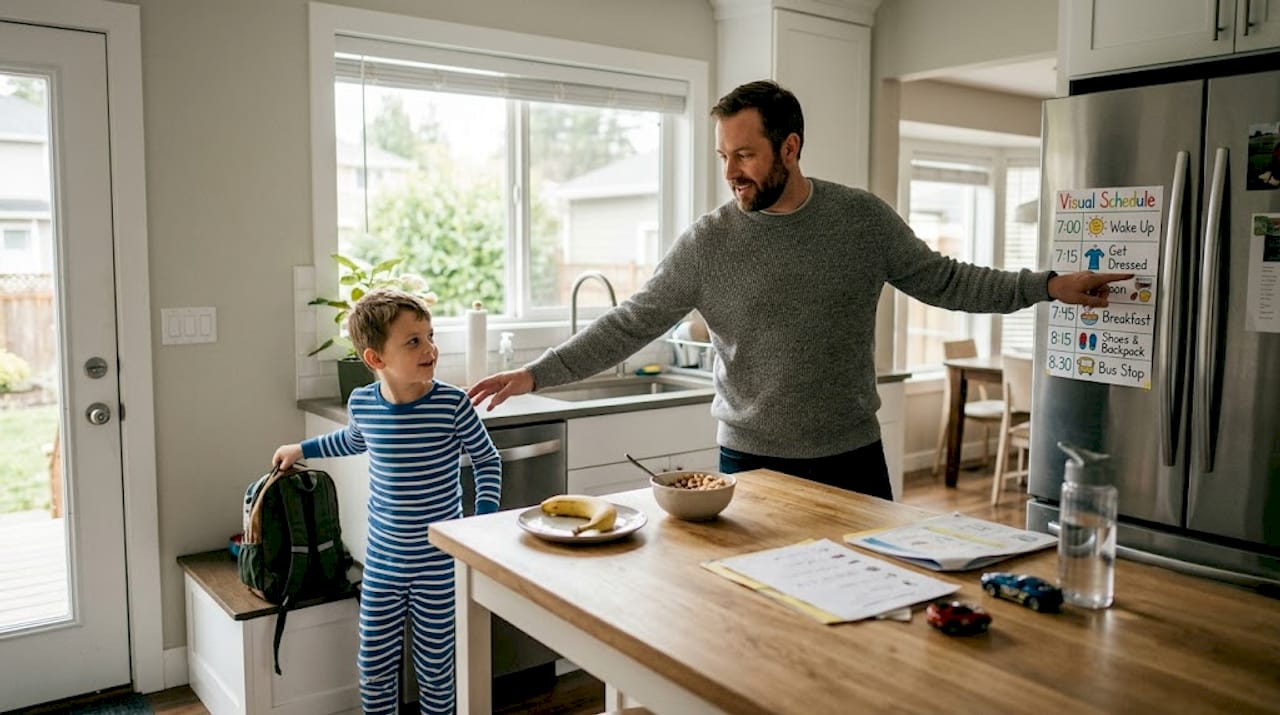
- Visual schedules reduce anxiety around transitions by showing what comes next in pictures or simple words.
- First/then boards keep tasks concrete: “First shoes, then park.”
- Timers make abstract waiting periods feel fair and predictable.
- Choice boards give children a sense of control within structured situations.
ABA works best when woven into life naturally, not delivered as repetitive drill sessions that feel separate from real experience. Always watch your child’s stress levels. Long-term mental health risks from compliance-heavy approaches are a documented concern, and your child’s comfort during these moments matters as much as the skill being taught. Explore ABA therapy options or look into support and alternatives if a particular method consistently triggers distress.
Benefits of ABA therapy and the key criticisms
You’ve seen ABA in daily life. Now let’s weigh its benefits and ongoing debates so you can match strategies to your values.
| Reported benefits | Key criticisms |
|---|---|
| Improved social interaction skills | Focus on compliance over child autonomy |
| Measurable communication growth | Risk of anxiety or emotional distress |
| Increased independence in daily tasks | Suppression of stimming and natural expression |
| Reduction in dangerous or disruptive behaviors | Compared to conversion therapy by some autistic adults |
| Structured learning that generalizes to new settings | Masking may hide genuine needs rather than resolve them |
The reported gains are real for many families. Specialists often cite empirical improvements in independence and social skills, particularly when therapy begins early and is delivered by trained professionals. But the criticisms deserve equal weight. ABA may prioritize compliance over well-being, with some autistic adults reporting lasting anxiety and trauma from their therapy experiences.
What parents should actively monitor:
- Happiness and engagement during and after sessions
- Willingness to participate without signs of dread or shutdown
- Emotional health day to day, not just task performance
- Masking behaviors, such as suppressing natural reactions to please adults
- Signs of distress, including increased meltdowns outside sessions
Exploring alternatives to ABA or combining approaches through other therapy options is always a valid choice. The goal is a child who thrives, not just one who performs.
Tailoring ABA to your child’s strengths and needs
With the benefits and criticisms in mind, here’s how to individualize any ABA strategy for your child.
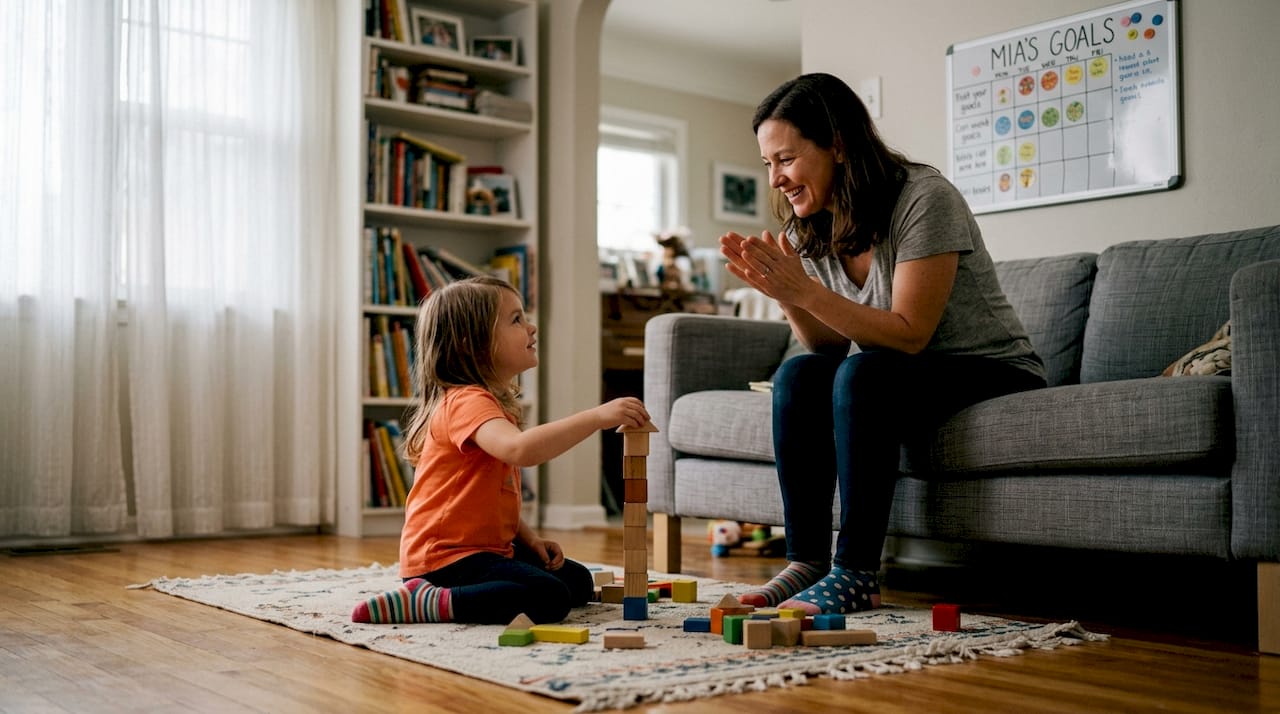
- Observe your child’s motivation. What lights them up? Build techniques around their genuine interests, whether that’s dinosaurs, music, or water play.
- Collaborate with therapists actively. Ask questions, share what you notice at home, and push back when something doesn’t feel right for your child.
- Adjust techniques that trigger distress. If a method consistently causes shutdown or aggression, it’s not the right fit regardless of what research says broadly.
- Encourage child-led goals. When possible, involve your child in choosing what skills to work on. Ownership boosts motivation.
- Know when to pause or seek alternatives. There is no shame in stepping back. Empirical skill gains are valuable, but not at the cost of your child’s mental health or sense of self.
Signs ABA is genuinely working include more initiative from your child, natural smiling during tasks, spontaneous communication outside sessions, and a willingness to try new things. Task completion alone is not enough.
Pro Tip: Give your child words to describe therapy experiences. Even simple phrases like “I like that” or “too hard” build self-advocacy that will serve them for life. Consider professional ABA support to help structure this process with expert guidance.
Our perspective: Moving beyond rote ABA to real-life progress
Here’s our direct take: even the most evidence-based ABA technique is only as good as how it fits the individual child in front of you. Families sometimes fall into the trap of treating ABA like a checklist, where consistency becomes more important than the child’s experience. That’s where things can go wrong.
The best progress we see consistently comes from families who treat ABA methods as a starting point, then adapt freely. They use structure where it helps and step back when their child needs breathing room. They pay as much attention to their child’s emotional signals as to whether a task gets completed.
Real-life progress means your child is gaining independence and confidence, not just performing for external reward.
We believe self-advocacy and emotional health are goals just as important as any skill milestone. A child who can communicate discomfort, set a boundary, or say “I need a break” is making profound progress, even if that moment doesn’t show up on a data sheet. Find practical support for families who want to balance structure with genuine child-centered values.
Find professional support for ABA and autism therapies
Choosing the right approach for your child is genuinely complex, and no article can replace personalized professional guidance. Therapists who know your child can adjust methods in real time, spot what’s working faster, and help you avoid common pitfalls. If you’re ready to connect with experienced providers, the Autism Doctor Search Directory makes it easy to find vetted resources close to home. Browse local autism therapy services for options in your area, explore The Missing Piece ABA Therapy for specialized support, or connect with Autism Therapeutics specialists who bring deep clinical experience to every family they serve.
Frequently asked questions
What is an example of ABA therapy for communication skills?
A common example is prompting a child to say “juice” when thirsty and immediately rewarding them with a sip, building the connection between language and outcome. ABA targets communication through structured, repeatable practice like this across many settings.
Can ABA therapy be done at home by parents?
Yes, parents can apply strategies like visual schedules, token boards, and natural environment teaching within everyday routines. ABA techniques work in home settings when parents receive proper guidance from a qualified therapist.
What are some criticisms of ABA therapy?
Key criticisms include an overemphasis on compliance, suppression of stimming, and risk of anxiety or masking. Some autistic adults compare ABA to conversion therapy based on their own experiences.
How do I know if ABA is working for my child?
Look for genuine signs like spontaneous communication, increased confidence, and willingness to engage, not just task completion. ABA’s effectiveness shows most clearly when children generalize skills to new situations on their own.